
Louis Aragon (1897–1982)
Author of Paris Peasant
About the Author
Louis Aragon was born in Paris, France. He had a varied professional life that included experimentation with numerous writing styles. Initially planning on a career in medicine, Aragon studied at the University of Paris. During World War I and World War II, he was mobilized as an auxiliary doctor. show more Dadaism and surrealism influenced many of his early works, including Nightwalker. In 1919 he co-founded the Surrealist magazine Literature, but he soon broke away from dadaism and surrealism and joined the Communist Party. Among his best-known works are Residential Quarters and The Bells of Basel, which reflect this Communist influence. His later works, such as Holy Week (1958), seem to turn away from some of his more controversial ideas. In the 1940s Aragon reintroduced rhyme in his work and was interested in ideas of automatic writing and freedom of the unconscious. Aragon wrote under numerous pseudonyms including Albert de Routisie, Arnaud de Saint Roman, and Francois La Colere. He died on December 24, 1982. (Bowker Author Biography) show less
Disambiguation Notice:
Le con d'Irène was originally published under the nom de plume Albert de Routisie.
(fre) Le con d'Irène was originally published under the nom de plume Albert de Routisie.
Image credit: Louis Aragon in his country house in Saint-Arnoult-en-Yvelines, 1980
Series
Works by Louis Aragon
Les Communistes (Mai-Juin 1940) 3 copies
Henri Matisse : a novel. Volume 1 3 copies
Die Kommunisten, Bd. 5 (Mai 1940) 3 copies
La Grande Gaité/Tout ne finit pas par des chansons (Poésie/Gallimard, 544) (French Edition) (2019) 2 copies
Basilejské zvony 2 copies
Usmrcení 2 copies
Campanas de Basilea, Las 2 copies
La culture et les hommes 2 copies
Basel'in Çanları 2 copies
Deux poètes d'aujourd'hui 2 copies
Les deux geants -histoire des etats-unis et de l'urss de 1917 a nos jours (2 premiers volumes) Histoire de l'URSS Tome II (1963) 2 copies
Cestující z imperiálu 2 copies
L'homme communiste 2 2 copies
EL SIGLO ERA JOVEN 2 copies
Aragon 2 copies
De Hollandse reis 2 copies
Aragon válogatott versei 2 copies
Le più belle poesie di Louis Aragon 2 copies
Chroniques du bel canto 2 copies
Μ' ανοιχτά χαρτιά 1 copy
Uhelbredelig Mad! 1 copy
Avez-vous lu Victor Hugo ? 1 copy
Saf Şiir Yoktur 1 copy
Aşk Şiirleri 1 copy
Le monde reel Aurelien 1 1 copy
Анри Матисс, роман 1 copy
Os Bairros elegantes 1 copy
ELSA TRIOLET CHOISIE 1 copy
Le Neveu de M. Duval 1 copy
Un Jour du Monde (Chroniques de Ce Soir) 2e Partie : 1939. Jusqu'au Pacte Germano-Soviétique (2019) 1 copy
France écoute. 1 copy
Les Communistes (Mui 1940) 1 copy
ÇAĞIMIZIN SANATI 1 copy
Aurélien, roman 1 copy
Comment meurt un journal 1 copy
L’exemple de Courbet 1 copy
La diane française 1 copy
Das Beispiel Courbet 1 copy
LA SEMAINE SAINTE 1. ARAGON 1 copy
Au grand jour 1 copy
La valse des adieux 1 copy
Wielki Tydzień 1 copy
La condanna a morte 1 copy
Les yeux d'Elsa - En appendice : La leçon de Ribérac, La rime en 1940, Sur une définition de la poésie (1971) 1 copy
Le Mouvement perpétuel / Écritures automatiques / Feu de joie (Poésie t. 54) (French Edition) (2015) 1 copy
Histoire de l'URSS 3 1 copy
Condenação à Morte 1 copy
The red front 1 copy
Basel'in Canlari 1 copy
Les beaux quartiers roman 1 copy
Les communistes roman 1 copy
Picasso-Aragon Shakespeare 1 copy
Sziget a Szajnán Aurélien 1 copy
LA DEFENSE DE L'INFINI 1 copy
مجنون إلسا 1 copy
Saptamana patimilor 1 copy
Associated Works
World Poetry: An Anthology of Verse from Antiquity to Our Time (1998) — Contributor — 496 copies, 2 reviews
Tagged
Common Knowledge
- Canonical name
- Aragon, Louis
- Legal name
- Aragon, Louis Marie Alfred Antoine
Andrieux, Louis (birth name) - Other names
- Routisie, Albert de
- Birthdate
- 1897-10-03
- Date of death
- 1982-12-24
- Gender
- male
- Education
- Faculté de médecine, Paris (Début d'études, 2 ans puis abandon, 19 20 | 19 22)
Lycée Carnot, Paris
Ecole Saint-Pierre de Neuilly-sur-Seine (1907) - Occupations
- poet
novelist
editor - Organizations
- American Academy of Arts and Letters ( [1972])
French Communist Party
Académie Goncourt
French Army (WWI)
Editeurs français réunis - Awards and honors
- Croix de guerre 1914-1918
Croix de guerre 1939-1945
Médaille militaire
Prix Lénine pour la paix (1956)
De nombreuses institutions et infrastructures portent son nom en France (Rues, Ecoles, Collèges, Lycées, ...) - Relationships
- Triolet, Elsa (wife)
Tzara, Tristan (colleague) - Short biography
- Louis Aragon est un poète, romancier et journaliste français né en octobre 1897 à Paris. Il commence des études de médecine et rencontre, en 1917, à l’hôpital du Val-de-Grâce, André Breton. En 1919, il fonde la revue Littérature avec Philippe Soupault et André Breton.
Louis Aragon est un membre du mouvement Dada et du mouvement surréaliste. Il publie Anicet ou le Panorama en 1921 et le Paysan de Paris en 1926. L’année suivante, en 1927, il adhère au parti communiste. Il devient par ailleurs journaliste à L’Humanité. En 1928, il rencontre Elsa Triolet et rompt avec les surréalistes en 1932. Pendant la Seconde Guerre mondiale, il entre dans la Résistance et publie des poèmes dédiés à Elsa Triolet, sa compagne. Il s’agit du Crève-cœur en 1941 et des Yeux d’Elsa en 1942.
En 1970, Elsa Triolet meurt. En 1982, Aragon meurt en décembre à Paris. - Nationality
- France
- Birthplace
- Neuilly-sur-Seine, Hauts-de-Seine, Île-de-France, France
- Places of residence
- Paris, France
- Place of death
- 7e arrondissement, Paris, Île-de-France, France
- Burial location
- Triolet Foundation Park, Yvelines, Ile-de-France, France
- Map Location
- France
- Disambiguation notice
- Le con d'Irène was originally published under the nom de plume Albert de Routisie.
- Associated Place (for map)
- France
Members
Reviews

What an interesting and surprising book this was. It grabbed me from the first line (“Don’t wake me up, for God’s sake, you bastards, don’t wake me up, look out I bite I see red.”), which continued on into explosive prose expressing the desire to remain in bed. It continued to hold me even in portions that were hard to interpret. I guess I should warn you that the book has very explicit passages, so if that doesn’t appeal to you, you should skip it (and this review!).
In a show more nutshell, a young man who has apparently had his heart broken goes into the provinces to be with his relations. There isn’t a whole lot to do and he has a cynical attitude towards life there – bored with everything, and finding fault with it all. He visits a brothel and sees some pretty squalid scenes of debauchery there, one prostitute being described as “writhing like a soul in hell.” He only finds release in writing, and sometimes feels the presence of his old lover while he does so. He can’t figure out what to write about until he’s wandered the countryside a bit, then the idea for a young woman named Irene comes to him.
The book then segues into a description of Irene, her mother Victoire, and her grandfather, who has been paralyzed and in a wheelchair for 40 years, a victim of syphilis contracted at a brothel. Comically (and painfully), the grandfather can still become aroused, and watches helplessly on as farm maidens occasionally engage in oral sex in front of him, as if he was part of the furniture. He’s scorned by all, but in reality he feels “true freedom in my apparent slavery” even as he sees his own daughter, a sentiment which was quite a surprise to me. The last vision the young author has of Irene makes it clear that she behaves ‘as a man’ when it comes to sex, just taking physical pleasure in it and not looking for any emotional attachments, and that her mother is known in the community for her lesbian affairs.
As I think about what “de Routisie” (now believed to be Louis Aragon) was trying to say with these three characters in the country, it’s interesting to me that they all find complete freedom and acceptance in their conditions, particularly as it relates to sex, while the young author cannot find cathartic pleasure in physical relations, and envies those who can. To him sex is more of a curse, as his body occasionally requires an outlet. The sex scenes are blunt and I suppose shocking, but brief, and surrounded by what seems to be a surrealistic painting. I believe that’s the other point of crafting the novel as he did - it’s a story within a story, there are a couple different narrators, and the style of the prose occasionally becomes stream of consciousness. It’s hard to know what’s ‘real’, and indeed this mind-bending is a central part of the surrealist movement that Aragon was a part of in 1920’s-1930’s France.
As he puts it at the end, “arranging everything into a story is a bourgeois mania”, and “imbeciles see novels, romantic ballads, everywhere”. This is not a conventional story, it’s a set of dreamlike images. It’s surreal in its unconventionality, and yet real in its depictions of sex, and it was intended to provoke a reaction. (btw I’m happy the original title in French was, uh, ‘shortened’ in this translation). For Aragon, sex seems to be both at once sad and banal, the somewhat disgusting action no better than dogs, but at the same time powerful enough to briefly transcend the human condition, for those who are able to channel this ability (and for this reason, he says “how I would like to be an ordinary pervert”, which brought a smile).
Camus said it was the ‘finest of all works touching on eroticism’. I don’t know about that, but it’s certainly one of the most artsy, and unique.
Quotes:
On feeling someone who is not there:
“I sometimes tried desperately to see you, by closing my eyes, or on the contrary opening them very wide on the shadows of the room. But you were there suddenly. Your walk. Your dress. It seemed that you chose to come precisely at the time when I was writing at my narrow table, with only the wall before me. Then the room with all its nooks and corners, and the area where the carpet was turning blue, belonged entirely to you. I knew you were walking back and forth behind my back, mute. Sometimes you came close to me. My heart would pound. I knew that to turn around would be to make you vanish. I did not turn around. I wrote. Little by little you became bolder. I felt your breath. I did not turn around.”
On an orgasm; I smiled at the ‘caravans of the spasm’ and imagery which followed:
“Already a fine sweat beads the flesh at the horizon of my desires. Already the canvas of the spasm appear in the far reaches of the sands. They have walked, those travelers, carrying gunpowder in flasks and shoddy wares in crates with rusty nails, from towns of terraces and long paths of water damned by black docks. They have crossed the mountains. Here they are in their striped cloaks. Travelers, travelers, your soft fatigue is like the night. The camels follow them, carrying foodstuffs. The guide waves his stick and the sandstorm rises from the earth, Irene suddenly recalls the hurricane. The mirage appears, and its beautiful fountains…The mirage is sitting naked in the pure wind. A beautiful mirage of man entering the quim. A beautiful mirage strong-limbed like a pile driver. A beautiful mirage of springs and heavy melting fruit. Here are the travelers raving mad, rubbing their lips. Irene is like an arch above the sea. I have not drunk for a hundred days, and sighs quench my thirst. Huff, huff. Irene calls her lover. Her lover with an erection at a distance. Huff, huff. Irene agonizes and contorts herself. His erection is like a god above the abyss. She moves, he flees from her, she moves and strains forward. Huff. The oasis leans down with its tall palms. Travelers, your burnooses turn in the scouring sand. Irene pants to the breaking point. He contemplates her. Her cunt is misty with expectation of his prick. On the illusory saline lake, the shadow of a gazelle…
Let your damned in hell jerk off. Irene has come.” show less
In a show more nutshell, a young man who has apparently had his heart broken goes into the provinces to be with his relations. There isn’t a whole lot to do and he has a cynical attitude towards life there – bored with everything, and finding fault with it all. He visits a brothel and sees some pretty squalid scenes of debauchery there, one prostitute being described as “writhing like a soul in hell.” He only finds release in writing, and sometimes feels the presence of his old lover while he does so. He can’t figure out what to write about until he’s wandered the countryside a bit, then the idea for a young woman named Irene comes to him.
The book then segues into a description of Irene, her mother Victoire, and her grandfather, who has been paralyzed and in a wheelchair for 40 years, a victim of syphilis contracted at a brothel. Comically (and painfully), the grandfather can still become aroused, and watches helplessly on as farm maidens occasionally engage in oral sex in front of him, as if he was part of the furniture. He’s scorned by all, but in reality he feels “true freedom in my apparent slavery” even as he sees his own daughter, a sentiment which was quite a surprise to me. The last vision the young author has of Irene makes it clear that she behaves ‘as a man’ when it comes to sex, just taking physical pleasure in it and not looking for any emotional attachments, and that her mother is known in the community for her lesbian affairs.
As I think about what “de Routisie” (now believed to be Louis Aragon) was trying to say with these three characters in the country, it’s interesting to me that they all find complete freedom and acceptance in their conditions, particularly as it relates to sex, while the young author cannot find cathartic pleasure in physical relations, and envies those who can. To him sex is more of a curse, as his body occasionally requires an outlet. The sex scenes are blunt and I suppose shocking, but brief, and surrounded by what seems to be a surrealistic painting. I believe that’s the other point of crafting the novel as he did - it’s a story within a story, there are a couple different narrators, and the style of the prose occasionally becomes stream of consciousness. It’s hard to know what’s ‘real’, and indeed this mind-bending is a central part of the surrealist movement that Aragon was a part of in 1920’s-1930’s France.
As he puts it at the end, “arranging everything into a story is a bourgeois mania”, and “imbeciles see novels, romantic ballads, everywhere”. This is not a conventional story, it’s a set of dreamlike images. It’s surreal in its unconventionality, and yet real in its depictions of sex, and it was intended to provoke a reaction. (btw I’m happy the original title in French was, uh, ‘shortened’ in this translation). For Aragon, sex seems to be both at once sad and banal, the somewhat disgusting action no better than dogs, but at the same time powerful enough to briefly transcend the human condition, for those who are able to channel this ability (and for this reason, he says “how I would like to be an ordinary pervert”, which brought a smile).
Camus said it was the ‘finest of all works touching on eroticism’. I don’t know about that, but it’s certainly one of the most artsy, and unique.
Quotes:
On feeling someone who is not there:
“I sometimes tried desperately to see you, by closing my eyes, or on the contrary opening them very wide on the shadows of the room. But you were there suddenly. Your walk. Your dress. It seemed that you chose to come precisely at the time when I was writing at my narrow table, with only the wall before me. Then the room with all its nooks and corners, and the area where the carpet was turning blue, belonged entirely to you. I knew you were walking back and forth behind my back, mute. Sometimes you came close to me. My heart would pound. I knew that to turn around would be to make you vanish. I did not turn around. I wrote. Little by little you became bolder. I felt your breath. I did not turn around.”
On an orgasm; I smiled at the ‘caravans of the spasm’ and imagery which followed:
“Already a fine sweat beads the flesh at the horizon of my desires. Already the canvas of the spasm appear in the far reaches of the sands. They have walked, those travelers, carrying gunpowder in flasks and shoddy wares in crates with rusty nails, from towns of terraces and long paths of water damned by black docks. They have crossed the mountains. Here they are in their striped cloaks. Travelers, travelers, your soft fatigue is like the night. The camels follow them, carrying foodstuffs. The guide waves his stick and the sandstorm rises from the earth, Irene suddenly recalls the hurricane. The mirage appears, and its beautiful fountains…The mirage is sitting naked in the pure wind. A beautiful mirage of man entering the quim. A beautiful mirage strong-limbed like a pile driver. A beautiful mirage of springs and heavy melting fruit. Here are the travelers raving mad, rubbing their lips. Irene is like an arch above the sea. I have not drunk for a hundred days, and sighs quench my thirst. Huff, huff. Irene calls her lover. Her lover with an erection at a distance. Huff, huff. Irene agonizes and contorts herself. His erection is like a god above the abyss. She moves, he flees from her, she moves and strains forward. Huff. The oasis leans down with its tall palms. Travelers, your burnooses turn in the scouring sand. Irene pants to the breaking point. He contemplates her. Her cunt is misty with expectation of his prick. On the illusory saline lake, the shadow of a gazelle…
Let your damned in hell jerk off. Irene has come.” show less
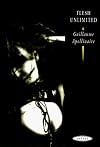
This edition presents a pair of Apollinaire stories: 'The Eleven Thousand Rods' (also known as 'The Loves of a Hospodar') and 'Memoirs of a Young Don Juan', both translated by Alexis Lykiard. The former owes much to de Sade in the way it takes punitive erotica to the extremes of violence, being the memoirs of a young man who gives and receives mortal pain in furtherance of his erotic inclinations. He finds many like-minded people, male and female, in the course of his travels, but is quite show more indiscriminate in his choice of others to suffer the ultimate penalty in a disinterested, callous manner. Rather too bloody for the taste of many readers, I feel. The latter is a marked contrast, being a reasonably plausible account of a young man's awakening to erotic feelings in an almost educational style common to the genre. Sisters and an aunt join an assortment of willing serving wenches in contributing enthusiastically to his knowledge, and the story is much better told than many attempts at this basic plot. High class erotica, written (sometimes literally) with guts. show less

This is a rather .... strange novel. I would give it 3.5 stars but rounded to 4.
First thing first, disregard the title - to be honest I am not quite sure why is the book titled as it is.
Only, lets say hard-core pornographic, vulgar element of the novel is the title. Novel on its own is truly beautifully written and erotic elements are presented in a very ... steamy but romantic (?) way.
That being said, book has some very interesting erotic scenes, but when one takes into account the style I show more am not sure where to place this book. Unlike young Don Juan or novel of Lust, this book does not contain details of lovemaking nor is it concentrated solely on sex to the level of obsession. It starts with the man coming to a small place called C (full name redacted by author). He is disgusted with the world, cannot find peace so slowly, partly out of boredom and partly because of philosophical, oh why to live sorts, reasons, he starts having intercourse with maids and with time moves to a local brothel. Here he witnesses employees of the brothel peeking around and watching their clients (starting from mayor to local garrison) indulge in variety of sexual activities. Not wanting to be observed our protagonist decides to stay home where he continues having sex with the maids, all the time expressing his rather pessimistic and disappointed view of the world. And then, like a bolt from the clear sky, he tells us (readers) of first time he saw Irene, girl whose intimate parts have completely took control over him (hence the title..... I guess).
And suddenly we are given a man sick with syphilis that made him basically completely paralyzed, taken care by his wife and placed in a chair at the window. While physically he might be immobile, his mind is quick and constantly turning, and (if one believes his inner monologue) his intimate parts are more than operational, and so is sexual obsession. His eyes fall on his daughter when she enters the adulthood and soon he becomes a witness to her sexual escapades with both men and women, always in the clear view to him at the window, where his mind works on the dirtiest ideas and scenarios concerning him and his daughter. His daughter also seems to be playing this game because she is aware of her fathers below the waist reactions. This brings forth her anger toward her father and very soon she starts the power-play with the invalid (did I say this is strange dynamic? and yet nobody knows how did this start....).
And then she has her own daughter (Irene from the title). Irene also becomes more than sexually active, although concentrated (unlike her mother) on the men (which irritates her mother because she views domination over any of the sexes as a must (she basically controls all males and females on the estate and this place called C!). And these two sensual women start their own conflict (again - how come? why?) and ....... book ends with chapter that reads more like author's frustration venting during drinking spree, full of critique of society, constant seeking of pleasure, constant goal of reading and finding about various affairs and lust of flesh etc etc. When book ended I thought pages were missing.
Style is great, story flows very natural and fast so when discussion of Irene and her intimate parts starts, it feels (at least to me) as something that is not part of this novel. It just feels disjointed. I just cannot match the style and content, or for that purpose entire novel context is still not clear to me.
Who is our protagonist, who is the invalid, what happens to them both (some reviewers say they are one and the same?!?) and when did our protagonist actually meet Irene, what is the role of Irene's mother ........ all these questions remain unanswered.
For poetical erotic elements this is very good book. For everything else it reads as several chapters joint by force. There is element of surrealism (author is mentioned as a very important surrealist) but even crazy dreams have something to link various sleeping phases. This unfortunately is missing here, and as such result in rather disjointed read.
Interesting but ultimately leaves you with more questions than Twin Peaks. show less
First thing first, disregard the title - to be honest I am not quite sure why is the book titled as it is.
Only, lets say hard-core pornographic, vulgar element of the novel is the title. Novel on its own is truly beautifully written and erotic elements are presented in a very ... steamy but romantic (?) way.
That being said, book has some very interesting erotic scenes, but when one takes into account the style I show more am not sure where to place this book. Unlike young Don Juan or novel of Lust, this book does not contain details of lovemaking nor is it concentrated solely on sex to the level of obsession. It starts with the man coming to a small place called C (full name redacted by author). He is disgusted with the world, cannot find peace so slowly, partly out of boredom and partly because of philosophical, oh why to live sorts, reasons, he starts having intercourse with maids and with time moves to a local brothel. Here he witnesses employees of the brothel peeking around and watching their clients (starting from mayor to local garrison) indulge in variety of sexual activities. Not wanting to be observed our protagonist decides to stay home where he continues having sex with the maids, all the time expressing his rather pessimistic and disappointed view of the world. And then, like a bolt from the clear sky, he tells us (readers) of first time he saw Irene, girl whose intimate parts have completely took control over him (hence the title..... I guess).
And suddenly we are given a man sick with syphilis that made him basically completely paralyzed, taken care by his wife and placed in a chair at the window. While physically he might be immobile, his mind is quick and constantly turning, and (if one believes his inner monologue) his intimate parts are more than operational, and so is sexual obsession. His eyes fall on his daughter when she enters the adulthood and soon he becomes a witness to her sexual escapades with both men and women, always in the clear view to him at the window, where his mind works on the dirtiest ideas and scenarios concerning him and his daughter. His daughter also seems to be playing this game because she is aware of her fathers below the waist reactions. This brings forth her anger toward her father and very soon she starts the power-play with the invalid (did I say this is strange dynamic? and yet nobody knows how did this start....).
And then she has her own daughter (Irene from the title). Irene also becomes more than sexually active, although concentrated (unlike her mother) on the men (which irritates her mother because she views domination over any of the sexes as a must (she basically controls all males and females on the estate and this place called C!). And these two sensual women start their own conflict (again - how come? why?) and ....... book ends with chapter that reads more like author's frustration venting during drinking spree, full of critique of society, constant seeking of pleasure, constant goal of reading and finding about various affairs and lust of flesh etc etc. When book ended I thought pages were missing.
Style is great, story flows very natural and fast so when discussion of Irene and her intimate parts starts, it feels (at least to me) as something that is not part of this novel. It just feels disjointed. I just cannot match the style and content, or for that purpose entire novel context is still not clear to me.
Who is our protagonist, who is the invalid, what happens to them both (some reviewers say they are one and the same?!?) and when did our protagonist actually meet Irene, what is the role of Irene's mother ........ all these questions remain unanswered.
For poetical erotic elements this is very good book. For everything else it reads as several chapters joint by force. There is element of surrealism (author is mentioned as a very important surrealist) but even crazy dreams have something to link various sleeping phases. This unfortunately is missing here, and as such result in rather disjointed read.
Interesting but ultimately leaves you with more questions than Twin Peaks. show less
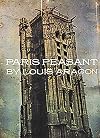
I usually find Surrealist writers, at least in translation, to be dreadfully boring & wooden & forced. The best "Surrealist" writing is by people who were either never Surrealists or were only peripherally associated w/ Surrrealism - like Raymond Roussel & Raymond Queneau. Of course, you have to be named Raymond to be a good Surrealist writer - except for Antonin Artaud.. However, I liked this Louis Aragon bk. On the other hand, contrary to what the back-cover blurb says, I wdn't call this show more bk Surrealist either, so.. show less
Lists
Awards


You May Also Like


Associated Authors
Statistics
- Works
- 219
- Also by
- 13
- Members
- 3,045
- Popularity
- #8,384
- Rating
- 3.9
- Reviews
- 49
- ISBNs
- 287
- Languages
- 14
- Favorited
- 8


