
Alan Macfarlane
Author of The Empire of Tea
About the Author
Alan Macfarlane is currently Professor of Social Anthropology at the University of Cambridge.
Works by Alan Macfarlane
The Origins of English Individualism: The Family Property and Social Transition (1978) 92 copies, 1 review
The Family Life of Ralph Josselin, a Seventeenth-Century Clergyman: An Essay in Historical Anthropology (The Norton Libr (1970) 51 copies
Dragon Days: Education at an English Preparatory School, the Dragon School, Oxford 1949-1955 (2012) 2 copies
Marriage and Love in England: Modes of Reproduction, 1300-1840 by Alan Macfarlane (1986-01-23) 1 copy
Bristol 1908-1983 1 copy
Creative lives and works: Raymond Firth, Audrey Richards, Lucy Mair, Meyer Fortes and Edmund Leach (2021) 1 copy
How to Discover the World 1 copy
Associated Works
The Hidden World of the Naga: Living Traditions in Northeast India and Burma (2003) — Preface — 10 copies
The Diary of Ralph Josselin, 1616-1683 (Records of Social and Economic History) (1976) — Editor — 8 copies
Expedition Naga: Diaries from the Hills in Northeast India 1921 - 1937 & 2002 - 2006 (2008) — Foreword — 7 copies
Tagged
Common Knowledge
- Other names
- Macfarlane, Alan Donald James (birth name)
- Birthdate
- 1941-12-20
- Gender
- male
- Education
- Worcester College, Oxford
University of London, School of Oriental and African Studies - Occupations
- anthropologist
historian
university professor emeritus - Organizations
- Cambridge University, Kings College
Royal Historical Society (fellow)
Royal Anthropological Institute (fellow)
British Academy (fellow)
Academia Europaea (fellow)
Association of Social Anthropologists - Awards and honors
- British Academy (Fellow)
Royal Historical Society (Fellow)
Royal Anthropological Institute (Fellow)
Academia Europaea (Fellow)
Rivers Memorial Medal for Anthropological Fieldwork, 1984
William J. Goode Medal of the American Sociological Association, 1987 (show all 7)
Huxley Memorial Medal of the Royal Anthropological Institute, 2012 - Relationships
- MacFarlane, Iris (mother)
MacFarlane, Fiona (sister) - Nationality
- UK
- Birthplace
- Shillong, Assam, India
- Places of residence
- Cambridge, England, UK
Oxford, England, UK
London, ENgland, UK - Associated Place (for map)
- UK
Members
Reviews
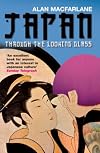
Alan Macfarlane is a leading British social anthropologist who does not speak Japanese nor has he dedicated his life to Japan but rather to the study of society in general and to tribal societies in particular. It might seem presumptuous for him to purport to explain the Japanese.
In fact, he makes a good fist of the task, owing a great deal to a number of extended visits to the country, wide reading and an appropriately humble engagement with Japanese academics and families. He does not want show more to 'go native', he wants to understand as an Englishman.
What we get is something useful if it is not going to be definitive. One knows that this is not the last word on the matter. He admits that but the book has insights that are thought-provoking even if one finishes the book thinking that neither he nor the reader truly understands the subject.
We are in that territory explored by Thomas Nagel who asked what it was like to be a bat and, of course, the answer is that we cannot know what it is like to be a bat. Only a bat knows what it is like to be bat if it knows anything at all.
So it is with our understanding of other people or peoples. We can imagine what it is like to be Japanese (just as a Japanese may imagine what it is like to be English) but we (and he) cannot know. Imagination is never knowing. Believing certainly is not.
However, if we think not knowing means that we should simply abandon the task, we know that we are deluding ourselves because human beings have to imagine other minds in order to communicate with them and permit the delusion of knowledge through the illusion of empathy.
We gain sufficient knowledge to 'do business' with the other. The closer we can approximate an understanding of the other then the better the business that can be done.
From this perspective, Macfarlane has produced a very worthwhile book that 'translates' (with Japanese help) the best possible approximation of what it might be like to be Japanese to a Westerner through a whole set of integrated observations of behaviour and language.
His anthropological perspective may have the disadvantage of a cool Western objectivity (at odds with the Japanese way of seeing the world) but it does allow a description that we can purport to 'understand'. The book is as much about us as the Japanese if we are wise enough to know it.
Perhaps his greatest insights are that the Japanese have a hole at their centre where the Western self is to be found, that the culture is untainted by 'axial' thinking and owes more to the tribal model than any other and that the enchantment the West has lost is still present amongst them.
Since the best use of the book is not to 'understand' the Japanese but to draw back and respect them and understand ourselves better in their mirror, I found myself understanding my own disenchantment with my own culture reflected in my personal similarities with theirs.
This is not to say that I am Japanese or aspire to become Japanese or regret not being born Japanese. Quite the contrary, I would resent deeply the conformity of their life and I am far from 'tribal'. It is more I regret that my culture has lost a great deal of what they have retained.
As Macfarlane shows us, the Japanese have not got trapped into our binary thinking and endless categorisations. Their fluidity of thought and ability to think impossible and contradictory things while getting on with the job in hand is why they are unique and we have become depressing.
I appreciate and love their aesthetic sense but I also know that it has been knocked out of me (as for most Westerners). What I connect with is their inherent and relaxed paganism and their lack of enforced text-based morality and integrated psychology and propensity to calm as default.
I have often wondered whether my being drawn to Japanese culture as a form of loss is because I was born with a personality separate from 99% of the rest of my culture (Myers-Briggs seems to tell me this) or whether it has been learned. A bit of both, I suspect.
Macfarlane is good on the constant reinvention of what it is to be Japanese around a central cultural core that persists over time (much as Western people are generally healthier for being able to reinvent themselves around whatever core personality they have).
As an avid reader of Japanese literature (in translation and therefore immediately suspect as a guide to mentality), there are points in the book when I suspect he is unconsciously doing some inventing himself but such inventions are still better than we are going to get from (say) a journalist.
I was early drawn to and never left the anti-Platonic trend in Western philosophy that started arguably with Kierkegaard and certainly with Nietzsche and which had a hidden link back to the more esoteric, transgressive and 'pagan' elements in Eastern 'religion' and philosophy.
Macfarlane pictures the Japanese as fundamentally Stoic if we have to choose a Western philosophy for them but, although this accords with their behaviour, it does not really accord with their melancholy, aesthetic, pre-modern/post-modern and 'tribal/pagan' thought patterns.
There is no Western philosophy for the Japanese because they do not need one. In their magpie borrowings from the West, they were drawn only to the philosophical thinking that derived secretly from the East. They are their own people and that is worth something. I wish we were.
A similar book on my tribe - the English - would be much harder to write because the English would have immediately to be differentiated from the British and then understood in relation to the Celtic peoples and empire. Such a project would be close to impossible.
There is much specific and close observation in the book that owes a great deal to Macfarlane's skills as an observer - about how people actually relate to each other (it is a relational culture), how they use language and how they cannot be said to have a religion whilst accepting 'spirits'.
This book made me feel that I understood the Japanese and their culture as much as it was possible to do so but I also knew, more than ever before, that I would and could never 'know what it was like to be a Japanese' and that their reality was going to be a lot more complex than the book allowed. show less
In fact, he makes a good fist of the task, owing a great deal to a number of extended visits to the country, wide reading and an appropriately humble engagement with Japanese academics and families. He does not want show more to 'go native', he wants to understand as an Englishman.
What we get is something useful if it is not going to be definitive. One knows that this is not the last word on the matter. He admits that but the book has insights that are thought-provoking even if one finishes the book thinking that neither he nor the reader truly understands the subject.
We are in that territory explored by Thomas Nagel who asked what it was like to be a bat and, of course, the answer is that we cannot know what it is like to be a bat. Only a bat knows what it is like to be bat if it knows anything at all.
So it is with our understanding of other people or peoples. We can imagine what it is like to be Japanese (just as a Japanese may imagine what it is like to be English) but we (and he) cannot know. Imagination is never knowing. Believing certainly is not.
However, if we think not knowing means that we should simply abandon the task, we know that we are deluding ourselves because human beings have to imagine other minds in order to communicate with them and permit the delusion of knowledge through the illusion of empathy.
We gain sufficient knowledge to 'do business' with the other. The closer we can approximate an understanding of the other then the better the business that can be done.
From this perspective, Macfarlane has produced a very worthwhile book that 'translates' (with Japanese help) the best possible approximation of what it might be like to be Japanese to a Westerner through a whole set of integrated observations of behaviour and language.
His anthropological perspective may have the disadvantage of a cool Western objectivity (at odds with the Japanese way of seeing the world) but it does allow a description that we can purport to 'understand'. The book is as much about us as the Japanese if we are wise enough to know it.
Perhaps his greatest insights are that the Japanese have a hole at their centre where the Western self is to be found, that the culture is untainted by 'axial' thinking and owes more to the tribal model than any other and that the enchantment the West has lost is still present amongst them.
Since the best use of the book is not to 'understand' the Japanese but to draw back and respect them and understand ourselves better in their mirror, I found myself understanding my own disenchantment with my own culture reflected in my personal similarities with theirs.
This is not to say that I am Japanese or aspire to become Japanese or regret not being born Japanese. Quite the contrary, I would resent deeply the conformity of their life and I am far from 'tribal'. It is more I regret that my culture has lost a great deal of what they have retained.
As Macfarlane shows us, the Japanese have not got trapped into our binary thinking and endless categorisations. Their fluidity of thought and ability to think impossible and contradictory things while getting on with the job in hand is why they are unique and we have become depressing.
I appreciate and love their aesthetic sense but I also know that it has been knocked out of me (as for most Westerners). What I connect with is their inherent and relaxed paganism and their lack of enforced text-based morality and integrated psychology and propensity to calm as default.
I have often wondered whether my being drawn to Japanese culture as a form of loss is because I was born with a personality separate from 99% of the rest of my culture (Myers-Briggs seems to tell me this) or whether it has been learned. A bit of both, I suspect.
Macfarlane is good on the constant reinvention of what it is to be Japanese around a central cultural core that persists over time (much as Western people are generally healthier for being able to reinvent themselves around whatever core personality they have).
As an avid reader of Japanese literature (in translation and therefore immediately suspect as a guide to mentality), there are points in the book when I suspect he is unconsciously doing some inventing himself but such inventions are still better than we are going to get from (say) a journalist.
I was early drawn to and never left the anti-Platonic trend in Western philosophy that started arguably with Kierkegaard and certainly with Nietzsche and which had a hidden link back to the more esoteric, transgressive and 'pagan' elements in Eastern 'religion' and philosophy.
Macfarlane pictures the Japanese as fundamentally Stoic if we have to choose a Western philosophy for them but, although this accords with their behaviour, it does not really accord with their melancholy, aesthetic, pre-modern/post-modern and 'tribal/pagan' thought patterns.
There is no Western philosophy for the Japanese because they do not need one. In their magpie borrowings from the West, they were drawn only to the philosophical thinking that derived secretly from the East. They are their own people and that is worth something. I wish we were.
A similar book on my tribe - the English - would be much harder to write because the English would have immediately to be differentiated from the British and then understood in relation to the Celtic peoples and empire. Such a project would be close to impossible.
There is much specific and close observation in the book that owes a great deal to Macfarlane's skills as an observer - about how people actually relate to each other (it is a relational culture), how they use language and how they cannot be said to have a religion whilst accepting 'spirits'.
This book made me feel that I understood the Japanese and their culture as much as it was possible to do so but I also knew, more than ever before, that I would and could never 'know what it was like to be a Japanese' and that their reality was going to be a lot more complex than the book allowed. show less

Un saggio scritto molto bene ed enormemente interessante, a patto che, ovviamente, vi piaccia almeno un poco il tè! Esplora svariati aspetti della sua storia e delle sue caratteristiche, e mi ha permesso di capire perché si può, in effetti, parlare veramente di Oro Verde.
http://www.naufragio.it/iltempodileggere/17736
An essay very well written and enormously interesting, provided, of course, that you like tea, at least a bit! It explores various aspects of tea's history and show more characteristics, and allowed me to understand why they can, actually, really talk about Green Gold. show less
http://www.naufragio.it/iltempodileggere/17736
An essay very well written and enormously interesting, provided, of course, that you like tea, at least a bit! It explores various aspects of tea's history and show more characteristics, and allowed me to understand why they can, actually, really talk about Green Gold. show less
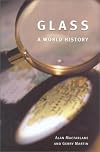
If you really think about it, without the invention of glass, civilization would be stuck in a technological rut. There would be no magnifying glass, no telescope, no spectacles, or no mirrors. We have no glass apparatus to conduct experiments nor any way to comfortably view the environment outside a building. Glass invades nearly every aspect of our lives. Even now, I am looking through a pair of corrective lenses at an image on a computer screen (two panes of glass). Alan McFarlane’s and show more Gerry Martin’s Glass is a historical and philosophical look at how the invention of glass shaped human history and how glass helped us view the world.
The authors break up glass inventions into five loose categories: mirrors, panes, prisms, beads, and vessels. Each of these types of glass works are traced through history and they even incorporate many, many examples of non-Western glass technologies. This is where a lot of scientific histories fail. Rather than confine the history of scientific experimentation to a linear progression from the Greeks to the Dark Ages to the Renaissance to the Industrial Revolution, McFarlane and Martin attempt to piece together the fragmented history from around the world. Their exploration leads to interesting questions about the nature of science, invention, and philosophy. To talk about glass, you must first discuss the science of glass, and then the science of science.
The authors’ attempt to leave no stone unturned is refreshing and that makes this “object biography” better than some others I’ve read before. The writing moves along at a steady clip and they don’t get too bogged down in any one particular area. If you’re a science history person, than this one would make a great addition to your library. The nuance given here to the history of glass and the nature of human curiosity is stunning. A quick but illuminating read. show less
The authors break up glass inventions into five loose categories: mirrors, panes, prisms, beads, and vessels. Each of these types of glass works are traced through history and they even incorporate many, many examples of non-Western glass technologies. This is where a lot of scientific histories fail. Rather than confine the history of scientific experimentation to a linear progression from the Greeks to the Dark Ages to the Renaissance to the Industrial Revolution, McFarlane and Martin attempt to piece together the fragmented history from around the world. Their exploration leads to interesting questions about the nature of science, invention, and philosophy. To talk about glass, you must first discuss the science of glass, and then the science of science.
The authors’ attempt to leave no stone unturned is refreshing and that makes this “object biography” better than some others I’ve read before. The writing moves along at a steady clip and they don’t get too bogged down in any one particular area. If you’re a science history person, than this one would make a great addition to your library. The nuance given here to the history of glass and the nature of human curiosity is stunning. A quick but illuminating read. show less
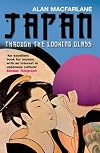
An average read that didn't manage to enlighten me on Japan in any way. Everything seemed to go in circles and only touch on the surface of many issues with constant comparisons to Britain for some reason. Alan Booth's travel books are a far better way for readers to acquaint themselves with this fascinating country.
Lists
Awards

You May Also Like


Associated Authors
Statistics
- Works
- 55
- Also by
- 5
- Members
- 1,040
- Popularity
- #24,754
- Rating
- 3.6
- Reviews
- 15
- ISBNs
- 123
- Languages
- 12
- Favorited
- 1