
Thomas DiLorenzo
Author of The Real Lincoln: a New Look at Abraham Lincoln, His Agenda, and an Unnecessary War
About the Author
Thomas J. DiLorenzo is the author of The Real Lincoln, How Capitalism Saved America, and Lincoln Unmasked.
Image credit: Ludwig von Mises Institute, mises.org
Works by Thomas DiLorenzo
The Real Lincoln: a New Look at Abraham Lincoln, His Agenda, and an Unnecessary War (2002) 588 copies, 8 reviews
How Capitalism Saved America: The Untold History of Our Country, from the Pilgrims to the Present (2004) 279 copies, 5 reviews
Hamilton's Curse: How Jefferson's Arch Enemy Betrayed the American Revolution--and What It Means for Americans Today (2008) 182 copies, 2 reviews
U.S. Employment Policy 1 copy
Tagged
Common Knowledge
- Other names
- DiLorenzo, Thomas James
- Birthdate
- 1954-08-08
- Gender
- male
- Education
- Virginia Polytechnic Institute and State University (PhD ∙ Economics)
- Occupations
- economist
teacher - Organizations
- Loyola College
Mises Institute
Abbeville Institute - Nationality
- USA
- Associated Place (for map)
- USA
Members
Reviews
The Real Lincoln: A New Look at Abraham Lincoln, His Agenda, and an Unnecessary War by Thomas DiLorenzo
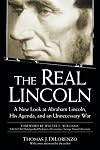
I bought this used so that the author would not get a dime from me. Obviously written by a southern right-winger, this book is a joke. I see that lots of readers have rated this a '5'... they must all be the author's sock puppets. DiLorenzo creates so many straw men that he could furnish the entire midwest with scarecrows for the next 100 years. He continuously writes about how 'Lincoln started the war', and how Lincoln 'cleverly got the south the fire the first shot'.
DiLorenzo seems to show more conveniently forget LOTS of facts. He mentions Lincoln's letter to Greeley (where Lincoln states that to save the Union he would free all the slaves, none of the slaves, or free some and not others) and suggests that the Emancipation Proclamation was written after that letter. In fact, the letter was written *after* he wrote the Proclamation.
Worst of all, DiLorenzo seems to claim that Lincoln intended for the Emancipation Proclamation to instigate a slave revolt that would result in the slaughter of all the women tending the farms while their husbands were away at war. The exact opposite was true. Lincoln even put in the proclamation his hope that the freed slaves would remain law-abiding. DiLorenzo just can't seem to come up with ANY OTHER alternative explanation for why Lincoln would issue the proclamation other than that the slaves would revolt. Hmmmm. Perhaps if the slaves were no longer tending the farms then the soldiers would HAVE TO STOP FIGHTING AND GO HOME?? Ya think? That, indeed, was Lincoln's basic thinking behind the proclamation... free the slaves where they were essentially helping the Confederacy, thereby forcing young southern white men to do anything but be soldiers. That is why the proclamation was a *military necessity*.
And where does DiLorenzo get off saying that Lincoln was a dictator? Geez, Jeff Davis wielded FAR MORE dictatorial powers than Lincoln ever dreamed of. I guess that was ok.
The most amazing thing about the book is that the author seems to think that the central government should not have any power at all. States Rights and all that. I guess he doesn't like all those interstates, bridges, etc that facilitate capitalism that the author likes so much. Guess he doesn't like the military that protects this country. What an idiot.
DiLorenzo also seems to think that the Civil War wasn't about slavery. Something to do with 'states rights'. Anyone who seriously proposes that the Civil War had nothing to do with slavery does not deserve to be taken seriously themselves. While many *northerners* undoubtedly did not fight for slavery, the *south* most assuredly was fighting to retain slavery. The words 'states rights' and 'slavery' are essentially interchangeable. In 1860, 'states rights' were meaningless unless they included the right to keep slaves.
Another gripe I have is his seeming indifference to slavery. "It would have died out anyway." Shorter DiLorenzo to the slaves: "sorry about your luck". He states many times that Lincoln never tried to pay off the slave owners to avoid a costly war (that the south started). Well, dude, Lincoln DID try that (starting with Delaware), and they said 'nope... we'll keep our slaves thank you very much'.
Well, I could go on and on... The author clearly has an agenda, and that is to smear Lincoln. The facts be damned. This book is actually worth reading... if only to get a glimpse into the mind of someone who knows nothing about Lincoln, yet writes a book about him. This book reminds me greatly of a book about evolution written by Jehova's Witnesses that I bought many years ago: there was a lie, distortion or misleading statement on every single page. This book is pure garbage. show less
DiLorenzo seems to show more conveniently forget LOTS of facts. He mentions Lincoln's letter to Greeley (where Lincoln states that to save the Union he would free all the slaves, none of the slaves, or free some and not others) and suggests that the Emancipation Proclamation was written after that letter. In fact, the letter was written *after* he wrote the Proclamation.
Worst of all, DiLorenzo seems to claim that Lincoln intended for the Emancipation Proclamation to instigate a slave revolt that would result in the slaughter of all the women tending the farms while their husbands were away at war. The exact opposite was true. Lincoln even put in the proclamation his hope that the freed slaves would remain law-abiding. DiLorenzo just can't seem to come up with ANY OTHER alternative explanation for why Lincoln would issue the proclamation other than that the slaves would revolt. Hmmmm. Perhaps if the slaves were no longer tending the farms then the soldiers would HAVE TO STOP FIGHTING AND GO HOME?? Ya think? That, indeed, was Lincoln's basic thinking behind the proclamation... free the slaves where they were essentially helping the Confederacy, thereby forcing young southern white men to do anything but be soldiers. That is why the proclamation was a *military necessity*.
And where does DiLorenzo get off saying that Lincoln was a dictator? Geez, Jeff Davis wielded FAR MORE dictatorial powers than Lincoln ever dreamed of. I guess that was ok.
The most amazing thing about the book is that the author seems to think that the central government should not have any power at all. States Rights and all that. I guess he doesn't like all those interstates, bridges, etc that facilitate capitalism that the author likes so much. Guess he doesn't like the military that protects this country. What an idiot.
DiLorenzo also seems to think that the Civil War wasn't about slavery. Something to do with 'states rights'. Anyone who seriously proposes that the Civil War had nothing to do with slavery does not deserve to be taken seriously themselves. While many *northerners* undoubtedly did not fight for slavery, the *south* most assuredly was fighting to retain slavery. The words 'states rights' and 'slavery' are essentially interchangeable. In 1860, 'states rights' were meaningless unless they included the right to keep slaves.
Another gripe I have is his seeming indifference to slavery. "It would have died out anyway." Shorter DiLorenzo to the slaves: "sorry about your luck". He states many times that Lincoln never tried to pay off the slave owners to avoid a costly war (that the south started). Well, dude, Lincoln DID try that (starting with Delaware), and they said 'nope... we'll keep our slaves thank you very much'.
Well, I could go on and on... The author clearly has an agenda, and that is to smear Lincoln. The facts be damned. This book is actually worth reading... if only to get a glimpse into the mind of someone who knows nothing about Lincoln, yet writes a book about him. This book reminds me greatly of a book about evolution written by Jehova's Witnesses that I bought many years ago: there was a lie, distortion or misleading statement on every single page. This book is pure garbage. show less
How Capitalism Saved America: The Untold History of Our Country, from the Pilgrims to the Present by Thomas DiLorenzo
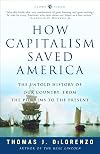
This is an exceptional book. In an episode of kismet, I purchased this book for no other reason than to just read and learn history; I made no coordinated effort to compliment my learning as I began an introductory macroeconomics course. However, not only does this book layout a comprehensive history of capitalism, complimented by some in-depth arguments against government intervention, How Capitalism Saved America dovetails nicely with the terminology and concepts I am learning. Despite my show more current familiarization with economic theory, one need not be versed in the jargon or advanced practice; this is clearly written to enlighten those at every level of understanding.
Thomas DiLorenzo provides measured and logical arguments against Marxist ideals and anticapitalist's relentless battle against capitalism: the economic model which made America a great nation. There is no doubt left wing call for regulations and intervention by the government are attempts to destroy America's history of free-market individualism and responsibility. What might surprise some readers would be Mr. DiLorenzo's bi-partisanship. Most of the examples he provides as examples of (federal) governmental intervention were often done under administrations of Republicans. Buzz phrases like "leveling the playing field" or "fair competition" should cause alarm in the average citizen or market leading competitor alike. There is a grain of truth to the Left's lamentation of government being for the "big guy," but the outcome usually harms the little guy worse than the perceived "price gouging" or "unfair business practices" they plead the government to regulate!
Perception is everything, and nothing is more pervasive in unintended consequences (or these ill effects may be quite intended). The prevailing perception is that capitalism is ruining our government when there has not been a purely capitalistic market since shortly after our nation's founding. Each "boom" has led to the claims of victimization by "big business;" likewise, each "bust" has garnered the same accusation. In either case more regulation is the typical outcome which only further upsets a free-market and creates worsening problems which are blamed on capitalism.
From federal and state subsidization of roads and canals in the dawn of the 19th century to breaking up so-called "monopolies" (despite market leaders like Standard Oil which had hundreds of competitors bringing down market prices through innovation and efficiency) in the 20th century to present day "milker bills" which urge corporations to hire lobbyists, America has not had a free system of trade based on human nature. Mr DiLorenzo shows the folly of President Hoover's interventions (which President Obama is re-employing to the same effect) and how they brought about the Great Depression. He also compares President Roosevelt's mirror image programs to Mussolini's economic fascism. Think this is revisionist history? Well, Roosevelt's economic adviser wrote a laudatory letter of Mussolini as a preface to a book.
In short, the less capitalism, via overbearing regulations, price controls, stifling competition via government actions, the more it is blamed for unintended consequences (which are either ignored or altogether no predicted) which further harm our economy. As we loose the ability to exercise personal responsibilities, normal market equilibrium mechanisms are thwarted, and contract law and private property rights are weakened to punish successful business, we drift farther away from capitalism to a centralized economy which preformed so well for countries behind the Iron Curtain (ironically, countries environmentalists and human rights advocates elevate above the wretched United States but actually "raped" the land for resources and victimized its citizens in order to create a human free of desires which Adam Smith described in his Invisible Hand theory). show less
Thomas DiLorenzo provides measured and logical arguments against Marxist ideals and anticapitalist's relentless battle against capitalism: the economic model which made America a great nation. There is no doubt left wing call for regulations and intervention by the government are attempts to destroy America's history of free-market individualism and responsibility. What might surprise some readers would be Mr. DiLorenzo's bi-partisanship. Most of the examples he provides as examples of (federal) governmental intervention were often done under administrations of Republicans. Buzz phrases like "leveling the playing field" or "fair competition" should cause alarm in the average citizen or market leading competitor alike. There is a grain of truth to the Left's lamentation of government being for the "big guy," but the outcome usually harms the little guy worse than the perceived "price gouging" or "unfair business practices" they plead the government to regulate!
Perception is everything, and nothing is more pervasive in unintended consequences (or these ill effects may be quite intended). The prevailing perception is that capitalism is ruining our government when there has not been a purely capitalistic market since shortly after our nation's founding. Each "boom" has led to the claims of victimization by "big business;" likewise, each "bust" has garnered the same accusation. In either case more regulation is the typical outcome which only further upsets a free-market and creates worsening problems which are blamed on capitalism.
From federal and state subsidization of roads and canals in the dawn of the 19th century to breaking up so-called "monopolies" (despite market leaders like Standard Oil which had hundreds of competitors bringing down market prices through innovation and efficiency) in the 20th century to present day "milker bills" which urge corporations to hire lobbyists, America has not had a free system of trade based on human nature. Mr DiLorenzo shows the folly of President Hoover's interventions (which President Obama is re-employing to the same effect) and how they brought about the Great Depression. He also compares President Roosevelt's mirror image programs to Mussolini's economic fascism. Think this is revisionist history? Well, Roosevelt's economic adviser wrote a laudatory letter of Mussolini as a preface to a book.
In short, the less capitalism, via overbearing regulations, price controls, stifling competition via government actions, the more it is blamed for unintended consequences (which are either ignored or altogether no predicted) which further harm our economy. As we loose the ability to exercise personal responsibilities, normal market equilibrium mechanisms are thwarted, and contract law and private property rights are weakened to punish successful business, we drift farther away from capitalism to a centralized economy which preformed so well for countries behind the Iron Curtain (ironically, countries environmentalists and human rights advocates elevate above the wretched United States but actually "raped" the land for resources and victimized its citizens in order to create a human free of desires which Adam Smith described in his Invisible Hand theory). show less
The Real Lincoln: A New Look at Abraham Lincoln, His Agenda, and an Unnecessary War by Thomas DiLorenzo
Around 15 years ago, I read The Real Lincoln book without knowing anything about the author; and at the time I accepted its contents at face value. In the ensuing years, as I think of the book periodically, I've grown annoyed at the author's blatant bias and political agenda and his lack of candor about it, and have avoided reading any other works by the author. This crude polemic, for better nor worse, was the first push toward my mature skepticism of Lincoln--not since childhood have I show more been naive enough to uncritically accept the whitewashed depiction given in the kiddie books. But I know this twerp simply writes from another extreme; if their side is the cult of Lincoln, his side is the cult of libertarian partisans of the South.
My kingdom for an evenhanded, relatively unbiased analysis of Lincoln, the Whig Party (which Lincoln belonged to for most of his career before the Whigs broke up and he joined their successor, the Republicans), Lincoln's prosecution of the war, and the political results. show less
My kingdom for an evenhanded, relatively unbiased analysis of Lincoln, the Whig Party (which Lincoln belonged to for most of his career before the Whigs broke up and he joined their successor, the Republicans), Lincoln's prosecution of the war, and the political results. show less
The Real Lincoln: A New Look at Abraham Lincoln, His Agenda, and an Unnecessary War by Thomas DiLorenzo
Excellent, well-documented, thorough treatment of a very unpopular subject - the destruction by Abraham Lincoln of America as a federal republic. The author goes about a hundred pages too far, sometimes less is more, but nevertheless the evidence exists everywhere you look today.
Probably the sum total of the book can be summed up by a quote that appears on page 278, attributed to abolitionist Lysander Spooner,
All these cries of having "abolished slavery," of having "saved the country," of show more having "preserved the union," of establishing a "government of consent," and of "maintaining the national honor" are all gross, shameless, transparent cheats - so transparent that they ought to deceive no one. show less
Probably the sum total of the book can be summed up by a quote that appears on page 278, attributed to abolitionist Lysander Spooner,
All these cries of having "abolished slavery," of having "saved the country," of show more having "preserved the union," of establishing a "government of consent," and of "maintaining the national honor" are all gross, shameless, transparent cheats - so transparent that they ought to deceive no one. show less
You May Also Like


Statistics
- Works
- 16
- Members
- 1,423
- Popularity
- #18,081
- Rating
- 4.0
- Reviews
- 16
- ISBNs
- 43
- Languages
- 1
- Favorited
- 7