
Nigel Warburton
Author of A Little History of Philosophy
About the Author
Nigel Warburton is Senior Lecturer at the Open University
Image credit: The Open University
Series
Works by Nigel Warburton
مختصر تاريخ الفلسفة 1 copy
Practical ethics bites [podcast] — Producer; Interviewer — 1 copy
Associated Works
Tagged
Common Knowledge
- Birthdate
- 1962
- Gender
- male
- Education
- University of Bristol (BA)
Darwin College, University of Cambridge (PhD) - Occupations
- lecturer
author - Nationality
- UK
- Associated Place (for map)
- UK
Members
Reviews
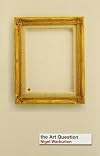
Contemporary British philosopher Nigel Warburton, host of the podcast series “Philosophy Bites” asks us to consider if the live peacock Belgian artist Francis Alÿs recently sent to the Venice Biennale to be entered as a work of art is, in fact, a true work of art. Curiously, this is the same question my philosophy instructor asked our class nearly fifty years ago when he showed us a slide of Alpha-Pi by Morris Lewis, a white canvas with wavy lines of color painted on the bottom left and show more bottom right. In other words, different work, same question.
In an attempt to address this question, “What is art?” Warburton has written his engaging little book, approaching this philosophic conundrum from four specific theoretical angles: 1) Clive Bell’s significant form, that is, the work’s line, shape and color possessing the power to produce an aesthetic emotion in the viewer, 2) R.G.Collingwood’s theory of emotional expression and clarity of feeling needed in the process of artistic creation, 3) Ludwig Wittgenstein’s focus on the concept of ‘family resemblance’ along with an overview of the nature of language, 4) the ‘Institutional Theory’ developed by George Dickie, shifting attention from the work itself to the context of how the work is exhibited by museums and galleries and how it is appreciated by an audience. As by way of a wrap-up, in the fifth and final section of his little book, Nigel himself steps forward to share his views on the art question. I wouldn’t want to restate the various facets of his position but let me mention one thing he does say: we should move away from general rules and hone our attention back to the individual works themselves.
After reading Nigel’s book and giving the art question some reflection, I’d like to share a few of my own thoughts. This art question revolves around the visual arts, particularly painting and sculpture. The other arts, such as theater, dance and music do not face this question in quite the same way. Why is that? I suspect it has to do with recognized quality of performers and performances, for example, when we see or listen to the best of the best – Royal Shakespeare Company, Imperial Russian Ballet, Philadelphia Orchestra, Cirque de Soleil, Pilobolus Dance -- we know we are in the presence of great art.
So, in my modest view, this is what the visual arts needs in our brave new 21st century world: a breakthrough, that is, an artist or artists creating great art, so great, similar to the above examples of theater, dance and music there would be no question as to its greatness. Of course, I don’t have a clue respecting the form such breakthrough art would take, nor do I think such art would sufficiently answer the question ‘What is art’ but by such a breakthrough I strongly suspect the public perception of the visual arts would be enormously enhanced.
Anyway, back on the book. Here is a passage I find especially probing, “What you know and believe affects what you see. Your expectations and knowledge don’t just help you to understand and interpret what you see, they in part help you to construct and categorize what you see.” The example offered is Van Gogh’s painting of crows flying over a cornfield. We look at the painting a first time. Then we are told this is the last painting Van Gogh painted before killing himself. We take a second look. All of a sudden the crows appear ominous and threatening.
I think this examples underscores how art can be a transforming experience – the more we open ourselves to multiple viewings, open ourselves to such things as exploring the cultural and historical context of a work along with the artist’s development, the more we can grow in our understanding of that specific art form and also grow in our overall artistic sensitivity and aesthetic delicacy of taste. Am I overdoing it with all the sensitivity and delicacy? Reading Nigel Warburton’s little book will undoubtedly help you formulate an opinion. Highly recommended. show less
While this is certainly useful as an introduction to philosophy, for me it only served to confirm my view (based on other reading of philosophy texts) that while learning about philosophy may be, as some claim, a way to learn how to think critically, it's generally a waste of time and effort. The fact that Warburton starts with 'God', focusing on efforts to prove that God, a god, or any gods do or do not exist, illustrates this waste. Philosophers have been going at this question for fifteen show more hundred years and may perhaps persist for another fifteen hundred, regardless of the fairly obvious fact that such a thing is not - almost by definition - open to proof either way.
Ditto "the problem of evil", also not open to resolution. And so on.
In each of his chapters, Warburton presents a selection of different philosophical approaches to a topic and, for each approach, sets out a number of 'criticisms' (by philosophers) outlining ways in which each approach can be shown to be an insufficient route to any conclusion. Each chapter ends with a 'Conclusion', but only a conclusion to the chapter, not in any way a resolution of the question discussed. An example: "As in all areas of philosophy there is no guarantee that clear argument will provide convincing answers to the difficult questions, but it does improve the chances of this happening." On all the evidence, such a chance is diminishingly small.
Seems to me that philosophy is simply a debating society - lots of fun for the participants, very little value outside the debate. Nothing wrong with debating societies of course, but why are my taxes used to pay teachers and professors and students to enjoy these debates? The evidence from the UK parliament and government is that reading 'PPE' (Philosophy, Politics and Economics) leaves the graduate unable to make sound decisions but makes sure their PPE graduate friends will help them to join the decision-making process . . . . show less
Ditto "the problem of evil", also not open to resolution. And so on.
In each of his chapters, Warburton presents a selection of different philosophical approaches to a topic and, for each approach, sets out a number of 'criticisms' (by philosophers) outlining ways in which each approach can be shown to be an insufficient route to any conclusion. Each chapter ends with a 'Conclusion', but only a conclusion to the chapter, not in any way a resolution of the question discussed. An example: "As in all areas of philosophy there is no guarantee that clear argument will provide convincing answers to the difficult questions, but it does improve the chances of this happening." On all the evidence, such a chance is diminishingly small.
Seems to me that philosophy is simply a debating society - lots of fun for the participants, very little value outside the debate. Nothing wrong with debating societies of course, but why are my taxes used to pay teachers and professors and students to enjoy these debates? The evidence from the UK parliament and government is that reading 'PPE' (Philosophy, Politics and Economics) leaves the graduate unable to make sound decisions but makes sure their PPE graduate friends will help them to join the decision-making process . . . . show less
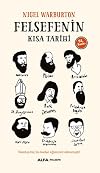
Felsefenin Kısa Tarihi'ni okudum. Uzun zamandır felsefe üzerine yoğunlaşmak istiyordum ama felsefenin genel hatlarını bilmediğim için sürekli erteliyordum. Bu kitapla birlikte önemli felsefecilerin çoğunu ve bu felsefecilerin çalışmalarını genel hatlarıyla öğrendim. Kitaplarını okumak istediğim filozofları da belirlemiş oldum.
Felsefeye başlamak için güzel bir kitap olduğunu düşünüyorum. Kitabın adından dolayı çekinen varsa çekinmesine gerek yok show more kesinlikle sıkıcı bir kitap değil. Yazarın üslubu güzel ve güncel örnekler de vererek anlamamızı kolaylaştırıyor. show less
Felsefeye başlamak için güzel bir kitap olduğunu düşünüyorum. Kitabın adından dolayı çekinen varsa çekinmesine gerek yok show more kesinlikle sıkıcı bir kitap değil. Yazarın üslubu güzel ve güncel örnekler de vererek anlamamızı kolaylaştırıyor. show less
I’m a sucker for introductory books on philosophy, maybe in part because there are various approaches (historical, topical, etc.) and many fine minds with widely different views who’ve taken a variety of approaches to the basic formula chosen. This one’s pretty good. It gives synopses of the major ideas in two dozen books the author considers short-listers (covered in chronological order), with major counter-arguments. If anything it’s too concise, but the author knows his material show more and presents it very capably. A fault, in my view (though a very common one), is that he skips from late antiquity to Descartes (or Machiavelli in this case). It also seems a bit odd that he skips Hegel. On the other hand, about a third is given to the last 150 years, including Rawls, and the author’s convincing that this emphasis is warranted. show less
Lists
Awards

You May Also Like


Associated Authors
Statistics
- Works
- 30
- Also by
- 1
- Members
- 3,076
- Popularity
- #8,302
- Rating
- 3.8
- Reviews
- 47
- ISBNs
- 165
- Languages
- 17
- Favorited
- 1