
Anthony Gottlieb
Author of The Dream of Reason: A History of Philosophy from the Greeks to the Renaissance
About the Author
Anthony Gottlieb is the executive editor of The Economics and writes regularly for the New York times Book Review. (Bowker Author Biography)
Works by Anthony Gottlieb
The Dream of Reason: A History of Philosophy from the Greeks to the Renaissance (2000) 956 copies, 8 reviews
Associated Works
Tagged
Common Knowledge
Members
Reviews
The Dream of Reason – A History of Western Philosophy from the Greeks to the Renaissance by Anthony Gottlieb
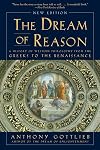
The Dream of Reason takes a human, popular view at philosophy from the ancient Greeks forward to the Renaissance, treating this conversation as one of wise, fallible, and occasionally funny humans through the ages. These were people grappling with Big Questions, namely what is the universe made of, how did it come to be, and how do people lead meaningful lives, and while their answers do not match modern understandings, they are foundational. For someone with a fairly weak background in show more philosophy, especially the older stuff, it's a good supplement to a missed classical education.
The first few chapters, on the pre-Socratics, are necessarily weaker, given that the surviving works of these authors is measured in a few hundred lines, and sometimes even a handful of direct words and a maze of quotations and commentaries. The book fully arrives with Socrates, who's method of systematic questioning set the form for much of what follows. Plato and Aristotle get detailed overviews as well, with their foundational works on ethics, metaphysics, as well as more practical topics like logic and biology.
What follows after the big three is less good. Gottlieb has less sympathy for the efforts of the stoics, epicureans, and skeptics to flesh out frameworks in the wake of Aristotle. Medieval theology, and the effort to synthesize non-heretical Christian theology with neoplatonist mysticism is mostly a dead end. One thing which I learned was that the scientific reaction against Aristotle was more rhetoric than reality. Aristotle couldn't have been the stifling authority on Western learning during the Middle Ages, because he was almost lost entirely, only being preserved by Arab philosophers (a sadly absent chapter). The abstruse commentary style of the scholastics has little in common with Aristotle, who can be tedious, but is generally a model of clarity. While Aristotle's physics lack the tools of quantified measurement which make modern physics work, he was a dedicated empiricist.
Fun and informative, and not exactly unbiased, The Dream of Reason is a solid introduction and overview. show less
The first few chapters, on the pre-Socratics, are necessarily weaker, given that the surviving works of these authors is measured in a few hundred lines, and sometimes even a handful of direct words and a maze of quotations and commentaries. The book fully arrives with Socrates, who's method of systematic questioning set the form for much of what follows. Plato and Aristotle get detailed overviews as well, with their foundational works on ethics, metaphysics, as well as more practical topics like logic and biology.
What follows after the big three is less good. Gottlieb has less sympathy for the efforts of the stoics, epicureans, and skeptics to flesh out frameworks in the wake of Aristotle. Medieval theology, and the effort to synthesize non-heretical Christian theology with neoplatonist mysticism is mostly a dead end. One thing which I learned was that the scientific reaction against Aristotle was more rhetoric than reality. Aristotle couldn't have been the stifling authority on Western learning during the Middle Ages, because he was almost lost entirely, only being preserved by Arab philosophers (a sadly absent chapter). The abstruse commentary style of the scholastics has little in common with Aristotle, who can be tedious, but is generally a model of clarity. While Aristotle's physics lack the tools of quantified measurement which make modern physics work, he was a dedicated empiricist.
Fun and informative, and not exactly unbiased, The Dream of Reason is a solid introduction and overview. show less
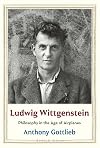
There is a small industry of Wittgenstein biographies, still led by Ray Monk’s The Duty of Genius. But there’s room for more, and I found Gottleib’s book interesting for several reasons.
One is his account of Wittgenstein’s family history. We knew of the family wealth but not as much about his father, Karl’s attachment to an “American” way of thinking about business and achievement. Karl wanted badly to pass along an industrious and entrepreneurial temperament to his sons. He show more particularly wanted to see his sons follow him into industry, manufacturing, and engineering. The “airplanes” in the book’s subtitle references Wittgenstein’s own interests in aeronautics (he received a patent for a unique propeller design). The fates and achievements of Karl’s sons and daughters tell a story of pressure, with tragedy and greatness spilling all around.
Gottlieb goes farther back as well to find Wittgenstein’s roots in Jewish European culture, with its headwinds and tailwinds. The book is itself part of a series of books on “Jewish Lives.”
Wittgenstein’s aristocratic background isn’t just a matter of financial power. The family was a social and cultural power, with artists and composers frequently visiting and providing influence at the “Palais Wittgenstein.”
An aristocratic personality isn’t necessarily a good thing for anybody. We knew of Wittgenstein’s own troubled and troubling personality. By many accounts he was just a hard person to be around. On his return to Cambridge after his long absence in Norway and Austria, John Maynard Keynes wrote to his wife, Lydia, “Pray for me.” What’s remarkable about this from Keynes is that it’s coming from a man we’d imagine to have an impregnable sense of confidence and self-worth, not easily harmed by the worst of difficult personalities. But Wittgenstein was on the very high end of the spectrum of difficult personalities, frequently referring to those around him as “muck” or “vile” or just plain “stupid.” It seems, by Gottlieb’s account to have been a family trait, or a family curse.
Wittgenstein’s relationships at Cambridge were always volatile. He so offended G.E. Moore that the two of them didn’t speak for fifteen years, despite at other times having a close intellectual relationship. He broke off his friendship with Bertrand Russell, although maintaining a purely intellectual relationship. Outbursts of disdain and disrespect were just part of the deal in relationships, although those over-developed facets of Wittgenstein’s persanality may have been exaggerated, by Gottlieb’s account, in his relationships with other intellectuals, while he could be downright playful in other circumstances.
Wittgenstein’s dismissive disdain for many around him was also directed back on himself. I suppose if you’re going to be insulting, you may as well include yourself for the sake of consistency. Gottlieb writes, “His charismatic gift was to be halting, self-deprecating, and imperious all at the same time.” Deprecating others can be superior but it doesn’t have to be.
Wittgenstein was also prone to developing “love” relationships, sometimes reciprocated and sometimes not. For the most part, these were with younger men within his intellectual circle, and some were long-lasting, as with David Pinset and with Ben Richards. Gottlieb also gives some accounting of Wittgenstein’s relationship with Marguerite Respinger (see Wittgenstein’s diaries from the period of that relationship, published as Movements of Thought, for Wittgensteisn’s own reflections).
Gottlieb’s book is not a philosophical critique of Wittgenstein’s work, but he does offer some provocative insights into Wittgenstein’s intellectual and philosophical development. It’s more intellectual biography than philosophy or pure biography, and his thoughts on that level are, I think, the strength of the book.
In particular, Gottlieb calls attention to a change in Wittgenstein’s philosophical perspective and temperament after his time teaching schoolchildren in Austria. The Tractatus, written before that time, is declarative and definite. Wittgenstein even regarded himself as having solved the major problems of philosophy with that one short, somewhat enigmatic book.
His writing after that (see the Philosophical Investigations) is questioning and experimental, even a bit humble on a philosophical level. And, perhaps owing to his experiences with the schoolchildren, as Gottlieb emphasizes, Wittgenstein now puts at the center of his thoughts about language and mathematics questions about how something, e.g., the meaning of a word, is learned (see, for example, the opening discussion of Augustine and how a language might be learned in the Investigations). His practice of examining language through “primitive language games” may also reflect a new regard for the simpler levels at which schoolchildren begin and at which they grow adept, as opposed to the more convoluted language games of philosophers.
One of the points that Gottlieb makes about the whole of Wittgenstein’s work is his quest, maybe obsession, with clarity. The Tractatus, even though enigmatic, strives for a simple clarity about the relationship between language and reality and about the limits of language. His later work, in the Investigations and also in the posthumously published notebooks, read from this perspective like an heroic attempt to clear the overgrowth and underbrush around language as a natural and primarily pragmatic activity, without pretension or complexity.
All biographies of Wittgenstein tend to have this quality of throwing new and different light on why he practiced philosophy in the way that he did, and how this philosophical activity bears a relationship with his own somewhat tortured inner life. This was a man who constantly thought about and examined himself, maybe trying to clear that same overgrowth and underbrush from his own character. show less
One is his account of Wittgenstein’s family history. We knew of the family wealth but not as much about his father, Karl’s attachment to an “American” way of thinking about business and achievement. Karl wanted badly to pass along an industrious and entrepreneurial temperament to his sons. He show more particularly wanted to see his sons follow him into industry, manufacturing, and engineering. The “airplanes” in the book’s subtitle references Wittgenstein’s own interests in aeronautics (he received a patent for a unique propeller design). The fates and achievements of Karl’s sons and daughters tell a story of pressure, with tragedy and greatness spilling all around.
Gottlieb goes farther back as well to find Wittgenstein’s roots in Jewish European culture, with its headwinds and tailwinds. The book is itself part of a series of books on “Jewish Lives.”
Wittgenstein’s aristocratic background isn’t just a matter of financial power. The family was a social and cultural power, with artists and composers frequently visiting and providing influence at the “Palais Wittgenstein.”
An aristocratic personality isn’t necessarily a good thing for anybody. We knew of Wittgenstein’s own troubled and troubling personality. By many accounts he was just a hard person to be around. On his return to Cambridge after his long absence in Norway and Austria, John Maynard Keynes wrote to his wife, Lydia, “Pray for me.” What’s remarkable about this from Keynes is that it’s coming from a man we’d imagine to have an impregnable sense of confidence and self-worth, not easily harmed by the worst of difficult personalities. But Wittgenstein was on the very high end of the spectrum of difficult personalities, frequently referring to those around him as “muck” or “vile” or just plain “stupid.” It seems, by Gottlieb’s account to have been a family trait, or a family curse.
Wittgenstein’s relationships at Cambridge were always volatile. He so offended G.E. Moore that the two of them didn’t speak for fifteen years, despite at other times having a close intellectual relationship. He broke off his friendship with Bertrand Russell, although maintaining a purely intellectual relationship. Outbursts of disdain and disrespect were just part of the deal in relationships, although those over-developed facets of Wittgenstein’s persanality may have been exaggerated, by Gottlieb’s account, in his relationships with other intellectuals, while he could be downright playful in other circumstances.
Wittgenstein’s dismissive disdain for many around him was also directed back on himself. I suppose if you’re going to be insulting, you may as well include yourself for the sake of consistency. Gottlieb writes, “His charismatic gift was to be halting, self-deprecating, and imperious all at the same time.” Deprecating others can be superior but it doesn’t have to be.
Wittgenstein was also prone to developing “love” relationships, sometimes reciprocated and sometimes not. For the most part, these were with younger men within his intellectual circle, and some were long-lasting, as with David Pinset and with Ben Richards. Gottlieb also gives some accounting of Wittgenstein’s relationship with Marguerite Respinger (see Wittgenstein’s diaries from the period of that relationship, published as Movements of Thought, for Wittgensteisn’s own reflections).
Gottlieb’s book is not a philosophical critique of Wittgenstein’s work, but he does offer some provocative insights into Wittgenstein’s intellectual and philosophical development. It’s more intellectual biography than philosophy or pure biography, and his thoughts on that level are, I think, the strength of the book.
In particular, Gottlieb calls attention to a change in Wittgenstein’s philosophical perspective and temperament after his time teaching schoolchildren in Austria. The Tractatus, written before that time, is declarative and definite. Wittgenstein even regarded himself as having solved the major problems of philosophy with that one short, somewhat enigmatic book.
His writing after that (see the Philosophical Investigations) is questioning and experimental, even a bit humble on a philosophical level. And, perhaps owing to his experiences with the schoolchildren, as Gottlieb emphasizes, Wittgenstein now puts at the center of his thoughts about language and mathematics questions about how something, e.g., the meaning of a word, is learned (see, for example, the opening discussion of Augustine and how a language might be learned in the Investigations). His practice of examining language through “primitive language games” may also reflect a new regard for the simpler levels at which schoolchildren begin and at which they grow adept, as opposed to the more convoluted language games of philosophers.
One of the points that Gottlieb makes about the whole of Wittgenstein’s work is his quest, maybe obsession, with clarity. The Tractatus, even though enigmatic, strives for a simple clarity about the relationship between language and reality and about the limits of language. His later work, in the Investigations and also in the posthumously published notebooks, read from this perspective like an heroic attempt to clear the overgrowth and underbrush around language as a natural and primarily pragmatic activity, without pretension or complexity.
All biographies of Wittgenstein tend to have this quality of throwing new and different light on why he practiced philosophy in the way that he did, and how this philosophical activity bears a relationship with his own somewhat tortured inner life. This was a man who constantly thought about and examined himself, maybe trying to clear that same overgrowth and underbrush from his own character. show less
The Dream of Reason, New Edition: A History of Western Philosophy from the Greeks to the Renaissance by Anthony Gottlieb
Heavy on the Greeks, light on the Renaissance and everything inbetween. The presocratics are given one big section, Socrates/Plato and Aristotle fight for a second and then everything else gets lumped into the third bit. If this is your first history of philosophy book this is probably fine. It's really giving the humanistic and scholastic tradition the short shrift however, and dips into the meme that everything that got preserved came from the arabic copies. Gottlieb is working from the show more (also frequently referenced) Bertrand Russell tradition of an opinionated history, focusing very much on the red thread of skepticism and naturalism that will "blossom" in a scientific revolution. There's a lot left on the cutting floor in that telling.
The Swerve: How the World Became Modern paints a much deeper picture of the rediscovery of ancient reading material and manuscript hunting.
The Reopening of the Western Mind: The Resurgence of Intellectual Life from the End of Antiquity to the Dawn of theEnlightenment goes over the traditions within Christianity keeping the ancient sources alive and finally blossoming in the renaissance. If you read half of Dream of Reason and then switch to this one I think you'll be well covered. show less
The Swerve: How the World Became Modern paints a much deeper picture of the rediscovery of ancient reading material and manuscript hunting.
The Reopening of the Western Mind: The Resurgence of Intellectual Life from the End of Antiquity to the Dawn of theEnlightenment goes over the traditions within Christianity keeping the ancient sources alive and finally blossoming in the renaissance. If you read half of Dream of Reason and then switch to this one I think you'll be well covered. show less
I will confess to having a degree in Philosophy, which, from a practical stand point, may seem kind of pointless. My father certainly thought so when I was in college. 'What are you going to do with that?' he would say. 'There's no jobs in it.' His degree was in accounting and he worked as an auditor. He knew about money. And because he did, I didn't feel I needed to. That was back when I was young and not especially aware of the need to actually earn an income of my own some day. My show more insufferable reply was usually something like, 'I'm going to college for an education, not for job training.' Yeah, great comeback. Very philosophical, but try paying the rent with it!
Admittedly, a degree in Philosophy isn't for everyone, but we all have a philosophy, at least as it's broadly defined. We each have a particular way of looking at the world, complete with reasons (or at least rationalizations) of why we see it this way. Our personal philosophies form the foundations of everything we think and do. They color our perceptions and shape our actions. In this respect, our philosophies are pretty important, so sparing a thought or two for them is probably worthwhile.
In this book, Gottlieb takes us back to some of the earliest recorded reflections on ways of seeing the world, from ideas about what it 'really' is, to how people should live in it. I don't recall ever reading a better summation of the main points of the most prominent thinkers: from ancient Greece (where all sorts of ideas, both wild and insightful were espoused and criticized) to the Renaissance (when rationalization tended to dominate over rationality). He also clears up a few common misconceptions about some philosophers. I, personally, gained a greater appreciation for Aristotle from this book. Like many, I tended to view his philosophy as one of the things impeding progress in the Middle Ages. But it wasn't the fault of Aristotle or Ptolemy or Galen that their works were regarded as something close to sacred long after their deaths, and they probably would not have approved to learn that they were.
The Dream of Reason is a great read. It's concise, informative, even entertaining. Gottlieb achieves the latter through clear prose and by providing just a bit of analysis from a modern perspective, which puts the ideas he's explaining in context and shows their progression over time. If you're a student of philosophy or just someone with a mild interest, you should read this. show less
Admittedly, a degree in Philosophy isn't for everyone, but we all have a philosophy, at least as it's broadly defined. We each have a particular way of looking at the world, complete with reasons (or at least rationalizations) of why we see it this way. Our personal philosophies form the foundations of everything we think and do. They color our perceptions and shape our actions. In this respect, our philosophies are pretty important, so sparing a thought or two for them is probably worthwhile.
In this book, Gottlieb takes us back to some of the earliest recorded reflections on ways of seeing the world, from ideas about what it 'really' is, to how people should live in it. I don't recall ever reading a better summation of the main points of the most prominent thinkers: from ancient Greece (where all sorts of ideas, both wild and insightful were espoused and criticized) to the Renaissance (when rationalization tended to dominate over rationality). He also clears up a few common misconceptions about some philosophers. I, personally, gained a greater appreciation for Aristotle from this book. Like many, I tended to view his philosophy as one of the things impeding progress in the Middle Ages. But it wasn't the fault of Aristotle or Ptolemy or Galen that their works were regarded as something close to sacred long after their deaths, and they probably would not have approved to learn that they were.
The Dream of Reason is a great read. It's concise, informative, even entertaining. Gottlieb achieves the latter through clear prose and by providing just a bit of analysis from a modern perspective, which puts the ideas he's explaining in context and shows their progression over time. If you're a student of philosophy or just someone with a mild interest, you should read this. show less
Lists
Awards


You May Also Like


Statistics
- Works
- 10
- Also by
- 1
- Members
- 1,510
- Popularity
- #17,027
- Rating
- 4.0
- Reviews
- 17
- ISBNs
- 62
- Languages
- 11