

Matthew Stewart (1) (1963–)
Author of The Courtier and the Heretic: Leibniz, Spinoza, and the Fate of God in the Modern World
For other authors named Matthew Stewart, see the disambiguation page.
About the Author
Matthew Stewart is the author of The Courtier and the Heretic: Leibniz, Spinoza, and the Fate of God in the Modern World and The Management Myth: Debunking the Modern Philosophy of Business.
Works by Matthew Stewart
The Courtier and the Heretic: Leibniz, Spinoza, and the Fate of God in the Modern World (2006) 862 copies, 22 reviews
The 9.9 Percent: The New Aristocracy That Is Entrenching Inequality and Warping Our Culture (2021) — Author — 64 copies
An Emancipation of the Mind: Radical Philosophy, the War over Slavery, and the Refounding of America (2024) 63 copies
Tagged
Common Knowledge
- Canonical name
- Stewart, Matthew
- Birthdate
- 1963-01-02
- Gender
- male
- Education
- Princeton University (BA|1985)
University of Oxford (D.Phil|Philosophy|1988) - Occupations
- management consultant
philosopher - Nationality
- USA
- Birthplace
- Honolulu, Hawaii, USA
- Places of residence
- New York, New York, USA
Santa Barbara, California, USA
Washington, D.C., USA
Virginia, USA
Barcelona, Spain
Boston, Massachusetts, USA - Associated Place (for map)
- USA
Members
Reviews
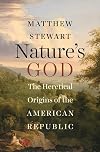
Summary: An argument that the key ideas at the foundations of our country were not Christian but rather traceable back to Lucretius and to European thinkers, the foremost of whom was Spinoza, whose ideas were shaped by Enlightenment reason resulting more in a materialist atheism or nature pantheism/deism.
There is an ongoing argument surrounding American beginnings as to whether these were Christian or more attributable to a kind of vague deism. While I as a Christian would love to believe it show more was the former, when I read the writings of Adams, Jefferson, Franklin and other founders, I find that while they recognize the place and importance of Christian churches, they are not Christian in any orthodox sense in the personal beliefs that shaped the thinking behind our Declaration of Independence and our Constitution (which omits even the mention of "God").
Matthew Stewart explores the intellectual genealogy of the founders, but does so in an unusual fashion. He starts out with a book, The Oracles of Reason, written by Ethan Allen, of Green Mountain Boys and Fort Ticonderoga fame. This inelegantly written book conveys Allen's repugnance of the idea of the Christian deity, argues for a god of nature, the place of reason ("self evident truths") and a state free of control by the church. Where did Allen get these ideas, as an uneducated man? From Dr. Thomas Young, who exists around the edges of the more famous founders. Stewart will weave these two characters throughout the narrative.
What I think Stewart is trying to demonstrate is how widely held these ideas, often classed under deism, but in fact were closer to pantheism ("all is god") or even outright atheism. He then follows back the lineage of these ideas to Lucretius, and Epicurean philosophy, which rather than being hedonistic, actually talked about the idea of living well, or moderately. Stewart follows these ideas into Europe to Benedict de Spinoza, Hobbes, and John Locke, who may clothe them at times in Christian language, but actually lays the groundwork for a view of reality that is sees God and Nature as synonymous (hence making this either pantheism, or outright atheism if nature is viewed simply as matter). Truth is "self-evident" in that what we think has an existence of its own that precedes all else. As with Lucretius, the pursuit of happiness is not wild pleasure-seeking but virtuous living. This leads to an "empire of reason," a rational rule of law that recognizes the equality of all, unalienable rights, government by the consent of the governed, the right to abolish governments that do not serve these ends and to institute new ones.
The concluding chapter is titled "The Religion of Freedom". It explores the fact that the founders, while protecting the free exercise of religious faith, believing that popular religion served a certain good in inculcating morals necessary for a good society, ultimately envisioned a government free of religion's control, where the individual could believe what he or she wants without constraint. Stewart argues that many of the founders were free-thinkers who might be classified as atheists today. And while religion went through a resurgence, and continues to play an important role, by and large it conforms to liberal ideals and only causes problems when it is not content to exist in a very privatized form.
One gets the sense in reading Stewart that he thinks that this is not only the truest account of the genealogy of ideas that formed our beginnings as a nation, but that this is as it ought to be, and that the continued existence of religion is an annoying hindrance. He writes,
"The main thing we learn now from the persistence in modern America of supernatural religion and the reactionary nationalism with which it is so regularly accompanied is that there is still work to be done. For too long we have relied on silence to speak a certain truth. The noise tells us the time has come for some candor. It points to a piece of unfinished business of the American Revolution" (p. 431).
What bothers me in Stewart's work is not the accuracy of the case he makes for the ideas that undergird our republic, but rather the selective treatment of Christian faith that presents a caricature featuring its most invidious expressions. Little attention, for example, is given to the educational enterprise, an extension of the churches, that brought together such a learned generation. No attention is given to another founder, Reverend John Witherspoon, President of the College of New Jersey (later Princeton), who thoughtfully sought to integrate Christian ethics and enlightenment thought, serving in the Continental Congress from 1776 to 1782. It seems to me that Stewart's intent is to marshal his evidence, as have some of our popular militant atheists, to make us want to eradicate "supernatural religion" (and one wonders if this also includes those who embrace it).
Likewise, for all it vaunting of reason and virtue, the tacit admission of the power of religious faith to foster morals, and public order suggests a certain weakness in this "empire of reason." Might a more constructive course be one that admits both the distinctive contribution of founders who articulated a vision of a public square not dominated by a single faith, but open to all, and the vibrant, but messy competing ideologies that seek to shape the minds, hearts, and moral life of our people that allows a thing rare in the annals of human history--freedom of conscience? show less
There is an ongoing argument surrounding American beginnings as to whether these were Christian or more attributable to a kind of vague deism. While I as a Christian would love to believe it show more was the former, when I read the writings of Adams, Jefferson, Franklin and other founders, I find that while they recognize the place and importance of Christian churches, they are not Christian in any orthodox sense in the personal beliefs that shaped the thinking behind our Declaration of Independence and our Constitution (which omits even the mention of "God").
Matthew Stewart explores the intellectual genealogy of the founders, but does so in an unusual fashion. He starts out with a book, The Oracles of Reason, written by Ethan Allen, of Green Mountain Boys and Fort Ticonderoga fame. This inelegantly written book conveys Allen's repugnance of the idea of the Christian deity, argues for a god of nature, the place of reason ("self evident truths") and a state free of control by the church. Where did Allen get these ideas, as an uneducated man? From Dr. Thomas Young, who exists around the edges of the more famous founders. Stewart will weave these two characters throughout the narrative.
What I think Stewart is trying to demonstrate is how widely held these ideas, often classed under deism, but in fact were closer to pantheism ("all is god") or even outright atheism. He then follows back the lineage of these ideas to Lucretius, and Epicurean philosophy, which rather than being hedonistic, actually talked about the idea of living well, or moderately. Stewart follows these ideas into Europe to Benedict de Spinoza, Hobbes, and John Locke, who may clothe them at times in Christian language, but actually lays the groundwork for a view of reality that is sees God and Nature as synonymous (hence making this either pantheism, or outright atheism if nature is viewed simply as matter). Truth is "self-evident" in that what we think has an existence of its own that precedes all else. As with Lucretius, the pursuit of happiness is not wild pleasure-seeking but virtuous living. This leads to an "empire of reason," a rational rule of law that recognizes the equality of all, unalienable rights, government by the consent of the governed, the right to abolish governments that do not serve these ends and to institute new ones.
The concluding chapter is titled "The Religion of Freedom". It explores the fact that the founders, while protecting the free exercise of religious faith, believing that popular religion served a certain good in inculcating morals necessary for a good society, ultimately envisioned a government free of religion's control, where the individual could believe what he or she wants without constraint. Stewart argues that many of the founders were free-thinkers who might be classified as atheists today. And while religion went through a resurgence, and continues to play an important role, by and large it conforms to liberal ideals and only causes problems when it is not content to exist in a very privatized form.
One gets the sense in reading Stewart that he thinks that this is not only the truest account of the genealogy of ideas that formed our beginnings as a nation, but that this is as it ought to be, and that the continued existence of religion is an annoying hindrance. He writes,
"The main thing we learn now from the persistence in modern America of supernatural religion and the reactionary nationalism with which it is so regularly accompanied is that there is still work to be done. For too long we have relied on silence to speak a certain truth. The noise tells us the time has come for some candor. It points to a piece of unfinished business of the American Revolution" (p. 431).
What bothers me in Stewart's work is not the accuracy of the case he makes for the ideas that undergird our republic, but rather the selective treatment of Christian faith that presents a caricature featuring its most invidious expressions. Little attention, for example, is given to the educational enterprise, an extension of the churches, that brought together such a learned generation. No attention is given to another founder, Reverend John Witherspoon, President of the College of New Jersey (later Princeton), who thoughtfully sought to integrate Christian ethics and enlightenment thought, serving in the Continental Congress from 1776 to 1782. It seems to me that Stewart's intent is to marshal his evidence, as have some of our popular militant atheists, to make us want to eradicate "supernatural religion" (and one wonders if this also includes those who embrace it).
Likewise, for all it vaunting of reason and virtue, the tacit admission of the power of religious faith to foster morals, and public order suggests a certain weakness in this "empire of reason." Might a more constructive course be one that admits both the distinctive contribution of founders who articulated a vision of a public square not dominated by a single faith, but open to all, and the vibrant, but messy competing ideologies that seek to shape the minds, hearts, and moral life of our people that allows a thing rare in the annals of human history--freedom of conscience? show less
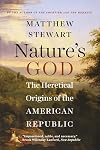
I'm nearing the end of this book and have strongly mixed feelings.
As a summary of philosophy and a 'history of philosophy' re: origins of modern democratic thought, it is great. 4 or even 5 stars. As a history of the irreligious origins of America... less so.
The problem I keep coming up against is two fold. Stewart will go on at great length discussing the details of some philosophical point, who held that point, and -then, for the length- trace the origins and evolution of that idea from show more Hobbes, Spinoza, Locke, Shaftesbury, Pope, and then Young and/or Allen... and then (1) buried in discussing popular support and passion because of (or aligned with) these philosophical points are snippets, backgrounds, nods to the fact that these ideas, shorn of some of their religious implications, were popular while religious belief was simultaneously popular and, often, vehement, and (2) that the revolutionary elites themselves were divided similarly.
I myself am an atheist, and a firm supporter of the 'heretical' tradition... but as an act of history, I'm not sure that Stewart sells the idea that the US government was founded on heretical... beliefs. This is a somewhat subtle point, having more to do with psychology, perhaps, than philosophy. But it is also a historical point. We're told that some point was championed by a set of 'heretical' thinkers, but that the language then had to be toned down for popular passage, and that some of the thinkers themselves bailed out over the 'atheistic' ideas/language. So... the hereticial/atheistic/Deistic ideas were there, no doubt, but there was popular and elite resistance to them "as such."
I think this book is a welcome addition, and something of an antidote to the 'Christian nation' narrative. But it aims at showing that we're instead a 'heretical nation,' and much as I wish that, it fails (and somewhat badly, I think.) Or, if we are a 'heretical nation,' we were founded on an amalgam of heresy, conservatism, and common belief. Which in my mind means we're neither a 'heretical' nation nor a 'Christian' nation.
As a history of philosophy, on the other hand, it is a book I will likely reread for its detail and analysis, even if it is very dense in parts. show less
As a summary of philosophy and a 'history of philosophy' re: origins of modern democratic thought, it is great. 4 or even 5 stars. As a history of the irreligious origins of America... less so.
The problem I keep coming up against is two fold. Stewart will go on at great length discussing the details of some philosophical point, who held that point, and -then, for the length- trace the origins and evolution of that idea from show more Hobbes, Spinoza, Locke, Shaftesbury, Pope, and then Young and/or Allen... and then (1) buried in discussing popular support and passion because of (or aligned with) these philosophical points are snippets, backgrounds, nods to the fact that these ideas, shorn of some of their religious implications, were popular while religious belief was simultaneously popular and, often, vehement, and (2) that the revolutionary elites themselves were divided similarly.
I myself am an atheist, and a firm supporter of the 'heretical' tradition... but as an act of history, I'm not sure that Stewart sells the idea that the US government was founded on heretical... beliefs. This is a somewhat subtle point, having more to do with psychology, perhaps, than philosophy. But it is also a historical point. We're told that some point was championed by a set of 'heretical' thinkers, but that the language then had to be toned down for popular passage, and that some of the thinkers themselves bailed out over the 'atheistic' ideas/language. So... the hereticial/atheistic/Deistic ideas were there, no doubt, but there was popular and elite resistance to them "as such."
I think this book is a welcome addition, and something of an antidote to the 'Christian nation' narrative. But it aims at showing that we're instead a 'heretical nation,' and much as I wish that, it fails (and somewhat badly, I think.) Or, if we are a 'heretical nation,' we were founded on an amalgam of heresy, conservatism, and common belief. Which in my mind means we're neither a 'heretical' nation nor a 'Christian' nation.
As a history of philosophy, on the other hand, it is a book I will likely reread for its detail and analysis, even if it is very dense in parts. show less
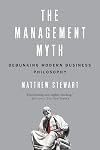
I love this book. Even though I am now a business advisor, I have had scant respect for most consultants.
This book by Matthew Stewart follows a dual narrative. The first is a personal one, in which we become privy to the foibles of most management firms.
Then, he introduces us to the great thinkers of the last century - from Taylor to Tom Peters. Interestingly, these men created management principles, claiming they were scientific, but not.
The transition to the 'management guru' theme of show more our times is revealing.
The book should give you reasons to think: in my management institute, we upheld Taylor, even though he lost credibility elsewhere.
While each consultant or guru peddles their models or fads, it is pertinent to note that, collectively, they have made some important contributions. You have no right to run a business if you rely on just one fad at a time.
However, management practitioners are as fond of following fads as 'gurus' are of peddling them.
This book will open your eyes. It is a delightful book to read. show less
This book by Matthew Stewart follows a dual narrative. The first is a personal one, in which we become privy to the foibles of most management firms.
Then, he introduces us to the great thinkers of the last century - from Taylor to Tom Peters. Interestingly, these men created management principles, claiming they were scientific, but not.
The transition to the 'management guru' theme of show more our times is revealing.
The book should give you reasons to think: in my management institute, we upheld Taylor, even though he lost credibility elsewhere.
While each consultant or guru peddles their models or fads, it is pertinent to note that, collectively, they have made some important contributions. You have no right to run a business if you rely on just one fad at a time.
However, management practitioners are as fond of following fads as 'gurus' are of peddling them.
This book will open your eyes. It is a delightful book to read. show less
The courtier and the heretic : Leibniz, Spinoza, and the fate of God in the modern world by Matthew Stewart
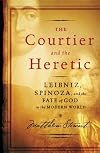
Stewart elegantly depicts the contrast between Spinoza and Leibniz, in both their lifestyles and their philosophies. He does so in an entertaining way and, while presenting a certain amount of speculation about the interaction between them, provides a lucid presentation of the portion of their lives and philosophies relevant to his project. I'm not sure I was convinced by all the speculation, but the book was a great read.
Lists
Awards


You May Also Like


Associated Authors
Statistics
- Works
- 7
- Members
- 1,578
- Popularity
- #16,353
- Rating
- 3.9
- Reviews
- 33
- ISBNs
- 49
- Languages
- 3
- Favorited
- 2
