
Jordi Punti
Author of Lost Luggage
About the Author
Works by Jordi Punti
Associated Works
Tagged
Common Knowledge
- Legal name
- Puntí i Garriga, Jordi
- Birthdate
- 1967
- Gender
- male
- Nationality
- Catalonia
- Birthplace
- Manlleu (Osona)
- Map Location
- Spain
Members
Reviews
This is the story of Gabriel Delacruz, orphan, international furniture remover and father to four sons. Four boys – born in four different countries to four different mothers; one German, one English, one French and one Spanish, and all christened the local equivalent of the name Christopher. They are not aware of each other’s existence, and none of them have seen their father for a couple of decades.
The ‘Four Christophers’ finally meet when the youngest, Cristòfol is contacted by show more the police when his father goes missing. He finds a piece of paper with the details of his brothers on. The Christophers meet to learn each others stories, and also to research their father – they don’t believe he’s dead.
The brothers take their turns to tell their stories. How their mothers met Gabriel, their births, and those rare visits throughout their childhood. Although they are very different, they all get on well, making up for lost time. Their mothers were all independent women and despite the lack of a permanent father figure in their lives, they have made the most of things. They start meeting regularly to talk, and search out Gabriel’s friends and acquaintances to help fill in the gaps.
Alongside Gabriel’s unfolding story was that of his fellow orphan and colleague Bundo. Together since their days in the ophanage, their undying friendship was the most touching part of this story. Whereas Gabriel had a woman in each port so to speak, there was only ever one girl for Bundo but he had to share her, for Carolina was a prostitute in a roadhouse outside Lyon.
One of the naughty but interesting things that Gabriel and Bundo did together along with fellow removers was to always remove one random box from the contents of each move. They’d share out the contents, and Gabriel catalogued them – over 200 boxes in total over their career. One of those boxes had contained a ventriloquist’s dummy, which Gabriel passed on to his German son, Christof, who called it Christofini. The dummy kept butting into Christof’s part of the narrative, which did give a slightly surreal edge to things.
I particularly loved reading about Gabriel and Bundo and their exploits through the years, lovable rogues both, always up for a chance to make a bit on the side or a game of cards. The sons’ stories weren’t as exciting in comparison, and as I read on, I did hope that they’d make progress on finding Gabriel, for at 473 pages, this is rather a long book. I won’t let on what finally happens, for this was a charming story told with humour, and you may want to find it out for yourself. Despite its length, Punti has created some memorable characters in this debut novel and I enjoyed the travels and travails of Gabriel, his friends and extended family a great deal. (8.5/10) show less
The ‘Four Christophers’ finally meet when the youngest, Cristòfol is contacted by show more the police when his father goes missing. He finds a piece of paper with the details of his brothers on. The Christophers meet to learn each others stories, and also to research their father – they don’t believe he’s dead.
The brothers take their turns to tell their stories. How their mothers met Gabriel, their births, and those rare visits throughout their childhood. Although they are very different, they all get on well, making up for lost time. Their mothers were all independent women and despite the lack of a permanent father figure in their lives, they have made the most of things. They start meeting regularly to talk, and search out Gabriel’s friends and acquaintances to help fill in the gaps.
Alongside Gabriel’s unfolding story was that of his fellow orphan and colleague Bundo. Together since their days in the ophanage, their undying friendship was the most touching part of this story. Whereas Gabriel had a woman in each port so to speak, there was only ever one girl for Bundo but he had to share her, for Carolina was a prostitute in a roadhouse outside Lyon.
One of the naughty but interesting things that Gabriel and Bundo did together along with fellow removers was to always remove one random box from the contents of each move. They’d share out the contents, and Gabriel catalogued them – over 200 boxes in total over their career. One of those boxes had contained a ventriloquist’s dummy, which Gabriel passed on to his German son, Christof, who called it Christofini. The dummy kept butting into Christof’s part of the narrative, which did give a slightly surreal edge to things.
I particularly loved reading about Gabriel and Bundo and their exploits through the years, lovable rogues both, always up for a chance to make a bit on the side or a game of cards. The sons’ stories weren’t as exciting in comparison, and as I read on, I did hope that they’d make progress on finding Gabriel, for at 473 pages, this is rather a long book. I won’t let on what finally happens, for this was a charming story told with humour, and you may want to find it out for yourself. Despite its length, Punti has created some memorable characters in this debut novel and I enjoyed the travels and travails of Gabriel, his friends and extended family a great deal. (8.5/10) show less
A curious tale of 4 men who meet when they learn they are 1/2 brothers whose father has disappeared in Barcelona. Each son was born in a different country to a single woman who then raised her son alone, with some early contact with the father. He, Gabriel, was a furniture removalist who lived in Barcelona. When he disappears his sons, after contact by the police with the Spanish son, gather over some months to try to unravel his past, their intersection with his life and his current show more whereabouts. Covered some of the Franco influence on Spain as well the Catalan independence issues. show less
I definitely got swept up in this. The story was captivating, and it was beautifully told. Since I had just been in Barcelona I loved the references to the city, but I would have enjoyed the book just as much if I hadn't been there.
Four young men, all raised by single mothers in Europe, learn they are half brothers when their father disappears and the police find their names and addresses in his apartment. Thus begins a journey to discover their father's history. Through their mothers, their show more father's acquaintances, and papers they find in the apartment they learn that he was a foundling who was raised in an orphanage and, once grown, worked for a moving company beside his best friend and orphan brother. They traveled Europe moving highly connected Spaniards, and Gabriel fell into relationships with three young women, all of which produced a son. He named all of them a version of Christopher. He visited each when he could until the visits ended abruptly and with no explanation. What they learn about his story makes it all make sense. show less
Four young men, all raised by single mothers in Europe, learn they are half brothers when their father disappears and the police find their names and addresses in his apartment. Thus begins a journey to discover their father's history. Through their mothers, their show more father's acquaintances, and papers they find in the apartment they learn that he was a foundling who was raised in an orphanage and, once grown, worked for a moving company beside his best friend and orphan brother. They traveled Europe moving highly connected Spaniards, and Gabriel fell into relationships with three young women, all of which produced a son. He named all of them a version of Christopher. He visited each when he could until the visits ended abruptly and with no explanation. What they learn about his story makes it all make sense. show less
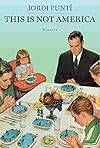
This Is Not America is a collection of nine short stories mostly taking place in Barcelona, but also with Catalans traveling abroad. The first and last stories are the strangest. In the first, “Vertical”, a man is waking the ‘I’ in Mai, memorializing his late wife by walking her name on the streets of Barcelona. His description of grief is vivid and authentic, though the story meanders through its own streets. Frankly, I nearly quit reading during the first story, but the rest were show more far more to my taste.
“Kidney” is a story of estranged brothers and a weak story that seems more like a long joke told late into the night on a drunken bender. “Consolation Prize” is a strange story of a man falling into infatuation with a girl because he learns she shares an admiration for a band he likes. To me he seemed a bit stalkerish and unpleasant, but I think Puntí’s stories are far more expressive of the male worldview. You really see that in “My Best Friend’s Mother” which has a middle-age man trying to replay an adolescent wish fulfillment fantasy.
I think “Seven Days on the Loveboat” is my favorite, a man had planned a trip to Paris with his wife but they separated right before their anniversary, so he trades his trip in for a Mediterranean cruise on one of the hookup type cruise ships where things don’t go as planned.
This Is Not America is strange collection of stories. Some of them I really liked and others were just strange and a couple I just did not like. I thought the final story was too cute by half, going all meta by writing about a writer writing a short story on commission who goes to a party where Jordi Puntí happens to be a guest. On the other hand, except for “Kidney” every story seemed truly new, unlike anything I have read before. That excites me, so on the whole, it’s a good anthology with a mix of hits and misses.
I received an e-galley ofThis Is Not America from the publisher through NetGalley
This Is Not America at Atria Books | Simon & Schuster
Jordi Puntí on Twitter
https://tonstantweaderreviews.wordpress.com/2019/08/06/9781982104719/ show less
“Kidney” is a story of estranged brothers and a weak story that seems more like a long joke told late into the night on a drunken bender. “Consolation Prize” is a strange story of a man falling into infatuation with a girl because he learns she shares an admiration for a band he likes. To me he seemed a bit stalkerish and unpleasant, but I think Puntí’s stories are far more expressive of the male worldview. You really see that in “My Best Friend’s Mother” which has a middle-age man trying to replay an adolescent wish fulfillment fantasy.
I think “Seven Days on the Loveboat” is my favorite, a man had planned a trip to Paris with his wife but they separated right before their anniversary, so he trades his trip in for a Mediterranean cruise on one of the hookup type cruise ships where things don’t go as planned.
This Is Not America is strange collection of stories. Some of them I really liked and others were just strange and a couple I just did not like. I thought the final story was too cute by half, going all meta by writing about a writer writing a short story on commission who goes to a party where Jordi Puntí happens to be a guest. On the other hand, except for “Kidney” every story seemed truly new, unlike anything I have read before. That excites me, so on the whole, it’s a good anthology with a mix of hits and misses.
I received an e-galley ofThis Is Not America from the publisher through NetGalley
This Is Not America at Atria Books | Simon & Schuster
Jordi Puntí on Twitter
https://tonstantweaderreviews.wordpress.com/2019/08/06/9781982104719/ show less
Awards


You May Also Like


Associated Authors
Statistics
- Works
- 12
- Also by
- 4
- Members
- 344
- Popularity
- #69,364
- Rating
- 3.6
- Reviews
- 27
- ISBNs
- 45
- Languages
- 8