
Andrew Feinstein
Author of The Shadow World: Inside the Global Arms Trade
About the Author
Image credit: Public-conversations
Works by Andrew Feinstein
Tagged
Common Knowledge
- Other names
- Andrew Josef Feinstein
- Birthdate
- 1964-03-16
- Gender
- male
- Education
- Kings College, Cambridge
University of California, Berkeley
University of Cape Town - Occupations
- Member of Parliament
economic advisor - Nationality
- South Africa
- Places of residence
- UK
Members
Reviews
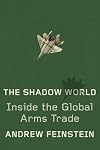
This book is a complete and utter failure. Luckily, it isn't really a book: it's a gigantic finger pointed at the world by Humanity as she slowly, desperately tries to make headway against the absolute idiocy that is the actually existing human species.
I have a hard time imagining anyone who would read this and come away feeling anything other than horrified disgust at the degree to which government, industry and armed forces are tied together, in Europe, the U.K., the U.S., and most show more horrifically in Africa and the Middle East. There is no genuine political ideology anywhere that could approve of the relationship between, for instance, Lockheed Martin, the United States Air Force, and the American Government. Corporate welfare is bad enough to unite libertarians and communists; corporate welfare dollars being used to make over-priced, under-performing death machines is really a whole 'nother turkey.
At the same time, I have a hard time imagining anyone who would read this and come away feeling anything other than tremendous fatigue. Feinstein obviously knows *everything*, except how to fit all the facts he knows into a digestible form. What we have here is, instead, a fact explosion. There is no good reason for this book to be almost 600 pages long. There are a number of bad reasons: i) Feinstein focuses on arms companies' garden-variety corruption in Saudi Arabia for long portions of the book, which is a bit like complaining about how the mass murderer down the street doesn't take good enough care of her lawn. ii) He tries to pack the history of Africa into the middle of the book to show that weapons get used on people. That's horrific, no doubt, but also accomplishes little. iii) He's unable to resist a good conspiracy theory, so we end up with hard to digest, hard to verify tales about shadowy underworld figures cutting deals within deals within money laundering within deals, all of which detracts from the really overwhelming horrors of, in particular, the relationship between BAE and the U.K. government, or that between the U.S. arms industry and its government. iv) Feinstein writes like a freshman who can't really be bothered with things like sentence structure.
So, in short, six stars for content, minus two for the organization and prose. You absolutely must read the intro, chapters 3, 5, 7, and sections III and IV. The rest is awful, awful window dressing. show less
I have a hard time imagining anyone who would read this and come away feeling anything other than horrified disgust at the degree to which government, industry and armed forces are tied together, in Europe, the U.K., the U.S., and most show more horrifically in Africa and the Middle East. There is no genuine political ideology anywhere that could approve of the relationship between, for instance, Lockheed Martin, the United States Air Force, and the American Government. Corporate welfare is bad enough to unite libertarians and communists; corporate welfare dollars being used to make over-priced, under-performing death machines is really a whole 'nother turkey.
At the same time, I have a hard time imagining anyone who would read this and come away feeling anything other than tremendous fatigue. Feinstein obviously knows *everything*, except how to fit all the facts he knows into a digestible form. What we have here is, instead, a fact explosion. There is no good reason for this book to be almost 600 pages long. There are a number of bad reasons: i) Feinstein focuses on arms companies' garden-variety corruption in Saudi Arabia for long portions of the book, which is a bit like complaining about how the mass murderer down the street doesn't take good enough care of her lawn. ii) He tries to pack the history of Africa into the middle of the book to show that weapons get used on people. That's horrific, no doubt, but also accomplishes little. iii) He's unable to resist a good conspiracy theory, so we end up with hard to digest, hard to verify tales about shadowy underworld figures cutting deals within deals within money laundering within deals, all of which detracts from the really overwhelming horrors of, in particular, the relationship between BAE and the U.K. government, or that between the U.S. arms industry and its government. iv) Feinstein writes like a freshman who can't really be bothered with things like sentence structure.
So, in short, six stars for content, minus two for the organization and prose. You absolutely must read the intro, chapters 3, 5, 7, and sections III and IV. The rest is awful, awful window dressing. show less
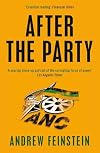
Not only does Andrew Feinstein give a detailed insider's look of all the turmoil, triumph, and eventual disappointment of post-apartheid politics...he has also written what amounts to a representative example of how all governments work. In this respect his book is an unparalleled look at the machinations of power. It's more than a book about South Africa. His book made me understand once and for all that every government is comprised of flawed humans, who make decisions, not always show more consciously, in a manner that furthers their own personal interests. I am reminded of the way th US blundered into a civil war and eventually toward emancipation, a process driven by people on both sides of the war who were more interested in retaining political and economic power than in ending the moral horror of slavery--Lincoln did not emancipate the slaves until very late in the war, and even then the terms of emancipation were grudging. Even so, emancipation happened. And even so, in the case of South Africa, apartheid was abolished, and however flawed the outcome has been, the change was accomplished without the need for a bloody civil war.
I don't think it was Feinstein's intention to write a representative case study concerning the abuse of power, though. He meant for this book to be a muckraking exposé'; a call to action and for political reform. If you read the book with this sole intent in mind, it might leave you as frustrated with humanity and with government as the author himself seems to be. But i believe the book to be much more valuable as a study of power and its uses and abuses, a story that has implications far beyond the specific players and their actions at a given time in history. Within this larger historical framework the book is transformative and even hopeful. show less
I don't think it was Feinstein's intention to write a representative case study concerning the abuse of power, though. He meant for this book to be a muckraking exposé'; a call to action and for political reform. If you read the book with this sole intent in mind, it might leave you as frustrated with humanity and with government as the author himself seems to be. But i believe the book to be much more valuable as a study of power and its uses and abuses, a story that has implications far beyond the specific players and their actions at a given time in history. Within this larger historical framework the book is transformative and even hopeful. show less
This really functions as a (very detailed) primer on the world's unofficial & criminal arms trade. If you want to learn about the large structures of the world's illegal arms trade, this is the place to start.
Heavy on detail, as others have commented, but that's necessary, I think, to give a good initial introduction to the student of these dark arts. Maybe 1/3 of the book deals with Saudi Arabia, which is probably appropriate.
I was entertained, somewhat educated (quickly forgot a lot of show more the details) and, at times, shocked. show less
Heavy on detail, as others have commented, but that's necessary, I think, to give a good initial introduction to the student of these dark arts. Maybe 1/3 of the book deals with Saudi Arabia, which is probably appropriate.
I was entertained, somewhat educated (quickly forgot a lot of show more the details) and, at times, shocked. show less
Fascinating, methodical, and extremely difficult at times, The Shadow World opens the light on just how far reaching and devastating the gloabl arms trade is. An important book to say the least.
Awards


You May Also Like


Statistics
- Works
- 3
- Members
- 293
- Popularity
- #79,899
- Rating
- 3.6
- Reviews
- 13
- ISBNs
- 21
- Languages
- 2