
Richard William Johnson
Author of Shootdown: Flight 007 and the American Connection
About the Author
Works by Richard William Johnson
Tagged
Common Knowledge
- Gender
- male
Members
Reviews

Shootdown is a fascinating piece of Cold War techno-paranoia, a web of circumstance carefully stitched together by British academic R.W. Johnson. The basic facts are clear. At 13:00 UTC, August 31st 1983, Korean Airlines Flight 007 departed Anchorage en route to Seoul. It strayed over Soviet territory, and was shot down at 18:26:46 UTC on September 1, 0626 local time over Sakhalin Island. 269 people were killed, including an American congressman. All parties involved began making accusations show more and counter-accusations, an international investigation was stonewalled, and the truth disappeared, along with the plane. Tensions between the superpowers escalated another notch, and the situation resumed.
Johnson argues that it is unlikely that the highly trained KAL crew could have made such a fatal navigational error. Rather, he sees KAL 007 flightpath as part of deliberate ploy orchestrated by National Security Adviser William P. Clark Jr. and CIA Director William J. Casey to gain electronic intelligence of Russian defenses in the volatile North Pacific. This effort was part of long tradition of aggressive surveillance by aircraft, most famously Gary Powers U-2 shootdown in 1960. The flight was monitored by an armada of sophisticated sensors, and arranged with the help of the strictly anti-communist Korean Central Intelligence Agency. An earlier incident, KAL 902, had ended in only two deaths, and the gamble of using a plane full of civilians was seen as worthwhile. After all, the Soviets wouldn't shoot an innocent airliner down, right? Except they did, and then the Reagan administration had to arrange a cover-up, which was aided by the tone-deaf propaganda of the Soviet Union.
It's a convincing story, with the single flaw being that it is entirely wrong. Johnson argues that the flight data recorders (the black box) were either destroyed by the US, or never recovered. What he had no way of knowing was that the black box was recovered by the USSR, and their tapes were released in late 1992. The revised report, with all the evidence, is clear. The crew of KAL 007 made a navigation error and failed to switch the autopilot from compass heading to INS waypoints. They never knew that they had entered Soviet airspace, and the Soviet Pacific defenses, far from being the well-oiled machine Johnson believes them to be, were beset by broken equipment and sclerotic command and control. It was a tragedy, and the Soviets shot without provocation.
For what's it worth, Johnson makes a bold stab at the getting the story straight. There was never much reason to trust the official Reagan administration stance on anything. His accounts of superpower technological confrontation are still gripping. The intrigues and incompetence of Reagan administration officials is very familiar. While at the end of the day, this is a conspiracy theory built on circumstantial evidence and gaps in the official record, it's at least plausible that KAL 007 was an unauthorized ELINT probe. Meanwhile, in our present darkest timeline, the right-o-sphere and even some Trump people are fixated on QAnon*, a series of cryptic hints delivered over childporn board 8chan that (((Globalist Deep State Bankers))) are engaged in a massive child sex-slave ring, and that Trump has arrested thousands of these people on double-secret warrants, and that commands are being sent via the web equivalent of number's stations.
Can we have the Cold War back, please?
*QAnon description is approximate. It's... nuts, is all I can say. show less
Johnson argues that it is unlikely that the highly trained KAL crew could have made such a fatal navigational error. Rather, he sees KAL 007 flightpath as part of deliberate ploy orchestrated by National Security Adviser William P. Clark Jr. and CIA Director William J. Casey to gain electronic intelligence of Russian defenses in the volatile North Pacific. This effort was part of long tradition of aggressive surveillance by aircraft, most famously Gary Powers U-2 shootdown in 1960. The flight was monitored by an armada of sophisticated sensors, and arranged with the help of the strictly anti-communist Korean Central Intelligence Agency. An earlier incident, KAL 902, had ended in only two deaths, and the gamble of using a plane full of civilians was seen as worthwhile. After all, the Soviets wouldn't shoot an innocent airliner down, right? Except they did, and then the Reagan administration had to arrange a cover-up, which was aided by the tone-deaf propaganda of the Soviet Union.
It's a convincing story, with the single flaw being that it is entirely wrong. Johnson argues that the flight data recorders (the black box) were either destroyed by the US, or never recovered. What he had no way of knowing was that the black box was recovered by the USSR, and their tapes were released in late 1992. The revised report, with all the evidence, is clear. The crew of KAL 007 made a navigation error and failed to switch the autopilot from compass heading to INS waypoints. They never knew that they had entered Soviet airspace, and the Soviet Pacific defenses, far from being the well-oiled machine Johnson believes them to be, were beset by broken equipment and sclerotic command and control. It was a tragedy, and the Soviets shot without provocation.
For what's it worth, Johnson makes a bold stab at the getting the story straight. There was never much reason to trust the official Reagan administration stance on anything. His accounts of superpower technological confrontation are still gripping. The intrigues and incompetence of Reagan administration officials is very familiar. While at the end of the day, this is a conspiracy theory built on circumstantial evidence and gaps in the official record, it's at least plausible that KAL 007 was an unauthorized ELINT probe. Meanwhile, in our present darkest timeline, the right-o-sphere and even some Trump people are fixated on QAnon*, a series of cryptic hints delivered over childporn board 8chan that (((Globalist Deep State Bankers))) are engaged in a massive child sex-slave ring, and that Trump has arrested thousands of these people on double-secret warrants, and that commands are being sent via the web equivalent of number's stations.
Can we have the Cold War back, please?
*QAnon description is approximate. It's... nuts, is all I can say. show less
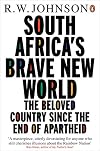
South Africa's Brave New World ' The beloved country since the end of Apartheid', is a political history of South Africa from 1994 - 2009. I'm a bit late to the party with this book having first been published back in 2009, but it has some very interesting information and insights. Normally a reviewer talks about the good, then the bad but I think I'm going to start with the bad, then move on to the good and finish with some minor criticisms.
The book is far to long, it could have conveyed show more much of the same information in half the pages and the main reason that it go's on is because it is disorganised. I was interested in what befell the police and the army after Apartheid and he does talk about these things. But as short detours in the middle of chapters that are quite large, unfortunately this is a recurring theme. The book could have really used a Dramatis Personae or list of characters. So many names are mentioned, who then reappear chapters later in a new job, it is very confusing and could have been done better.
The glossary at the start of the book, where all glossary's should be, was a big help.
But I actually think that this book provided a good deal of insight into South Africa, the ANC and the period of ANC rule up until 2009. One insight that I found interesting is his assertion that South Africa has since independence in 1910 been ruled by a Nationalist ideology. The first from 1910-1947 was British Empire loyalty, the idea that South Africa was British or in South African terminology 'English'. Which was replaced between 1947-1990 with a Afrikaner nationalism, that replaced loyalty to the Empire to one of loyal to Volk, particularly the Afrikaner Volk. Which in turn was replaced in 1994 with a Black African nationalism, which continues. The period between 1990-94 was one where much of the Afrikaner nationalism was being dismantled. It is an interesting idea that the current government is more of a continuation than a new start.
He also writes about the different factions within the ANC that made up the first government in 1994. The smallest but most prestigious were the prisoners like Mandela, the second largest were the Exiles, who had lived outside of South Africa. Most of these where Communists who believed in the revolution and in the inevitable destruction of Capitalism. The largest group by far, but at the same time the least prestigious as well as the least influential where the Inxiles, who had remained in South Africa. It was to be the Exiles who benefited the most from the end of Apartheid. They were organised and unlike the Inxiles disciplined enough to take control of most of the senior government positions as well as those in the ANC. In effect the Inxiles were frozen out of the victory that they had struggled for,
My favourite subtitle heading in the book is 'Crony Capitalism for the Comrades' as it sums up in one little phrase what happened when Communists realised that they could be rich!
Because now that they were back in south Africa they did realise that now was the time to make up for the personal sacrifices that they had made. It also helped that they had seized the commanding heights of the government and the ANC. Which means that much of the history since 1994 has been the efforts of the Exiles to consolidate their position, not just in politics but in money. BEE (Black Economic Empowerment) was meant to be a way for Blacks to get a foothold on the economic ladder. Companies would need Blacks to in effect 'legitimise' them. Which meant that the companies wanted the most powerful and connected Blacks, people like the Exiles. Which came to mean that in reality BEE helped a few hundred families in a country of about 50 million people.
The author is scathing in his criticism of BEE and Affirmative Action, I don't recall him having anything good to say about them. The ANC is not far behind in his criticism. He regards Mandela as a popular non-entity, a man who came to power when he was too old to influence events. To be far he did influence the peaceful transfer of power and he did believe in the 'rainbow nation'. Most of his contempt is directed towards Zuma, both as Vice President and as President. He blames him for much of the mismanagement that occurred during those 15 years and while I don't disagree with him. I do feel that the ANC and it's structure is the real issue that has not been addressed and maybe never will be.
What I find interesting is that he is a Liberal and the Liberal promise of the end of Apartheid was that non-Whites would get to live the lives that Whites enjoyed. It was not that a new select group would arise and take the place of Apartheid, or that Apartheid in a new form would be enacted. But he realises that that is exactly what has happened. He also writes about how galling it has been to see the future that he wanted for South Africa not appear but that the 'racists' as he calls them were right. South Africa has become a richer version of the rest of Black Africa, a kleptocracy were theft is the reason that you go into government. mismanagement and race baiting.
Part of the problem is that as a Liberal he keeps trying to be race blind and it is interesting to see him struggle with what he believes and what he can see with his own eyes. Africa is not just a product of it's past but also of it's present. The civilization that covers the world is not African it's European, which means that they are trying to government under the rules of someone else's civilization. The truth is that if South Africa was an all White country, it would be a lot more successful than if it was an all Black country, even if those Blacks were of the same ethnic group.
I want to leave you with an excerpt from the book about his attending an Anti-Racism conference in South Africa, September 2001. (p.350)
'Indigenous people' were invited from all over the world and the cause of ethnic minorities anywhere in the West was taken up with great indignation. Arriving in Durban for the conference, I found what could only be described as a crazed millenarian expectation and furious blaming. Black Americans, Roma, Inuit and many other minorities were there in strength and were all, apparently, angry. Even many of the whites attending the conference were anti-white. A great theme was the rights of indigenous peoples but this did not seem to work at all. Thus whites were condemned for colonialism abroad, and were also blamed for not making ex-colonial people welcome enough in their own countries. I asked many delegates whether there was anywhere that whites had rights as indigenous people themselves. There was apparently no such place.' show less
The book is far to long, it could have conveyed show more much of the same information in half the pages and the main reason that it go's on is because it is disorganised. I was interested in what befell the police and the army after Apartheid and he does talk about these things. But as short detours in the middle of chapters that are quite large, unfortunately this is a recurring theme. The book could have really used a Dramatis Personae or list of characters. So many names are mentioned, who then reappear chapters later in a new job, it is very confusing and could have been done better.
The glossary at the start of the book, where all glossary's should be, was a big help.
But I actually think that this book provided a good deal of insight into South Africa, the ANC and the period of ANC rule up until 2009. One insight that I found interesting is his assertion that South Africa has since independence in 1910 been ruled by a Nationalist ideology. The first from 1910-1947 was British Empire loyalty, the idea that South Africa was British or in South African terminology 'English'. Which was replaced between 1947-1990 with a Afrikaner nationalism, that replaced loyalty to the Empire to one of loyal to Volk, particularly the Afrikaner Volk. Which in turn was replaced in 1994 with a Black African nationalism, which continues. The period between 1990-94 was one where much of the Afrikaner nationalism was being dismantled. It is an interesting idea that the current government is more of a continuation than a new start.
He also writes about the different factions within the ANC that made up the first government in 1994. The smallest but most prestigious were the prisoners like Mandela, the second largest were the Exiles, who had lived outside of South Africa. Most of these where Communists who believed in the revolution and in the inevitable destruction of Capitalism. The largest group by far, but at the same time the least prestigious as well as the least influential where the Inxiles, who had remained in South Africa. It was to be the Exiles who benefited the most from the end of Apartheid. They were organised and unlike the Inxiles disciplined enough to take control of most of the senior government positions as well as those in the ANC. In effect the Inxiles were frozen out of the victory that they had struggled for,
My favourite subtitle heading in the book is 'Crony Capitalism for the Comrades' as it sums up in one little phrase what happened when Communists realised that they could be rich!
Because now that they were back in south Africa they did realise that now was the time to make up for the personal sacrifices that they had made. It also helped that they had seized the commanding heights of the government and the ANC. Which means that much of the history since 1994 has been the efforts of the Exiles to consolidate their position, not just in politics but in money. BEE (Black Economic Empowerment) was meant to be a way for Blacks to get a foothold on the economic ladder. Companies would need Blacks to in effect 'legitimise' them. Which meant that the companies wanted the most powerful and connected Blacks, people like the Exiles. Which came to mean that in reality BEE helped a few hundred families in a country of about 50 million people.
The author is scathing in his criticism of BEE and Affirmative Action, I don't recall him having anything good to say about them. The ANC is not far behind in his criticism. He regards Mandela as a popular non-entity, a man who came to power when he was too old to influence events. To be far he did influence the peaceful transfer of power and he did believe in the 'rainbow nation'. Most of his contempt is directed towards Zuma, both as Vice President and as President. He blames him for much of the mismanagement that occurred during those 15 years and while I don't disagree with him. I do feel that the ANC and it's structure is the real issue that has not been addressed and maybe never will be.
What I find interesting is that he is a Liberal and the Liberal promise of the end of Apartheid was that non-Whites would get to live the lives that Whites enjoyed. It was not that a new select group would arise and take the place of Apartheid, or that Apartheid in a new form would be enacted. But he realises that that is exactly what has happened. He also writes about how galling it has been to see the future that he wanted for South Africa not appear but that the 'racists' as he calls them were right. South Africa has become a richer version of the rest of Black Africa, a kleptocracy were theft is the reason that you go into government. mismanagement and race baiting.
Part of the problem is that as a Liberal he keeps trying to be race blind and it is interesting to see him struggle with what he believes and what he can see with his own eyes. Africa is not just a product of it's past but also of it's present. The civilization that covers the world is not African it's European, which means that they are trying to government under the rules of someone else's civilization. The truth is that if South Africa was an all White country, it would be a lot more successful than if it was an all Black country, even if those Blacks were of the same ethnic group.
I want to leave you with an excerpt from the book about his attending an Anti-Racism conference in South Africa, September 2001. (p.350)
'Indigenous people' were invited from all over the world and the cause of ethnic minorities anywhere in the West was taken up with great indignation. Arriving in Durban for the conference, I found what could only be described as a crazed millenarian expectation and furious blaming. Black Americans, Roma, Inuit and many other minorities were there in strength and were all, apparently, angry. Even many of the whites attending the conference were anti-white. A great theme was the rights of indigenous peoples but this did not seem to work at all. Thus whites were condemned for colonialism abroad, and were also blamed for not making ex-colonial people welcome enough in their own countries. I asked many delegates whether there was anywhere that whites had rights as indigenous people themselves. There was apparently no such place.' show less
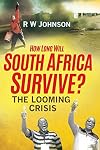
Gives a lot of insight on the story behind the news. Makes you worry more about the fools in charge, but says that there is a light at the end of the tunnel. But there's probably a bit of rusted track between here and there...
Gives a lot of insight on the story behind the news. Makes you worry more about the fools in charge, but says that there is a light at the end of the tunnel. But there's probably a bit of rusted track between here and there...
Lists
Awards

You May Also Like


Associated Authors
Statistics
- Works
- 12
- Members
- 276
- Popularity
- #84,077
- Rating
- 3.9
- Reviews
- 5
- ISBNs
- 37
- Languages
- 1