
L. Sprague de Camp (1907–2000)
Author of Conan the Conqueror
About the Author
L. Sprague de Camp, winner of the World Fantasy Award for Life Achievement, was fluent in several languages and traveled the world. He was chased by a hippopotamus in Uganda and sea lions in the Galapagos Islands. He saw tigers and rhinoceroses from elephantback in India, and he was bitten by a show more lizard in the jungles of Guatemala. His fascinating autobiography. Time and Chance, won the 1997 Hugo Award for best nonfiction. L. Sprague de Camp passed away in May 2000 show less
Disambiguation Notice:
There is only one L. Sprague de Camp. Do not split this author.
(ger) Es gibt nur einen L. Sprague de Camp. Bitte den Autor nicht teilen.
Series
Works by L. Sprague de Camp
The Purple Pterodactyls: The Adventures of W. Wilson Newbury, Ensorcelled Financier (Ace Science Fiction) (1979) — Foreword — 153 copies, 2 reviews
Great Cities of the Ancient World: From Thebes to Constantinople With 150 Photographs, Drawings and Maps (1972) 136 copies, 2 reviews
Wheels 34 copies
Man and power;: The story of power from the pyramids to the atomic age (A Deluxe golden book) (1961) 12 copies
The Bloodstained God 5 copies
THE BEST OF L SPAGUE DE CAMP by Nelson Doubleday 1978 BCE HC [Hardcover] L. Sprague de Camp (1978) 3 copies
The Guided Man 3 copies
The Eye of Tandyla [novelette] 3 copies
The Stolen Dormouse 3 copies
Language for Time Travelers 2 copies
The heroic age of American invention 2 copies
The Incorrigible [short story] 2 copies
The Warrior Race [short fiction] 2 copies
Living Fossil 2 copies
The Space Clause 2 copies
LA RAGAZZA GUERRIERA 2 copies
The Last Drop 1 copy
Il castello d’acciaio 1 copy
La couronne de lumiere 1 copy
Dimensioni vietate 1 copy
Ace Conan 13-18 (Conan the Swordsman, Conan the Liberator, Sword of Skelos, Road of Kings, Rebel, Conan and the Spider God) (1987) 1 copy
Spell of Seven 1 copy
Fantastic Swordsmen 1 copy
Gorilla sapiens 1 copy
L'anello del tritone 1 copy
King Conan 1 copy
The Virgin & The Wheels 1 copy
Barsoom vol. 33 1 copy
Rogue Queen 1 copy
Le pietre di Nomuru 1 copy
The Hand of Zei 1 copy
The Virgin of Zesh 1 copy
Lament By A Maker 1 copy
Red Moon of Zembabwei 1 copy
The Enchanted Bunny 1 copy
Dragon Hunt 1 copy
The Stronger Spell 1 copy
The Blunderer 1 copy
Shadows in the Skull 1 copy
Black Sphinx of Nebthu 1 copy
The Witch of the Mists 1 copy
Ananias 1 copy
The Sorcerers {poem} 1 copy
Juice 1 copy
Worlds of Fantasy 1 copy
Heretic in a Balloon 1 copy
The Scientist 1 copy
The Conan Grimoire 1 copy
Krishna Series & More 1 copy
Conan the Indestructible 1 copy
The Roaring Trumpet 1 copy
Gorilla sapiens 1 copy
Associated Works
The Year's Best Science Fiction: Tenth Annual Collection (1993) — Contributor — 476 copies, 5 reviews
Isaac Asimov's Magical Worlds of Fantasy, Volume 1: Wizards (1983) — Contributor — 268 copies, 1 review
Isaac Asimov's Magical Worlds of Fantasy, Volume 3: Cosmic Knights (1954) — Contributor — 146 copies, 3 reviews
Analog Anthology #1: Fifty Years of the Best Science Fiction From Analog (1980) — Contributor — 118 copies, 1 review
Alternate Americas (What Might Have Been, Vol. 4) (1992) — Contributor, some editions — 101 copies, 1 review
Rivals of Weird Tales: 30 Great Fantasy & Horror Stories from the Weird Fiction Pulps (1990) — Contributor — 97 copies, 1 review
Isaac Asimov's Wonderful Worlds of Science Fiction, Volume 2: The Science Fictional Olympics (1984) — Contributor — 97 copies, 1 review
Isaac Asimov's Magical Worlds of Fantasy, Volume 9: Atlantis (1988) — Contributor — 93 copies, 1 review
The World That Couldn't Be and 8 Other Novelets From "Galaxy" (1959) — Contributor — 86 copies, 5 reviews
The Best from Fantasy and Science Fiction: A Special 25th Anniversary Anthology (1974) — Contributor — 84 copies, 2 reviews
Isaac Asimov's Wonderful Worlds of Science Fiction, Volume 6: Neanderthals (1987) — Contributor — 73 copies, 1 review
In Lands That Never Were: Tales of Swords and Sorcery from The Magazine of Fantasy & Science Fiction (2004) — Contributor — 36 copies
The Collected Classical Stories and Classic Who Dunnits/boxed Set (2 volume set) (1996) — Contributor — 27 copies
Analog Science Fiction/Science Fact: Vol. XC, No. 1 (September 1972) (1972) — Contributor — 27 copies
The Best of Astounding: Classic Short Novels from the Golden Age of Science Fiction (1992) — Contributor — 22 copies
Analog Science Fiction and Fact: Vol. CXIII, No. 5 (April 1993) (1993) — Contributor — 21 copies, 1 review
The Magazine of Fantasy and Science Fiction July 1970, Vol. 39, No. 1 (1970) — Contributor — 18 copies
The Magazine of Fantasy and Science Fiction June 1976, Vol. 50, No. 6 (1976) — Contributor — 16 copies
The Magazine of Fantasy and Science Fiction May 1978, Vol. 54, No. 5 (1978) — Contributor — 15 copies
The Magazine of Fantasy and Science Fiction October 1967, Vol. 33, No. 4 (1967) — Contributor — 14 copies
Androids, Time Machines and Blue Giraffes: A Panorama of Science Fiction (1973) — Contributor — 13 copies, 1 review
The Magazine of Fantasy and Science Fiction November 1973, Vol. 45, No. 5 (1973) — some editions — 12 copies
The Magazine of Fantasy and Science Fiction Winter-Spring 1950, Vol. 1, No. 2 (1950) — Contributor — 8 copies
The Magazine of Fantasy and Science Fiction October 1957, Vol. 13, No. 4 (1957) — Contributor — 8 copies
The Magazine of Fantasy and Science Fiction January 1963, Vol. 24, No. 1 (1963) — Contributor — 7 copies
The Magazine of Fantasy and Science Fiction January 1955, Vol. 8, No. 1 (1955) — Contributor — 7 copies
Future Science Fiction No. 31 — Contributor — 2 copies
Cricket Magazine, Vol. 2, No. 11, July 1975 — Contributor — 2 copies
Fantasy Fiction Magazine, June 1953 (Vol. 1, No. 2) — Contributor — 2 copies
Cerberus: A Magazine of SF Writings, Vol.1 No.1 (Fall 1977) — Contributor — 1 copy
Tagged
Common Knowledge
- Legal name
- de Camp, Lyon Sprague
- Other names
- Lyom, Lyman R.
de Camp, Lyon Sprague (birth name) - Birthdate
- 1907-11-27
- Date of death
- 2000-11-06
- Gender
- male
- Education
- California Institute of Technology (BS|Aeronautical Engineering|1930)
Stevens Institute of Technology (MS|Engineering|1933) - Occupations
- writer
aeronautical engineer - Organizations
- Trap Door Spiders
Swordsmen and Sorcerers' Guild of America (SAGA)
Science Fiction and Fantasy Writers of America - Awards and honors
- World Science Fiction Convention Guest of Honor (1966)
SFWA Grand Master (1978)
Gandalf Grand Master (1976)
Sidewise Award, Lifetime Achievement (1995)
SFRA Pilgrim Award (1998) - Relationships
- Sprague, Charles E. (grandfather)
De Camp, Catherine Crook (spouse) - Nationality
- USA
- Birthplace
- New York, New York, USA
- Places of residence
- Plano, Texas, USA
- Place of death
- Plano, Texas, USA
- Burial location
- Arlington National Cemetery, Arlington, Virginia, USA
- Disambiguation notice
- There is only one L. Sprague de Camp. Do not split this author.
- Associated Place (for map)
- USA
Members
Discussions
Queensberry Rules Swordfight in Good Show Sir! — bad science fiction and fantasy covers (June 25)
A Midummer Night's Gleam in Good Show Sir! — bad science fiction and fantasy covers (June 23)
Horsing around in Good Show Sir! — bad science fiction and fantasy covers (June 22)
Conan! in The Weird Tradition (June 14)
Uber for Goober in Good Show Sir! — bad science fiction and fantasy covers (February 13)
Furries Untie! in Good Show Sir! — bad science fiction and fantasy covers (September 2025)
Large discrepancy in Good Show Sir! — bad science fiction and fantasy covers (May 2025)
I'd Rather See One than Be One in Good Show Sir! — bad science fiction and fantasy covers (March 2025)
Reviews

This is supposed to be a book of science fiction, but maybe it should be filed as historical fiction instead.
By that I mean that the book presents itself as offering an overview of how science fiction reached its current (well, current as of 1972) state, along with some interesting stories along the way. The problem is, the history really isn't accurate.
I'll only bore you with one example. The de Camps correctly connect medieval romances with modern SF and (especially) fantasy -- and then, show more on page 15, come up with this: Miguel de Cervantes "wrote a long novel... which so hilariously burlesqued medieval romance that nobody thereafter dared write one."
I'm sure William Shakespeare would be interested to know that "The Tempest" and "The Two Noble Kinsmen" do not exist -- because "The Two Noble Kinsmen" is Shakespeare's rewrite of Chaucer's romance "The Knight's Tale," and "The Tempest" (which is Shakespeare's pure invention) is a classic medieval romance, with magical elements and a plot that revolves around fixing an old wrong. It doesn't get more romance-y than that.
What Cervantes killed off was not the medieval romance (which happens to be the most popular genre in existence today: J. R. R. Tolkien's The Lord of the Rings was a deliberate recreation of a medieval romance, and the main Harry Potter sequence is also a romance, as is Ursula K. LeGuin's Earthsea series, and Frank Herbert's Dune, and Joan D. Vinge's The Snow Queen, and on and on). What Cervantes killed was the chivalric romance -- and even that, I contend, only died because chivalry had been killed by projectile weapons -- mortally wounded by the English longbow and polished off by gunpowder weapons. When a nitwit with a month's training and a matchlock musket could kill a knight who needed fifteen years of training and a lot of expensive equipment, chivalry was doomed without needing Cervantes to lampoon it. And, without chivalry, who needs chivalric romances?
There are a number of other examples of this sort of thing, which anyone with a good background in this sort of literature could point out. The overall accuracy I think improves as we get into the twentieth century, but I still can't bring myself to trust it on points I don't know.
To be sure, the de Camps also give an anthology of stories to illustrate the continuity of SF. This is a mixed bag. The Odyssey is certainly a good example of an early romance (yes, another one of those), and they picked a decent excerpt, but why did they pick Richmond Lattimore's translation -- generally agreed to be accurate but pedestrian? They print Plato's discussion of Atlantis -- but Plato is making a philosophical point, not engaging in speculative fiction. As for H. P. Lovecraft -- I guess there is a definitional disagreement here. Lovecraft is first and foremost occult horror, and neither of those are science fiction in my book.
Once they reach the period of genre science fiction (that is, post-1930 and published in science fiction magazines), the results are better. Stanley G. Weinbaum's "A Martian Odyssey" is one of the first tales of friendly but inexplicable aliens -- a milestone in the field. Lester del Rey' "Helen O'Loy" gave a valuable new twist on robot stories. Tom Godwin's "The Cold Equations" is a classic example of the dangers of space, though I wonder how feminist critics view it today. These are all good stories -- but you can get them, and many others, in The Science Fiction Hall of Fame. As for Isaac Asimov's "The Last Question," it was Asimov's favorite among his own stories, and the final plot twist is fascinating -- but the progress to that ending is a little repetitious, and it's a story that will irritate many with strong religious feelings.
Summary: The history in this volume doesn't work. The stories are good but are available elsewhere. Maybe the combination is supposed to add value -- but, to me, it subtracted instead. show less
By that I mean that the book presents itself as offering an overview of how science fiction reached its current (well, current as of 1972) state, along with some interesting stories along the way. The problem is, the history really isn't accurate.
I'll only bore you with one example. The de Camps correctly connect medieval romances with modern SF and (especially) fantasy -- and then, show more on page 15, come up with this: Miguel de Cervantes "wrote a long novel... which so hilariously burlesqued medieval romance that nobody thereafter dared write one."
I'm sure William Shakespeare would be interested to know that "The Tempest" and "The Two Noble Kinsmen" do not exist -- because "The Two Noble Kinsmen" is Shakespeare's rewrite of Chaucer's romance "The Knight's Tale," and "The Tempest" (which is Shakespeare's pure invention) is a classic medieval romance, with magical elements and a plot that revolves around fixing an old wrong. It doesn't get more romance-y than that.
What Cervantes killed off was not the medieval romance (which happens to be the most popular genre in existence today: J. R. R. Tolkien's The Lord of the Rings was a deliberate recreation of a medieval romance, and the main Harry Potter sequence is also a romance, as is Ursula K. LeGuin's Earthsea series, and Frank Herbert's Dune, and Joan D. Vinge's The Snow Queen, and on and on). What Cervantes killed was the chivalric romance -- and even that, I contend, only died because chivalry had been killed by projectile weapons -- mortally wounded by the English longbow and polished off by gunpowder weapons. When a nitwit with a month's training and a matchlock musket could kill a knight who needed fifteen years of training and a lot of expensive equipment, chivalry was doomed without needing Cervantes to lampoon it. And, without chivalry, who needs chivalric romances?
There are a number of other examples of this sort of thing, which anyone with a good background in this sort of literature could point out. The overall accuracy I think improves as we get into the twentieth century, but I still can't bring myself to trust it on points I don't know.
To be sure, the de Camps also give an anthology of stories to illustrate the continuity of SF. This is a mixed bag. The Odyssey is certainly a good example of an early romance (yes, another one of those), and they picked a decent excerpt, but why did they pick Richmond Lattimore's translation -- generally agreed to be accurate but pedestrian? They print Plato's discussion of Atlantis -- but Plato is making a philosophical point, not engaging in speculative fiction. As for H. P. Lovecraft -- I guess there is a definitional disagreement here. Lovecraft is first and foremost occult horror, and neither of those are science fiction in my book.
Once they reach the period of genre science fiction (that is, post-1930 and published in science fiction magazines), the results are better. Stanley G. Weinbaum's "A Martian Odyssey" is one of the first tales of friendly but inexplicable aliens -- a milestone in the field. Lester del Rey' "Helen O'Loy" gave a valuable new twist on robot stories. Tom Godwin's "The Cold Equations" is a classic example of the dangers of space, though I wonder how feminist critics view it today. These are all good stories -- but you can get them, and many others, in The Science Fiction Hall of Fame. As for Isaac Asimov's "The Last Question," it was Asimov's favorite among his own stories, and the final plot twist is fascinating -- but the progress to that ending is a little repetitious, and it's a story that will irritate many with strong religious feelings.
Summary: The history in this volume doesn't work. The stories are good but are available elsewhere. Maybe the combination is supposed to add value -- but, to me, it subtracted instead. show less

L Sprague De Camp will never go down in history as a literary great, but he's never written a boring novel either, and hardly ever one that wasn't damn good fun. The Fallible Fiend is one of his best standalone works, a satirical swashbuckler with a plane-walking demon as the main character. De Camp's on top form here; the plot flies along, the laughs come thick and fast. The characters, a rumbustious procession of rogues and grotesques, never fail to entertain. De Camp also has room to show more squeeze in a couple of astute Swiftian observations about the nature our species itself, though the book never falls into the trap of becoming a serious piece of work. It's frivolity all the way through. show less
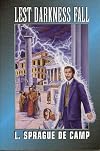
In 1938 an ancient historian/archaeologist is visiting Rome when he's struck by lightning and somehow sent back to 535 AD. He has absolutely no qualms about changing the future because he decides to 'invent' the printing press and a bunch of other should-be-anachronistic devices. He also decides to make sure that the Dark Ages don't happen.
I dunno. I feel like I should have adored this story, and I really super didn't. I mean, who hasn't daydreamed about going back in time and trying to show more decide how you would live in a past society (as a woman, though, these daydreams tend to end in a disturbingly nightmarish way for me). And yeah, it would be totally fun to act the non-modern day Prometheus (minus the monster, hopefully), but something about this version of the daydream seems off to me. Just because you know the printing press exists doesn't mean you could make one yourself (or am I just helplessly ignorant of such things? Does everyone know how to create something like that from essentially nothing?), and the main character has no problem doing just that and also creating so many other things without the benefit of Ikea-like instructions. (I mean, a telescope? Come on. I get the general concept, but actually *making* one?!) And he gets arrested a time or two, but has no real problem wriggling out of trouble, it seems. How was he not condemned for witchcraft?! (A TELESCOPE, FFS. AND CANONS.) It was also not...interesting? That period of Roman history has never been my favorite, but it's certainly not dull. But it seemed so here. Anyway, a big miss for me, sorry to say. show less
I dunno. I feel like I should have adored this story, and I really super didn't. I mean, who hasn't daydreamed about going back in time and trying to show more decide how you would live in a past society (as a woman, though, these daydreams tend to end in a disturbingly nightmarish way for me). And yeah, it would be totally fun to act the non-modern day Prometheus (minus the monster, hopefully), but something about this version of the daydream seems off to me. Just because you know the printing press exists doesn't mean you could make one yourself (or am I just helplessly ignorant of such things? Does everyone know how to create something like that from essentially nothing?), and the main character has no problem doing just that and also creating so many other things without the benefit of Ikea-like instructions. (I mean, a telescope? Come on. I get the general concept, but actually *making* one?!) And he gets arrested a time or two, but has no real problem wriggling out of trouble, it seems. How was he not condemned for witchcraft?! (A TELESCOPE, FFS. AND CANONS.) It was also not...interesting? That period of Roman history has never been my favorite, but it's certainly not dull. But it seemed so here. Anyway, a big miss for me, sorry to say. show less
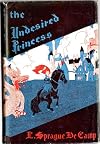
This story by L Sprague de Camp was published in book form in 1951 with a short story (Mr Arson) to fill up the pages. It is a fantasy tale typical of the author, in that it is highly inventive, moves along at a cracking pace and doesn't fail to raise a smile or two. Rollin Hobart is a hardworking executive who is keen on puzzle solving and a friend introduces him to Hoimon who is said to be an ascetic. They get into a conversation about Aristotelian two value logic and Hoimon says that he show more needs Rollin's help and transports him to the world of Logaia where his task is to save the king's daughter (Princess Argrimanda) who has been captured by the androsphinx. Rollin is the champion who must answer three questions to save her life and it starts with "is is not true that no cat has nine tails" Rollin is in his element of working out the logic of a double negative and breezes through the follow up questions. The king rewards Rollin with his daughters hand in marriage and half his kingdom. Rollin is a confirmed bachelor and anyway he wants to get back to work, but Hoimon has disappeared and he must travel through this strange world to find him to get himself back to America. Life becomes very complicated in this fantasy land where everything is taken literally in the world of "it is or it isn't;" there is nothing in between.
Rollin has a series of adventures with his companion the social lion and a "not very good magician", trying to find a way out of Logaia and avoiding being married to the beautiful Princess Argrimanda. I enjoyed this romp of a fantasy tale with its wit and humour. It is followed by a short story about an accidental summoning of a fire elemental which is just filler. 3.5 stars. show less
Rollin has a series of adventures with his companion the social lion and a "not very good magician", trying to find a way out of Logaia and avoiding being married to the beautiful Princess Argrimanda. I enjoyed this romp of a fantasy tale with its wit and humour. It is followed by a short story about an accidental summoning of a fire elemental which is just filler. 3.5 stars. show less
Lists
Awards


You May Also Like


Associated Authors
Statistics
- Works
- 328
- Also by
- 177
- Members
- 25,083
- Popularity
- #841
- Rating
- 3.6
- Reviews
- 324
- ISBNs
- 690
- Languages
- 15
- Favorited
- 25


