

Michael Rank
Author of From Muhammed to Burj Khalifa: A Crash Course in 2,000 Years of Middle East History
Works by Michael Rank
From Muhammed to Burj Khalifa: A Crash Course in 2,000 Years of Middle East History (2013) 33 copies, 1 review
Off the Edge of the Map: Marco Polo, Captain Cook, and 9 Other Travelers and Explorers That Pushed the Boundaries of the Known World (2014) 31 copies
History's Most Insane Rulers: Lunatics, Eccentrics, and Megalomaniacs From Emper (2013) 26 copies, 1 review
History's Greatest Generals: 10 Commanders Who Conquered Empires, Revolutionized Warfare, and Changed History Forever (2013) 13 copies, 1 review
Greek Gods and Goddesses Gone Wild: Bad Behavior and Divine Excess From Zeus's Philandering to Dionysus's Benders (2013) 12 copies
The Most Productive People in History: 18 Extraordinarily Prolific Inventors, Artists, and Entrepreneurs, From Archimedes to Elon Musk (2015) 7 copies
Spies, Espionage, and Covert Operations: From Ancient Greece to the Cold War (2014) 5 copies, 1 review
How Iowa Conquered the World: The Story of a Small Farm State's Journey to Global Dominance (2014) 4 copies
Against All Odds: Ten Historical Figures Who Overcome Incredible Adversity, From William the Bastard to Winston Churchill (2017) 3 copies
Feast 1 copy
Tagged
Common Knowledge
- Gender
- male
- Education
- Central European University
Istanbul Bilgi University (MA|Ottoman History) - Places of residence
- Istanbul, Turkey
- Map Location
- Turkey
Members
Reviews
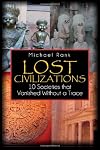
If you are interested in history, specifically lost or ancient civilizations {both real & possibly fictitious} then you will enjoy this book. This is not a book that is to be read as short stories, as it is full of factual opinions, proven truths, dated discoveries, etc. This is a small condensed version of 10 obscurely known and famously known lost civilizations. Each chapter covers one society or location, each chapter filled with facts and theories as to what may or could have occurred. show more Some of these civilizations have left clues behind to help us begin to figure out what happened, while others have left nothing at all for us to follow.
The most interesting part of this book were the slew of theories that are floating around the archeological and scientific worlds. Some seem very cut and dry, as others seem far fetched and unbelievable to a sane individual. The author, Michael Rank, takes you from The Lost City Of Atlantis to the Pyramid Builders and plenty of intriguing spots in between.
While reading each account of these lost civilizations, I learned facts that I had not known before. I was amazed when I read about Christopher Columbus in the Chapter entitled "Ancient American Explorers", this was not the Columbus that I was taught about in school. Michael Rank ended this chapter with the best paragraph ever in my opinion.
"The answer to these questions, if nothing else, may further reduce the legacy of Christopher Columbus. They are enough to make the once universally-beloved explorer roll in his grave. Still, at the very least, the Italian navigator will always have two inalienable accomplishments to console his woes: a federal holiday in his name, and a capital city in Ohio." ---This had me laughing but then again I had found things out that I didn't know about good ole Columbus. You will also learn how a sweet potato, a coin from a Greek city, a shipwreck in Texas, and other tokens play into theories based on Columbus and his famous discovery.
The best line in the book and one that most everyone can relate to, came in the third chapter of the book. The third chapter consists of the topic "The Indus Valley Civilization", this is a city where they are still trying to figure out how it ran-meaning did they appoint one ruler, a counsel, etc. People even suggest that it was a civilization without any rule at all. In reply to this it is stated:
" While it is highly unlikely that a civilization with millions of subjects could govern itself in a utopian anarchy- after all, if unmediated forums such as Facebook can erupt so easily into petty squabbles among adults that resemble that of first-graders fighting over a pack of Lunchables, imagine such a phenomenon at a civilization-wide scale." -----Now I am sure most of us can relate to this and probably have even witnessed this on numerous occasions. But what if? What if these civilizations were able to accomplish just that-a utopian anarchy?
That is one thing that I found myself thinking about during my journey through this book. That even if the civilizations are lost to us, they seemed to be living better lives and treating each other with much more dignity. There were many thoughts that I began exploring as I read each chapter of this book, and many questions that I began to want answered. Unfortunately, because they are lost or near lost to us, I will probably never get those answers. show less
The most interesting part of this book were the slew of theories that are floating around the archeological and scientific worlds. Some seem very cut and dry, as others seem far fetched and unbelievable to a sane individual. The author, Michael Rank, takes you from The Lost City Of Atlantis to the Pyramid Builders and plenty of intriguing spots in between.
While reading each account of these lost civilizations, I learned facts that I had not known before. I was amazed when I read about Christopher Columbus in the Chapter entitled "Ancient American Explorers", this was not the Columbus that I was taught about in school. Michael Rank ended this chapter with the best paragraph ever in my opinion.
"The answer to these questions, if nothing else, may further reduce the legacy of Christopher Columbus. They are enough to make the once universally-beloved explorer roll in his grave. Still, at the very least, the Italian navigator will always have two inalienable accomplishments to console his woes: a federal holiday in his name, and a capital city in Ohio." ---This had me laughing but then again I had found things out that I didn't know about good ole Columbus. You will also learn how a sweet potato, a coin from a Greek city, a shipwreck in Texas, and other tokens play into theories based on Columbus and his famous discovery.
The best line in the book and one that most everyone can relate to, came in the third chapter of the book. The third chapter consists of the topic "The Indus Valley Civilization", this is a city where they are still trying to figure out how it ran-meaning did they appoint one ruler, a counsel, etc. People even suggest that it was a civilization without any rule at all. In reply to this it is stated:
" While it is highly unlikely that a civilization with millions of subjects could govern itself in a utopian anarchy- after all, if unmediated forums such as Facebook can erupt so easily into petty squabbles among adults that resemble that of first-graders fighting over a pack of Lunchables, imagine such a phenomenon at a civilization-wide scale." -----Now I am sure most of us can relate to this and probably have even witnessed this on numerous occasions. But what if? What if these civilizations were able to accomplish just that-a utopian anarchy?
That is one thing that I found myself thinking about during my journey through this book. That even if the civilizations are lost to us, they seemed to be living better lives and treating each other with much more dignity. There were many thoughts that I began exploring as I read each chapter of this book, and many questions that I began to want answered. Unfortunately, because they are lost or near lost to us, I will probably never get those answers. show less
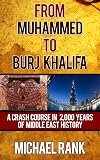
First and as always, this arrived on my doorstep for free, this time courtesy of a GoodReads giveaway. Despite that very kind consideration, I will review it with absolute and dispassionate candor.
When I signed up for this book I didn't read the description very closely and I expected a large, hardcover book that would take a few weeks to slog through. Honestly I was rather excited at the prospect so when this teeny thing showed up I was a bit put off. To its credit, it certainly is brief. show more No topic, no matter how complicated, takes more than 2-3 pages to be laid out in its entirety. It's simple, readable and accessible to anyone over the age of 12.
On the negative side of things, I would have been horrified had I paid for this. While it is simple, it is also in need of some editing. At the beginning particularly there are several simple typos and at one point it seems that a page might be missing. Further, the text is SO boiled down that one begins to doubt the veracity and completeness of what is being presented. This is a great overview but a rather terrifying one. The back of the book says, "by end you'll know as much as you would after a year-long college course." I'd feel really bad if I took a two-semester course on Middle-Eastern history and this was all I got out of it.
In summary, this is about as much history as you could pack into an hour of reading. Informative to be sure, but disappointing to anyone wanting something with a bit more meat on it. show less
When I signed up for this book I didn't read the description very closely and I expected a large, hardcover book that would take a few weeks to slog through. Honestly I was rather excited at the prospect so when this teeny thing showed up I was a bit put off. To its credit, it certainly is brief. show more No topic, no matter how complicated, takes more than 2-3 pages to be laid out in its entirety. It's simple, readable and accessible to anyone over the age of 12.
On the negative side of things, I would have been horrified had I paid for this. While it is simple, it is also in need of some editing. At the beginning particularly there are several simple typos and at one point it seems that a page might be missing. Further, the text is SO boiled down that one begins to doubt the veracity and completeness of what is being presented. This is a great overview but a rather terrifying one. The back of the book says, "by end you'll know as much as you would after a year-long college course." I'd feel really bad if I took a two-semester course on Middle-Eastern history and this was all I got out of it.
In summary, this is about as much history as you could pack into an hour of reading. Informative to be sure, but disappointing to anyone wanting something with a bit more meat on it. show less
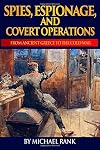
I've read several of Michael Rank's books, and this one was just as good as the others. I always appreciate the research that has gone into each book. Rank approaches history in an interesting way, and I always learn things I didn't know before. This book introduced me to a world I knew very little about, the world of spies and espionage, not just in our world today but back to ancient times. I'd never really considered how spies have affected the outcome of wars. The writing style is very show more readable, and the information is interesting - not what you'll find in your history textbooks! show less
History's Greatest Generals: 10 Commanders Who Conquered Empires, Revolutionized Warfare, and Changed History Forever by Michael Rank

I learned so much by reading this book, from military leaders I'd never studied to interesting details about those I knew. I found the methodology interesting also - just how does one choose the 10 greatest generals? Michael Rank has done an excellent job in reporting on ten fascinating individuals who still affect military leadership today.
You May Also Like


Statistics
- Works
- 17
- Members
- 185
- Popularity
- #117,259
- Rating
- 3.8
- Reviews
- 6
- ISBNs
- 17
- Languages
- 2