
Howard Nemerov (1920–1991)
Author of The Collected Poems of Howard Nemerov
About the Author
Nemerov's poetry is known for its wit and intelligence. His poetry is stoical and ironical. In his essays, he has argued against both what he considers to be the slackness of "free form" and the rigidity of prescriptive measures from the past. Nemerov's first book of poetry, The Image and Law show more (1947), was well received by critics, while The Salt Garden (1955) reflects the themes he was to develop in his writing, especially a concern for nature. The Blue Swallows (1967) received mixed reviews but won him the first Roethke Memorial Prize. He also received the Oscar Blumenthal Prize (1958), the Harriet Monroe Memorial Prize (1959), the National Institute and American Academy Award in literature (1961), and the Pulitzer Prize (1978). A lively and uncompromising critic, he has selected for his Poetry and Fiction: Essays of the 1970s emphasizing twentieth-century literature and the contemporary stance of the critic. Journal of the Fictive Life (1965) is Nemerov's somewhat grim introspective search for the conditions that make a writer most creative. He became the third poet laureate of the United States in 1988. (Bowker Author Biography) show less
Image credit: Blue Ridge Journal
Works by Howard Nemerov
Oak in the Acorn: On Remembrance of Things Past and on Teaching Proust, Who Will Never Learn (1987) 16 copies
The salt garden; poems 5 copies
Five American Poets — Contributor — 3 copies
Longfellow 2 copies
By Al Lebowitz's pool 2 copies
Guide to the Ruins 2 copies
Guide to the ruins; poems 1 copy
"Angel and Stone" 1 copy
La poesía y los poetas 1 copy
The Companions {poem} 1 copy
Epigram: Political Reflexion (included in The Norton Introduction to Literature - 5th Edition) 1 copy
Small Moment 1 copy
Associated Works
The Making of a Poem: A Norton Anthology of Poetic Forms (2000) — Contributor — 1,474 copies, 9 reviews
Literature: An Introduction to Fiction, Poetry, and Drama (1995) — Contributor, some editions — 1,017 copies, 7 reviews
Against Forgetting: Twentieth-Century Poetry of Witness (1993) — Contributor — 376 copies, 2 reviews
The Universe in Verse: 15 Portals to Wonder through Science and Poetry (2024) — Contributor — 164 copies, 8 reviews
Buzz Words: Poems About Insects (Everyman's Library Pocket Poets Series) (2021) — Contributor — 56 copies
New poems 1944. An anthology of American and British verse with a selection of poems from the armed forces. (1944) — Contributor — 2 copies
32 Współczesne Opowiadania Amerykańskie - Tom II — Contributor — 1 copy
Tagged
Common Knowledge
- Legal name
- Nemerov, Howard
- Birthdate
- 1920-03-01
- Date of death
- 1991-07-05
- Gender
- male
- Education
- Harvard University
- Occupations
- poet
novelist
critic - Organizations
- American Academy of Arts and Letters (Literature, 1960)
US Army Air Corps (WWII) - Awards and honors
- Bollingen Prize (1981)
National Medal of Arts (1987)
Fellowship of the Academy of American Poets (1970)
Poet Laureate Consultant in Poetry to the Library of Congress (1963-1964)
American Academy of Arts and Letters Academy Award (1961)
Poet Laureate Consultant in Poetry to the Library of Congress (1988-1990) (show all 8)
Aiken Taylor Award (1987)
Bowdoin Prize (1940) - Relationships
- Arbus, Diane (sister)
Nemerov, Alexander (son) - Nationality
- USA
- Birthplace
- New York, New York, USA
- Places of residence
- New York, New York, USA (birth)
University City, Missouri, USA (death) - Place of death
- University City, Missouri, USA
- Associated Place (for map)
- Missouri, USA
Members
Reviews
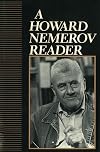
This generous selection of Howard Nemerov’s work appeared in the year of his death. It contains eighty or so poems, eight short stories, fifteen critical essays, and a novel. I found the poems consistently excellent. The stories were haunting and wry; “The Ocean to Cynthia,” in particular, was unforgettable.
The essays make clear that Nemerov cared deeply about language and doubted that poetry (or literature in general) was about much more than that. Language and thought. In one show more adventurous essay, “Bottom’s Dream,” Nemerov makes a case for the likeness of poems and jokes. I immediately thought of Shakespeare’s sonnets, in which so much depends on the final couplet—-the punchline, so to speak.
It was striking that when I came to the essays, which make up nearly one-third of the bulk of the volume, the voice is immediately identifiable as the wry voice of the story's narrator that immediately preceded them, “Digressions Around a Crow.”
Some of the essays are book reviews. Nemerov’s review of James Dickey’s Drowning with Others is so specifically observed, so personal in response that it reveals by contrast how superficial and formulaic book reviews often are. Another review pairs two books, one the esteemed magnum opus of a famous and prolific critic, Harold Bloom’s Anxiety of Influence, and a lesser-known book, Denis Donoghue’s Thieves of Fire. It’s the latter that Nemerov praises. As for Bloom’s Anxiety, Nemerov confesses, “My trouble with the book may merely have been that it was too difficult for me.” When did you last read that in a book review? But perhaps Nemerov is being coy. As he describes and comments on the book’s content, it becomes clear that the problem might not lie with Nemerov’s skill as a reader.
The novel that concludes this anthology, Federigo, Or, The Power of Love, is what in earlier centuries might have been called a comedy of manners. In fact, I thought it might not be out of place in the Decameron, albeit written and set in the early nineteen fifties. Yet the reminiscence of ancient tales is evoked by the names of characters such as Julian and Marius.
Federigo dragged at times. This may have been because Nemerov works more with interior states (à la Henry James) than with dialog and action. The love of paradox I enjoyed in his essays worked less for me in the novel. Late in the book, Federico quotes lines from Tennyson, then comments: “practically metaphysical, isn’t it, with all that back and forth in the words; confusing.” This could be taken as a wry self-criticism by the author. show less
The essays make clear that Nemerov cared deeply about language and doubted that poetry (or literature in general) was about much more than that. Language and thought. In one show more adventurous essay, “Bottom’s Dream,” Nemerov makes a case for the likeness of poems and jokes. I immediately thought of Shakespeare’s sonnets, in which so much depends on the final couplet—-the punchline, so to speak.
It was striking that when I came to the essays, which make up nearly one-third of the bulk of the volume, the voice is immediately identifiable as the wry voice of the story's narrator that immediately preceded them, “Digressions Around a Crow.”
Some of the essays are book reviews. Nemerov’s review of James Dickey’s Drowning with Others is so specifically observed, so personal in response that it reveals by contrast how superficial and formulaic book reviews often are. Another review pairs two books, one the esteemed magnum opus of a famous and prolific critic, Harold Bloom’s Anxiety of Influence, and a lesser-known book, Denis Donoghue’s Thieves of Fire. It’s the latter that Nemerov praises. As for Bloom’s Anxiety, Nemerov confesses, “My trouble with the book may merely have been that it was too difficult for me.” When did you last read that in a book review? But perhaps Nemerov is being coy. As he describes and comments on the book’s content, it becomes clear that the problem might not lie with Nemerov’s skill as a reader.
The novel that concludes this anthology, Federigo, Or, The Power of Love, is what in earlier centuries might have been called a comedy of manners. In fact, I thought it might not be out of place in the Decameron, albeit written and set in the early nineteen fifties. Yet the reminiscence of ancient tales is evoked by the names of characters such as Julian and Marius.
Federigo dragged at times. This may have been because Nemerov works more with interior states (à la Henry James) than with dialog and action. The love of paradox I enjoyed in his essays worked less for me in the novel. Late in the book, Federico quotes lines from Tennyson, then comments: “practically metaphysical, isn’t it, with all that back and forth in the words; confusing.” This could be taken as a wry self-criticism by the author. show less
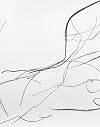
Albert Oehlen's graphic work forms a central part of his multifaceted oeuvre. Even though the affinity and interaction with his paintings is visible, Oehlen's works on paper distinguish themselves from his paintings and mark an independent category. Restless dashes, drawn with ink, form complex arrangements on white paper. Black lines are crossing and overlaying each other, condensing into tortuous bundles before fleeing into the void. Upon small format Oehlen develops works that occupy and show more survey this particular space. Beside abstract elements also human forms – bodies or mere single limbs – can be perceived, spreading over the sheet and immediately dissolving into abstraction. show less

James Dickey, Lawrence Ferlinghetti, and Howard Nemerov were representatives of their generation of USAmerican poets whom I identify with and admire. In poetic form, subject matter, and style, both Dickey and Ferlinghetti moved poetry in new directions. Dickey (q.v.) explored extremes of human experience, the outlandish, the macabre, or he plumbed the depths of ordinary experiences. Ferlinghetti identified with the Beats, using language and imagery of the San Francisco streets, of the show more outsider in society, the satirist of conventional culture. Not Nemerov. His poetry is quiet, steady, serene, at its best the most Wordsworthian of his era. His New and Selected Poems (U of Chicago P, 1960) established him, in my mind, as a laureate of the century.
Granted, there are at least two strains of his poetry that are definitely not Wordsworthian. He has a wry sense of humor and obviously enjoyed writing gentle Horatian satires. Examples in this volume are “Boom!” (taking off from a newspaper article touting a boom in religion), “Life Cycle of the Common Man” (“. . . Just under half a million cigarettes”), “Absent-Minded Professor,” and “Reflexions on the Seizure of the Suez, and on a Proposal to Line the Banks of That Canal with Billboard Advertisements.” His masterpiece in this genre, to my way of thinking, is regrettably not included in this collection. Entitled “Santa Claus,” it begins,
Somewhere on his travels the strange Child
Picked up with this overstuffed confidence man . . . .
Definitely non-Wordsworthian.
Occasionally, he still was also writing some very oblique poetry, playing with language as language. “The Scales of the Eyes” begins,
To fleece the Fleece from golden sheep,
Or prey, or get—is it not lewd
That we be eaten by our food
And slept by sleepers in our sleep?
Not Wordsworthian.
But the majority of his poems, especially in this volume, begin with the simplest of natural images in simple, direct language and move on to a quiet elegance, a thoughtful reflectiveness, even the sublime. Just listen to the opening lines of a few of my favorites:
People are putting up storm windows now,
Or were, this morning, until the heavy rain
Drove them indoors.
“Storm Windows”
This is about the stillness in moving things,
In running water, also in the sleep
Of winter seeds . . . .
“Runes” (a sequence of unrhymed sonnets)
Among the high-branching, leafless boughs
Above the roof-peaks of the town,
Snowflakes unnumberably come down.
“The View from an Attic Window”
Once I saw a grown man fall from a tree
and die. That’s years ago, I was a girl.
“Death and the Maiden” (a soliloquy)
But the most profound, the ones I return to again and again, are “Deep Woods” (“This / Place is too old for history to know / Beans about . . . .”), “The Pond” (an elegiac reflection on nature and the death of a child: “. . . immortality / Is ours until we have no use for it / And live anonymous in nature’s name / Though named in human memory and art”), and “To Lu Chi.”
The last one is a poem on poetry. Profound in its simplicity, it addresses the author of Wen Fu, a prose poem on the art of letters, A. D. 302. But it, too, begins (and will conclude) with unpretentious natural imagery:
Old sir, I think of you in this tardy spring,
Think of you for, maybe, no better reason
Than that the apple branches in the orchard
Bear snow, not blossoms . . . .
But the body of the poem is a reflection on the role of poetry in an age in which poetry is said, by certain scientists and philosophers, to be dead.
In letters as in many other trades
The active man and the contemplative
May both engage, and both in different ways
Succeed. The alphabet, the gift of god
Or of the gods (and modern as we are,
We have no better theory yet), was not
Devised to one use only, but to all
The work that human wit could find for it.
Nevertheless, the message that the speaker hears from Lu Chi is that he should “Continue.” And continue he does, not only reflecting on the role of poetry, but demonstrating its quiet assurance in his own lines, and in his return to the image of the apple trees in the tardy spring.
In “Deep Woods,” he refers to the “calligraphy” of vines overtaking bare limbs of trees. This is at the heart of Nemerov’s recurring theme. In the solemnity of nature, in language that reflects that solemnity, one sees written the message that otherwise one cannot hear or speak—“the joy of elevated thoughts,” “of something far more deeply interfused.”
In his poetic form, his subject matter, his imagery, his reflective style, one hears Wordsworth once again. Oh, yes, he speaks in another language for another century, but his heritage is apparent. From his forebears, he has learned—as he says in his poem called “Writing”—the miracle of language: “out there / at the pen’s point or brush’s tip, do world / and spirit wed.” Of course, he steps back immediately and admits the impermanence of writing and the “fission” of our imperfect world. But couched among the disclaimers is this statement of faith:
Miraculous. It is as though the world
were a great writing. show less
Granted, there are at least two strains of his poetry that are definitely not Wordsworthian. He has a wry sense of humor and obviously enjoyed writing gentle Horatian satires. Examples in this volume are “Boom!” (taking off from a newspaper article touting a boom in religion), “Life Cycle of the Common Man” (“. . . Just under half a million cigarettes”), “Absent-Minded Professor,” and “Reflexions on the Seizure of the Suez, and on a Proposal to Line the Banks of That Canal with Billboard Advertisements.” His masterpiece in this genre, to my way of thinking, is regrettably not included in this collection. Entitled “Santa Claus,” it begins,
Somewhere on his travels the strange Child
Picked up with this overstuffed confidence man . . . .
Definitely non-Wordsworthian.
Occasionally, he still was also writing some very oblique poetry, playing with language as language. “The Scales of the Eyes” begins,
To fleece the Fleece from golden sheep,
Or prey, or get—is it not lewd
That we be eaten by our food
And slept by sleepers in our sleep?
Not Wordsworthian.
But the majority of his poems, especially in this volume, begin with the simplest of natural images in simple, direct language and move on to a quiet elegance, a thoughtful reflectiveness, even the sublime. Just listen to the opening lines of a few of my favorites:
People are putting up storm windows now,
Or were, this morning, until the heavy rain
Drove them indoors.
“Storm Windows”
This is about the stillness in moving things,
In running water, also in the sleep
Of winter seeds . . . .
“Runes” (a sequence of unrhymed sonnets)
Among the high-branching, leafless boughs
Above the roof-peaks of the town,
Snowflakes unnumberably come down.
“The View from an Attic Window”
Once I saw a grown man fall from a tree
and die. That’s years ago, I was a girl.
“Death and the Maiden” (a soliloquy)
But the most profound, the ones I return to again and again, are “Deep Woods” (“This / Place is too old for history to know / Beans about . . . .”), “The Pond” (an elegiac reflection on nature and the death of a child: “. . . immortality / Is ours until we have no use for it / And live anonymous in nature’s name / Though named in human memory and art”), and “To Lu Chi.”
The last one is a poem on poetry. Profound in its simplicity, it addresses the author of Wen Fu, a prose poem on the art of letters, A. D. 302. But it, too, begins (and will conclude) with unpretentious natural imagery:
Old sir, I think of you in this tardy spring,
Think of you for, maybe, no better reason
Than that the apple branches in the orchard
Bear snow, not blossoms . . . .
But the body of the poem is a reflection on the role of poetry in an age in which poetry is said, by certain scientists and philosophers, to be dead.
In letters as in many other trades
The active man and the contemplative
May both engage, and both in different ways
Succeed. The alphabet, the gift of god
Or of the gods (and modern as we are,
We have no better theory yet), was not
Devised to one use only, but to all
The work that human wit could find for it.
Nevertheless, the message that the speaker hears from Lu Chi is that he should “Continue.” And continue he does, not only reflecting on the role of poetry, but demonstrating its quiet assurance in his own lines, and in his return to the image of the apple trees in the tardy spring.
In “Deep Woods,” he refers to the “calligraphy” of vines overtaking bare limbs of trees. This is at the heart of Nemerov’s recurring theme. In the solemnity of nature, in language that reflects that solemnity, one sees written the message that otherwise one cannot hear or speak—“the joy of elevated thoughts,” “of something far more deeply interfused.”
In his poetic form, his subject matter, his imagery, his reflective style, one hears Wordsworth once again. Oh, yes, he speaks in another language for another century, but his heritage is apparent. From his forebears, he has learned—as he says in his poem called “Writing”—the miracle of language: “out there / at the pen’s point or brush’s tip, do world / and spirit wed.” Of course, he steps back immediately and admits the impermanence of writing and the “fission” of our imperfect world. But couched among the disclaimers is this statement of faith:
Miraculous. It is as though the world
were a great writing. show less

Howard Nemerov was the guest of honor at a small dinner party that my wife and I were invited to by my good friend, physicist John Rigden. Howard was absolutely brilliant, in a way that reminded me of great scientists I have met. I was exhausted by the end of the dinner. This book has some of my favorite poetry, that always reminds me of that marvelous dinner.
Lists
Awards


You May Also Like


Associated Authors
Statistics
- Works
- 58
- Also by
- 27
- Members
- 685
- Popularity
- #36,933
- Rating
- 4.0
- Reviews
- 7
- ISBNs
- 42
- Favorited
- 5
