

Conrad Aiken (1889–1973)
Author of Selected Poems
About the Author
Conrad Potter Aiken was born on August 5, 1889 in Savannah, Georgia. He attended Middlesex School in Concord, Massachusetts, where he edited the school newspaper, played baseball, and won a tennis doubles championship. In 1907, he entered Harvard University and became friends with T.S. Eliot. show more Knowing he was destined to be a poet from an early age, Aiken is paradoxically regarded by some critics as both a dazzling craftsman and by others as being long-winded and vague. However, many critics feel that he was central to American literature, a "literary period in himself." Aiken is perhaps best known for his 1930 Pulitzer Prize-winning book Selected Poems (1929), but he regarded the poem "Ushant" as his most satisfying work. In almost all of Aiken's works, his overriding concern has been to resolve what might be called a personal identity crisis in terms of the cosmic evolution of consciousness and one's relationship to the world at large. In the 1920s Aiken turned to short story writing to supplement his income. Overall, he published more than 50 titles, including 35 collections of poetry, five novels, one autobiographical essay, and several collections of short stories and criticism. Conrad Aiken died on August 17, 1973 at the age of 84. (Bowker Author Biography) show less
Image credit: Courtesy of the NYPL Digital Gallery (image use requires permission from the New York Public Library)
Works by Conrad Aiken
A Reviewer's abc: Collected Criticism of Conrad Aiken from 1916 to the Present (1958) 21 copies, 1 review
Three novels 6 copies
Landscape West of Eden 5 copies
Impulse 4 copies
& in the Human Heart 3 copies
The pilgrimage of Festus 3 copies
Mr. Arcularis {story} 2 copies
An Old Man Sees Himself 2 copies
Senlin : a biography 2 copies
PUNCH: THE IMMORTAL LIAR 2 copies
Il logos nella Quinta Strada 1 copy
Il Logos della Quinta Strada 1 copy
The art of knowing 1 copy
Poetry in Crystal : Interpretations in Crystal of Thirty-One New Poems by Contemporary American Authors. (1963) 1 copy
Tetélestai [poem] 1 copy
Cambio de opinión 1 copy
Sea Holly [poem] 1 copy
The Room [poem] 1 copy
Senlin; a biography 1 copy
Associated Works
The Best Poems of the English Language: From Chaucer Through Robert Frost (2004) — Contributor — 1,249 copies, 3 reviews
The Selected Poems of Emily Dickinson [Modern Library Classics] (1996) — Introduction, some editions — 492 copies, 3 reviews
American Poetry: The Twentieth Century, Volume One: Henry Adams to Dorothy Parker (2000) — Contributor — 479 copies, 1 review
American Fantastic Tales : Terror and the Uncanny from Poe to the Pulps (2009) — Contributor — 290 copies, 4 reviews
This is My Best: American Greatest Living Authors Present and Give Their Reasons Why (1942) — Contributor — 215 copies
Vampires, Wine and Roses: Chilling Tales of Immortal Pleasure (1997) — Contributor — 169 copies, 2 reviews
Poetry in crystal; interpretations in crystal of thirty-one new poems by contemporary American poets (1963) — Contributor — 21 copies
The Best Short Stories of 1922 and the Yearbook of the American Short Story (2017) — Contributor — 7 copies
American poets : an anthology of contemporary verse — Contributor — 4 copies
Cricket Magazine, Vol. 5, No. 10, June 1978 — Contributor — 3 copies
Tagged
Common Knowledge
- Canonical name
- Aiken, Conrad
- Legal name
- Aiken, Conrad Potter
- Other names
- Leake, Samuel, Jr.
- Birthdate
- 1889-08-05
- Date of death
- 1973-08-17
- Gender
- male
- Education
- Middlesex School, Concord, Massachusetts
Harvard University (AB|1911) - Occupations
- poet
novelist
literary critic
short story writer - Organizations
- American Academy of Arts and Letters
Harvard Club - Awards and honors
- Poet Laureate Consultant in Poetry to the Library of Congress (1950-52)
Gold Medal, National Institute of Arts and Letters
National Medal for Literature
Bollingen Prize (1956)
Poet Lauerate of Georgia
Shelley Memorial Award (first winner) (show all 13)
Gold Medal of Achievement, Brandeis University
St. Botolph Award
Huntington Hartford Foundation award
Academy of American Poets Fellowship
Guggenheim fellowship
Aiken Taylor Award
Georgia Writers Hall of Fame - Relationships
- Lorenz, Clarissa (wife)
Aiken, Joan (daughter)
Hodge, Jane Aiken (daughter)
Aiken, John (son)
Eliot, T. S. (friend)
Pound, Ezra (friend) (show all 9)
Lowry, Malcolm (friend)
Davies, W. H. (friend)
Santayana, George (teacher) - Short biography
- Conrad Aiken was an American poet, short story writer, critic and novelist. Most of Aiken's work reflects his intense interest in psychoanalysis and the development of identity. As editor of Emily Dickinson's Selected Poems in 1924, he was largely responsible for establishing her posthumous literary reputation. From the 1920s Aiken divided his life between England and the United States, playing a significant role in introducing American poets to the British audience.
He was the father of two gifted writers, Joan Aiken and Jane Aiken Hodge. - Nationality
- USA
- Birthplace
- Savannah, Georgia, USA
- Places of residence
- Savannah, Georgia, USA
New Bedford, Massachusetts, USA
Concord, Massachusetts, USA
Washington, D.C., USA
Rye, New York, USA
West Brewster, Massachusetts, USA - Place of death
- Savannah, Georgia, USA
- Burial location
- Bonaventure Cemetery, Savannah, Georgia, USA
- Map Location
- USA
Members
Discussions
THE DEEP ONES: "Mr. Arcularis" by Conrad Aiken in The Weird Tradition (April 2016)
Reviews

An almost glacially slow story (1924) of the 'snow'-drifting of a 12 year old boy into detachment from reality. A fantasy that leaves it open whether the force is psychological or supernatural but part of the skill of the tale lies in exposing the desperation of parents seen through the boy's eyes.
Aiken was a poet and the story is expressed through an extended metaphor in which detachment from reality is likened to the effect of snow on the world - dampening it down, silencing it, removing show more its colour.
The metaphor appears eventually to have a consciousness outside the boy and to be seductive so that the final loss of consciousness - the sleep - is like that of an Arctic explorer (referenced in the text) losing consciousness from cold. Perhaps we are on the edge of a ghost story here. show less
Aiken was a poet and the story is expressed through an extended metaphor in which detachment from reality is likened to the effect of snow on the world - dampening it down, silencing it, removing show more its colour.
The metaphor appears eventually to have a consciousness outside the boy and to be seductive so that the final loss of consciousness - the sleep - is like that of an Arctic explorer (referenced in the text) losing consciousness from cold. Perhaps we are on the edge of a ghost story here. show less
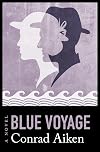
Reading Aiken’s BLUE VOYAGE again, and it makes more sense this time. Not sure if it just took a while to get used to Aiken’s style, or if I’m paying closer attention now, or if it’s because I understand the story better. Regardless, it’s becoming one of those books I’ll return to every couple of years just because it’s so deep, atmospheric and puzzling. Sex, death, eternity, spirituality, religion- it’s all there in one form or another.
As for structure and tone, it moves show more forward in time, over a series of days, but the voyage is fraught with flashbacks, internal and external conversations, dreams, letters, multiple streams of dialogue vying simultaneously for the reader’s attention. To read this book is to walk into the middle of conversations, stories, relationships and voyages. There’s no beginning and no end; it feels like we’ve been on the ship forever. Though countries are mentioned, the world is this ship, an island isolated from everything in the past or future.
What doesn’t make sense yet are the recurring images/thoughts of crucifixion. Why didn’t Aiken instead speak of self-sacrifice in terms of martyrdom or masochism? To be crucified is not necessarily something that one submits to willingly, like a martyr, but ending up on the cross has never been something one couldn’t avoid, if they put their mind to it. Maybe Aiken is simply implying that a commitment to something like marriage- matrimony or avoidance of the same figure prominently in this tale- is only worthwhile if someone is willing to give up freedom and comfort.
Marriage doesn’t fare well, as an institution, in the book. Smith’s marriage- Smith being a secondary character- failed years before; Demarest (the main character) is a confirmed but unfulfilled, bachelor; Cynthia, his ex-fiancé, is about to be married; one of the ship’s staff is married, but ready to cheat on his wife; the Major stays away from his wife for months at a time; the alluring Faubion is married, but on the cusp of a divorce due to her infidelity. None of the characters in Blue Voyage appear with their spouses- and of all of them, Demarest seems the closest to desiring a meaningful relationship. Yet he seems unable, due to fear or a lack of confidence, to effect the relationship he desires.
As for the characters, one of the most annoying is the geriatric Smith; more pathetic than lecherous, he is the personification of regret. Allegedly on the prowl for women, he is more talk than action. He flirts when he should be charming, charming when he should be genuine, friendly when he should instead be a friend. He seems to be the future that Demarest sees himself destined to become- unless this protagonist can overcome a fear of failure enabled by narcissism. Smith is the closest thing to a friend that Demarest has on board the ship, yet the elderly man is more of a co-conspirator in the quest for sex. To say that Smith is past his prime would be understatement; he is on death’s door, or might as well be, so unable is he to connect with the opposite sex.
I could go on and on, for BLUE VOYAGE is one of those books of which another book could be written, there is so much going on- the author’s psyche embedded everywhere one looks. His affairs, wordplay, poetry career, musings on religion, witnessed deaths in his family, and father-son dysfunction. It’s all there, and put together in such a way that I’ll never get to the bottom of it- not as long as his other puzzler, USHANT, is around. show less
As for structure and tone, it moves show more forward in time, over a series of days, but the voyage is fraught with flashbacks, internal and external conversations, dreams, letters, multiple streams of dialogue vying simultaneously for the reader’s attention. To read this book is to walk into the middle of conversations, stories, relationships and voyages. There’s no beginning and no end; it feels like we’ve been on the ship forever. Though countries are mentioned, the world is this ship, an island isolated from everything in the past or future.
What doesn’t make sense yet are the recurring images/thoughts of crucifixion. Why didn’t Aiken instead speak of self-sacrifice in terms of martyrdom or masochism? To be crucified is not necessarily something that one submits to willingly, like a martyr, but ending up on the cross has never been something one couldn’t avoid, if they put their mind to it. Maybe Aiken is simply implying that a commitment to something like marriage- matrimony or avoidance of the same figure prominently in this tale- is only worthwhile if someone is willing to give up freedom and comfort.
Marriage doesn’t fare well, as an institution, in the book. Smith’s marriage- Smith being a secondary character- failed years before; Demarest (the main character) is a confirmed but unfulfilled, bachelor; Cynthia, his ex-fiancé, is about to be married; one of the ship’s staff is married, but ready to cheat on his wife; the Major stays away from his wife for months at a time; the alluring Faubion is married, but on the cusp of a divorce due to her infidelity. None of the characters in Blue Voyage appear with their spouses- and of all of them, Demarest seems the closest to desiring a meaningful relationship. Yet he seems unable, due to fear or a lack of confidence, to effect the relationship he desires.
As for the characters, one of the most annoying is the geriatric Smith; more pathetic than lecherous, he is the personification of regret. Allegedly on the prowl for women, he is more talk than action. He flirts when he should be charming, charming when he should be genuine, friendly when he should instead be a friend. He seems to be the future that Demarest sees himself destined to become- unless this protagonist can overcome a fear of failure enabled by narcissism. Smith is the closest thing to a friend that Demarest has on board the ship, yet the elderly man is more of a co-conspirator in the quest for sex. To say that Smith is past his prime would be understatement; he is on death’s door, or might as well be, so unable is he to connect with the opposite sex.
I could go on and on, for BLUE VOYAGE is one of those books of which another book could be written, there is so much going on- the author’s psyche embedded everywhere one looks. His affairs, wordplay, poetry career, musings on religion, witnessed deaths in his family, and father-son dysfunction. It’s all there, and put together in such a way that I’ll never get to the bottom of it- not as long as his other puzzler, USHANT, is around. show less

Conrad Aiken, the American novelist and poet who won a Pulitzer Prize in 1930 (for his poetry), profiles various animals in this picture-book collection of fourteen poems, the only children's book (to the best of my knowledge) that he ever wrote. From the kingly lion, with "those powerful paws / those cutting claws / and o those mighty jaws," to the plump and kindly cat, who is so "Mysterious! / Whiskerious! / Imperious!," the animals depicted here come vividly to life. The poems themselves show more are playful, with a tripping cadence and rhyming scheme that make for an excellent read-aloud. Some of them are also a lot of fun to read on the page, as Aiken plays around with concrete, or visual poetry. The Owl, for instance, has a middle section in which the words tiptoe across the page, one per line, corresponding to the warning being given to mice, to beware of their strigine foes...
I stumbled upon Cats and Bats and Things with Wings quite by accident, while browsing through the children's poetry section of my public library this past weekend, and was immediately intrigued. I know little about Aiken, or his work, but am familiar with his name, as he is the father of celebrated children's author Joan Aiken (as well as her sister and fellow author, Jane Aiken Hodge). I hadn't been aware that he had written any children's books (as mentioned, this appears to be the only one), but thought I'd give the book a try. I'm glad I did, as I enjoyed the poems themselves, and the accompanying artwork by Milton Glaser. Recommended to young animals lovers and poetry readers. show less
I stumbled upon Cats and Bats and Things with Wings quite by accident, while browsing through the children's poetry section of my public library this past weekend, and was immediately intrigued. I know little about Aiken, or his work, but am familiar with his name, as he is the father of celebrated children's author Joan Aiken (as well as her sister and fellow author, Jane Aiken Hodge). I hadn't been aware that he had written any children's books (as mentioned, this appears to be the only one), but thought I'd give the book a try. I'm glad I did, as I enjoyed the poems themselves, and the accompanying artwork by Milton Glaser. Recommended to young animals lovers and poetry readers. show less

Though the least accessible memoir I have ever read, Aiken's epic-length essay pulls me back every so often as if to say, "Oh, come on. You can do it. Finish the book this time." And I try. And I fail. But one of these days... (Which is what I keep saying about Moby Dick and Don Quixote.)
The book's obtuse nature aside, though, it is full of prose that is by turns mysterious and beautiful, surreal and stark, tender and brutal. Like many of Aiken's stories, you are entering a world you won't show more soon forget, the events compelling, even more so if you study about Aiken's life before tackling Ushant. In the end, I believe it was very brave of Aiken to bare his life to the world- even if it's sometimes done by way of riddles, ciphers and symbolism. That's one of the reasons this book is so fascinating and rewarding.
To get a fuller picture of Aiken's style and talent, check out the novel Blue Voyage. Similar themes and style, but more straightforward... well, most of the time... show less
The book's obtuse nature aside, though, it is full of prose that is by turns mysterious and beautiful, surreal and stark, tender and brutal. Like many of Aiken's stories, you are entering a world you won't show more soon forget, the events compelling, even more so if you study about Aiken's life before tackling Ushant. In the end, I believe it was very brave of Aiken to bare his life to the world- even if it's sometimes done by way of riddles, ciphers and symbolism. That's one of the reasons this book is so fascinating and rewarding.
To get a fuller picture of Aiken's style and talent, check out the novel Blue Voyage. Similar themes and style, but more straightforward... well, most of the time... show less
Lists
Awards


You May Also Like


Associated Authors
Statistics
- Works
- 99
- Also by
- 63
- Members
- 1,326
- Popularity
- #19,389
- Rating
- 4.0
- Reviews
- 24
- ISBNs
- 90
- Languages
- 4
- Favorited
- 2