
Max Gross
Author of The Lost Shtetl
About the Author
Max Gross is a staff reporter for the New York Post, where his article "Schlub You the Right Way" was published. His occasional column, The Hapless Jewish Writer, appears in the Jewish Daily Forward. He lives in Queens, New York.
Image credit: via Brooklyn Public Library
Works by Max Gross
Tagged
Common Knowledge
- Birthdate
- 1978
- Gender
- male
- Nationality
- USA
- Birthplace
- New York, New York, USA
- Associated Place (for map)
- New York, USA
Members
Reviews

Do you have to be Jewish to love this book? No. You just have to be the type of reader who enjoys a bit of historical magical realism. In this tale, the tiny, insular Polish shtetl (Yiddish for "village") of Kreskol has been hidden in the deep woods, beyond modern viewing and imagination, surviving world wars and undiscovered even by Nazi troops when Poland was overrun. When a contentious married couple divorces (very rare) and then disappears, a baker's apprentice is recruited to venture show more into the outer world and find them. Yankel hitches a ride with gypsies, the only outsiders who travel through Kreskol, and is brought to Smolskie, the nearest small city. Here Yankel makes the startling discoveries of cars, trains, cellphones, televisions, internet, and planes, and lands in a psychiatric hospital where he finds sympathetic staff members who help him to make a gradual adjustment to the perils and pleasure of what for him is a true new world. We also follow the couple Yankel is seeking, Pesha and Ishmael, as they go their own separate and doomed ways. And back in Kreskol, everything changes when the whole of Poland and the entire world marvels at their secret existence. This is a delightful adventure story, filled with humor and pathos.
Quote: "He saw in the story of the Holocaust a vision of the future that Kreskol narrowly avoided. He saw all the great advances of technology that had been honed and perfected in the service of mankind's most primitive and horrific instincts." show less
Quote: "He saw in the story of the Holocaust a vision of the future that Kreskol narrowly avoided. He saw all the great advances of technology that had been honed and perfected in the service of mankind's most primitive and horrific instincts." show less
This book offers something that I have yet to find in modern (post-Shoah) Jewish literature: an alternative history that manages to speak to the cruel history of the Holocaust, demonstrate the reality of modern antisemitism, and empower Jewish narratives while also weaving an interesting and entertaining tale. No doubt, I was able to laugh, cry, and smile throughout this novel because of my culturally Jewish upbringing. Many of the punch lines would have likely gone undetected if I did not show more have a Jewish background. I found this novel to be a true page turner and I genuinely looked forward to getting back to my daily reading.
This being said, I have a few critiques. Firstly, I did find that the plot became a bit unnecessarily complex within the last 100 pages. I was saddened by this because in the first 300 pages, the author had managed to expertly relay a complex story line while remaining coherent and cohesive (ie: the plot had linear movement) but near the end, the plot seemed tangential and frustrated. My second criticism is that for all the attention to accuracy and empowerment paid to the Jewish characters I was dissapointed with the stereotypical portrayal of the Roma characters. I felt that there was really an opportunity missed here to add complexity and depth to the Roma characters. I expect that there will be sequel. show less
This being said, I have a few critiques. Firstly, I did find that the plot became a bit unnecessarily complex within the last 100 pages. I was saddened by this because in the first 300 pages, the author had managed to expertly relay a complex story line while remaining coherent and cohesive (ie: the plot had linear movement) but near the end, the plot seemed tangential and frustrated. My second criticism is that for all the attention to accuracy and empowerment paid to the Jewish characters I was dissapointed with the stereotypical portrayal of the Roma characters. I felt that there was really an opportunity missed here to add complexity and depth to the Roma characters. I expect that there will be sequel. show less
**SPOILERS**
i don't like to give half-star ratings but i just couldn't decide with this book. it took me so long to get through - half for life reasons but half because it was just so tedious at times. that was a real disappointment; everything i read about this book beforehand suggested it would be right up my alley. and i guess i was part right: i genuinely loved the kreskol narrative, the worldbuilding around kreskol's isolation, the digressions into the rabbis' lives and histories. there show more were parts of this that hit me hard, just the horrifying & intangible misery of the shoah, of the realities of modern antisemitism.
but for everything that i thought was well-written and deftly handled, there was the absolutely grim pesha and yankel storyline, which had no joy in it for anyone involved, and reinforced some truly frightful stereotypes about women. to the point that there were moments (in particular the fight between the two prostitutes) where i found myself wondering how this got published in the here and now. i just got so tired of this whole narrative and wished i could be back in kreskol. (like, i GET why this was included, but i didn't come here to read about sex trafficking in modern poland!) and the net effect of this was that i soured on yankel, who i had enjoyed so much in the first half of the book, and the final pages of the story had no emotional effect on me. i understood intellectually that this was an emotive ending but i was just like - oh, okay, that's it.
speaking of the modern poland stuff, i truly felt there was more love and detail spent on depicting yankel's experiences of modernity than on kreskol itself. i would have enjoyed it more if the book leant hard into either of those things. i would have loved a book half this length that really focused in on kreskol society. i would have probably enjoyed a story about a guy who is functionally from the past learning how to function in modernity. but by trying to balance these two things, veering wildly back and forth, the lost shtetl lost me. and in the end there was no real closure to either story. which is fine! there's nothing wrong with an open ending! but here, it was just unsatisfying.
there were also a couple really small nitpicky things that broke immersion and ruined my enjoyment of the book. the footnotes for yiddish/hebrew/polish translation were one thing, but was frustrated by the fact that there were footnotes for words that are quite common in american english/yinglish (and therefore easy to google, which i would have done were i not myself a yid.) also the historical footnotes felt like things that could have been elaborated in text very easily, given the narrator's didactic tone. (i did like the narration, in general!)
the other thing that annoyed me was the fact that every single character had a unique name and surname, which i guess is the case in a lot of books, but there were so many characters mentioned in asides that it became really noticeable here. i suppose this was done for ease of identification, but with the sheer volume of side characters and the fact that most of them didn't take up much space in the story, this had the effect of making it all feel rather cluttered. and, really, in a small town like kreskol i'd expect at least five prominent esthers and herschels apiece.
also, for my politics and tastes, this was a little too zionist. but you can totally understand some mythologising of israel for the characters in kreskol - i just wish there'd been more space to actually read about that. idk. largely unsatisfied by this book, which is a huge pity, because there was some real brilliance in here, damped by everything that annoyed me. show less
i don't like to give half-star ratings but i just couldn't decide with this book. it took me so long to get through - half for life reasons but half because it was just so tedious at times. that was a real disappointment; everything i read about this book beforehand suggested it would be right up my alley. and i guess i was part right: i genuinely loved the kreskol narrative, the worldbuilding around kreskol's isolation, the digressions into the rabbis' lives and histories. there show more were parts of this that hit me hard, just the horrifying & intangible misery of the shoah, of the realities of modern antisemitism.
but for everything that i thought was well-written and deftly handled, there was the absolutely grim pesha and yankel storyline, which had no joy in it for anyone involved, and reinforced some truly frightful stereotypes about women. to the point that there were moments (in particular the fight between the two prostitutes) where i found myself wondering how this got published in the here and now. i just got so tired of this whole narrative and wished i could be back in kreskol. (like, i GET why this was included, but i didn't come here to read about sex trafficking in modern poland!) and the net effect of this was that i soured on yankel, who i had enjoyed so much in the first half of the book, and the final pages of the story had no emotional effect on me. i understood intellectually that this was an emotive ending but i was just like - oh, okay, that's it.
speaking of the modern poland stuff, i truly felt there was more love and detail spent on depicting yankel's experiences of modernity than on kreskol itself. i would have enjoyed it more if the book leant hard into either of those things. i would have loved a book half this length that really focused in on kreskol society. i would have probably enjoyed a story about a guy who is functionally from the past learning how to function in modernity. but by trying to balance these two things, veering wildly back and forth, the lost shtetl lost me. and in the end there was no real closure to either story. which is fine! there's nothing wrong with an open ending! but here, it was just unsatisfying.
there were also a couple really small nitpicky things that broke immersion and ruined my enjoyment of the book. the footnotes for yiddish/hebrew/polish translation were one thing, but was frustrated by the fact that there were footnotes for words that are quite common in american english/yinglish (and therefore easy to google, which i would have done were i not myself a yid.) also the historical footnotes felt like things that could have been elaborated in text very easily, given the narrator's didactic tone. (i did like the narration, in general!)
the other thing that annoyed me was the fact that every single character had a unique name and surname, which i guess is the case in a lot of books, but there were so many characters mentioned in asides that it became really noticeable here. i suppose this was done for ease of identification, but with the sheer volume of side characters and the fact that most of them didn't take up much space in the story, this had the effect of making it all feel rather cluttered. and, really, in a small town like kreskol i'd expect at least five prominent esthers and herschels apiece.
also, for my politics and tastes, this was a little too zionist. but you can totally understand some mythologising of israel for the characters in kreskol - i just wish there'd been more space to actually read about that. idk. largely unsatisfied by this book, which is a huge pity, because there was some real brilliance in here, damped by everything that annoyed me. show less
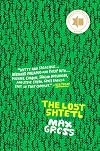
Gets off to a fantastic start, then the story screeches to a halt and is replaced by endless pages of exposition to provide the history of how the shtetl came about to be lost. Thankfully it picks up again, but without the charm of the opening chapters. In fact, the book becomes quite dark, with scenes from the Holocaust, sex trafficking, and assorted tribulations. In other words, this is a straight tragedy, made even more tragic by the contrast to the relatively light and humorous opening. show more
It's very good, but I would have approached a slightly lighter approach. I think that the challenges of having modernity thrust upon the lost shtetl could have been faced without quite so much grief and loss, while still retaining the tension with tradition. A bit more levity, and less bleak, without the crushing depression. show less
It's very good, but I would have approached a slightly lighter approach. I think that the challenges of having modernity thrust upon the lost shtetl could have been faced without quite so much grief and loss, while still retaining the tension with tradition. A bit more levity, and less bleak, without the crushing depression. show less
Lists
Europe (1)
Five star books (1)
Awards


You May Also Like


Associated Authors
Statistics
- Works
- 3
- Members
- 252
- Popularity
- #90,784
- Rating
- 3.7
- Reviews
- 13
- ISBNs
- 18
- Languages
- 5