
Avram Davidson (1923–1993)
Author of The Phoenix and the Mirror
About the Author
Avram Davidson was one of the great masters of short fiction of the twentieth century, a writer who won the major awards in the science-fiction, fantasy, and mystery genres -- the Hugo, Edgar, and World Fantasy Awards -- while constantly pushing at the boundaries of those genres. He published show more seventeen novels and wrote more than 200 stories and essays during his lifetime show less
Image credit: Courtesy of the Avram Davidson Society
Series
Works by Avram Davidson
Adventures in Unhistory: Conjectures on the Factual Foundations of Several Ancient Legends (1993) 224 copies, 5 reviews
The Best from Fantasy and Science Fiction: 12th Series (1963) — Editor; Contributor — 128 copies, 2 reviews
The Best from Fantasy and Science Fiction: 13th Series (1964) — Editor; Contributor — 104 copies, 1 review
The Magazine of Fantasy and Science Fiction October 1964, Vol. 27, No. 4 (1964) — Editor — 13 copies
The Magazine of Fantasy and Science Fiction November 1964, Vol. 27, No. 5 (1964) — Editor; Author; Book reviewer — 13 copies
The Magazine of Fantasy and Science Fiction December 1963, Vol. 25, No. 6 (1963) — Editor — 12 copies
The Magazine of Fantasy and Science Fiction October 1963, Vol. 25, No. 4 (1963) — Editor — 11 copies
The Magazine of Fantasy and Science Fiction September 1962, Vol. 23, No. 3 (1962) — Editor — 11 copies
The Magazine of Fantasy and Science Fiction February 1963, Vol. 24, No. 2 (1963) — Editor — 11 copies
The last wizard: With a letter of explanation (Publications of the Avram Davidson Society) (1972) 4 copies
Duke Pasquale's Ring 4 copies
Bumberboom [short fiction] 4 copies
The Montavarde Camera 4 copies
The Cost of Kent Castwell 3 copies
Rogue Dragon [novella] 3 copies
The Magazine of Fantasy & Science Fiction: Volume IV No. 11 (British Edition) (1990) — Editor — 2 copies
Up Christopher to Madness 2 copies
The Kappa Nu Nexus — Author — 2 copies
Veldslag der vrouwen 2 copies
Big Sam {short story} 2 copies
Pebble in Time 1 copy
Basilisk [short story] 1 copy
Skinny 1 copy
Blunt 1 copy
Blood Money [short fiction] 1 copy
I sette segni di Tarnis 1 copy
TREASURY 1 copy
Sacrifice 1 copy
Dr Bhumbo Singh 1 copy
Summerland 1 copy
Jury-Rig 1 copy
The Other Magus 1 copy
Something Rich and Strange 1 copy
Davidson Avram 1 copy
Great is Diana 1 copy
Seeomancer {short story} 1 copy
Climacteric 1 copy
Twenty-three 1 copy
Leg {short story} 1 copy
The Spoor Of The Unicorn 1 copy
Young Doctor Eszterhazy 1 copy
Far Countrie {novella} 1 copy
George's Shirt {novelette} 1 copy
Associated Works
The Best of Mystery: 63 Short Stories Chosen by the Master of Suspense (1982) — Contributor — 427 copies
The Norton Book of Science Fiction: North American Science Fiction, 1960-1990 (1993) — Contributor — 345 copies, 6 reviews
Wandering Stars: An Anthology of Jewish Fantasy and Science Fiction (1974) — Contributor — 339 copies, 6 reviews
The Year's Best Science Fiction: Seventh Annual Collection (1990) — Contributor — 310 copies, 2 reviews
The Year's Best Science Fiction: Third Annual Collection (1986) — Contributor — 251 copies, 1 review
The Year's Best Science Fiction: First Annual Collection (1984) — Contributor — 148 copies, 1 review
The Jewish caravan : great stories of twenty-five centuries (1965) — Contributor, some editions — 141 copies
Science Fiction Showcase: Eleven Extraordinary Stories by Eleven Masters of Science-Fiction and Fantasy (1959) — Contributor — 111 copies, 3 reviews
The Prentice Hall Anthology of Science Fiction and Fantasy (2000) — Contributor — 99 copies, 2 reviews
Alfred Hitchcock Presents : Stories My Mother Never Told Me (1963) — Contributor — 94 copies, 2 reviews
The Magazine of Fantasy & Science Fiction: A 30-Year Retrospective (1980) — Contributor — 94 copies, 1 review
Mammoth Book of Short Fantasy Novels (Mammoth) (1986) — Contributor, some editions — 80 copies, 1 review
The Best Fantasy Stories from the Magazine of Fantasy & Science Fiction (1985) — Contributor — 78 copies, 2 reviews
Alfred Hitchcock's Mystery Magazine Presents Fifty Years of Crime and Suspense (2006) — Contributor — 78 copies, 1 review
SF: The Year's Greatest Science Fiction and Fantasy: 4th Annual Volume (1959) — Contributor — 78 copies, 1 review
Isaac Asimov's Wonderful Worlds of Science Fiction, Volume 6: Neanderthals (1987) — Contributor — 73 copies, 1 review
SF: The Year's Greatest Science-Fiction and Fantasy: 3rd Annual Volume (1958) — Contributor — 66 copies, 2 reviews
Isaac Asimov's Magical Worlds of Fantasy, Volume 11: Curses (1939) — Contributor — 59 copies, 1 review
Transformations II: Understanding American History Through Science Fiction (1974) — Contributor — 32 copies
Ellery Queen's murdercade: 23 stories from Ellery Queen's mystery magazine (Mystery annual ; 29) (1975) — Contributor — 25 copies
The Magazine of Fantasy and Science Fiction June 1991, Vol. 80, No. 6 (1991) — Contributor — 22 copies
The Magazine of Fantasy and Science Fiction October 1961, Vol. 21, No. 4 (1961) — Contributor — 21 copies, 1 review
The Magazine of Fantasy and Science Fiction October 1981, Vol. 61, No. 4 (1981) — Contributor — 19 copies
The Magazine of Fantasy and Science Fiction November 1990, Vol. 79, No. 5 (1990) — Author — 17 copies
The Magazine of Fantasy and Science Fiction October 1982, Vol. 63, No. 4 (1982) — Author — 16 copies
The Magazine of Fantasy and Science Fiction October 1988, Vol. 75, No. 4 (1988) — Author — 15 copies
The Magazine of Fantasy and Science Fiction October 1967, Vol. 33, No. 4 (1967) — Contributor — 14 copies
Hollywood Ghosts: Haunting, Spine-Chilling Stories from America's Film Capital (American Ghost Series) (1991) — Contributor — 12 copies
The Magazine of Fantasy and Science Fiction April 1983, Vol. 64, No. 4 (1983) — Contributor — 12 copies
The Magazine of Fantasy and Science Fiction June 1960, Vol. 18, No. 6 (1960) — Contributor — 12 copies
Special Wonder: The Anthony Boucher Memorial Anthology of Fantasy and Science Fiction (1970) — Contributor — 12 copies
The Magazine of Fantasy and Science Fiction February 1962, Vol. 22, No. 2 (1962) — Contributor — 11 copies
Isaac Asimov's Science Fiction Magazine: Vol. 4, No. 10 [October 1980] (1980) — Contributor — 10 copies
The Magazine of Fantasy and Science Fiction August 1958, Vol. 15, No. 2 (1958) — Contributor — 8 copies
The Magazine of Fantasy and Science Fiction August 1961, Vol. 21, No. 2 (1961) — Contributor — 7 copies
The Magazine of Fantasy and Science Fiction November 1958, Vol. 15, No. 5 (1958) — Contributor — 7 copies, 1 review
Tagged
Common Knowledge
- Canonical name
- Davidson, Avram
- Other names
- Davidson, Avram James
- Birthdate
- 1923-04-23
- Date of death
- 1993-05-08
- Gender
- male
- Occupations
- writer
- Organizations
- Swordsmen and Sorcerers' Guild of America (SAGA)
Science Fiction and Fantasy Writers of America
United States Navy (WWII) - Awards and honors
- World Fantasy Award (Life Achievement, 1986)
- Relationships
- Davis, Grania (ex-wife)
- Nationality
- USA
- Birthplace
- Yonkers, New York, USA
- Places of residence
- Mexico
Belize
Sausalito, California, USA
San Francisco, California, USA - Place of death
- Bremerton, Washington, USA
- Associated Place (for map)
- USA
Members
Discussions
Lee Moyer Cover Recreations in Good Show Sir! — bad science fiction and fantasy covers (November 2024)
Reviews
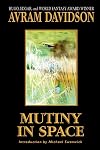
Davidson, Avram. Mutiny in Space. 1964. Prologue, 2012.
Everything about the way this book has usually been packaged is misleading. The title should be something like Castaways on Valentine’s World because most of the action takes place on that planet. The name of the planet suggests a romantic focus that is present but downplayed in the plot. A blurb says the main characters are surrounded by a “howling mob of women,” phrasing that suggests a misogynistic focus that Davidson was at show more pains to undercut. As Michael Swanwick noted in his 2003 “Introduction to Mutiny in Space” (michaelswanwick.com/nonfic/mutiny.html), Davidson also undercuts the heroic stereotype of the brave, hunky space captain who never makes a mistake, and he suggests a critique of attempts to make colonialism, racism, and sexism morally palatable. The plot does have some pulpy elements, though. A mutiny leaves a captain and the loyal members of his mostly male spacecraft crew stranded on a planet with a nonindustrial culture in which women far outnumber men. When the captain inadvertently leads the mutineers with their megalomaniac leader to the planet, violence ensues. But the loyal crew is also having trouble deciding how to create a viable society. The ones we root for are the ones with the least grandiose plans. Three and a half stars rounded up to four. show less
Everything about the way this book has usually been packaged is misleading. The title should be something like Castaways on Valentine’s World because most of the action takes place on that planet. The name of the planet suggests a romantic focus that is present but downplayed in the plot. A blurb says the main characters are surrounded by a “howling mob of women,” phrasing that suggests a misogynistic focus that Davidson was at show more pains to undercut. As Michael Swanwick noted in his 2003 “Introduction to Mutiny in Space” (michaelswanwick.com/nonfic/mutiny.html), Davidson also undercuts the heroic stereotype of the brave, hunky space captain who never makes a mistake, and he suggests a critique of attempts to make colonialism, racism, and sexism morally palatable. The plot does have some pulpy elements, though. A mutiny leaves a captain and the loyal members of his mostly male spacecraft crew stranded on a planet with a nonindustrial culture in which women far outnumber men. When the captain inadvertently leads the mutineers with their megalomaniac leader to the planet, violence ensues. But the loyal crew is also having trouble deciding how to create a viable society. The ones we root for are the ones with the least grandiose plans. Three and a half stars rounded up to four. show less
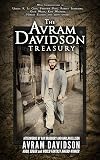
Updated/expanded 2022 edition of a collection originally published in 1998; a very generous collection -- roughly 650 pages, almost 40 stories -- of Davidson's stories, each with an introduction by one of his friends or colleagues, and with afterwords at the end of the book by even more of them.
Those other writers are not timid about placing Davidson among the very finest writers of short stories. Ray Bradbury imagines himself taking a long train trip with his favorite writers, including show more Davidson as well as Rudyard Kipling, Saki, John Collier, and G. K. Chesterton, then says:
"I realize that is a rare fine company I have put him in, but I have always been one to stick my neck out through affection and admiration. If I would not say he measures completely to their height, I do say this: On such a train, on such a sweet night journey, these men would gladly listen to Avram Davidson and read and enjoy him. You would find his stories in their book bags, even as you would find theirs in his."
Bradbury isn't overstating the case. Davidson's stories are marvelous, and he deserves to be remembered in such company.
I am particularly struck by how well, and how quickly, he establishes mood and tone, and over what a range -- the unsettling grim creepiness of "Naples," the outlandish whimsy of "Help! I Am Dr. Morris Goldpepper," the ferociously dark humor of "Revolver." And he's always in absolute control of those moods, capable of pulling off shifts that might, in lesser hands, cause painful whiplash; the abruptly shocking end of "Crazy Old Lady" is a marvel.
Davidson also has a striking gift for language and dialect. His characters come from a variety of places around the world, and they speak accordingly. He writes dialect in a way that sounds authentic without ever feeling condescending. The elderly Jewish couple of "The Golem," for instance, could easily have slipped into horrible cliche, especially as far back as 1955, but Davidson presents them with a warmth and precision that makes them real people.
In reading this book, I knocked three more stories off my list of award-nominated short SF, and two of those are stunners. "Or All the Seas with Oysters" deftly adds touches of paranoia and the otherworldly to a story of bickering bicycle repairmen (and delivers another jawdropping ending); "The House the Blakeneys Built" is a slow-building gem of both comedy and horror. I was not quite as taken with "Polly Charms, the Sleeping Woman," a Sleeping Beauty variation featuring Davidson's series character, Dr. Eszterhazy, who is sort of a Ruritanian Sherlock Holmes, though it's certainly beautifully written prose.
This book covers Davidson's career from his first published story -- 1954's "My Boy Friend's Name Is Jello," a riff on the games children play -- to his last -- 1993's "The Spook-Box of Theodore Delafont De Brooks," a dryly melancholy look at the weight of self-imposed expectations. show less
Those other writers are not timid about placing Davidson among the very finest writers of short stories. Ray Bradbury imagines himself taking a long train trip with his favorite writers, including show more Davidson as well as Rudyard Kipling, Saki, John Collier, and G. K. Chesterton, then says:
"I realize that is a rare fine company I have put him in, but I have always been one to stick my neck out through affection and admiration. If I would not say he measures completely to their height, I do say this: On such a train, on such a sweet night journey, these men would gladly listen to Avram Davidson and read and enjoy him. You would find his stories in their book bags, even as you would find theirs in his."
Bradbury isn't overstating the case. Davidson's stories are marvelous, and he deserves to be remembered in such company.
I am particularly struck by how well, and how quickly, he establishes mood and tone, and over what a range -- the unsettling grim creepiness of "Naples," the outlandish whimsy of "Help! I Am Dr. Morris Goldpepper," the ferociously dark humor of "Revolver." And he's always in absolute control of those moods, capable of pulling off shifts that might, in lesser hands, cause painful whiplash; the abruptly shocking end of "Crazy Old Lady" is a marvel.
Davidson also has a striking gift for language and dialect. His characters come from a variety of places around the world, and they speak accordingly. He writes dialect in a way that sounds authentic without ever feeling condescending. The elderly Jewish couple of "The Golem," for instance, could easily have slipped into horrible cliche, especially as far back as 1955, but Davidson presents them with a warmth and precision that makes them real people.
In reading this book, I knocked three more stories off my list of award-nominated short SF, and two of those are stunners. "Or All the Seas with Oysters" deftly adds touches of paranoia and the otherworldly to a story of bickering bicycle repairmen (and delivers another jawdropping ending); "The House the Blakeneys Built" is a slow-building gem of both comedy and horror. I was not quite as taken with "Polly Charms, the Sleeping Woman," a Sleeping Beauty variation featuring Davidson's series character, Dr. Eszterhazy, who is sort of a Ruritanian Sherlock Holmes, though it's certainly beautifully written prose.
This book covers Davidson's career from his first published story -- 1954's "My Boy Friend's Name Is Jello," a riff on the games children play -- to his last -- 1993's "The Spook-Box of Theodore Delafont De Brooks," a dryly melancholy look at the weight of self-imposed expectations. show less

Ostensibly the tale of a wandering youth, bastard son of the last pagan king in Christiandom, this is an opulent romp of baroque language, sly puns, and wicked satirization of both early Christianity and of the decaying Roman empire.

It must be a source of endless frustration to Davidson's friends and fans that his work isn't better known, because good lord it deserves to be. This collection is a joy and a pleasure - right from the riotous opening story and all through the various layers of disparate and even warring elements that combine in perfectly balanced recipes to produce the others, to the impending passing from history and memory of the fourth-largest empire in Europe. To say the Doctor is a kind of Sherlock show more Holmes is truly insufficent - he is a kind of court sorceror of a rational age filled with surviving superstitions and ambiguous occurences and every now and the the just plain magical. A wonderful read, a wonderful listen, incredibly funny, deeply learned, Umberto Eco crossed with PG Wodehouse set in the place next door to Ruritania. show less
Lists
Awards


You May Also Like


Associated Authors
Statistics
- Works
- 182
- Also by
- 204
- Members
- 5,659
- Popularity
- #4,373
- Rating
- 3.7
- Reviews
- 116
- ISBNs
- 209
- Languages
- 8
- Favorited
- 16