

Laura Kasischke
Author of In A Perfect World
About the Author
Works by Laura Kasischke
Ghost Writers: Us Haunting Them, Contemporary Michigan Literature (Made in Michigan Writers Series) (2011) — Editor — 21 copies, 1 review
Search Continues For Elderly Man 2 copies
Associated Works
You Don't Have to Be Everything: Poems for Girls Becoming Themselves (2021) — Contributor — 86 copies, 2 reviews
The Poem Is You: 60 Contemporary American Poems and How to Read Them (2016) — Contributor — 78 copies
Tagged
Common Knowledge
- Birthdate
- 1961
- Gender
- female
- Education
- University of Michigan
Columbia University - Occupations
- poet
fiction writer
professor (English) - Organizations
- University of Michigan, Ann Arbor (Professor of English)
- Awards and honors
- Pushcart Prize
Guggenheim Fellowship (Creative Arts -- Poetry, 2009) - Nationality
- USA
- Places of residence
- Chelsea, Michigan, USA
- Associated Place (for map)
- Michigan, USA
Members
Reviews
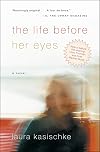
When I tell you that Laura Kasischke's novel, THE LIFE BEFORE HER EYES (2002), opens with an active shooter cornering two girls, best friends, in a high school bathroom, I'm not giving anything away, but almost everything that follows is directly connected, in an episodic, sometimes surreal time-jumping narrative that hooked me from page one.
The two besties are both seventeen, children of divorced parents, living with their mothers in the Midwestern college town of Briar Hill. Otherwise they show more are very unalike. Maureen is a virgin and a born-again Christian who claims to have seen Jesus. Diana is sexually active and a tattooed, dope-smoking, drinking, party girl, who doesn't give much thought to what she's doing. But both are still in the process of 'becoming' -
"Both girls are used to being flirted with, especially when they've initiated the flirting. They aren't conceited girls. They are simply both very beautiful and very young, and they have no idea that not every girl in the world is treated by men and boys with such intensity and attention."
Diana (the central character) is in fact quite fearless regarding men, and has a!ready, at fifteen, been involved with Marcus, a thirty-something drug dealer -
"After the first time they made love, Marcus said, 'I like young girls, but you're the only one I've ever met who isn't afraid.' It had never occurred to her to be afraid."
In a visit to the zoo, the girls, in short shorts, with ankle tatoos, are amused at the looks they get from the fathers and mothers of young children.
"They are still like children, except that the world, in all of its complexity and implications, is coming into focus for them ... the effect of their own flesh on the mothers who follow their husbands' glances in the direction of the girls, then look away. They aren't children. Or animals, or women. Briefly they're in a state between each of these. They are all of these things at once."
But there's much more to Diana's story. She is also presented at forty, married, with a small daughter. Her older husband was her philosophy professor in college, who left his first wife to marry Diana. There is a surreal strangeness to this aspect of her story, when her seemingly perfect life begins to go wrong in multiple ways. I finished reading this book after midnight, and it kept me awake thinking about its ending, for another hour or more.
Maybe it's the times we live in (think Trump and Epstein), but this novel, written nearly twenty-five years ago, with its subplots of young girls and older men sometimes almost made my skin crawl. It's that good - and I mean by that Kasischke's skill as a writer. There is an unexpected prescience to this tale that is more than a bit, well, just creepy. But that's NOT a criticism. I'm not giving anything else away. You'll have to read it yourself. Very highly recommended.
- Tim Bazzett, author of the memoir, BOOKLOVER show less
The two besties are both seventeen, children of divorced parents, living with their mothers in the Midwestern college town of Briar Hill. Otherwise they show more are very unalike. Maureen is a virgin and a born-again Christian who claims to have seen Jesus. Diana is sexually active and a tattooed, dope-smoking, drinking, party girl, who doesn't give much thought to what she's doing. But both are still in the process of 'becoming' -
"Both girls are used to being flirted with, especially when they've initiated the flirting. They aren't conceited girls. They are simply both very beautiful and very young, and they have no idea that not every girl in the world is treated by men and boys with such intensity and attention."
Diana (the central character) is in fact quite fearless regarding men, and has a!ready, at fifteen, been involved with Marcus, a thirty-something drug dealer -
"After the first time they made love, Marcus said, 'I like young girls, but you're the only one I've ever met who isn't afraid.' It had never occurred to her to be afraid."
In a visit to the zoo, the girls, in short shorts, with ankle tatoos, are amused at the looks they get from the fathers and mothers of young children.
"They are still like children, except that the world, in all of its complexity and implications, is coming into focus for them ... the effect of their own flesh on the mothers who follow their husbands' glances in the direction of the girls, then look away. They aren't children. Or animals, or women. Briefly they're in a state between each of these. They are all of these things at once."
But there's much more to Diana's story. She is also presented at forty, married, with a small daughter. Her older husband was her philosophy professor in college, who left his first wife to marry Diana. There is a surreal strangeness to this aspect of her story, when her seemingly perfect life begins to go wrong in multiple ways. I finished reading this book after midnight, and it kept me awake thinking about its ending, for another hour or more.
Maybe it's the times we live in (think Trump and Epstein), but this novel, written nearly twenty-five years ago, with its subplots of young girls and older men sometimes almost made my skin crawl. It's that good - and I mean by that Kasischke's skill as a writer. There is an unexpected prescience to this tale that is more than a bit, well, just creepy. But that's NOT a criticism. I'm not giving anything else away. You'll have to read it yourself. Very highly recommended.
- Tim Bazzett, author of the memoir, BOOKLOVER show less
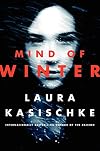
There is a reason I will always pick up the new book by Laura Kasischke on the day of release - I know I'm in for a treat of a story. Of course, that story always takes place in a world that resembles ours, but always just enough to the left or right of normal to make it questionable whether it really is ours or not. My first experience reading Laura Kasischke was her novel, The Life Before Her Eyes, and I've been hooked since.
Mind of Winter opens Christmas morning, and Holly has just awoken show more from a nightmare and fragments of a thought that something had followed her and her husband back from Russia all those years ago when they had adopted their daughter, Tatiana. Even after her husband leaves to get his parents from the airport and Holly is rushing to prepare Christmas dinner for the in-laws, the thought never quite leaves the back of her mind. As the day progresses and a blizzard moves in that makes travel impossible, Holly is stuck at her house, alone, with her now teenaged daughter Tatiana, whose rebellious nature is more evident today than ever, even bordering on erratic. As Holly tries to piece together the puzzle of her fragments of memory and dream, she is also trying to reconcile what is happening to her daughter right before her eyes, and what it all means.
The book seemed a little slow at first, and in places I'd found myself hoping that the pace would pick up soon, but as I read on, I understood that the book needed to be paced that way. Holly's morning was spilling out as uneventful but hard to deal with, and we were feeling that right along with her. As her world begins to spin ever so slowly out of her control, the pace quickens, so that we're feeling pulled right along with her. Kasischke clearly knows her art and uses it to its maximum potential here.
I used to constantly try to figure out where Kasischke's books are going, but I've learned over the years to just let the story carry you with it, and all will be revealed. Kasischke is a master of language and using language to convey a simultaneous feeling of normalcy and dread in her writing, again giving the feeling that everything in her books could possible be happening in the real world, right now, outside our window. It always ends up being so much more than that, however, as she's also unnerving us as readers at the same time, so that we are feeling a growing sense of unease right along with her characters. We know, just like her characters, that something isn't quite right, but we can't put our finger on where that unease is coming from any better than her characters can. Mind of Winter is Kasischke at her mind bending best, right up to the last page.
I can't recommend this book enough. I read it in one sitting, finishing at 2am, which helped give the book an even better flair as Holly begins to feel more and more cut off from the outside world, and the world outside my window was becoming more and more cut off with the passing hours of the morning. Finishing, I wanted to go back and reread portions, so see where hints could have been dropped throughout the book to what was ultimately happening in Holly's world, but I felt I needed to let it sit, giving me time to ponder the story and its mysteries. Kasischke cements again the need for me to pick up her next book on release day, as she has hit another home run with Mind of Winter. show less
Mind of Winter opens Christmas morning, and Holly has just awoken show more from a nightmare and fragments of a thought that something had followed her and her husband back from Russia all those years ago when they had adopted their daughter, Tatiana. Even after her husband leaves to get his parents from the airport and Holly is rushing to prepare Christmas dinner for the in-laws, the thought never quite leaves the back of her mind. As the day progresses and a blizzard moves in that makes travel impossible, Holly is stuck at her house, alone, with her now teenaged daughter Tatiana, whose rebellious nature is more evident today than ever, even bordering on erratic. As Holly tries to piece together the puzzle of her fragments of memory and dream, she is also trying to reconcile what is happening to her daughter right before her eyes, and what it all means.
The book seemed a little slow at first, and in places I'd found myself hoping that the pace would pick up soon, but as I read on, I understood that the book needed to be paced that way. Holly's morning was spilling out as uneventful but hard to deal with, and we were feeling that right along with her. As her world begins to spin ever so slowly out of her control, the pace quickens, so that we're feeling pulled right along with her. Kasischke clearly knows her art and uses it to its maximum potential here.
I used to constantly try to figure out where Kasischke's books are going, but I've learned over the years to just let the story carry you with it, and all will be revealed. Kasischke is a master of language and using language to convey a simultaneous feeling of normalcy and dread in her writing, again giving the feeling that everything in her books could possible be happening in the real world, right now, outside our window. It always ends up being so much more than that, however, as she's also unnerving us as readers at the same time, so that we are feeling a growing sense of unease right along with her characters. We know, just like her characters, that something isn't quite right, but we can't put our finger on where that unease is coming from any better than her characters can. Mind of Winter is Kasischke at her mind bending best, right up to the last page.
I can't recommend this book enough. I read it in one sitting, finishing at 2am, which helped give the book an even better flair as Holly begins to feel more and more cut off from the outside world, and the world outside my window was becoming more and more cut off with the passing hours of the morning. Finishing, I wanted to go back and reread portions, so see where hints could have been dropped throughout the book to what was ultimately happening in Holly's world, but I felt I needed to let it sit, giving me time to ponder the story and its mysteries. Kasischke cements again the need for me to pick up her next book on release day, as she has hit another home run with Mind of Winter. show less
Mind of Winter is one of those tricky novels in which to share anything about the plot would be to establish expectations or create a hyper-awareness in future readers that will diminish one’s enjoyment of this spooky thriller. To truly enjoy it and recognize its brilliance it requires no prior knowledge, no hints, no clues, and no anticipation on the part of the reader. One should open the story as blind as possible, a blank slate to whatever is set to occur within its pages. Therein lies show more the warning for proceeding with any review reading of this book.
The success of Mind of Winter lies in the crisp writing and the emotional turmoil captured perfectly by Ms. Kasischke. Christmas is always stressful if one is hosting a large party, but the unexpected blizzard sets the tone for the rest of the day. For, the unexpected becomes a key theme of the novel, as nothing goes as planned and Holly must adjust to each new curve ball. That the day is also the anniversary of the day Eric and Holly first met and fell in love with Tatiana means it is also a day for reminiscence and contemplation.
Mind of Winter is a quiet novel in that there is very little action. For the story to succeed, one must feel Holly’s emotions, be able to understand them and empathize with her as she struggles to get through the day, all something Ms. Kasischke accomplishes through her careful stream-of-consciousness approach. The suspense is internal as Holly spends much of the story internally ruminating her past successes and current frustrations. Holly’s strength of character drives the story and establishes a benchmark for future happenings.
As the story is Holly and Holly is the story, one’s enjoyment depends solely on one’s reaction to her. Thankfully, Holly is a well-rounded, fully developed character with whom it is easy to empathize. The tension within the story builds subtly and without obvious reason, causing readers to question their doubts and suspicions. The conclusion is as stunning as it is sudden – one of those jaw-dropping moments that is so memorable for its clarity and creepiness – and is the reason why Mind of Winter is going to be quite popular in the months to come. show less
The success of Mind of Winter lies in the crisp writing and the emotional turmoil captured perfectly by Ms. Kasischke. Christmas is always stressful if one is hosting a large party, but the unexpected blizzard sets the tone for the rest of the day. For, the unexpected becomes a key theme of the novel, as nothing goes as planned and Holly must adjust to each new curve ball. That the day is also the anniversary of the day Eric and Holly first met and fell in love with Tatiana means it is also a day for reminiscence and contemplation.
Mind of Winter is a quiet novel in that there is very little action. For the story to succeed, one must feel Holly’s emotions, be able to understand them and empathize with her as she struggles to get through the day, all something Ms. Kasischke accomplishes through her careful stream-of-consciousness approach. The suspense is internal as Holly spends much of the story internally ruminating her past successes and current frustrations. Holly’s strength of character drives the story and establishes a benchmark for future happenings.
As the story is Holly and Holly is the story, one’s enjoyment depends solely on one’s reaction to her. Thankfully, Holly is a well-rounded, fully developed character with whom it is easy to empathize. The tension within the story builds subtly and without obvious reason, causing readers to question their doubts and suspicions. The conclusion is as stunning as it is sudden – one of those jaw-dropping moments that is so memorable for its clarity and creepiness – and is the reason why Mind of Winter is going to be quite popular in the months to come. show less
Mind of Winter is one of those novels that creeps up on you, page by page, the story building, the layers being pulled off very precisely, one at a time. The novel is subtle in its intensity, especially in the beginning, making it all the more a worthwhile read
Holly Judge and her husband Eric adopted a Russian girl thirteen years ago. They fell in love with her the moment they saw her on that Christmas Day long ago. It was not an easy process. Adoption never is. And when adoption in another show more country brings with it its own challenges.
Waking up from a fitful night's sleep, still groggy from a not so good dream, Holly begins her day. Her husband rushes off to pick his parents up from the airport and Holly goes to see what is keeping her teenage daughter, Tatiana (Tatty), in bed so late. Haunted still from her nightmare, "Something followed them from Russia," Holly begins to really question events from the past: the seemingly innocent accidents, the growth on her husband's hand, the fate of Sally the chicken, the scratched CD's, and her daughter's ever growing dark mood.
What follows is a day in the life type story, set in the middle of a blizzard on Christmas Day. Although written in third person, the story is told strictly from the perspective of Holly, as she remembers the past--the adoption process--and as she goes through the motions of the present day. The entire book is told in one long narrative. There are no chapters, with only the occasional section break.
When I think back to reading this novel, I find myself amazed at how well-crafted the story is, how every little detail was carefully placed, and, yet, it wasn't something I noticed so much as I read. It was in hindsight I could see it most. And aren't those among the best books?
I admit I wasn't overly fond of Holly. I actually felt bad at times for her daughter because of Holly's constant questioning of Tatty and felt some of the mother's anger at her daughter was overblown or misplaced. It was in part because of this I was not sure I would like the book initially, and yet something about the story kept me reading. Perhaps it was the sense of foreboding that something bad was about to happen. By the end of the novel, I felt a wide range of emotions. The ending is what made the book for me.
This is very much a book about grief, regret, failures. It is one of denial and fear. Mind of Winter is so much more than it seems at first. Picture a small crack in a car's windshield. If left unfixed, that crack will spread out, splintering off into various other fractures. That is much how Mind of Winter plays out. show less
Holly Judge and her husband Eric adopted a Russian girl thirteen years ago. They fell in love with her the moment they saw her on that Christmas Day long ago. It was not an easy process. Adoption never is. And when adoption in another show more country brings with it its own challenges.
Waking up from a fitful night's sleep, still groggy from a not so good dream, Holly begins her day. Her husband rushes off to pick his parents up from the airport and Holly goes to see what is keeping her teenage daughter, Tatiana (Tatty), in bed so late. Haunted still from her nightmare, "Something followed them from Russia," Holly begins to really question events from the past: the seemingly innocent accidents, the growth on her husband's hand, the fate of Sally the chicken, the scratched CD's, and her daughter's ever growing dark mood.
What follows is a day in the life type story, set in the middle of a blizzard on Christmas Day. Although written in third person, the story is told strictly from the perspective of Holly, as she remembers the past--the adoption process--and as she goes through the motions of the present day. The entire book is told in one long narrative. There are no chapters, with only the occasional section break.
When I think back to reading this novel, I find myself amazed at how well-crafted the story is, how every little detail was carefully placed, and, yet, it wasn't something I noticed so much as I read. It was in hindsight I could see it most. And aren't those among the best books?
I admit I wasn't overly fond of Holly. I actually felt bad at times for her daughter because of Holly's constant questioning of Tatty and felt some of the mother's anger at her daughter was overblown or misplaced. It was in part because of this I was not sure I would like the book initially, and yet something about the story kept me reading. Perhaps it was the sense of foreboding that something bad was about to happen. By the end of the novel, I felt a wide range of emotions. The ending is what made the book for me.
This is very much a book about grief, regret, failures. It is one of denial and fear. Mind of Winter is so much more than it seems at first. Picture a small crack in a car's windshield. If left unfixed, that crack will spread out, splintering off into various other fractures. That is much how Mind of Winter plays out. show less
Lists
Awards


You May Also Like


Associated Authors
Statistics
- Works
- 29
- Also by
- 10
- Members
- 2,340
- Popularity
- #10,965
- Rating
- 3.6
- Reviews
- 138
- ISBNs
- 143
- Languages
- 5
- Favorited
- 5
