
Allison Amend
Author of Enchanted Islands
About the Author
Image credit: Author Allison Amend at the 2016 Texas Book Festival. By Larry D. Moore, CC BY-SA 4.0, https://commons.wikimedia.org/w/index.php?curid=53317382
Works by Allison Amend
Tagged
Common Knowledge
Members
Reviews
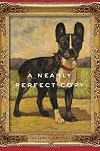
At first glace, a novel that attempts to bring together the crime of art forgery with the underworld of human cloning seems quite at odds with itself. However, art and science are not always polar opposites, especially if they exist for the sole purpose of recreating what is most important.
Following the tragic loss of her young son, Elm Howells struggles to adapt to her painfully altered life. Though her eye and passion for art is seemingly untouchable, she can't help but feel engulfed by show more feelings of failure and emptiness. Halfway across the world in Paris, artist Gabriel Cannois shares Elm's feelings as he attempts to navigate his way out of his great grandfather's famous shadow, while burdened with the ability to masterfully reproduce his greatest pieces. Elm's desire to bring back her son slowly merges with Gabriel's need for success and recognition, which will cause the pair to stretch their morals well beyond their breaking points.
What struck me from the start of A Nearly Perfect Copy was Allison Amend's ability to voice the conflicting thoughts of a grieving mother. While Elm attempts to adjust to new interactions with her husband, daughter and friends, her internal battles become increasingly frustrated, but no less understandable.
"Here was a city where she knew no one, where no one knew she'd been Ronan's mother. This feeling was simultaneously thrilling and devastating. She could be free. She was not under examination as a woman who had lost a child. The flipside of being where no one knew about Ronan was the feeling that all traces of him had been erased from the collective unconscious. She wanted to tell people on the street, 'I had a son,' just so there would be some recognition of him."
With the introduction of Gabriel's character and the man who becomes his guide through the world of forgery, the novel takes a fun turn. The descriptions of Gabriel's process, including how he makes aged paper and brings together images from his great-grandfathers pieces, are some of the book's most fascinating. Yet, the scenes detailing the ways a fake can be identified are even more intriguing.
As the story progresses, Amend handles the introduction of cloning well. What could have thrown a well paced, art-centered novel into strange, sci-fi territory is instead touched lightly on the edges. The technicalities of the cloning are not necessary to the plot, so it was refreshing to keep that balance. Strangely enough, I felt somehow let down by the last few pages of the novel, almost as if everything was a little too well wrapped up.
Still, A Nearly Perfect Copy is just that. I give Allison Amend tons of praise for a well written, enjoyable novel that brings together unique ideas. show less
Following the tragic loss of her young son, Elm Howells struggles to adapt to her painfully altered life. Though her eye and passion for art is seemingly untouchable, she can't help but feel engulfed by show more feelings of failure and emptiness. Halfway across the world in Paris, artist Gabriel Cannois shares Elm's feelings as he attempts to navigate his way out of his great grandfather's famous shadow, while burdened with the ability to masterfully reproduce his greatest pieces. Elm's desire to bring back her son slowly merges with Gabriel's need for success and recognition, which will cause the pair to stretch their morals well beyond their breaking points.
What struck me from the start of A Nearly Perfect Copy was Allison Amend's ability to voice the conflicting thoughts of a grieving mother. While Elm attempts to adjust to new interactions with her husband, daughter and friends, her internal battles become increasingly frustrated, but no less understandable.
"Here was a city where she knew no one, where no one knew she'd been Ronan's mother. This feeling was simultaneously thrilling and devastating. She could be free. She was not under examination as a woman who had lost a child. The flipside of being where no one knew about Ronan was the feeling that all traces of him had been erased from the collective unconscious. She wanted to tell people on the street, 'I had a son,' just so there would be some recognition of him."
With the introduction of Gabriel's character and the man who becomes his guide through the world of forgery, the novel takes a fun turn. The descriptions of Gabriel's process, including how he makes aged paper and brings together images from his great-grandfathers pieces, are some of the book's most fascinating. Yet, the scenes detailing the ways a fake can be identified are even more intriguing.
As the story progresses, Amend handles the introduction of cloning well. What could have thrown a well paced, art-centered novel into strange, sci-fi territory is instead touched lightly on the edges. The technicalities of the cloning are not necessary to the plot, so it was refreshing to keep that balance. Strangely enough, I felt somehow let down by the last few pages of the novel, almost as if everything was a little too well wrapped up.
Still, A Nearly Perfect Copy is just that. I give Allison Amend tons of praise for a well written, enjoyable novel that brings together unique ideas. show less
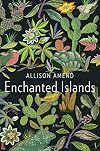
I enjoyed Allison Amend's creative and elegant novel. Her story is based on the real-life memoirs of Frances Conway, who spent the years surrounding World War II living with her husband Ainslie in the inhospitable and virtually uninhabited Galápagos Islands. From that already intriguing premise, Amend then spins off a counterfactual story in which she re-imagines the Conways as American intelligence agents keeping tabs on a few German settlers who might be spies. Were the Conways in fact show more spies? Were the Germans? It's an intriguing (and possibly dangerous) thing for a novelist to play the "what if" historical game with someone who isn't really a historical figure and who has penned her own account of her life. But it does make for interesting reading.
Despite the dramatic backdrop, this is really a story about relationships and deception: the lies we tell to ourselves and those we love, and how we ultimately come to terms with the tangled webs we weave. The relationships at the heart of the story are the Conways' strange marriage and Frances's lifelong friendship with Rosalie.
As a young girl, Frances discovers that she has a taste (and talent) for secrets and lies: "Even back then I was motivated by the excitement of espionage, and I should have learned that it is inevitably disappointing."
The story moves back and forth in time and place, from the Midwest of Frances's and Rosalie's childhood, to prewar and postwar San Francisco, and ultimately to a nursing home where Frances narrates her story at the end of her life. But the story really sings during the war years in the Galápagos. Amend's descriptions of the strange beauty of this exotic but harsh landscape are evocative, and we see the Conways struggle to live in a place they ultimately come to love and call home, despite the enormous hardships. The spy story seems almost incidental to that larger canvas. But the cloak-and-dagger bits are exciting all the same, and I did find myself flipping the pages even quicker when the Conways and the Germans are battling wits with each other in a potentially deadly game of cat and mouse. Did their actions matter, or was it all just a meaningless sideshow far from the actual theaters of war? As Frances says, "I just found it so absurd that we were influencing history. It seemed utterly preposterous, farcical."
Amend tells her story with confidence and warmth. She clearly has fondness for these flawed characters trying to make their way in the world. In Frances she has created an authentic character with a unique voice: honest, lonely, witty. This is very good fiction.
(Thanks to Doubleday / Nan A. Talese for an advance copy via a giveaway. Receiving a free copy did not affect the content of my review.) show less
Despite the dramatic backdrop, this is really a story about relationships and deception: the lies we tell to ourselves and those we love, and how we ultimately come to terms with the tangled webs we weave. The relationships at the heart of the story are the Conways' strange marriage and Frances's lifelong friendship with Rosalie.
As a young girl, Frances discovers that she has a taste (and talent) for secrets and lies: "Even back then I was motivated by the excitement of espionage, and I should have learned that it is inevitably disappointing."
The story moves back and forth in time and place, from the Midwest of Frances's and Rosalie's childhood, to prewar and postwar San Francisco, and ultimately to a nursing home where Frances narrates her story at the end of her life. But the story really sings during the war years in the Galápagos. Amend's descriptions of the strange beauty of this exotic but harsh landscape are evocative, and we see the Conways struggle to live in a place they ultimately come to love and call home, despite the enormous hardships. The spy story seems almost incidental to that larger canvas. But the cloak-and-dagger bits are exciting all the same, and I did find myself flipping the pages even quicker when the Conways and the Germans are battling wits with each other in a potentially deadly game of cat and mouse. Did their actions matter, or was it all just a meaningless sideshow far from the actual theaters of war? As Frances says, "I just found it so absurd that we were influencing history. It seemed utterly preposterous, farcical."
Amend tells her story with confidence and warmth. She clearly has fondness for these flawed characters trying to make their way in the world. In Frances she has created an authentic character with a unique voice: honest, lonely, witty. This is very good fiction.
(Thanks to Doubleday / Nan A. Talese for an advance copy via a giveaway. Receiving a free copy did not affect the content of my review.) show less
I found this newly published novel compulsively readable. It's one of those books that you can just fly through - the writing is nice but not complex and the story is interesting but also palatable and slightly predictable. Fun writing, though maybe not "great" writing.
This novel is very loosely based on the memoirs of Frances Conway who lived on the Galapagos Islands with her husband during WWII. It's more than just the story of surviving on an almost uninhabited island, though. In fact show more I'd say this is more the story of Frances's friendship with childhood friend, Rosalie. The book begins in early 1900s in Duluth, MN and explores the childhood friendship of these two girls. They run away to Chicago together and have a fight that splits them up after their adolescence. They ended up meeting each other again by chance in San Francisco just before Frances leaves for the Galapagos. She has been sent there by the U.S. government to spy on the German inhabitants of the island. She marries Ainslie Conway as part of this mission and part of the book focuses on how they learn to exist together.
All of that together sounds like it might read in a disjointed manner, but Amend does a good job of keeping the flow of the narrative and the pacing. And somehow keeping the theme of the female friendship at the core, even when the two aren't around each other.
I wanted to read this book because I've been to the Galapagos Islands and think it's a fascinating place. I wished that there was a bit more time spent on describing the island and how they lived on it. But all in all, this was fun to read. show less
This novel is very loosely based on the memoirs of Frances Conway who lived on the Galapagos Islands with her husband during WWII. It's more than just the story of surviving on an almost uninhabited island, though. In fact show more I'd say this is more the story of Frances's friendship with childhood friend, Rosalie. The book begins in early 1900s in Duluth, MN and explores the childhood friendship of these two girls. They run away to Chicago together and have a fight that splits them up after their adolescence. They ended up meeting each other again by chance in San Francisco just before Frances leaves for the Galapagos. She has been sent there by the U.S. government to spy on the German inhabitants of the island. She marries Ainslie Conway as part of this mission and part of the book focuses on how they learn to exist together.
All of that together sounds like it might read in a disjointed manner, but Amend does a good job of keeping the flow of the narrative and the pacing. And somehow keeping the theme of the female friendship at the core, even when the two aren't around each other.
I wanted to read this book because I've been to the Galapagos Islands and think it's a fascinating place. I wished that there was a bit more time spent on describing the island and how they lived on it. But all in all, this was fun to read. show less

Story of the ups and downs of a lifetime friendship between two women, Frances and Rosalie. They leave home at age fifteen. Their lives diverge when one betrays the other. The set piece of this novel, which is a fictional portrayal of real people, is the time Frances spends in the Galapagos Islands. The time period is during and after WWII and espionage is involved, but the focus remains on relationships. It contains beautiful descriptions of life on the islands. Themes include ambition to show more improve one’s life and forgiveness. I found it a satisfying read. show less
Lists
Awards


You May Also Like


Statistics
- Works
- 7
- Members
- 459
- Popularity
- #53,509
- Rating
- 3.6
- Reviews
- 25
- ISBNs
- 26
- Languages
- 1