
Mikhail Prishvin (1873–1954)
Author of The Root of Life
About the Author
By training, Prishvin was a specialist in agronomy. His interests, however, were much broader, encompassing ethnography, folklore, linguistics, and ornithology, all of which benefited from his many travels. His first published work was a collection of stories, In the Land of Unfrightened Birds show more (1907). Its emphasis on nature is characteristic of much of Prishvin's later prose. Prishvin is distinguished by his rich, colorful language. In this, as well as in his injection of ethnographic concerns into literature, he was close to his contemporary Remizov and part of the neorealist strain in early twentieth-century prose. (Bowker Author Biography) show less
Image credit: Wikipedia
Works by Mikhail Prishvin
Phacelia : [miniatuurid] 3 copies
Lantul vrajit 2 copies
四季 2 copies
Весна света 1 copy
[Rasskazy] 1 copy
Šumski šator 1 copy
西比利亜の印象 1 copy
Рассказы и очерки 1 copy
Ketun leipä 1 copy
Boys and ducklings 1 copy
Sumski sator 1 copy
Slavík na zahradní brance 1 copy
Shen-Schen 1 copy
Родники Берендея 1 copy
Избранные произведения 1 copy
Осударева дорога 1 copy
Адам и Ева 1 copy
Зеленый шум [Сборник] 1 copy
Bốn Mùa - Lịch Thiên Nhiên 1 copy
Associated Works
ソヴェート文学 Советская Литература No.17 / 1968 1月号 — Contributor — 1 copy
Tagged
Common Knowledge
- Canonical name
- Prishvin, Mikhail
- Legal name
- Пришвин, Михаил Михайлович
Prishvin, Mikhail Mikhailovich - Birthdate
- 1873-02-04
- Date of death
- 1954-01-16
- Gender
- male
- Education
- University of Leipzig
- Occupations
- writer
- Nationality
- Russia
- Birthplace
- Yelets, Russian Empire
- Place of death
- Moscow, Soviet Union
- Associated Place (for map)
- Yelets, Russian Empire
Members
Reviews

Mikhail Prishvin lived in interesting times (1873-1954) and spanned interesting fields and styles in his professional and literary life--did some soldiering, some revolutioning, studied chemistry and agronomy, and published works ranging from Decadent through lyrical nature writing to sober-minded studies of the common potato. Ginseng (The Root of life in English translation) is a blend of fact and fiction, and I wish I knew where the lines lie, but in the short time I had to explore, I show more couldn't figure it out. (I hope to get hold of Prishvin's diaries one of these days.) A Russian soldier in Manchuria (1904-5) drops out of the war game with the Japanese and ends up living in a valley close to the sea, in close quarters with a Chinese ginseng-hunter, Lu Wen. Lu Wen isn't necessarily a sage, but he's wise, and imbued with a sense of kinship for everything living. It even makes him reluctant to kill, but not to the point of forgoing sustenance on animals--so, happily, there's this big Russian "captain" to take care of that. The Russian gradually awakes to Lu Wen's vision (or state), although he never fully gets there. He is too much of a go-getting Westerner, and he can plot, for instance, a deer antler-harvesting operation even as he practically falls in love with the animals. The utterly unsentimental, unapologetic contrast in lyrical feeling for nature and the urge, or need, and skill in exploiting it, deeply affected me. The Russian wonders at the trace of an old bullet wound in the ear of a beautiful hind he names and tames, he admires the regal beauty of her mate, and yet he cuts off the latter's crown, precipitating his decline in the herd and eventual death. Deer antlers are prized as "medicine" in Asia, they bring in a lot of money.
So does ginseng. Ginseng is rare. The Russian manages to see a grown root only once in ten years, in the hands of a band of hunters. But Lu Wen identifies a growing root for him, his ginseng, something that will ripen only in time and which the Russian consciously connects to the zest, the living current in his life. The spot is marked and almost forgotten about. It is something growing underground, like the meaning of life, something never on the surface of things. show less
So does ginseng. Ginseng is rare. The Russian manages to see a grown root only once in ten years, in the hands of a band of hunters. But Lu Wen identifies a growing root for him, his ginseng, something that will ripen only in time and which the Russian consciously connects to the zest, the living current in his life. The spot is marked and almost forgotten about. It is something growing underground, like the meaning of life, something never on the surface of things. show less
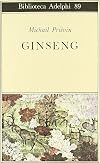
Con tutta la sua ingenua freschezza trasmette il senso della comunione con la natura e tocca comunque verità profonde. Ricorda in questo Pan di Hamsun.

Михаил Михайлович Пришвин - выдающийся писатель-натуралист. Все его произведения посвящены неразрывной связи человека и природы, единству живого мира, в котором, как считал писатель, чудеса "совершаются везде и всюду и во всякую минуту нашей жизни". В книгу Михаила show more Пришвина вошла его знаменитая сказка-быль КЛАДОВАЯ СОЛНЦА, а также познавательные и поучительные рассказы о русской природе. show less
Awards


You May Also Like


Associated Authors
Statistics
- Works
- 54
- Also by
- 5
- Members
- 194
- Popularity
- #112,876
- Rating
- 3.7
- Reviews
- 3
- ISBNs
- 46
- Languages
- 6
- Favorited
- 2