
Jessica Francis Kane
Author of Rules for Visiting
About the Author
Jessica Francis Kane's first novel, The Report, wars a Barnes Noble Discover selection and a finalist for Both the Center for Fiction's Flaherry-Dunnan First Novel Prize and the Indie Boolsellers' Choice Award. She is a contributor to the Morning Nems and lives in New york.
Image credit: Kane at the 2025 Texas Book Festival
Works by Jessica Francis Kane
The report : a novel 8 copies
Twenty-Minute Stories 1 copy
Associated Works
McSweeney's 12: Unpublished, Unknown, and/or Unbelievable (2003) — Contributor — 290 copies, 4 reviews
Tagged
Common Knowledge
- Gender
- female
Members
Reviews
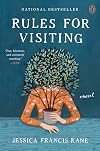
I had to read this book slowly, so that I could savor each page. I didn't comprehend until near the end that May had suffered such a trauma due to her mother's death that she was literally emotionally frozen. She has observed friendship and love, but doesn't know how to achieve it. As her father ages, she feels that her life is going to be totally empty soon if she doesn't develop relationships with other people. Visiting old friends is a way to get in touch with her younger self and learn show more what childhood friends had liked about that person. Along the way she meets new people and becomes better acquainted with others who befriend her in spite of her "prickliness."
I personally like prickly people, having had many in my life and possibly being one myself. Added to my enjoyment on that level were the observations about trees and plants throughout the book. As a botanist, May discusses various kinds of trees, how they stand alone, but are connected invisibly (underground) through their roots. This is how she sees friendship among people and what she wants to build for herself.
Notes: “Midway through my fortieth year, I reached a point where the balance of the past and all it contained seemed to outweigh the future, my mind so full of things said and not said, done and undone, I no longer understood how to move forward. I was tipped backward and wobbly, my balance was off, and this made sense to me. A life seemed so long, I couldn't see how anyone proceeded under the accumulated weight of it.”
"Better to take the train, where I can watch the trees rush by, though so many were in bad shape from pruning and storms, they started to make me sad. Do trees regret their lot? The ones struggling in cities or growing along forgotten margins? Do they dream of dark nights and quiet forests?"
"You grow up thinking it's natural for the ones who love most to keep their distance. Love stands apart; love lets you come to it. This isn't wrong, exactly, but I wanted to learn how to stand closer."
"Welcoming a friend into your life is like folding egg whites: it should be done gently and with good technique, leaving lots of air."
"Perhaps a best friend is someone who ....holds the story of your life in mind. Sometimes in music a melodic line is so beautiful the notes feel inevitable; you can anticipate the next note through a long rest. Maybe that is friendship. A best friend holds your story in mind so notes don't have to be repeated."
"Why do I like gardening? Because I worry I've inherited a certain hopelessness, a potentially fatal lack of interest, that I'm diseased with reserve. Making a garden runs counter to all that. You can't garden without thinking about the future." show less
I personally like prickly people, having had many in my life and possibly being one myself. Added to my enjoyment on that level were the observations about trees and plants throughout the book. As a botanist, May discusses various kinds of trees, how they stand alone, but are connected invisibly (underground) through their roots. This is how she sees friendship among people and what she wants to build for herself.
Notes: “Midway through my fortieth year, I reached a point where the balance of the past and all it contained seemed to outweigh the future, my mind so full of things said and not said, done and undone, I no longer understood how to move forward. I was tipped backward and wobbly, my balance was off, and this made sense to me. A life seemed so long, I couldn't see how anyone proceeded under the accumulated weight of it.”
"Better to take the train, where I can watch the trees rush by, though so many were in bad shape from pruning and storms, they started to make me sad. Do trees regret their lot? The ones struggling in cities or growing along forgotten margins? Do they dream of dark nights and quiet forests?"
"You grow up thinking it's natural for the ones who love most to keep their distance. Love stands apart; love lets you come to it. This isn't wrong, exactly, but I wanted to learn how to stand closer."
"Welcoming a friend into your life is like folding egg whites: it should be done gently and with good technique, leaving lots of air."
"Perhaps a best friend is someone who ....holds the story of your life in mind. Sometimes in music a melodic line is so beautiful the notes feel inevitable; you can anticipate the next note through a long rest. Maybe that is friendship. A best friend holds your story in mind so notes don't have to be repeated."
"Why do I like gardening? Because I worry I've inherited a certain hopelessness, a potentially fatal lack of interest, that I'm diseased with reserve. Making a garden runs counter to all that. You can't garden without thinking about the future." show less

I enjoyed this author's first novel, The Report, and was excited to learn her new one was out in paperback. The cover - and the premise, to be honest - had me fearing it would be a little twee, but this is actually a real gem. It reminded me of Weather and Crudo - and, with its Moby Dick-style sections on trees, The Overstory. A timely look at isolation as the world gets more connected. I don't care what her next cover looks like - Jessica Francis Kane is on my must-read list.
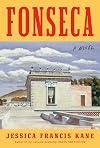
3.5 I absolutely loved Kane's book Rules for Visiting. This is another concept all together. It is an homage to writer Penelope Fitzgerald, who I just don't know enough about - though this book has piqued my curiosity. A fictional account of Fitzgerald's actual time in Mexico in the early 1950s, where she was invited/dispatched to try to secure a legacy fortune for her family from a distant relative. She brings her 6-year old son Valpy, leaving her 3-year old daughter with her mother-in-law, show more while her alcoholic husband tries to hold down the fort of their sinking literary magazine. She is also 3 mos. pregnant. The money would change everything, Penelope believes. Once she arrives, however, she finds the benefactors, 2 old widowed women, the Delany sisters, to be judgemental, moody, and dissembling. They have assembled a host of other people vying for the money, so every evening of visiting is filled with drunkenness, false amity, and ultimately, stress. Valpy, who becomes a favorite of the sisters makes it seem like the Fitzgeralds stand a chance, but the other seekers (or frauds) are cutthroat and aren't above lying and treachery. While there, Penelope befriends Edward Hopper and his wife Jo and a handsome young man who claims to be a direct heir. During her 3 month stay, she tries to feed her artistic soul, give Valpy some semblance of normalcy with school and scouts, and navigate the twisty path to acceptance and financial success. The problem with stories like these that are reconstructed from journals and letters is that the re-telling of anecdotes and events is choppy and small events take on big significance, displacing the narrative. Kane treats her subject with reverence and respect, but it still feels like a second-hand story. Things I didn't know: Edward Hopper was a consummate jerk and his wife's talent often surpassed his, but he squelched as much as possible. Fitzgerald's talent surpassed her husband's as well, but didn't come to light until later in her life. The Irish had a significant immigrant population in Mexico associated with silver mines and gained significant wealth. Both Fitzgerald (and Kane) have assigned themselves a monumental task in getting this right, but (I feel) fell short. show less
In 1952, Penelope Fitzgerald was experiencing hard times. She was overwhelmed with domestic duties, pregnant with her third young child, burdened by an alcoholic husband suffering from what we now call PTSD, and shepherding an ailing literary magazine on the verge of financial collapse. One can certainly understand why she may have needed a temporary change of scene. With her young son in tow, she left her home, husband and infant daughter for the tiny Mexican village of Saltillo. She spent show more 3 months there but never wrote much about the whys and wherefores of the visit. Building on the relevant scraps left behind by Fitzgerald, Kane reimagines her sanctuary as a magical oasis she facetiously renames Fonseca, a term roughly translated as “dry well.”
The plot involves a couple of wealthy dowagers who may have had some obscure relationship to Penelope. So why not take a vacation from her troubles in England and see if there might be a legacy in Mexico? Instead of money, what she finds there is a magical and life altering experience. The place is a dilapidated manse called Mirando and the dowagers are a couple of alcoholic and excentric seniors who appear to be dangling their silver mining fortune in front of just about everyone in their village. They entertain the “pretenders” with a daily drink-fest. Penelope lists the members of this eclectic group of fortune seekers by their potential uses for the money. Along with the unconventional competition, she finds romance, friendship (some nastiness), and especially a new self-image as an author. Moreover, her son blossoms in this totally new environment. He experiences a new language, newfound freedom and a strange new religion at the hands of the household help, the nuns at his school and the neighborhood boys.
Much like her protagonist, Kane writes with delicacy about religion, class and human foibles. You will find FONSECA satisfying if you like character-driven stories, literary history, and atmospherics. However, you should be open to a sedate pace. Slow down and savor the subtleties. Kane is an astute observer of her setting and characters, especially her protagonist. Her intention is to blend the genres of fiction, history and biography, which she achieves remarkably well. show less
The plot involves a couple of wealthy dowagers who may have had some obscure relationship to Penelope. So why not take a vacation from her troubles in England and see if there might be a legacy in Mexico? Instead of money, what she finds there is a magical and life altering experience. The place is a dilapidated manse called Mirando and the dowagers are a couple of alcoholic and excentric seniors who appear to be dangling their silver mining fortune in front of just about everyone in their village. They entertain the “pretenders” with a daily drink-fest. Penelope lists the members of this eclectic group of fortune seekers by their potential uses for the money. Along with the unconventional competition, she finds romance, friendship (some nastiness), and especially a new self-image as an author. Moreover, her son blossoms in this totally new environment. He experiences a new language, newfound freedom and a strange new religion at the hands of the household help, the nuns at his school and the neighborhood boys.
Much like her protagonist, Kane writes with delicacy about religion, class and human foibles. You will find FONSECA satisfying if you like character-driven stories, literary history, and atmospherics. However, you should be open to a sedate pace. Slow down and savor the subtleties. Kane is an astute observer of her setting and characters, especially her protagonist. Her intention is to blend the genres of fiction, history and biography, which she achieves remarkably well. show less
Lists
Awards


You May Also Like


Associated Authors
Statistics
- Works
- 9
- Also by
- 1
- Members
- 848
- Popularity
- #30,160
- Rating
- 3.8
- Reviews
- 57
- ISBNs
- 28
- Languages
- 1