
Paul Mariani
Author of Thirty Days: On Retreat with the Exercises of St. Ignatius
About the Author
Paul Mariani is the University Professor of English at Boston College and the author of eighteen books, including seven volumes of poetry, as well as biographies of Robert Lowell, John Berryman, Hart Crane, Gerard Manley Hopkins, and William Carlos Williams, the last a National Book Award finalist.
Image credit: Credit: Barry Moser
Works by Paul Mariani
Associated Works
Leading from Within: Poetry That Sustains the Courage to Lead (2007) — Contributor — 116 copies, 3 reviews
Read the Beatles: Classic and New Writings on the Beatles, Their Legacy, and Why They Still Matter (2006) — Contributor — 77 copies
Introspections: American Poets on One of Their Own Poems (Bread Loaf Anthology) (1997) — Contributor — 37 copies, 1 review
Touchstones: American Poets on a Favorite Poem (Bread Loaf Anthology) (1996) — Contributor — 34 copies
St. Peter's B-list: Contemporary Poems Inspired by the Saints (2014) — Contributor — 32 copies, 1 review
In the Face of Presumptions: Essays, Speeches & Incidental Writings (2000) — Introduction, some editions — 31 copies
Not Less Than Everything: Catholic Writers on Heroes of Conscience, from Joan of Arc to Oscar Romero (2013) — Contributor — 25 copies, 2 reviews
Biography as High Adventure: Life-Writers Speak on Their Art (Probability and Statistics) (1986) — Contributor, some editions — 19 copies
View From This Wilderness: American Literature as History (1977) — Foreword, some editions — 18 copies
Gerard Manley Hopkins (Bloom's Modern Critical Views) (1986) — Contributor, some editions — 10 copies
Readings of the Wreck: Essays in Commemoration of the Centenary of G. M. Hopkins' the Wreck of the Deutschland (1976) — Contributor — 10 copies
William Carlos Williams and John Sanford: A Correspondence (1984) — Foreword, some editions — 6 copies
Tagged
Common Knowledge
- Legal name
- Mariani, Paul Louis
- Birthdate
- 1940-02-09
- Gender
- male
- Education
- Manhattan College (BA|1962)
Colgate University (MA|1964)
City University of New York (PhD|1968) - Occupations
- poet
biographer
literary critic
professor
essayist
editor - Awards and honors
- John Ciardi Award for Lifetime Achievement in Poetry (2009)
Robert Frost fellow in poetry, Bread Loaf Writers' Conference (1980)
National Endowment for the Arts Fellowship
National Endowment for the Humanities Fellowship
Guggenheim Fellowship - Relationships
- Mariani, Paul P. (son)
- Nationality
- USA
- Birthplace
- New York, New York, USA
- Associated Place (for map)
- New York, USA
Members
Reviews
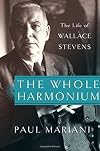
"The Whole Harmonium" is a poignant exploration of the life and work of the poet Wallace Stevens, penned by the author Mariani. This biography delves into Stevens' intricate relationship with poetry, philosophy, and the world around him, revealing the profound impact of his experiences on his creative process.
Mariani meticulously examines Stevens' evolution as a poet, highlighting key moments that shaped his unique voice. The narrative intertwines personal anecdotes with critical analysis, show more offering readers a comprehensive understanding of Stevens' artistic journey. Through vivid storytelling, Mariani captures the essence of Stevens' struggle to reconcile the mundane with the extraordinary, illustrating how his work reflects a deep engagement with the complexities of existence.
The book also sheds light on Stevens' interactions with contemporaries and his place within the broader literary landscape. Mariani's insightful commentary invites readers to appreciate the nuances of Stevens' poetry, encouraging a deeper connection with the themes of imagination, reality, and the human experience.
In essence, "The Whole Harmonium" serves as both a tribute to Wallace Stevens and a thoughtful examination of the interplay between life and art, making it a must-read for poetry enthusiasts and those interested in the intricacies of literary biography. show less
Mariani meticulously examines Stevens' evolution as a poet, highlighting key moments that shaped his unique voice. The narrative intertwines personal anecdotes with critical analysis, show more offering readers a comprehensive understanding of Stevens' artistic journey. Through vivid storytelling, Mariani captures the essence of Stevens' struggle to reconcile the mundane with the extraordinary, illustrating how his work reflects a deep engagement with the complexities of existence.
The book also sheds light on Stevens' interactions with contemporaries and his place within the broader literary landscape. Mariani's insightful commentary invites readers to appreciate the nuances of Stevens' poetry, encouraging a deeper connection with the themes of imagination, reality, and the human experience.
In essence, "The Whole Harmonium" serves as both a tribute to Wallace Stevens and a thoughtful examination of the interplay between life and art, making it a must-read for poetry enthusiasts and those interested in the intricacies of literary biography. show less
Wallace Stevens was a complex man who wrote complex poetry---and many criticize the man and the poetry as cold and intellectual. From my 1984 masters theses until today, I have found heart and passion and music in Stevens work. Paul Mariani's biography does a good job of revealing the same in the man and his work.
Yes, Stevens was often boorish, hard to get to know, and sometimes expressed racist and bigoted opinions. Mariani does not shrink from showing that part of the man. But we also see show more Stevens "at play" in the warmth of the Florida Keys as well as in his poetry.
The analysis and discussion of the poetry is good enough for a biography, allowing for the man to explain the poetry and the poetry to explain the man to some degree. Mariani concludes that Stevens "is among the most important poets of the twentieth and still-young twenty-first century," placing him with Rilke, Yeats, and Neruda. I would agree in terms of the 20th century while adding three women to the list: Wislawa Symborska, Marianne Moore, and E;Elizabeth Bishop---and I would leave out judgement on the current century except that Steven's influence certainly has grown wit time.
This is a good biography for both the experienced reader of Stevens and someone wanting to begin to live a bit with the music of Crispin and his poetic islands and cold snow. show less
Yes, Stevens was often boorish, hard to get to know, and sometimes expressed racist and bigoted opinions. Mariani does not shrink from showing that part of the man. But we also see show more Stevens "at play" in the warmth of the Florida Keys as well as in his poetry.
The analysis and discussion of the poetry is good enough for a biography, allowing for the man to explain the poetry and the poetry to explain the man to some degree. Mariani concludes that Stevens "is among the most important poets of the twentieth and still-young twenty-first century," placing him with Rilke, Yeats, and Neruda. I would agree in terms of the 20th century while adding three women to the list: Wislawa Symborska, Marianne Moore, and E;Elizabeth Bishop---and I would leave out judgement on the current century except that Steven's influence certainly has grown wit time.
This is a good biography for both the experienced reader of Stevens and someone wanting to begin to live a bit with the music of Crispin and his poetic islands and cold snow. show less
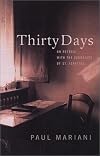
From the day Paul Mariani arrives at Eastern Point Retreat House to take part in the five-hundred-year-old Spiritual Exercises of St. Ignatius, he realizes that his expectations and assumptions about who he is, what he knows, and what he believes are about to change radically. In this profound memoir Mariani blends a brief life of St. Ignatius and meditations on the life of Jesus with the day-to-day unfolding of thirty days of silence at the retreat house. His journey of introspection, show more self-revelation, and spiritual renewal leads him to a new understanding of his relationship with God and of what it truly means to put others before oneself. show less
There is very little to tell about Stevens's famously uneventful life. Mariani fills the many pages of his book with very useful analyses of the most important poems written by Stevens. One would expect, however, a little more about Stevens's readings and friendships. Who is, for instance, Ramon Fernandez, so strikingly remembered in "The Idea of Order at Key West"? Paul Mariani was inable to answer this question, in spite of his deep researches in Stevens's correspondence.
Awards


You May Also Like


Associated Authors
Statistics
- Works
- 24
- Also by
- 31
- Members
- 777
- Popularity
- #32,751
- Rating
- 3.8
- Reviews
- 11
- ISBNs
- 49