
Jonathan Swift (1667–1745)
Author of Gulliver's Travels
About the Author
Apparently doomed to an obscure Anglican parsonage in Laracor, Ireland, even after he had written his anonymous masterpiece, A Tale of a Tub (c.1696), Swift turned a political mission to England from the Irish Protestant clergy into an avenue to prominence as the chief propagandist for the Tory show more government. His exhilaration at achieving importance in his forties appears engagingly in his Journal to Stella (1710--13), addressed to Esther Johnson, a young protegee for whom Swift felt more warmth than for anyone else in his long life. At the death of Queen Anne and the fall of the Tories in 1714, Swift became dean of St. Patrick's Cathedral, Dublin. In Ireland, which he considered exile from a life of power and intellectual activity in London, Swift found time to defend his oppressed compatriots, sometimes in such contraband essays as his Drapier's Letters (1724), and sometimes in such short mordant pieces as the famous A Modest Proposal (1729); and there he wrote perhaps the greatest work of his time, Gulliver's Travels (1726). Using his characteristic device of the persona (a developed and sometimes satirized narrator, such as the anonymous hack writer of A Tale of a Tub or Isaac Bickerstaff in Predictions for the Ensuing Year, who exposes an astrologer), Swift created the hero Gulliver, who in the first instance stands for the bluff, decent, average Englishman and in the second, humanity in general. Gulliver is a full and powerful vision of a human being in a world in which violent passions, intellectual pride, and external chaos can degrade him or her---to animalism, in Swift's most horrifying images---but in which humans do have scope to act, guided by the Classical-Christian tradition. Gulliver's Travels has been an immensely successful children's book (although Swift did not care much for children), so widely popular through the world for its imagination, wit, fun, freshness, vigor, and narrative skill that its hero is in many languages a common proper noun. Perhaps as a consequence, its meaning has been the subject of continuing dispute, and its author has been called everything from sentimental to mad. Swift died in Dublin and was buried next to his beloved "Stella." (Bowker Author Biography) show less
Disambiguation Notice:
Please be careful not to mistakenly combine full versions and abridged versions of Jonathan Swift's works.
Works by Jonathan Swift
Memoirs of the Extraordinary Life, Works, and Discoveries of Martinus Scriblerus (1741) 200 copies, 6 reviews
The Adventure Collection: Treasure Island, The Jungle Book, Gulliver's Travels, White Fang, The Merry Adventures of Robin (2012) 71 copies
Gulliver's Travels: and Alexander Pope's Verses on Gulliver's Travels (Everyman's Library CLASSICS) (2009) 59 copies
Gulliver's Travels [Pagemaster Classic Series - Adapted by Andrew Borkowski] (1994) — Original Author — 36 copies
Gulliver's Travels: A Story about the Value of Peace [abridged - Chick-fil-A] (2004) — Original Story — 34 copies
Gulliver's Travels Into Several Remote Nations of the World (Hallmark Children's Classics) (1937) 29 copies
Gulliver's Travels: A Tale of a Tub / Battle of the Books, Etc. (Oxford Standard Edition) (1933) 26 copies
Grolier Classics: Gulliver's Travels, Autobiography of Cellini, Decline and Fall of the Roman Empire, Aeneid (1956) 15 copies
Gulliver's Travels, an account of the Four Voyages in Several Remote Nations of the World, Junior Heritage Edition; wood engravings by Fritz Eichenberg; (1940) 13 copies
Reading & Training : Jonathan Swift : Gulliver's travels [book + sound recording] (2008) — Writer — 12 copies
Gulliver's travels. Part III : A voyage to Laputa, Balnibarbi, Luggnagg, Glubbdubdrib, and Japan (1998) 11 copies
Poems 9 copies
Gullivers travels 8 copies
GULLIVER'S TRAVELS Easton Press 7 copies
English Political Writings 1711-1714: 'The Conduct of the Allies' and Other Works (The Cambridge Edition of the Works of Jonathan Swift) (2008) 7 copies
A Complete Collection of Genteel and Ingenious Conversation, in Three Dialogues (For Her Own Good: A Series of Conduct Books) (1996) 7 copies, 1 review
Miscellanies 6 copies
Gullivers Reisen. Münchhausen. Das Gespenst von Canterbury. Drei Geschichten in einem Band (1997) 5 copies
Respektlose Schriften 5 copies
Een bescheiden voorstel om te voorkomen dat kinderen van arme mensen in Ierland hun ouders of vaderland tot last zijn, en om hen in een maatschappelijke behoefte te laten voorzien… (1996) 5 copies, 1 review
Gulliver's Travels: 3100 Headwords: Further Voyages (Oxford Progressive English Readers) (1995) 5 copies
GULLIVER'S TRAVELS INTO SEVERAL REMOTE NATIONS OF THE WORLD, ARRANGED IN THREE PARTS FROM THE ORIGINAL OF JONATHAN SWIFT. (1930) 4 copies
Irish Political Writings after 1725: A Modest Proposal and Other Works (The Cambridge Edition of the Works of Jonathan Swift) (2018) 4 copies
Los viajes de Gulliver 4 copies
The Collected Works of Jonathan Swift: The Complete Works PergamonMedia (Highlights of World Literature) (2009) 4 copies
Biblioteca Basica Salvat libro RTV numero 012:Viajes de gulliver (numerado 1 en interior cubierta) (1969) 4 copies
I magnifici 7 capolavori della letteratura irlandese (eNewton Classici) (Italian Edition) (2013) 4 copies
Selected essays ... Decorated with engravings on wood by Jon Farleigh. Edited by R. Ellis Roberts 4 copies
Călătoriile lui Gulliver 4 copies
Opere 3 copies
Gulliver's Travels Into Several Remote Nations of the World. Introduction By John F. Ross (1966) 3 copies
The Annotated Gulliver’s Travels… Edited, with a biographical introduction and notes by Isaac Asimov. (1980) 3 copies
Junior Classics Gulliver`s Travels 3 copies
The Prose Works of Jonathan Swift, D.D. - Volume 09 Contributions to The Tatler, The Examiner, The Spectator, and The Intelligencer (2012) 3 copies
Gulliver Travels Part 2 - into Several Remote Nations of the World : Complete and Unabridged with Extensive Notes (2013) 3 copies
Complete Works of Jonathan Swift 3 copies
I viaggi di Gulliver. Vol. II 3 copies
The Prose Works of Jonathan Swift, D.D. - Volume 03 Swift's Writings on Religion and the Church - Volume 1 (2012) 3 copies
The Prose Works of Jonathan Swift, D.D. - Volume 04 Swift's Writings on Religion and the Church - Volume 2 (2012) 3 copies
Gullivers Reisen: Überarbeitete Altfassung (Klassiker bei Null Papier) (German Edition) (2013) 3 copies
Gulliver's Travels (Tales for Children from Many Lands): A Voyage to Lilliput, & A Voyage to Brobdingnag (2004) 3 copies
Gulliver's Travels and other stories 3 copies
The British Essayists: Tatler Vol 2 3 copies
Gulliver bei den Riesen 3 copies
The British Essayists: Tatler Vol 3 2 copies
GULIVER'S TRAVELS 2 copies
Gulliver's travels in Lilliput and Brobdingnag. From the story by Dean Swift. [Stories old and new.] (1915) 2 copies
Gulliver's Travels Into Several Remote Nations of the World: a New Edition, Edited for Young Readers (1894) 2 copies
When I Come to be Old 2 copies
Poetry and prose 2 copies
Viatge a Laputa 2 copies
The Poems of Jonathan Swift 2 copies
Résolutions pour quand je vieillirai et autres pensées sur divers sujets (Folio Sagesses) (French Edition) (2018) 2 copies
Una modesta proposició 2 copies
Die goldenen Kinderbuch-Klassiker. Ein Domino-Buch. Gullivers Reisen 3. Gulliver oder Die Reise nach Brobdingnag Teil 1. (1993) 2 copies
Jonathan Swift's Word-book : a vocabulary compiled for Esther Johnson and copied in her own hand (2017) 2 copies
Jonathan Swift - A Selection Of His Works: Gulliver's Travels; A Tale Of A Tub; The Battle of The Books; A Modest Proposal; Poems (1969) 2 copies
Verses on the death of Dr. Swift. Occasioned by reading the following maxim in Rochfoucault. Written by himself; Nov. 1731. (2010) 2 copies
THE WORKS OF JONATHAN SWIFT Blacks Readers Service Hardcover 1932 [Hardcover] Jonathan Swift 2 copies
Gullivers Reisen in ferne Länder 2 copies
Gulliver az óriások között 2 copies
Gulliver's Travels abridged version: A Genesis Curriculum Rainbow Reader (Indigo Series) (2015) 2 copies
LOS VIAJES DE GULLIVER 2 copies
Padres e hijos: Una humilde propuesta / El club de los parricidas y un crimen más (Calambur Narrativa) (1991) 2 copies
La cuestión de Irlanda: (selección de artículos sobre Irlanda) = Irish tracts (Erasmo) (Spanish Edition) (1982) 2 copies
Selections from the Journal to Stella, A Tale of a Tub, Personal Letters and Gulliver's Travels (1901) 2 copies
Swift's Polite Conversation. With introduction, notes and extensive commentary by Eric Partridge 2 copies
Satyre als medicijn, Jonathan Swift 2 copies
Ein bescheidener Vorschlag, wie man verhindern kann, daß die Kinder der Armen ihren Eltern oder dem Lande zur Last fallen und andere Satiren. (1975) 2 copies
Miscellanies. 2 copies
La cuestion de Irlanda: (seleccion de articulos sobre Irlanda) = Irish tracts (Erasmo) (1982) 2 copies
SELECTED POEMS OF JONATHAN SWIFT 2 copies
Miscellanies. The last volume 2 copies
VIAGENS DE GULLIVER 1 copy
Guliwer w krainie Liliputów 1 copy
The place of the damn'd 1 copy
Gulliver's Travels (Collector's Library) by Swift, Jonathan (March 1, 2011) Hardcover New (1700) 1 copy
Gulliver történetei 1 copy
Gulliers Travels 1 copy
Gulliver se reise 1 copy
A Beautiful Young Nymph Going to Bed. ... to Which Are Added Strephon and Chloe. and Cassinus and Peter. (2010) 1 copy
Uputstva posluzi 1 copy
Gulliver a Lilliput 1 copy
The Portable Swift 1 copy
Gulliver's Travels (Illustrated): The 1726 Classic Edition with Original Illustrations (Kindle) 1 copy
Works of Jonathan Swift 1 copy
By Jonathan Swift - Writings of Jonathan Swift (Norton Critical Edition): 1st (first) Edition (1972) 1 copy
Udhëtimet e Guliverit 1 copy
Antique Rare Gulliver's Travel's by Dean Swift (1895) Vintage Hardcover Book [Hardcover] Unknown 1 copy
Gulliver bei den Zwergen 1 copy
Les Voyages extraordinaires de Gulliver: un roman de littérature jeunesse de Jonathan Swift (2022) 1 copy
Jonathan Swift 1 copy
Gulliver's Travels Into Several Remote Regions of the World in Words of One Syllables 1 copy, 1 review
SWIFT-VOLTAIRE-DIDEROT 1 copy
Τα ταξίδια του Γκιούλιβερ 1 copy
Gulliver's travels into several remote nations of the world. By: Jonathan Swift and ill. Arthur Rackham (2017) 1 copy
Voyages de Gulliver 1 copy
Modeste proposition 1 copy
Los Viajes De Gulliver I 1 copy
Gulliver’s Travels into Several Remote Nations of the World: with original color illustrations by Arthur Rackham (2019) 1 copy
Le Gulliver des enfants, ou Aventures les plus curieuses de ce voyageu...Ouvrage orné de... vignettes... dessinées et gravées par Pauquet 1 copy, 1 review
Bd. 2. Politische Schriften 1 copy
Bd. 3. Gullivers Reisen 1 copy
Gulliver’s Travels, etc. 1 copy
Camchuairt Ghuilivéir 1 copy
VIAJES DE GUILLIVER (17) 1 copy
Cuoc phieu luu Gulliver 1 copy
Viajes de Gulliver 1 copy
Gulliver du ký 1 copy
গালিভারের ভ্রমণকথা 1 copy
Shorter Prose Works 1 copy
Gulliver Ressuscite, Parts 1-2: Ou Les Voyages, Campagnes Et Aventures Extraordinaires (1787) (French Edition) (2009) 1 copy
Gullivers Reisen. Alle Bände 1 copy
FÁBULAS ENCANTADAS 1 copy
Gulliver du k©ư 1 copy
Poetical Works 1 copy
A Tale of a Tub 1 copy
Gulliver's Stories 1 copy
Gulliver'S Travels - 1 copy
גוליבר : מסעיו ועלילותיו 1 copy
গালিভারের ভ্রমণ কথা 1 copy
বামনের দেশ 1 copy
Gulliver's Travels 1 copy
VOYAGES DE GULLIVER 1 copy
Путешествия Гулливера 1 copy
The Golden Story Book 1 copy
gulliver travels in lilliput 1 copy
The Works of Jonathan Swift 1 copy
Gulliver's Travels (JKL Classics): By Jonathan Swift – Illustrated + Unabridged + Active Contents 1 copy
Stella's Birth-Days 1 copy
Gulliver?s travels 1 copy
Viajens de Gulliver 1 copy
Gulliver's Voyages 1 copy
Gullivers Travels 1 copy
La favola della botte 1 copy
Gullivers reiser 1 copy
Gulliver's Bird Book 1 copy
Swift's select works 1 copy
Swift's Gulliver's Travels 1 copy
Výbor z díla 1 copy
Szatírák és röpiratok 1 copy
Scritti satirici e polemici 1 copy
Humble proposition suivie de Proposition pour la généralisation des produits irlandais (2002) 1 copy
Gullivers Reisen. Alle Bände 1 copy
The Battle of the Books and Other Short Pieces: (Dr. Jonathan Swift Classics Collection) (2015) — Author — 1 copy
Gullivers rejser 1-2 1 copy
Gulliver's Travels. Based on Jonathan Swift's Immortal Tale. Based on Paramount's Motion Picture (1939) 1 copy
Gulliver's Travels In Plain and Simple English (A Modern Translation and the Original Version) (2012) 1 copy
The Works of Dr. Jonathan Swift, Dean of St. Patrick's, Dublin, Vol. 4 (Classic Reprint) (2017) 1 copy
The works of Dean Swift : embracing Gulliver's travels, Tale of a tub, Battle of the books, etc. 1 copy
Podróże Guliwera 1 copy
La storia di Gulliver 1 copy
Letters and journals of Jonathan Swift. Selected and edited with a commentary and notes, by Stanley Lane-Poole. (1885) 1 copy
Gulliver's Travels, etc 1 copy
Gulliver en Liliput 1 copy
Voyage de Gulliver 1 copy
Justice and Lawyers 1 copy
Satiren 1 copy
Los viajes de Gulliver — Author — 1 copy
Gulliver . Viaje a Liliput 1 copy
Gullivers Reisen. Nach alten Ausg. neu erzählt von Franz Taucher u. mit zahlreichen Ill. von Lajos von Horvath (1947) 1 copy
Directions to Servants and Miscellaneous Pieces, 1733-1742 (The Prose Writings of Jonathan Swift, Vol. 13) (1973) 1 copy
Essays 1 copy
Mährchen von der Tonne Eine neue Übersetzung mit Erläuterungen von dem Verfasser der Briefe eines reisenden Franzosen (1986) 1 copy
Swift Jonathan 1 copy
Stella's Birth-Days : Poems 1 copy
Podróże Guliwera 1 copy
Aboliamo il cristianesimo! 1 copy
Satire scelte 1 copy
Gullivers Travels. 1 copy
Gullivers Rejser 1 og 2 1 copy
Lo spogliatoio della signora 1 copy
Poetry & prose 1 copy
Miscellanies. Vol. 1, 6 1 copy
The Battle of the Books. Extracted from Selections from Swift edited by Sir Henry Craik (1912) 1 copy
Desire and Possession. 1 copy
A Treatise on Good Manners and Good Breeding (The Complete Harvard Classics, Vol. 27) (KINDLE) 1 copy
Swift's Works 1 copy
The Spectator 1 copy
Three Sermons 1 copy
Cuento de un tonel 1 copy
Los viajes de Gulliver 1 copy
Pensamentos 1 copy
I Viaggi di Gulliver 1 copy
LOS VIAJES DE GULLIVER 1 copy
The Works of the Rev. Jonathan Swift, D.D. ...: With Notes, Historical and Critical Volume 1 (2015) 1 copy
Gulliver în ţara piticilor 1 copy
La mécanique de l'esprit 1 copy
Letters written by the late Jonathan Swift, and several of his friends from the year 1703 to 1740 1 copy
Human Ordure, Botanically Considered. The First Essay, of the Kind, Ever Published in the World. (2018) 1 copy
Travels of Lemuel Gulliver 1 copy
A Modest Proposal and Other Works by Jonathan Swift (Unexpurgated Edition) (Halcyon Classics) (2009) 1 copy
Culliver's Travels 1 copy
Gulliver's Travel & Other Writing History — Author — 1 copy
The conduct of the allies and of the late ministry, in beginning and carrying on the present war 1 copy
Los viajes de Gulliver (Con notas y completo): y "Una modesta proposición" (anotado por Álvaro Díaz) (Spanish Edition) (2014) 1 copy
Gulliver's voyage to Lilliput, by Jonathan Swift, in the corresponding style of Pitman's shorthand 1 copy
Swift oeuvres 1 copy
Penguin Great Ideas : A Tale of A Tub: Written by Jonathan Swift, 2004 Edition, (New Ed) Publisher: Penguin [Paperback] (2004) 1 copy
A proposal for correcting the English tongue, polite conversation, etc (The prose works of Jonathan Swift) (1957) 1 copy
I quattro viaggi di Gulliver 1 copy
GULLIVER CUCELER ULKESINDE 1 copy
Gullivers Reisen 1 copy
LOS VIAJES DE GULLIVER II 1 copy
LOS VIAJES DE GULLIVER I 1 copy
Gulliver's travels into several remote nations of the world, (Immortal masterpieces of literature [vol. 10]) (1937) 1 copy
Los Viajes De Gulliver II 1 copy
Associated Works
Literature: An Introduction to Fiction, Poetry, and Drama (1995) — Contributor, some editions — 1,016 copies, 7 reviews
The Illustrated Treasury of Children's Literature, Volumes 1-2 (1955) — Contributor — 523 copies, 4 reviews
The Graphic Canon, Vol. 1: From the Epic of Gilgamesh to Shakespeare to Dangerous Liaisons (2012) — Contributor — 304 copies, 7 reviews
The Sophisticated Cat: A Gathering of Stories, Poems, and Miscellaneous Writings About Cats (1992) — Contributor — 112 copies, 1 review
The Graphic Canon of Children's Literature: The World's Greatest Kids' Lit as Comics and Visuals (2014) — Contributor — 101 copies, 1 review
The Junior Classics Volume 05: Stories That Never Grow Old (1912) — Contributor — 69 copies, 1 review
The World of Law, Volumes I-II: The Law in Literature, The Law as Literature (1960) — Contributor — 54 copies
Children's Classic Compendium: Jungle Book / Rip Van Winkle / Guilliver's Travels (1999) — Author — 40 copies
Out of the Best Books: An Anthology of Literature, Vol. 4: The World Around Us (1968) — Contributor — 28 copies
Oogst Der Tijden. keur uit de werken van schrijvers en dichters aller volken en eeuwen (1940) — Contributor — 12 copies
English Verse: Volume 3: The Eighteenth Century: Swift to Crabbe (Penguin English Verse) (1995) — Contributor — 12 copies
One Thousand Years of Laughter: An Anthology a Classic Comic Prose (2002) — Contributor, some editions — 9 copies, 2 reviews
A voyage to Cacklogallinia, with a description of the religion, policy, customs and manners of that country (1727) — attributed author, some editions — 7 copies, 2 reviews
Edexcel Poetry Anthology for Advanced subsidiary and advanced GCE examinations in English Literature (2000) — Contributor, some editions — 6 copies
Fantastic Imaginings: A Journey Through 3500 Years of Imaginative Writing, Comprising Fantasy, Horror, and Science Fiction (2012) — Contributor — 4 copies
Love & Marriage — Contributor — 3 copies
Piirakkasota; valikoima huumoria — Contributor — 3 copies
A Voyage to the Country of the Houyhnhnms — Author — 1 copy
Nouveaux mémoires du chevalier Guillaume Temple, ambassadeur & plénipotentiaire de la Grande Bretagne en diverses cour de l'Europe... Publ. avec une Préface par le docteur… — Introduction, some editions — 1 copy
Lilliput Magazine. November - December 1952. Vol. 31 no. 6. Issue no. 186. — Contributor — 1 copy
Tagged
Common Knowledge
- Canonical name
- Swift, Jonathan
- Legal name
- Swift, Jonathan
- Other names
- Bickerstaff, Isaac
- Birthdate
- 1667-11-30
- Date of death
- 1745-10-19
- Gender
- male
- Education
- Kilkenny School
Trinity College, Dublin (BA|1686, "by speciali gratia"|D.Div|1702)
University of Oxford (MA|1692) - Occupations
- clergyman
poet
writer
dean (St. Patrick's Cathedral, Dublin, Ireland)
secretary
editor - Organizations
- Scriblerus Club
Kit-Cat Club - Relationships
- Sheridan, Thomas (godson, friend)
Pope, Alexander (friend)
Godwin, Francis (great-great uncle)
Pilkington, Laetitia (friend) - Short biography
- Jonathan Swift (30 November 1667 – 19 October 1745) was an Anglo-Irish satirist, essayist, political pamphleteer (first for the Whigs, then for the Tories), poet and cleric who became Dean of St Patrick's Cathedral, Dublin, hence his common sobriquet, "Dean Swift".
Swift is remembered for works such as A Tale of a Tub (1704), An Argument Against Abolishing Christianity (1712), Gulliver's Travels (1726), and A Modest Proposal (1729). He is regarded by the Encyclopædia Britannica as the foremost prose satirist in the English language, and is less well known for his poetry. He originally published all of his works under pseudonyms – such as Lemuel Gulliver, Isaac Bickerstaff, M. B. Drapier – or anonymously. He was a master of two styles of satire, the Horatian and Juvenalian styles.
His deadpan, ironic writing style, particularly in A Modest Proposal, has led to such satire being subsequently termed "Swiftian". - Nationality
- Kingdom of Ireland
- Birthplace
- Dublin, Kingdom of Ireland
- Places of residence
- Dublin, County Dublin, Ireland
Surrey, England, UK
London, Middlesex, England, UK
Trim, County Meath, Ireland - Place of death
- Dublin, County Dublin, Ireland
- Burial location
- St. Patrick's Cathedral, Dublin, Ireland
- Map Location
- Ireland
- Disambiguation notice
- Please be careful not to mistakenly combine full versions and abridged versions of Jonathan Swift's works.
Members
Discussions
Gulliver's Travels in George Macy devotees (June 2023)
Heritage Press Gulliver's Travels in George Macy devotees (August 2022)
Reviews
Reading A Modest Proposal as someone from Ireland felt different than I expected. I had heard about the essay before, mostly that it was “shocking” and “satirical” but I wasn’t prepared for how unsettled it would make me. The idea itself is horrifying, yet Swift presents it so calmly, so logically, that for a split second you almost follow his reasoning.
What makes the essay powerful isn’t just the outrage. It’s the restraint. Swift never breaks character. He never tells you show more directly that he’s angry. Instead, he forces you to feel the cruelty of a system that treated Irish people as economic burdens rather than human beings. Reading it as an Irish person, I couldn’t help but feel a quiet heaviness. This wasn’t just satire it was written out of real suffering in this country’s history.
A lot of Irish people have been affected by the housing crisis and it’s impossible to live in Ireland today and not be aware of it. You see it in news headlines, conversations, and the constant talk about rent prices, especially in places like Dublin. What struck me while reading Swift was how familiar the language felt. Discussions about housing often revolve around markets, supply, demand, and investment. Those conversations matter, but they can sometimes feel detached from the reality that people are simply trying to find a place to live.
Swift exaggerates economic thinking to an extreme, reducing children to numbers and profit margins, but his point feels painfully clear. When human lives are discussed only in terms of cost and efficiency, something deeply important is lost. The comparison isn’t about equating situations; today’s Ireland is not 18th-century Ireland. But emotionally, the essay made me more aware of how easily suffering can be normalized when it’s framed as a financial issue.
What I appreciated most about A Modest Proposal is that it didn’t just inform me it made me uncomfortable in a way that felt necessary. It pushed me to think about how societies justify inequality and how quickly compassion can be overshadowed by practicality. As someone from Ireland, that reflection feels personal, even if the events Swift wrote about happened centuries ago.
In the end, the essay lingers. It’s not enjoyable in a traditional sense, but it’s powerful. It reminds me that literature can act as both a mirror and a warning reflecting our past while quietly asking what we might be overlooking in the present. show less
What makes the essay powerful isn’t just the outrage. It’s the restraint. Swift never breaks character. He never tells you show more directly that he’s angry. Instead, he forces you to feel the cruelty of a system that treated Irish people as economic burdens rather than human beings. Reading it as an Irish person, I couldn’t help but feel a quiet heaviness. This wasn’t just satire it was written out of real suffering in this country’s history.
A lot of Irish people have been affected by the housing crisis and it’s impossible to live in Ireland today and not be aware of it. You see it in news headlines, conversations, and the constant talk about rent prices, especially in places like Dublin. What struck me while reading Swift was how familiar the language felt. Discussions about housing often revolve around markets, supply, demand, and investment. Those conversations matter, but they can sometimes feel detached from the reality that people are simply trying to find a place to live.
Swift exaggerates economic thinking to an extreme, reducing children to numbers and profit margins, but his point feels painfully clear. When human lives are discussed only in terms of cost and efficiency, something deeply important is lost. The comparison isn’t about equating situations; today’s Ireland is not 18th-century Ireland. But emotionally, the essay made me more aware of how easily suffering can be normalized when it’s framed as a financial issue.
What I appreciated most about A Modest Proposal is that it didn’t just inform me it made me uncomfortable in a way that felt necessary. It pushed me to think about how societies justify inequality and how quickly compassion can be overshadowed by practicality. As someone from Ireland, that reflection feels personal, even if the events Swift wrote about happened centuries ago.
In the end, the essay lingers. It’s not enjoyable in a traditional sense, but it’s powerful. It reminds me that literature can act as both a mirror and a warning reflecting our past while quietly asking what we might be overlooking in the present. show less
Gloom and doom
When I was an undergraduate, Thomas Malthus’ 1798 An Essay on the Principle of Population was on the geography curriculum, and as a studious student, I read (some of) it.
It was depressing, as the gist seemed to be that we’re all going to die. All of us. Slowly. Painfully. Because population grows exponentially, whereas the ability of humans to feed themselves grows only arithmetically/ linearly.
Image: Linear versus exponential growth (Source.)
So we’ll starve. And before show more that, we’ll be too poor to buy what food there is, because population growth will increase the labour supply and drive down wages. The birth rate must be cut. Celibacy should be promoted, too. And higher death rates accepted.
Kenneth Boulding’s poem, from a 20th century environmental angle, seemed to agree:
(Douglas Adams agreed with that moral.)
Soylent pink?
I also discovered that seventy years before Malthus’ book, Jonathan Swift had a different solution to the problem of overpopulation. A Modest Proposal starts with grim descriptions of extreme poverty and hunger in Ireland:
“It is a melancholy object to those, who walk through this great town, or travel in the country, when they see the streets, the roads, and cabbin-doors crowded with beggars of the female sex, followed by three, four, or six children, all in rags, and importuning every passenger for an alms… [and] women murdering their bastard children.”
A particular problem is that children are an expense for years before their parents can get any return on the investment they can’t afford in the first place:
“I am assured by our merchants, that a boy or a girl, before twelve years old, is no saleable commodity.”
After such concern, his “modest” proposal is a total shock, and would have been even more so to 18th century readers unused to deadpan satire:
“A young healthy child well nursed, is, at a year old, a most delicious nourishing and wholesome food, whether stewed, roasted, baked, or boiled; and I make no doubt that it will equally serve in a fricasee, or a ragoust.”
Image: Dinner! (Source.)
He goes into great detail, not just culinary, but about the practicalities of the trade. He indirectly mocks his own suggestion by saying the only possible objection anyone might have is that it would reduce the population, which, he points out, is his intention. And just in case readers can’t think of any better solutions, such as raising taxes, controlling rents, buying local products, he lists them (supposedly to dismiss them).
But we’re still here
(I hope that writing that during the Coronavirus Covid-19 pandemic isn’t tempting fate.)
When I was reading Swift and Malthus a couple of centuries after they were written, there was certainly poverty and hunger around the world, even in England, and the Chinese One-child policy was being strictly enforced. Malthusianism hadn’t gone away, but it hadn’t entirely come true either. I had no immediate fears of starvation or even poverty.
Why was this, I wondered? Kenneth Boulding had an answer:
Back then, I was firmly with the optimistic technologist.
As a cynical middle-aged adult in a country torn by Brexit and ravaged by a global pandemic, I think both poems miss the crucial social-political aspects, and the fact that humans are not omnipotent.
Science has certainly helped, but it's not all positive:
* Crops and livestock have higher yields and are more resistant to disease - but there are risks from GM and antibiotic resistance.
* Land that was unsuitable for farming, can now be used - but irrigation in one place leaves others barren.
* Machines work faster than people - so some lose their jobs.
* Packaging and chilling reduce damage - and yet waste increases.
* Efficiency increases in many spheres - but that increases demand, so resources are used up faster (Jevons paradox).
* Technological advances benefit the rich more than the poor.
And we could all be wiped out by a virus. Cheers!
Image: Optimist, pessimist, realist, opportunist (Source.)
Sources
You can read Swift and Malthus, free on Gutenberg:
* A Modest Proposal, HERE
* An Essay on the Principle of Population, HERE. show less
When I was an undergraduate, Thomas Malthus’ 1798 An Essay on the Principle of Population was on the geography curriculum, and as a studious student, I read (some of) it.
It was depressing, as the gist seemed to be that we’re all going to die. All of us. Slowly. Painfully. Because population grows exponentially, whereas the ability of humans to feed themselves grows only arithmetically/ linearly.
Image: Linear versus exponential growth (Source.)
So we’ll starve. And before show more that, we’ll be too poor to buy what food there is, because population growth will increase the labour supply and drive down wages. The birth rate must be cut. Celibacy should be promoted, too. And higher death rates accepted.
Kenneth Boulding’s poem, from a 20th century environmental angle, seemed to agree:
A Conservationist’s Lament
The world is finite, resources are scarce,
Things are bad and will be worse.
Coal is burned and gas exploded,
Forests cut and soils eroded.
Wells are dry and air’s polluted,
Dust is blowing, trees uprooted,
Oil is going, ores depleted,
Drains receive what is excreted.
Land is sinking, seas are rising,
Man is far too enterprising.
Fire will rage with Man to fan it,
Soon we’ll have a plundered planet.
People breed like fertile rabbits,
People have disgusting habits.
Moral:
The evolutionary plan
Went astray by evolving Man.
(Douglas Adams agreed with that moral.)
Soylent pink?
I also discovered that seventy years before Malthus’ book, Jonathan Swift had a different solution to the problem of overpopulation. A Modest Proposal starts with grim descriptions of extreme poverty and hunger in Ireland:
“It is a melancholy object to those, who walk through this great town, or travel in the country, when they see the streets, the roads, and cabbin-doors crowded with beggars of the female sex, followed by three, four, or six children, all in rags, and importuning every passenger for an alms… [and] women murdering their bastard children.”
A particular problem is that children are an expense for years before their parents can get any return on the investment they can’t afford in the first place:
“I am assured by our merchants, that a boy or a girl, before twelve years old, is no saleable commodity.”
After such concern, his “modest” proposal is a total shock, and would have been even more so to 18th century readers unused to deadpan satire:
“A young healthy child well nursed, is, at a year old, a most delicious nourishing and wholesome food, whether stewed, roasted, baked, or boiled; and I make no doubt that it will equally serve in a fricasee, or a ragoust.”
Image: Dinner! (Source.)
He goes into great detail, not just culinary, but about the practicalities of the trade. He indirectly mocks his own suggestion by saying the only possible objection anyone might have is that it would reduce the population, which, he points out, is his intention. And just in case readers can’t think of any better solutions, such as raising taxes, controlling rents, buying local products, he lists them (supposedly to dismiss them).
But we’re still here
(I hope that writing that during the Coronavirus Covid-19 pandemic isn’t tempting fate.)
When I was reading Swift and Malthus a couple of centuries after they were written, there was certainly poverty and hunger around the world, even in England, and the Chinese One-child policy was being strictly enforced. Malthusianism hadn’t gone away, but it hadn’t entirely come true either. I had no immediate fears of starvation or even poverty.
Why was this, I wondered? Kenneth Boulding had an answer:
The Technologist’s Reply
Man’s potential is quite terrific,
You can’t go back to the Neolithic.
The cream is there for us to skim it,
Knowledge is power, and the sky’s the limit.
Every mouth has hands to feed it,
Food is found when people need it.
All we need is found in granite
Once we have the men to plan it.
Yeast and algae give us meat,
Soil is almost obsolete.
Men can grow to pastures greener
Till all the earth is Pasadena.
Moral:
Man’s a nuisance, Man’s a crackpot.
But only Man can hit the jackpot.
Back then, I was firmly with the optimistic technologist.
As a cynical middle-aged adult in a country torn by Brexit and ravaged by a global pandemic, I think both poems miss the crucial social-political aspects, and the fact that humans are not omnipotent.
Science has certainly helped, but it's not all positive:
* Crops and livestock have higher yields and are more resistant to disease - but there are risks from GM and antibiotic resistance.
* Land that was unsuitable for farming, can now be used - but irrigation in one place leaves others barren.
* Machines work faster than people - so some lose their jobs.
* Packaging and chilling reduce damage - and yet waste increases.
* Efficiency increases in many spheres - but that increases demand, so resources are used up faster (Jevons paradox).
* Technological advances benefit the rich more than the poor.
And we could all be wiped out by a virus. Cheers!
Image: Optimist, pessimist, realist, opportunist (Source.)
Sources
You can read Swift and Malthus, free on Gutenberg:
* A Modest Proposal, HERE
* An Essay on the Principle of Population, HERE. show less
I can hardly believe I'm giving this four stars, given I found it such a challenge to get into. It is written as more travel log than novel, and while I can't fault it for this (style of the time), it kept me at emotional arm's length. Had the book started with the Houyhnhnms and ended with one of the other countries, I might have settled on three. But this last voyage was my favorite, the deepest in terms of probing human behavior, and the most affecting as Gulliver grew to love and admire show more the Houyhnhnms and grieve the end of his time there. All around thought-provoking, sardonic, clever. A challenge for my modern attention span but well worth the time. show less
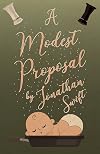
I can never resist a quick short read, reviewed and rated highly by a GR Friend. This one came from Sara and since I have not read anything by Jonathan Swift - not even Gulliver's Travels (I suppose I should be ashamed to own up to that), I thought I'd leap at the opportunity. What a surprise! Swift writes a brilliant, witty and satiric essay (albeit a touch macabre) addressing the urgent problem of poverty and starvation among the poor in 1720's Ireland. His "solution"? Selling off show more Ireland's abundant commodity of babies as food for the rich!
It's hard to even imagine laughing at such a macabre notion, but even without knowing the history of the period, a heavy-handed sarcasm is obvious and the poison arrows are aimed at....not the Starving Downtrodden Poor, but rather the aristocrats who address the issue of the (sdp) burden from their Ivory Tower (or so it seemed to me).
The essay is freely available in numerous places online, including: https://www.gutenberg.org/files/1080/1080-h/1080-h.htm
The recording, read by Sir Alec Guinness can be found at:
https://archive.org/details/alec-guinness-a-modest-proposal show less
“I have been assured by a very knowing American of my acquaintance in London, that a young healthy child well nursed, is, at a year old, a most delicious nourishing and wholesome food, whether stewed, roasted, baked, or boiled; and I make no doubt that it will equally serve in a fricasee, or a ragoust.”
It's hard to even imagine laughing at such a macabre notion, but even without knowing the history of the period, a heavy-handed sarcasm is obvious and the poison arrows are aimed at....not the Starving Downtrodden Poor, but rather the aristocrats who address the issue of the (sdp) burden from their Ivory Tower (or so it seemed to me).
“I grant this food will be somewhat dear, and therefore very proper for landlords, who, as they have already devoured most of the parents, seem to have the best title to the children.”
The essay is freely available in numerous places online, including: https://www.gutenberg.org/files/1080/1080-h/1080-h.htm
The recording, read by Sir Alec Guinness can be found at:
https://archive.org/details/alec-guinness-a-modest-proposal show less
Lists
Best Satire (6)
Ambleside Books (1)
Funny Classics (1)
Fave Books (1)
Best Young Adult (1)
Tall tales (1)
Tour of Ireland (1)
Folio Society (1)
Overdue Podcast (1)
Sonlight Books (1)
Leseliste (1)
Read (1)
Best Dystopias (1)
18th Century (2)
el (1)
AP Lit (1)
Unread books (1)
bound (1)
A Novel Cure (2)
1720s (2)
A Reading List (2)
aijowenuwaneaw (1)
. (1)
100 (1)
BBC Top Books (1)
. (1)
Favourite Books (1)
Spirituality (1)
My TBR (1)
Out of Copyright (1)
Awards


You May Also Like


Associated Authors
Statistics
- Works
- 1,103
- Also by
- 84
- Members
- 45,613
- Popularity
- #355
- Rating
- 3.7
- Reviews
- 483
- ISBNs
- 2,358
- Languages
- 35
- Favorited
- 88
