
Denis Guedj (1940–2010)
Author of The Parrot's Theorem
About the Author
Denis Guedj is Professor of the History of Science at Paris VIII University.
Image credit: Denis Guedj en 2004
Works by Denis Guedj
Associated Works
Tagged
Common Knowledge
- Canonical name
- Guedj, Denis
- Legal name
- Guedj, Raymond Denis
- Birthdate
- 1940
- Date of death
- 2010-04-24
- Gender
- male
- Education
- Faculté des sciences de Paris (Licence mathématique, Doctorat, Histoire et d'épistémologie des sciences)
Lycée Bugeaud, Alger - Occupations
- professor
- Organizations
- Université de Paris 8 (Professeur ∙ Histoire des sciences ∙ Epistémologie ∙ 19 69 ∙ 20 09)
Libération, Journal (Collaborateur ∙ 19 94 ∙ 19 97) - Nationality
- France
- Birthplace
- Setif, Algeria
- Place of death
- 15e arrondissement, Paris, Ile-de-France, France
- Burial location
- Cimetière de Montmartre, Paris, Ile-de-France, France
- Associated Place (for map)
- France
Members
Reviews
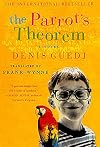
An attempt to tell the history of mathematics from the Greeks to the present day in the guise of a novel...and not a very good novel at that. The mathematics is at times misunderstood and at times flawed. There are misquoted formulae and bizarre statements, "all new mathematics is just sets." There are strange non-sequiters, one of the central characters who is confined to a wheelchair walks across the room to put the kettle on. The book is translated from French but the translator has show more attempted to give it an "English" air by making the characters perform in an English manner (drink tea on a regular basis etc.) and speak with a cockney accent while still living in Paris. All distinctly odd! There are better books on the history of maths and better novels. show less
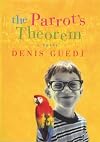
Not sure how this got on my wishlist. I thought that I realized several years ago that my infatuation with mathematics was something that I'd outgrown by my 30s. Well, I think this book is confirming that, anyway. I'm taking every excuse to put it down and working hard to pick it up again.
The characters are neither believable or interesting, the thrilling mystery neither thrilling nor mysterious, and I'm not likely to remember anything about the math except for, perhaps, the trisection of show more the angle. And that may stick in my mind because it seems obvious to me how to do it and I'm still reading in order to find out what's wrong with my idea.
---
Ok done. Three days of on/off reading, which is awfully long for me.
I'm going to have to consult my college grad. son about trisecting an angle. I did predict the 'loyal friend' correctly in the mystery, but not the chief bad guy, and certainly not how interesting he would prove to be... honestly, the book, if not written by a maths teacher, would have been about him, and been better.
I'm not quite sure why I'm giving this three stars instead of two.
"Thales' theorem had already shown them how to divide a line segment into three equal parts."
Arabic numerals are apparently actually Indian numerals? (Yup: "The Hindu–Arabic or Indo–Arabic numerals were invented by mathematicians in India. Persian and Arabic mathematicians called them "Hindu numerals". Later they came to be called "Arabic numerals" in Europe because they were introduced to the West by Arab merchants. - Wikipedia.)
Chapter 14 begins with a wonderful ode to books... check it out. "... a book will never turn its back on you."
A triangle spread on a sphere would be 'bigger' than the same triangle on a plane. Beware absolutes (in maths or in life). show less
The characters are neither believable or interesting, the thrilling mystery neither thrilling nor mysterious, and I'm not likely to remember anything about the math except for, perhaps, the trisection of show more the angle. And that may stick in my mind because it seems obvious to me how to do it and I'm still reading in order to find out what's wrong with my idea.
---
Ok done. Three days of on/off reading, which is awfully long for me.
I'm going to have to consult my college grad. son about trisecting an angle. I did predict the 'loyal friend' correctly in the mystery, but not the chief bad guy, and certainly not how interesting he would prove to be... honestly, the book, if not written by a maths teacher, would have been about him, and been better.
I'm not quite sure why I'm giving this three stars instead of two.
"Thales' theorem had already shown them how to divide a line segment into three equal parts."
Arabic numerals are apparently actually Indian numerals? (Yup: "The Hindu–Arabic or Indo–Arabic numerals were invented by mathematicians in India. Persian and Arabic mathematicians called them "Hindu numerals". Later they came to be called "Arabic numerals" in Europe because they were introduced to the West by Arab merchants. - Wikipedia.)
Chapter 14 begins with a wonderful ode to books... check it out. "... a book will never turn its back on you."
A triangle spread on a sphere would be 'bigger' than the same triangle on a plane. Beware absolutes (in maths or in life). show less
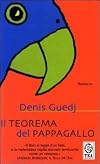
Il teorema del pappagallo e’ da consigliare a chi è terrorizzato dalla matematica: scoprirà che è un mondo affascinante e per nulla arido . E’ un libro gradevole , con alcune parti spassosissime come ad esempio la misura della piramide in unità di "taleti", ed e’ semplice nella sua complessità. La trama non e’ solo un mero preteso per raccontare la storia della matematica, e’ avvincente e con personaggi ben delineati e deliziosi, pappagallo compreso .
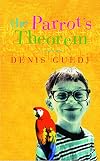
One of the most interesting books I have ever read, and perhaps the luckiest purchase too - I picked it up from a bargain bin in a remaindered book shop.Wrapped loosely around a plot of sorts, the Parrot's Theorem takes the reader through a history of mathematics, and is by turns wonderfully accessible, fun, intriguing and absorbing.If you ever spot it in a book shop, make sure you pick it up.
Lists
Awards

You May Also Like


Associated Authors
Statistics
- Works
- 27
- Also by
- 1
- Members
- 1,570
- Popularity
- #16,442
- Rating
- 3.4
- Reviews
- 28
- ISBNs
- 107
- Languages
- 13
- Favorited
- 1


