
Holly George-Warren
Author of The Rolling Stone Encyclopedia of Rock & Roll: Revised and Updated for the 21st Century: Third Edition
About the Author
Holly George-Warren is a two-time Grammy nominee and the award-winning author of sixteen books, including A Man Called Destruction: The Life and Music of Alex Chilton and Public Cowboy No. 1: The Life and Times of Gene Autry. She lives in upstate New York.
Works by Holly George-Warren
The Rolling Stone Encyclopedia of Rock & Roll: Revised and Updated for the 21st Century: Third Edition (2001) — Editor — 257 copies, 2 reviews
The Rolling Stone Album Guide: Completely New Reviews: Every Essential Album, Every Essential Artist (1992) — Editor — 239 copies, 2 reviews
The Rolling Stone Book of the Beats: The Beat Generation and American Culture (1999) — Editor — 180 copies, 2 reviews
A Man Called Destruction: The Life and Music of Alex Chilton, From Box Tops to Big Star to Backdoor Man (2014) 93 copies, 6 reviews
Honky-Tonk Heroes and Hillbilly Angels: The Pioneers of Country and Western Music (2006) 42 copies, 1 review
Physioynomy 1 copy
Associated Works
Behind the Seams: My Life in Rhinestones (2023) — Author; Narrator, some editions — 242 copies, 10 reviews
Legends: For Your Love — Notes — 4 copies
Tagged
Common Knowledge
- Canonical name
- George-Warren, Holly
- Birthdate
- 1956-10-10
- Gender
- female
- Nationality
- USA
- Associated Place (for map)
- USA
Members
Reviews

I love Janis Joplin and love being immersed in her story. I can't say I really learned anything in this bio that I hadn't from the several others that I have read. This one leaned heavily on Janis' copious written correspondence with her family; and seemed less focused on her relationships with men, and more on those she had with women. Janis here is presented as frankly bisexual, if not lesbian with a daddy fixation.
I took issue when lyrics were misquoted. The most egregious example was the show more part in "Piece of My Heart" where Janis sings, "Nowma nowma nowma nowma nowma HEAR me when I cry-y-y-y, and baby I cry all the time!" This was transcribed on paper as "Never, never, never hear me when I cry." I can only think that when another artist wrote or transcribed the song, the word was "Never." If so, tell us what you're quoting. Because you're not quoting Janis. On no planet does "Nowma" mean "Never." (It means, obviously, "Nowma".)
My thoughts on the medical nature of addiction have evolved since I last immersed myself in Janis' life story. With so much attention to the opiate crisis, so many obituaries of young people in my local paper, and a harrowing recent book club meeting covering DOPESICK by Beth Macy accompanied by a gut-wrenching story of the addiction-related death of the son of one of the members of my own book club, I now more than ever consider addiction to be a brain-altering medical condition.
And this makes me ponder in a new light the narrative of Janis Joplin. How would it be different if she had lived? Luck played a huge part in who among her cohort lived and who died in the 60s. What if she had lived, cleaned up, moved on; would we still dwell so much on the "tortured soul" angle of her early years?
She indisputably had a lot of difficulties in her background. She tried to kick heroin multiple times, sometimes seeming to come oh-so-close, only to relapse - how it always goes. In the past, I would think, "What tortured her soul so much that she had to keep going back to it?" Now I simply think, "She was an addict. The addiction kept her coming back."
What is it about Janis? Right in the introduction, George-Warren nails it: "Janis was a walking live nerve capable of surfacing feelings that most people couldn't or wouldn't." When I'm asked what it is about Janis that so enthralls me, the only phrase I can come up with it "out there," accompanied by expanded arms. "She was so out there." It was all out there. Being "14 with no tits," as she put it. The acne, the high school hall put-downs that didn't seem to end with high school. She puts it all out there in a way I can't or won't. Janis is my live nerve. show less
I took issue when lyrics were misquoted. The most egregious example was the show more part in "Piece of My Heart" where Janis sings, "Nowma nowma nowma nowma nowma HEAR me when I cry-y-y-y, and baby I cry all the time!" This was transcribed on paper as "Never, never, never hear me when I cry." I can only think that when another artist wrote or transcribed the song, the word was "Never." If so, tell us what you're quoting. Because you're not quoting Janis. On no planet does "Nowma" mean "Never." (It means, obviously, "Nowma".)
My thoughts on the medical nature of addiction have evolved since I last immersed myself in Janis' life story. With so much attention to the opiate crisis, so many obituaries of young people in my local paper, and a harrowing recent book club meeting covering DOPESICK by Beth Macy accompanied by a gut-wrenching story of the addiction-related death of the son of one of the members of my own book club, I now more than ever consider addiction to be a brain-altering medical condition.
And this makes me ponder in a new light the narrative of Janis Joplin. How would it be different if she had lived? Luck played a huge part in who among her cohort lived and who died in the 60s. What if she had lived, cleaned up, moved on; would we still dwell so much on the "tortured soul" angle of her early years?
She indisputably had a lot of difficulties in her background. She tried to kick heroin multiple times, sometimes seeming to come oh-so-close, only to relapse - how it always goes. In the past, I would think, "What tortured her soul so much that she had to keep going back to it?" Now I simply think, "She was an addict. The addiction kept her coming back."
What is it about Janis? Right in the introduction, George-Warren nails it: "Janis was a walking live nerve capable of surfacing feelings that most people couldn't or wouldn't." When I'm asked what it is about Janis that so enthralls me, the only phrase I can come up with it "out there," accompanied by expanded arms. "She was so out there." It was all out there. Being "14 with no tits," as she put it. The acne, the high school hall put-downs that didn't seem to end with high school. She puts it all out there in a way I can't or won't. Janis is my live nerve. show less

I learned so much more than I ever thought I would about Janis Joplin. I was never a huge fan of her music but am fascinated by the time period in which she lived, not to mention the fact that she was a fellow Texan and grew up near some of my own family. I also can’t deny that she had quite a unique voice and seemed to be the epitome of free love and rebellion during a very tumultuous era. She indelibly left her mark on pop culture despite only living to the very young age of 27.
One of show more the things I was most impressed about was the many quotes that were taken from Janis herself and just how much information there was about her upbringing. Before reading this book, all I knew was that she was from south Texas, but I knew little else. Knowing where she came from really helps paint the full picture of this complex yet talented woman.
Janice has always came across as haunted, almost like there was this invisible cloak of despair that she always seemed to be carrying and could never be rid of. Maybe that’s why I was never a fan of her music. Maybe I felt her pain of years of not being accepted and being misunderstood, and drowning her sorrow in anything to keep her mind from running rampant. Deep down, she was an insecure little girl seeking approval, and sadly, I don’t think she was ever able to free herself from this.
It’s clear this was a well-thought-out and deeply researched novel, and it’s clear that it was a passion project for the author. I am grateful for her time and attention to detail in telling Janis’s story. I learned so much and I left her story feeling sadness. Janis lived a lot of life in a very small period of time but ultimately died alone, a life of someone with such incredible talent and passion gone in an instant. I will never see Janis nor hear her music the same again.
*I have voluntarily reviewed a copy of this book which I received from the author/publisher. All views and opinions expressed are completely honest, and my own. show less
One of show more the things I was most impressed about was the many quotes that were taken from Janis herself and just how much information there was about her upbringing. Before reading this book, all I knew was that she was from south Texas, but I knew little else. Knowing where she came from really helps paint the full picture of this complex yet talented woman.
Janice has always came across as haunted, almost like there was this invisible cloak of despair that she always seemed to be carrying and could never be rid of. Maybe that’s why I was never a fan of her music. Maybe I felt her pain of years of not being accepted and being misunderstood, and drowning her sorrow in anything to keep her mind from running rampant. Deep down, she was an insecure little girl seeking approval, and sadly, I don’t think she was ever able to free herself from this.
It’s clear this was a well-thought-out and deeply researched novel, and it’s clear that it was a passion project for the author. I am grateful for her time and attention to detail in telling Janis’s story. I learned so much and I left her story feeling sadness. Janis lived a lot of life in a very small period of time but ultimately died alone, a life of someone with such incredible talent and passion gone in an instant. I will never see Janis nor hear her music the same again.
*I have voluntarily reviewed a copy of this book which I received from the author/publisher. All views and opinions expressed are completely honest, and my own. show less
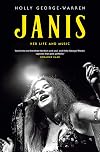
I have several other books about Janis Joplin, a singer, songwriter and interpreter of others' songs who died of a heroin overdose in 1970 at the age of 27. I came across this 2019 biography of her in the library while I was looking for something else. and had a quick look through to get an idea of the author's approach to her subject, as it is important to me that such a book takes the subject of an artist's life and music seriously, not just the salacious details of drugs, drink and other show more lifestyle issues. George-Warren has written a number of other biographies of musicians and books about the music industry and for respected quality publications like the US music magazine Rolling Stone, and I thought it was worth a try.
This is a sensitive and carefully researched look at Janis Joplin's short life, including her family, her childhood and education in a conservative oil industry town in 1950s Texas. I thought this part was really interesting. Joplin regarded her dad as a "secret intellectual" who liked to read and think about things, and who didn't share the conservative religious and political views of the society he had settled in. Her mum was more religious but was also a talented musician who started teaching her daughter to play and sing from an early age, and who had enjoyed nights out dancing on tables in her 20s.
Janis was a clever child and a very talented artist. As she grew up though, the life mapped out for even clever teenage girls and young women was restrictive and unappealing, and Janis began to rebel, though George-Warren outlines the contradictions - the stories about Janis Joplin at school and university were possibly more lurid than the reality. Importantly, she also explores Janis's influences and development as a singer/musician in Texas and California, as she came across Bessie Smith, blues, jazz and R&B and other black music, as well as rock and roll, folk and protest songs. Georgia-Warren mentions the racism of the society in which Joplin grew up and the challenge of her alternative influences, including her love for Bessie Smith. Going to college, though still in Texas, offered lots of opportunities to hear music and other cultural influences and hang out with an alternative "beatnik crowd" as much as formal education. Then Janis took a chance to stay with relatives and work in California, got into a mess with drugs and money problems, came back and tried taking a very conventional office job for a bit, before returning to 1960s San Francisco and finally becoming famous.
Throughout the book, the various phases of Janis Joplin's short life are explored through correspondence, older and more recent interviews with family and friends - she continued to write to her parents and much younger sister, Laura. The detailed endnotes also reference previous memoirs, including Myra Friedman (who was a friend and who worked with Janis Joplin) and Alice Echols, a feminist activist and writer. There are also a generous 32 pages of photographic plates, mostly black and white but with a few colour photos from Joplin's final, famous years - these include pictures of Janis Joplin through her life, of family, of her with a student band, and of her bandmates in Big Brother and the Kozmic Blues Band. There are also pictures of her with other friends and musicians.
This is an interesting read, though it makes me want to go back to the other Janis Joplin books, especially Alice Echols and one by little sister Laura Joplin with the letters Janis sent her. show less
This is a sensitive and carefully researched look at Janis Joplin's short life, including her family, her childhood and education in a conservative oil industry town in 1950s Texas. I thought this part was really interesting. Joplin regarded her dad as a "secret intellectual" who liked to read and think about things, and who didn't share the conservative religious and political views of the society he had settled in. Her mum was more religious but was also a talented musician who started teaching her daughter to play and sing from an early age, and who had enjoyed nights out dancing on tables in her 20s.
Janis was a clever child and a very talented artist. As she grew up though, the life mapped out for even clever teenage girls and young women was restrictive and unappealing, and Janis began to rebel, though George-Warren outlines the contradictions - the stories about Janis Joplin at school and university were possibly more lurid than the reality. Importantly, she also explores Janis's influences and development as a singer/musician in Texas and California, as she came across Bessie Smith, blues, jazz and R&B and other black music, as well as rock and roll, folk and protest songs. Georgia-Warren mentions the racism of the society in which Joplin grew up and the challenge of her alternative influences, including her love for Bessie Smith. Going to college, though still in Texas, offered lots of opportunities to hear music and other cultural influences and hang out with an alternative "beatnik crowd" as much as formal education. Then Janis took a chance to stay with relatives and work in California, got into a mess with drugs and money problems, came back and tried taking a very conventional office job for a bit, before returning to 1960s San Francisco and finally becoming famous.
Throughout the book, the various phases of Janis Joplin's short life are explored through correspondence, older and more recent interviews with family and friends - she continued to write to her parents and much younger sister, Laura. The detailed endnotes also reference previous memoirs, including Myra Friedman (who was a friend and who worked with Janis Joplin) and Alice Echols, a feminist activist and writer. There are also a generous 32 pages of photographic plates, mostly black and white but with a few colour photos from Joplin's final, famous years - these include pictures of Janis Joplin through her life, of family, of her with a student band, and of her bandmates in Big Brother and the Kozmic Blues Band. There are also pictures of her with other friends and musicians.
This is an interesting read, though it makes me want to go back to the other Janis Joplin books, especially Alice Echols and one by little sister Laura Joplin with the letters Janis sent her. show less
Janis: Her life and Music is a very well-researched and readable biography from Holly George-Warren. Whether you know very little about her life or think you know it all already (trust me, you don't, and even after reading this you won't, so don't fool yourself) this is a book well worth reading.
This is likely to be as comprehensive and complete a biography as we will ever get about Joplin. Whether a biography or an autobiography we have to remember that the story, even if no falsehoods are show more told, are from the perspective of those telling the tale. Not the author so much but those agreeing to be interviewed and share their "true" accounts. Like all "true" accounts, they must be taken with a grain of salt. In the case of an often controversial, always outspoken deceased subject, those telling their side are as much interested in presenting themselves and family members in better light than they may have previously been shown. Truth usually lies some where in between the various accounts. Having made that qualification, George-Warren presents a balanced and fair biography incorporating previous material from Janis' own mouth as well as more recent accounts from family members offering their "true" perspectives on events of the past.
I remember listening to her when she was first coming up and was taken with the very different sound, to my young ears, that Big Brother and the Holding Company had. I have been a lifelong fan of her music. This book does a wonderful job of contextualizing Joplin's life both historically and, for lack of a better word, psychologically. I do not mean that there is a lot of psychobabble here but that when we can understand what motivated her we can then go beyond making puerile judgements lumping every person who took drugs or had sex into the same bin. One doesn't have to condone these actions but to be unable to empathize says far more about the reader than it does about Joplin. This biography goes a long way toward providing some understanding beyond simply being a product of the counter culture.
George-Warren blends telling about Joplin's life and her music very well. While these things are inseparable in most musician's lives, many biographies tend to treat them as separate and usually to the detriment of one of them. Here, the interplay between what is happening in her private life and what she does musically is illustrated very well, along with placing that whole thing in the historical moment as well. Unfortunately for Joplin, the music side of the coin also included many people who were more than willing to take advantage of her and her talent. But the private side included some family that was equally self-centered, even well after her death.
I would recommend this to anyone with an interest in Joplin, late 60s culture, or music in general. Also for anyone who simply enjoys reading well-written biographies.
Reviewed from a copy made available by the publisher via NetGalley. show less
This is likely to be as comprehensive and complete a biography as we will ever get about Joplin. Whether a biography or an autobiography we have to remember that the story, even if no falsehoods are show more told, are from the perspective of those telling the tale. Not the author so much but those agreeing to be interviewed and share their "true" accounts. Like all "true" accounts, they must be taken with a grain of salt. In the case of an often controversial, always outspoken deceased subject, those telling their side are as much interested in presenting themselves and family members in better light than they may have previously been shown. Truth usually lies some where in between the various accounts. Having made that qualification, George-Warren presents a balanced and fair biography incorporating previous material from Janis' own mouth as well as more recent accounts from family members offering their "true" perspectives on events of the past.
I remember listening to her when she was first coming up and was taken with the very different sound, to my young ears, that Big Brother and the Holding Company had. I have been a lifelong fan of her music. This book does a wonderful job of contextualizing Joplin's life both historically and, for lack of a better word, psychologically. I do not mean that there is a lot of psychobabble here but that when we can understand what motivated her we can then go beyond making puerile judgements lumping every person who took drugs or had sex into the same bin. One doesn't have to condone these actions but to be unable to empathize says far more about the reader than it does about Joplin. This biography goes a long way toward providing some understanding beyond simply being a product of the counter culture.
George-Warren blends telling about Joplin's life and her music very well. While these things are inseparable in most musician's lives, many biographies tend to treat them as separate and usually to the detriment of one of them. Here, the interplay between what is happening in her private life and what she does musically is illustrated very well, along with placing that whole thing in the historical moment as well. Unfortunately for Joplin, the music side of the coin also included many people who were more than willing to take advantage of her and her talent. But the private side included some family that was equally self-centered, even well after her death.
I would recommend this to anyone with an interest in Joplin, late 60s culture, or music in general. Also for anyone who simply enjoys reading well-written biographies.
Reviewed from a copy made available by the publisher via NetGalley. show less
Lists
Awards


You May Also Like


Associated Authors
Statistics
- Works
- 29
- Also by
- 2
- Members
- 2,206
- Popularity
- #11,624
- Rating
- 3.9
- Reviews
- 35
- ISBNs
- 89
- Languages
- 8
- Favorited
- 1
