
Centre Pompidou
Author of Dada: Zurich, Berlin, Hannover, Cologne, New York, Paris
About the Author
Image credit: Photo by Leland
Series
Works by Centre Pompidou
Balthus : [cat. exp., Paris, Centre Pompidou, 5 nov 1983 - 23 janvier 1984; New York, Metropolitan Museum of Art, 21 fév - 13 mai 1984] (1983) 89 copies, 1 review
Calder: The Paris Years, 1926-1933 [cat. exp., New York, Whitney Museum of American Art; Paris, Centre Pompidou, 2008] (2008) 44 copies
Paris 1937-Paris 1957: Créations en France : [exposition], Centre Georges Pompidou, 28 mai-2 novembre 1981 (French Edition) (1981) 32 copies, 2 reviews
Magritte: The Treachery of Images [cat. exp., Paris, Centre Pompidou, 21 sept 2016 - 9 jan 2017] (2016) 28 copies
Calder: a retrospective [cat. exp., Solomon R. Guggenheim Museum, New York, Nov 1964-Jan 1965; Musée National d'Art Moderne, Paris, 1965] (1964) 22 copies
Le temps des gares Exposition au Centre Georges Pompidou du 13 décembre 1978 au 9 avril 1979 (1978) 14 copies
Francis Bacon en toutes lettres : Catalogue de l'expostion présentée au Centre Pompidou du 11 septembre 2019 au 20 janvier 2020 (2019) 12 copies
Kandinsky: trente peintures des musées soviétiques: [cat. exp., Paris, Musée national d'art moderne, 1er février-26 mars 1979] (1979) 11 copies
Dessins de Miró: [cat. exp., Paris, Centre Georges Pompidou; London, Hayward Gallery, 20 sept 1978 - 22 jan 1979] (1979) 7 copies
Collection de photographies du Musee national d'art moderne, 1905-1948 (French Edition) (1996) 6 copies
Art & pub / art et publicite, 1890-1990 / exposition realisee par centre georges pompidou, [paris], (1990) 5 copies, 2 reviews
Donations Daniel Cordier: Le regard d'un amateur (Collections du Musee national d'art moderne) (French Edition) (1989) 4 copies
Henri Matisse : dessins et sculpture [exhibition] Musée National d'art Moderne, Paris, May 29- September 7, 1975 (1975) 4 copies
L'art du mouvement: Collection cinematographique du Musee national d'art moderne, 1919-1996 (1996) 3 copies
Manifeste: Une histoire parallele, 1960-1990 : Centre Georges Pompidou, 5e etage, grande galerie, 23 septembre-13 decembre 1993 (French Edition) (1993) 3 copies
Bonjour Monsieur Manet: Centre Georges Pompidou, Musee national d'art moderne, Galeries contemporaines (1983) 3 copies
Le Cubisme, 1907-1914 [cat. exp., Paris, Musée national d’art moderne, 30 jan-9 avril 1953] 2 copies
Derain: [exposition], Paris, Musée national d'art moderne, 11 décembre 1954 - 30 janvier 1955 2 copies
Le Futurisme, 1909-1916 [cat. exp., Paris, Musée national d'art moderne, 19 sept - 19 nov 1973] (1973) 2 copies
La Révolution cubiste - Exposition de la collection du Centre Pompidou, Paris - パリ ポンピドゥーセンター - キュビスム展 - 美の革命 -… (2023) 2 copies
Robert Delaunay, Sonia Delaunay : das Centre Pompidou zu Gast in Hamburg, Hamburger Kunsthalle (1999) 2 copies
Collection Art graphique : la collection du Centre Pompidou-Musée national d'art moderne-Centre de création industrielle (2008) 1 copy
Parade 1901-2001 - Collections du Centre Pompidou Musée National d'Art Moderne (exposition au Brésil) (2001) 1 copy
12 peintres et sculpteurs américains contemporains : Musée national d'art moderne : avril-juin 1953 1 copy
COCTEAU 1 copy
Editions du Centre Pompidou 1 copy
Zoltan Kemeny 1 copy
Cézanne dans les musées nationaux.Expo., Paris, Orangerie des Tuileries, 19 juillet - 14 octobre 1974. (1974) 1 copy
Le Fauvisme 1 copy
Soulages 1 copy
Vassily Kandinsky 1866-1944 : exposition rétrospective (cat. exp., Paris, Musée national d’art moderne) (1965) 1 copy
L'¿uvre de Kupka 1 copy
Lucio Fontana 1 copy
Canada, art d'aujourd'hui 1 copy
Soulages - Peintures recents 1 copy
Andy Warhol 1 copy
Robert et Sonia Delaunay 1 copy
André Masson 1 copy
Associated Works
Tagged
Common Knowledge
- Other names
- Musée national d'art moderne/Centre de création
Centre Georges Pompidou
Centre de Création Industrielle - Gender
- n/a
- Nationality
- France
- Places of residence
- Paris, France
- Associated Place (for map)
- Paris, France
Members
Reviews

Balthus is an artist who is bound to disturb you. His lifelong preoccupation with painting prepubescent girls nude or in highly suggestive poses may actually anger you, especially if you think beyond the paintings and into their creation. His painting ‘The Guitar Lesson’ from 1934 shocks us with such overt sadism. Again and again he shows us girls with their legs spread, in outright provocation (as in ‘The Golden Days’ (1944-45), or ‘Therese Dreaming’ (1938)), or in what are show more ostensibly more innocent works (as in ‘The Children’ (1937), or ‘The Game of Patience’ (1943)). His models were mostly neighbor girls over the decades - Therese Blanchard, Georgette, Jeannette Aldry, Marie-Pierre Colle, and Frederique Tison among others - and one wonders what their parents were thinking. The expression of Frederique Tison in ‘Girl in White’ (1955) shows us a very sad painting if you ask me, as the 17-year-old girl (who had posed for him since the age of 9) seems resigned to the gaze of the 47-year-old painter.
Great art pushes boundaries, is provocative, and causes introspection. Balthus clearly does all that, and with skill as a painter. Is he to be praised as a great artist, or condemned as one encouraging pedophilia, if not (possibly) practicing it? Is there a message or statement he’s making in these images? In ‘The Street’ (1933), with the original version having the man’s hand between the girl’s legs (he altered it at the owner’s request 20 years later), is his point that while this violence is happening to a girl, the rest of the world is disinterested, their heads turned and going about their business? In ‘Girl With a Cat’ (1937), are Therese’s eyes telling us that if we’re thinking dirty thoughts while gazing upon her with our adult eyes, we’re the ones who are perverts? Or are those thoughts a reflection of the discomfort we feel as adults when girls occasionally reveal themselves, innocently, or later, when they inevitably do begin to blossom, but are still children?
The book itself, published after a 1984 exhibition in Paris and New York and written by Sabine Rewald, an expert in Balthus’s work, is well formatted, has a great introduction, 51 full page color reproductions, and 151 black and white illustrations. It provides insightful commentary, and does a great job showing earlier artwork that inspired specific pieces by Balzac, as well as his own sketches and studies. It was interesting to find that Rainer Maria Rilke had been his mother’s lover, and encouraged his art at an early age. In reviewing and rating the book, how much should this weigh in, versus some of the content?
Balthus’s position that the paintings were not meant to be erotic is laughable. Some apologists point out that at the start of his career, the French age of consent was 13 – does this excuse him somewhat, or does it illustrate how hopelessly wrong he was, that this material does not stand the test of time, especially as we’re more sensitized to the violence against women and girls in society?
Answers to these questions are hard to come by. At first I thought that Rewald didn’t go far enough to explain Balthus’s rationale, or to provide a judgment of him one way or another. However, I came to realize that that in itself was the right answer – for art is in the eye of the beholder, and it’s up to the viewer, or reader, to judge. And as an aside, Rewald continued to write about Balthus after 1984, and this excellent article from 1998 expands on her themes, as well as provides additional examples of the treatment of puberty in art (from Rops, Schiele, Munch, Dix, Kirchner, and others).
www.metmuseum.org/pubs/journals/1/pdf/1513021.pdf.bannered.pdf
As for the art itself, my favorites in this collection:
Andre Derain (1936)
Therese (1938) … a more subtle version
The Cherry Tree (1940)
The Game of Patience (1943)
Nude with Cat (1949)
The Room (1952-54) … wow, on the scorn and judgment in the look on the little girl!
The Dream I (1955)
The Turkish Room (1963) … he would marry the model, Setsuko, despite a 35 year age gap
Katia Reading (1968-76)
It’s not for everyone, and it’s art that you may be seriously conflicted by, but if Balthus is an artist you’re interested in trying to fathom, this would be a good book to start with. show less
Great art pushes boundaries, is provocative, and causes introspection. Balthus clearly does all that, and with skill as a painter. Is he to be praised as a great artist, or condemned as one encouraging pedophilia, if not (possibly) practicing it? Is there a message or statement he’s making in these images? In ‘The Street’ (1933), with the original version having the man’s hand between the girl’s legs (he altered it at the owner’s request 20 years later), is his point that while this violence is happening to a girl, the rest of the world is disinterested, their heads turned and going about their business? In ‘Girl With a Cat’ (1937), are Therese’s eyes telling us that if we’re thinking dirty thoughts while gazing upon her with our adult eyes, we’re the ones who are perverts? Or are those thoughts a reflection of the discomfort we feel as adults when girls occasionally reveal themselves, innocently, or later, when they inevitably do begin to blossom, but are still children?
The book itself, published after a 1984 exhibition in Paris and New York and written by Sabine Rewald, an expert in Balthus’s work, is well formatted, has a great introduction, 51 full page color reproductions, and 151 black and white illustrations. It provides insightful commentary, and does a great job showing earlier artwork that inspired specific pieces by Balzac, as well as his own sketches and studies. It was interesting to find that Rainer Maria Rilke had been his mother’s lover, and encouraged his art at an early age. In reviewing and rating the book, how much should this weigh in, versus some of the content?
Balthus’s position that the paintings were not meant to be erotic is laughable. Some apologists point out that at the start of his career, the French age of consent was 13 – does this excuse him somewhat, or does it illustrate how hopelessly wrong he was, that this material does not stand the test of time, especially as we’re more sensitized to the violence against women and girls in society?
Answers to these questions are hard to come by. At first I thought that Rewald didn’t go far enough to explain Balthus’s rationale, or to provide a judgment of him one way or another. However, I came to realize that that in itself was the right answer – for art is in the eye of the beholder, and it’s up to the viewer, or reader, to judge. And as an aside, Rewald continued to write about Balthus after 1984, and this excellent article from 1998 expands on her themes, as well as provides additional examples of the treatment of puberty in art (from Rops, Schiele, Munch, Dix, Kirchner, and others).
www.metmuseum.org/pubs/journals/1/pdf/1513021.pdf.bannered.pdf
As for the art itself, my favorites in this collection:
Andre Derain (1936)
Therese (1938) … a more subtle version
The Cherry Tree (1940)
The Game of Patience (1943)
Nude with Cat (1949)
The Room (1952-54) … wow, on the scorn and judgment in the look on the little girl!
The Dream I (1955)
The Turkish Room (1963) … he would marry the model, Setsuko, despite a 35 year age gap
Katia Reading (1968-76)
It’s not for everyone, and it’s art that you may be seriously conflicted by, but if Balthus is an artist you’re interested in trying to fathom, this would be a good book to start with. show less
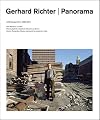
Spanning nearly five decades, and coinciding with the artist's 80th birthday, Gerhard Richter: Panorama is a major chronological retrospective that groups together significant moments of this remarkable painter's career. It includes portraits based on photographs such as the famous Betty 1988, abstractions, subtle landscapes, colour charts, works on paper, mirrors and three important glass constructions.
Gerhard Richter was one of the first German artists to reflect on the history of National show more Socialism, creating paintings of family members who had been members, as well as victims of, the Nazis, as well as canvases reminiscent of images of the bombing of Dresden. In 1988 he produced the 15-part work October 18 1977, a sequence of black and white paintings based on images of the Baader Meinhof group. Richter has continued to respond to significant moments in history. Gerhard Richter (born 1932) is widely regarded as one of the most important painters at work in the world today and has exhibited at many of the world's leading art institutions. He is as well known for his figurative works as he is for his abstract paintings, often combining elements of both in groundbreaking ways. On the occasion of a major, touring, retrospective exhibition, a collaboration between Tate Modern, London, Nationalgalerie, Staatliche Museen zu Berlin and Centre Pompidou, Paris, this important book encompasses Richter's entire career. With texts by leading international authorities on Richter's work, a new interview with the artist and over 300 illustrations, it will remain the most comprehensive survey of Richter's monumental achievements for many years to come. show less
Gerhard Richter was one of the first German artists to reflect on the history of National show more Socialism, creating paintings of family members who had been members, as well as victims of, the Nazis, as well as canvases reminiscent of images of the bombing of Dresden. In 1988 he produced the 15-part work October 18 1977, a sequence of black and white paintings based on images of the Baader Meinhof group. Richter has continued to respond to significant moments in history. Gerhard Richter (born 1932) is widely regarded as one of the most important painters at work in the world today and has exhibited at many of the world's leading art institutions. He is as well known for his figurative works as he is for his abstract paintings, often combining elements of both in groundbreaking ways. On the occasion of a major, touring, retrospective exhibition, a collaboration between Tate Modern, London, Nationalgalerie, Staatliche Museen zu Berlin and Centre Pompidou, Paris, this important book encompasses Richter's entire career. With texts by leading international authorities on Richter's work, a new interview with the artist and over 300 illustrations, it will remain the most comprehensive survey of Richter's monumental achievements for many years to come. show less
A short but in depth reflection by Matisse on how he worked, what drove his inspiration and how he saw his art. Much like a musical composition. Useful for writing purposes.

Cover by Roman Cieslewicz. With an exhibition checklist and a chronology (1937-1957). This is the massive catalogue published in conjunction with Pontus Hulten's landmark 1981 Centre Georges Pompidou exhibition that traced Parisian artistic and cultural innovations from the onset of World War II through to the Space Age. In addition to a dazzling array of works by over one hundred and fifty artists, it includes informative textual contributions and essays.
You May Also Like


Associated Authors
Statistics
- Works
- 141
- Also by
- 1
- Members
- 1,202
- Popularity
- #21,357
- Rating
- 3.9
- Reviews
- 13
- ISBNs
- 129
- Languages
- 5