
Christina Lamb
Author of I Am Malala: The Girl Who Stood Up for Education and Was Shot by the Taliban
About the Author
Christina Lamb received a degree in politics, philosophy and economics from Oxford University. She has been a foreign correspondent for more than 20 years, living in Pakistan, Brazil and South Africa first for the Financial Times then the Sunday Times. She has received numerous awards including show more Young Journalist of the Year in the British Press Awards for her coverage of the Soviet occupation of Afghanistan in 1988, the Foreign Press Association award for reporting on Zimbabwean teachers forced into prostitution, the Amnesty International award for the plight of street children in Rio, and the Prix Bayeux Calvados in 2007. She has written several books including The Africa House, House of Stone: The True Story of a Family Divided in War-Torn Zimbabwe, Waiting for Allah, The Sewing Circles of Heart, and Small Wars Permitting: Dispatches from Foreign Lands. Christina Lamb will be at the Ubud Writers and Readers Festival 2015. (Bowker Author Biography) show less
Works by Christina Lamb
I Am Malala: The Girl Who Stood Up for Education and Was Shot by the Taliban (2013) 7,972 copies, 291 reviews
The Africa House: The True Story of an English Gentleman and His African Dream (1999) 269 copies, 5 reviews
I Am Malala: The Girl Who Stood Up for Education and Was Shot by the Taliban [Quick Reads Edition] (2016) 15 copies
Nuestros cuerpos, sus batallas: Lo que la guerra hace a las mujeres (Spanish Edition) (2022) 2 copies
EU SOU MALALA A HISTÓRIA DA GAROTA QUE DEGFENDEU O DIREITO A EDUCAÇÃO E FOI BALEADA PELO TALIBÃ 2 copies
Mūsų kūnai – jų karo laukas 1 copy
Tagged
Common Knowledge
- Birthdate
- 1966-05-15
- Gender
- female
- Education
- University of Oxford (University College)
Harvard University - Occupations
- journalist
- Organizations
- The Times of London
- Awards and honors
- Order of the British Empire (Officer)
Royal Geographical Society (Fellow)
British Press Awards. Foreign Correspondent of the Year, 2001
Foreign Correspondents Association. Foreign Correspondent of the Year, 2001 - Nationality
- UK
- Birthplace
- London, England, UK
- Places of residence
- London, England, UK
Estoril, Portugal
Brazil
South Africa
USA - Associated Place (for map)
- London, England, UK
Members
Discussions
Biography Group Read, 4th Quarter: I am Malala by Malala Yousafzai and Christina Lamb, General Discussion in 2014 Category Challenge (December 2014)
Reviews
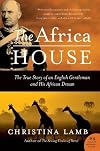
The Africa House by Christina Lamb
This book, ostensibly about a house at Shiwa Ngandu in Zambia, is really the story of the man who built the house, Stewart Gore Browne.
Stewart Gore Browne was an English nobleman who visited what was then Northern Rhodesia shortly before the First World War and fell in love with an area around Lake Shiwa Ngandu (Lake of the Royal Crocodile).
Following his service in WWI, Stewart Gore Browne returned to Northern Rhodesia in 1920 and set about constructing his show more own version of an English country estate in the midst of what was then a relatively unsettled portion of Africa. Gore Browne set about employing large numbers of the local populace and built from scratch much of what was needed to construct his ideal mansion. This including setting up a wood shop and training locals in wood working, setting up various agricultural operations, creating his own roof tile kilns, and so on.
The house project is quite interesting but the extraordinary portion of the book is the portrait of Stewart Gore Browne. He started as a purely Victorian colonial throwback and was called Chipembere (meaning rhinoceros) by the local people he employed. He thought himself utterly superior to the backwards Africans and believed it was quite proper to use violence to motivate his workers.
He insisted on rigid, outdated manners at all times. He sat down to formal dinners every night with African servants wearing uniforms complete with white gloves to serve him. He dressed impeccably and actually regularly wore a monocle. For much of his early life at Shiwa Ngandu he strolled about his estate alternating between Great White Hunter of the various game and harsh overseer of his African plantation.
Equally weird, he spent most of his life wrapped up with an apparently unrequited love for his aunt, Ethel Locke King, with whom he corresponded frequently (maybe weekly?) even while he was in Northern Rhodesia and she in England. Yet that wasn't the weirdest part of his personal life. Prior to his first visit to Northern Rhodesia, Stewart Browne courted, for almost three years, a woman named Lorna Bosworth Smith. However, when he had the chance to propose marriage he hesitated and she married another man she did not particularly care for. Stewart Browne spent his life mourning this failure to propose marriage. However, he availed himself of a weird second chance of sorts. At Lorna's funeral, he met Lorna's daughter, Lorna Goldmann. He fell for her just as he did her mother but this time marries her despite the fact that there is a 25 year age difference between the two of them. Because you can't make this stuff up, the two of them had a daughter and name her Lorna also.
All of this would make for an odd and mostly disturbing story except it doesn't end there for Gore Browne. As he continued to build and expand his estate and agricultural pursuits, Gore Browne become ever more enmeshed in the local Bemba people. The Bemba treated him almost as a chief and as Northern Rhodesia slowly developed, especially after the Second World War, Gore Browne increasingly acted on behalf of the Bemba people and the Africans themselves. He set up schools and hospitals, made a point of employing as many people as he could and eventually got involved in politics.
Once in politics, he become involved in fighting racial views that were coalescing into governing rules like apartheid in nearby South Africa and generally becomes a staunch advocate for de-colonialism and self governance by the Africans. As Northern Rhodesia gained independence and becomes Zambia, Gore Browne was the first major white political figure to openly ally with the majority African party. The first president of Zambia, Kenneth Kaunda, was a friend and mentee of Gore Browne.
In addition to his political role, Gore Browne created a vibrant and long lasting friendship with his Bembe driver, Henry, to the point that that Gore Browne made arrangements for his friend to be buried beside him after his death.
Gore Browne died in 1967. He was buried at Shiwa Ngandu as a chief of the Bemba people. He was also afforded the only Zambian state funeral for a white man in that nation's history. President Kauda spoke at Gore Browne's funeral.
The house, after a long period of disrepair, is still there and has been restored. http://www.shiwangandu.com/ After reading the extraordinary story of Stewart Gore Browne, it is very high on my list of places that I would like to visit. show less
This book, ostensibly about a house at Shiwa Ngandu in Zambia, is really the story of the man who built the house, Stewart Gore Browne.
Stewart Gore Browne was an English nobleman who visited what was then Northern Rhodesia shortly before the First World War and fell in love with an area around Lake Shiwa Ngandu (Lake of the Royal Crocodile).
Following his service in WWI, Stewart Gore Browne returned to Northern Rhodesia in 1920 and set about constructing his show more own version of an English country estate in the midst of what was then a relatively unsettled portion of Africa. Gore Browne set about employing large numbers of the local populace and built from scratch much of what was needed to construct his ideal mansion. This including setting up a wood shop and training locals in wood working, setting up various agricultural operations, creating his own roof tile kilns, and so on.
The house project is quite interesting but the extraordinary portion of the book is the portrait of Stewart Gore Browne. He started as a purely Victorian colonial throwback and was called Chipembere (meaning rhinoceros) by the local people he employed. He thought himself utterly superior to the backwards Africans and believed it was quite proper to use violence to motivate his workers.
He insisted on rigid, outdated manners at all times. He sat down to formal dinners every night with African servants wearing uniforms complete with white gloves to serve him. He dressed impeccably and actually regularly wore a monocle. For much of his early life at Shiwa Ngandu he strolled about his estate alternating between Great White Hunter of the various game and harsh overseer of his African plantation.
Equally weird, he spent most of his life wrapped up with an apparently unrequited love for his aunt, Ethel Locke King, with whom he corresponded frequently (maybe weekly?) even while he was in Northern Rhodesia and she in England. Yet that wasn't the weirdest part of his personal life. Prior to his first visit to Northern Rhodesia, Stewart Browne courted, for almost three years, a woman named Lorna Bosworth Smith. However, when he had the chance to propose marriage he hesitated and she married another man she did not particularly care for. Stewart Browne spent his life mourning this failure to propose marriage. However, he availed himself of a weird second chance of sorts. At Lorna's funeral, he met Lorna's daughter, Lorna Goldmann. He fell for her just as he did her mother but this time marries her despite the fact that there is a 25 year age difference between the two of them. Because you can't make this stuff up, the two of them had a daughter and name her Lorna also.
All of this would make for an odd and mostly disturbing story except it doesn't end there for Gore Browne. As he continued to build and expand his estate and agricultural pursuits, Gore Browne become ever more enmeshed in the local Bemba people. The Bemba treated him almost as a chief and as Northern Rhodesia slowly developed, especially after the Second World War, Gore Browne increasingly acted on behalf of the Bemba people and the Africans themselves. He set up schools and hospitals, made a point of employing as many people as he could and eventually got involved in politics.
Once in politics, he become involved in fighting racial views that were coalescing into governing rules like apartheid in nearby South Africa and generally becomes a staunch advocate for de-colonialism and self governance by the Africans. As Northern Rhodesia gained independence and becomes Zambia, Gore Browne was the first major white political figure to openly ally with the majority African party. The first president of Zambia, Kenneth Kaunda, was a friend and mentee of Gore Browne.
In addition to his political role, Gore Browne created a vibrant and long lasting friendship with his Bembe driver, Henry, to the point that that Gore Browne made arrangements for his friend to be buried beside him after his death.
Gore Browne died in 1967. He was buried at Shiwa Ngandu as a chief of the Bemba people. He was also afforded the only Zambian state funeral for a white man in that nation's history. President Kauda spoke at Gore Browne's funeral.
The house, after a long period of disrepair, is still there and has been restored. http://www.shiwangandu.com/ After reading the extraordinary story of Stewart Gore Browne, it is very high on my list of places that I would like to visit. show less
Malala was raised by a father who believed in the education of all Pakistanis, including girls. He sacrificed much to open a school for girls, including death threats when the Taliban started wielding increased power in Afghanistan and Pakistan. Malala found her worth in knowledge and in competing with other girls in her class. Her father's cause quickly became her own and she was a public speaker about educating girls for many months before the incident that brought her worldwide attention. show more Malala brings beauty to the impoverished way of life in Swat Valley. She is fiercely proud of her heritage, even while she criticizes its treatment of women. She draws clear lines between the true teachings of Islam and what the Taliban and others claim as religious belief. The lives of many in Pakistan were changed forever by the extremist beliefs enforced by the Taliban and ignored by the government. Though her story occasionally gets bogged down in political detail, Malala's passion and determination shine through, leaving the reader awed by the sheer will and bravery of one teenage girl. show less
My 13 year old granddaughter recommended this to me and I find myself powerfully moved. The author does a vivid job of describing her life and her passion for education and creates a loving description of her culture and her home. I so wish I'd read this before I'd been mentor to a dozen Pakistani students. I would have been less casual with them and more in awe of the burden and the gift they carry.
The other gift (albeit painful one) which this account gives is a window into how the USA is show more perceived.
Thirdly, my own understanding of fundamentalism has been informed by encounters with Christian fundamentalists; the Muslim fundamentalists are comprehensible with that background. The only way to bring us to the table to listen to each other, I think, will be learning nonviolence, practicing nonviolence and teaching nonviolence. At the very least, we can read about nonviolence and allow ourselves to be changed by nonviolence. show less
The other gift (albeit painful one) which this account gives is a window into how the USA is show more perceived.
Thirdly, my own understanding of fundamentalism has been informed by encounters with Christian fundamentalists; the Muslim fundamentalists are comprehensible with that background. The only way to bring us to the table to listen to each other, I think, will be learning nonviolence, practicing nonviolence and teaching nonviolence. At the very least, we can read about nonviolence and allow ourselves to be changed by nonviolence. show less
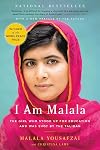
This is the terrifying true story of how extremists infiltrate and take over a community, stealing its trust away from the proper authorities and claiming it for themselves, imposing themselves through swift 'justice' and willingness to commit unchecked, unremitting violence. It is also the even more terrifying story of standing up to them. I watched an interview with Malala by David Letterman on Netflix and was struck by the impression of a typical university student, contrasting with her show more larger-than-life public image. This has made me a latecomer to her biography, published in 2013, but my delay is opportune given the several scattered references that tie in with events of 2022: passing mention of the now-late Queen Elizabeth II's visit to northern Pakistan; reaction to the 'Satanic Verses' of Salman Rushdie who was recently stabbed in New York; and the Swat Valley, which has not escaped this year's catastrophic monsoon flooding.
I could also say it is well timed with the rise of Canadian populism, except that our troubles don't compare with the Taliban's religious extremism that led to shooting a fourteen year old girl in the face. This key scene is dispensed with in the book's prologue before settling in. Malala's relatively short life to that point would not provide an entire book's worth of content without delving into the biographies of her parents, and it requires setting the scene within the history of her country and region while shedding light on Pashtun culture. These opening chapters strongly trigger a "they're just like us" sentiment, highlighting cultural differences but demonstrating that the Swat Valley features the same range of personalities as every other community on Earth. Pakistan's political history is a necessary part of the picture. From the point at which the Taliban enter into it, so does the tension.
It's not the first biography I've read that was assisted by a ghost writer, but I've never been so conscious of that person's contribution before. In many sections I can't align what I've read with Malala's voice as I've heard it in her speeches and interviews, though she must have informed and confirmed its depictions of her family and personal events. Precise casualty statistics and dated drone attacks can only be Christina Lamb masquerading as Malala. Other parts do seem more like the actual recollections of a young girl trying to make sense of what was happening as the Taliban noose drew tighter, and finding the incredible willingness to act. Long after the Taliban and Malala have both passed into history, the power of that parable will remain. show less
I could also say it is well timed with the rise of Canadian populism, except that our troubles don't compare with the Taliban's religious extremism that led to shooting a fourteen year old girl in the face. This key scene is dispensed with in the book's prologue before settling in. Malala's relatively short life to that point would not provide an entire book's worth of content without delving into the biographies of her parents, and it requires setting the scene within the history of her country and region while shedding light on Pashtun culture. These opening chapters strongly trigger a "they're just like us" sentiment, highlighting cultural differences but demonstrating that the Swat Valley features the same range of personalities as every other community on Earth. Pakistan's political history is a necessary part of the picture. From the point at which the Taliban enter into it, so does the tension.
It's not the first biography I've read that was assisted by a ghost writer, but I've never been so conscious of that person's contribution before. In many sections I can't align what I've read with Malala's voice as I've heard it in her speeches and interviews, though she must have informed and confirmed its depictions of her family and personal events. Precise casualty statistics and dated drone attacks can only be Christina Lamb masquerading as Malala. Other parts do seem more like the actual recollections of a young girl trying to make sense of what was happening as the Taliban noose drew tighter, and finding the incredible willingness to act. Long after the Taliban and Malala have both passed into history, the power of that parable will remain. show less
Lists
Awards


You May Also Like


Associated Authors
Statistics
- Works
- 17
- Members
- 9,370
- Popularity
- #2,569
- Rating
- 4.1
- Reviews
- 314
- ISBNs
- 199
- Languages
- 25
- Favorited
- 1