
Sara Baume
Author of Spill Simmer Falter Wither
About the Author
Image credit: Sara Baume. Photograph: Dave Meehan
Works by Sara Baume
Associated Works
Tagged
Common Knowledge
- Birthdate
- 1984
- Gender
- female
- Nationality
- Ireland
- Birthplace
- Lancashire, England, UK
- Places of residence
- Cork, County Cork, Ireland
- Associated Place (for map)
- Ireland
Members
Reviews
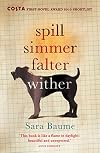
SPILL SIMMER FALTER WITHER is Irish writer Sara Baume's first book, but she writes with a sureness that speaks of a real dedication to her craft. It is a novel that will be difficult to classify. The edition I read is the British one, from Windmill Books, but it was first published by Tramp Press, an Independent Irish Publisher, and has already gained considerable favorable recognition in Europe. An American edition from Houghton Mifflin Harcourt will be published in March 2016.
How to show more describe this strange novel? Magical? Maybe. Moving? Absolutely. Humorous? Yes, that too. Sad? Yes again. Wise. Well, yes again. It's just such a different kind of story. It's told by Ray, fifty-seven, a kind of orphan in that he never knew his mother. Grotesquely misshapen, huge, ugly and ungainly, Ray describes his manner of walking thusly: "I pitch, I clump, I flail." Mostly neglected by his cold-mannered father, who told people that his son was "not right," Ray was teased and abused as a child and never attended school. Yet he learned to read, with some help from a neighbor woman he knew simply as "Aunt," and displays an inquiring mind and an attention to nature and small things that is simply amazing. He has taught himself the names of birds, insects, plants and flowers. A horticulturist would love the countless references to the local flora around the village where Ray has spent his whole life.
And there is a dog. And although dog lover readers will love this dog and the immediate attachment that springs up between the lonely man and the damaged beast, I would never label this a "dog book." The dog's name is One Eye, or ONEEYE, as his bone-shaped identification tag reads, and he bears the scars of "badger baiting," an ancient and brutal sport that still exists in some parts of the world.
Ray finds One Eye at an animal shelter, looking for a "good ratter." Their friendship, however, is instant, as Rays soon muses -
"What did I use to do all day without you. I can't remember."
And soon after that (Ray's internal monologue is always addressed to the dog) -
"I find it hard to picture a time when we were simultaneously alive, yet separate. Now you are like a bonus limb. Now you are my third leg, an unlimping leg, and I am the eye you lost."
But don't get the idea this is just a warm-and-fuzzy old man and his dog story. Because it is so much more. Through their quick and ever-deepening bond, Ray is compelled to confront some dark secrets about his father. He talks to One Eye about everything - about how he became the shy, fearful person he is; about his interest in all things, his disenchantment with his Catholic faith. Initially - through the spring and summer - the dog is a source of joy and contentment to Ray, until a couple of ugly encounters with other dogs and their owners. Indeed, the kennel man at the shelter had warned Ray the dog was "a vicious little bugger." Threatened with having to give up the dog, Ray and One Eye take to the road in his old car, wandering the countryside's back roads throughout the fall and into the winter. (In fact, when you look at the book's title, SPILL SIMMER FALTER WITHER, think seasons.)
Ray's life is sad and empty until One Eye. The dog changes Ray, and changes his life too. But things get complicated, and it's still a cold and unfriendly world. And Ray's sense of sadness returns, as he considers the pointlessness of everyday life.
"Boiling kettles, peeling potatoes, laundering towels, buying milk, changing lightbulbs, rooting wet mats of pubic hair out of the shower's plughole. This is the way people survive ... This is the way life's eaten away, expended by the onerous effort of living itself."
Reading Baume's book brought to mind several films and books from the past - Jackie Gleason's GIGOT, Steinbeck's Lenny (but with an intellect), Art Carney and his cat in HARRY AND TONTO, or I HAVE HEARD YOU CALLING IN THE NIGHT, Thomas Healy's moving memoir of how a Doberman pup named Martin changed his life for the good. I thought too of Michel Tournier's novel, THE OGRE, read more than thirty years ago.
But Sara Baume's story is, in the end, a one-of-a-kind book. Her language sometimes soars to poetic heights, but then might quickly drop down into some scatological doggy humor that anyone who has ever loved a dog will quickly recognize and relate to. SPILL SIMMER FALTER WITHER is simply terrific. I recommend it whole heartedly. Bravo and kudos to Ms. Baume.
- Tim Bazzett, author of the memoir, BOOKLOVER show less
How to show more describe this strange novel? Magical? Maybe. Moving? Absolutely. Humorous? Yes, that too. Sad? Yes again. Wise. Well, yes again. It's just such a different kind of story. It's told by Ray, fifty-seven, a kind of orphan in that he never knew his mother. Grotesquely misshapen, huge, ugly and ungainly, Ray describes his manner of walking thusly: "I pitch, I clump, I flail." Mostly neglected by his cold-mannered father, who told people that his son was "not right," Ray was teased and abused as a child and never attended school. Yet he learned to read, with some help from a neighbor woman he knew simply as "Aunt," and displays an inquiring mind and an attention to nature and small things that is simply amazing. He has taught himself the names of birds, insects, plants and flowers. A horticulturist would love the countless references to the local flora around the village where Ray has spent his whole life.
And there is a dog. And although dog lover readers will love this dog and the immediate attachment that springs up between the lonely man and the damaged beast, I would never label this a "dog book." The dog's name is One Eye, or ONEEYE, as his bone-shaped identification tag reads, and he bears the scars of "badger baiting," an ancient and brutal sport that still exists in some parts of the world.
Ray finds One Eye at an animal shelter, looking for a "good ratter." Their friendship, however, is instant, as Rays soon muses -
"What did I use to do all day without you. I can't remember."
And soon after that (Ray's internal monologue is always addressed to the dog) -
"I find it hard to picture a time when we were simultaneously alive, yet separate. Now you are like a bonus limb. Now you are my third leg, an unlimping leg, and I am the eye you lost."
But don't get the idea this is just a warm-and-fuzzy old man and his dog story. Because it is so much more. Through their quick and ever-deepening bond, Ray is compelled to confront some dark secrets about his father. He talks to One Eye about everything - about how he became the shy, fearful person he is; about his interest in all things, his disenchantment with his Catholic faith. Initially - through the spring and summer - the dog is a source of joy and contentment to Ray, until a couple of ugly encounters with other dogs and their owners. Indeed, the kennel man at the shelter had warned Ray the dog was "a vicious little bugger." Threatened with having to give up the dog, Ray and One Eye take to the road in his old car, wandering the countryside's back roads throughout the fall and into the winter. (In fact, when you look at the book's title, SPILL SIMMER FALTER WITHER, think seasons.)
Ray's life is sad and empty until One Eye. The dog changes Ray, and changes his life too. But things get complicated, and it's still a cold and unfriendly world. And Ray's sense of sadness returns, as he considers the pointlessness of everyday life.
"Boiling kettles, peeling potatoes, laundering towels, buying milk, changing lightbulbs, rooting wet mats of pubic hair out of the shower's plughole. This is the way people survive ... This is the way life's eaten away, expended by the onerous effort of living itself."
Reading Baume's book brought to mind several films and books from the past - Jackie Gleason's GIGOT, Steinbeck's Lenny (but with an intellect), Art Carney and his cat in HARRY AND TONTO, or I HAVE HEARD YOU CALLING IN THE NIGHT, Thomas Healy's moving memoir of how a Doberman pup named Martin changed his life for the good. I thought too of Michel Tournier's novel, THE OGRE, read more than thirty years ago.
But Sara Baume's story is, in the end, a one-of-a-kind book. Her language sometimes soars to poetic heights, but then might quickly drop down into some scatological doggy humor that anyone who has ever loved a dog will quickly recognize and relate to. SPILL SIMMER FALTER WITHER is simply terrific. I recommend it whole heartedly. Bravo and kudos to Ms. Baume.
- Tim Bazzett, author of the memoir, BOOKLOVER show less
I listened to this in audiobook format.
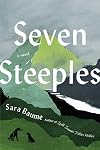
This very short novel is about a couple who chooses to live an isolated life in rural Ireland. It subtly contrasts a productive achievement-oriented life with a relaxed take-it-as-it-comes life. The latter provides the opportunity to observe and appreciate every mundane yet beautiful detail of their surroundings and one another. The writing is poetic and makes some interesting observations about what happens to things when they are simply left alone. show more
The backdrop is a mountain symbolizing goals and accomplishments. Will they ever climb it? From the top there is a view. It is worth the climb? There is almost no plot to this book but I enjoyed listening to the writing and I liked their dogs. The theme is something I appreciate and have thought about a lot since my retirement and move to a much more relaxed life. show less
This very short novel is about a couple who chooses to live an isolated life in rural Ireland. It subtly contrasts a productive achievement-oriented life with a relaxed take-it-as-it-comes life. The latter provides the opportunity to observe and appreciate every mundane yet beautiful detail of their surroundings and one another. The writing is poetic and makes some interesting observations about what happens to things when they are simply left alone. show more
The backdrop is a mountain symbolizing goals and accomplishments. Will they ever climb it? From the top there is a view. It is worth the climb? There is almost no plot to this book but I enjoyed listening to the writing and I liked their dogs. The theme is something I appreciate and have thought about a lot since my retirement and move to a much more relaxed life. show less
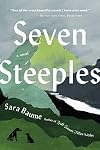
Despite the NYT Book Review blurb on the front cover that Seven Steeples was one of the most beautiful novels the reviewer had ever read, the majority of the beauty dropped off for this reviewer after the first chapter or so and quickly turned into a tedious slog. Baume is a gifted wordsmith throughout, but Seven Steeples is far more of a delirious ode to rural Ireland in poetic cant than what I would consider a story, and the preciousness of her stylized prose quickly wore while I waited show more for something to happen. It never did, and instead we're drawn into the aimless lives of a young, rudderless couple who have retreated to a cottage by the sea beneath a mountain they just can't find the interest or energy to climb.
In fact, they don't do much of anything, and the absolute lack of ambition or joy in either of the main characters is progressively draining as the place-poem rambles on. Bell and Sigh are ostensibly anti-social, anti-family, and anti-capitalist, but all of this really amounts to anti-interesting as the novel slooooowly tells the story of their unwillingness to cook, to clean, to care for themselves and each other, instead preferring to turn their backs on everything joyful the world has to offer except for a routine walk, swim, or the occasional fishing trip in the sea. Meanwhile, everything is changing through the seasons and decaying all around them: the very structure of their rented house, their scant belongings, their appliances, their clothing, and their relationships with the outside world.
Everything in Baume's vignette gets slowly and ponderously used up, including my patience, as I struggled to find some redeeming qualities in these characters or a reason to care about the nanoscopic cycles of life and death around them while they frittered away their existences against the backdrop of the rural-gothic Irish landscape. I even felt sorry for their two dogs, who were easily the most interesting characters in the story, but only because they were totally hapless and existing purely at the whim of their heedless pet-parents.
Lovers of alembicated language and dilapidated-cottage-core might get more out of this than I did, but I was really hoping that Bell and Sigh would get off their asses and do something – anything – that might serve as an inspirational inflection point to counter the eulogistic reverence for self-loathing indolence that masquerades as the real main character of this novel. Like, climb the bloody mountain, already, gang. FFS. show less
In fact, they don't do much of anything, and the absolute lack of ambition or joy in either of the main characters is progressively draining as the place-poem rambles on. Bell and Sigh are ostensibly anti-social, anti-family, and anti-capitalist, but all of this really amounts to anti-interesting as the novel slooooowly tells the story of their unwillingness to cook, to clean, to care for themselves and each other, instead preferring to turn their backs on everything joyful the world has to offer except for a routine walk, swim, or the occasional fishing trip in the sea. Meanwhile, everything is changing through the seasons and decaying all around them: the very structure of their rented house, their scant belongings, their appliances, their clothing, and their relationships with the outside world.
Everything in Baume's vignette gets slowly and ponderously used up, including my patience, as I struggled to find some redeeming qualities in these characters or a reason to care about the nanoscopic cycles of life and death around them while they frittered away their existences against the backdrop of the rural-gothic Irish landscape. I even felt sorry for their two dogs, who were easily the most interesting characters in the story, but only because they were totally hapless and existing purely at the whim of their heedless pet-parents.
Lovers of alembicated language and dilapidated-cottage-core might get more out of this than I did, but I was really hoping that Bell and Sigh would get off their asses and do something – anything – that might serve as an inspirational inflection point to counter the eulogistic reverence for self-loathing indolence that masquerades as the real main character of this novel. Like, climb the bloody mountain, already, gang. FFS. show less

This is one of those works of fiction where nature and the small things in life are both the characters and the story. There is little plot to speak of, beyond a young couple deciding to move into a rural house at the foot of a mountain in Ireland and to cut themselves off from their past lives. Their families and friends cease to exist for them, and their world voluntarily shrinks to the house itself, their dogs, their old red van and the flora and fauna of the landscape around them.
The show more novel spans over seven years of them living in the house, and as each year passes their retreat from civilisation becomes more pronounced, both in terms of their appetite for small trips to the shops where other people will be found and also in their lack of interest in ever upgrading or replacing the few possessions they have, even when they reach their end of life. The joy of this novel is that this is not a negative but an observance of an alternative lifestyle, of slowing down and finding contentment through living semi off-grid and being at one with nature and the seasons.
The book blurb calls it a prose poem, which I get but also find a teeny bit misleading. Am I splitting hairs if I consider poetic prose to be closer?
If you enjoy slow fiction with a strong sense of place you will enjoy this. The minutiae details collectively are the story - the cobweb of the house spider, the diamond scales of the fish landing on the dog as they prepare dinner and staying in its fur for four days, the blue bath mat that stays on the washing line for so long it becomes part of the expected scenery outside.
4.5 stars - beautifully written. It will make you feel as if you've been walking around with your eyes closed. show less
The show more novel spans over seven years of them living in the house, and as each year passes their retreat from civilisation becomes more pronounced, both in terms of their appetite for small trips to the shops where other people will be found and also in their lack of interest in ever upgrading or replacing the few possessions they have, even when they reach their end of life. The joy of this novel is that this is not a negative but an observance of an alternative lifestyle, of slowing down and finding contentment through living semi off-grid and being at one with nature and the seasons.
The book blurb calls it a prose poem, which I get but also find a teeny bit misleading. Am I splitting hairs if I consider poetic prose to be closer?
If you enjoy slow fiction with a strong sense of place you will enjoy this. The minutiae details collectively are the story - the cobweb of the house spider, the diamond scales of the fish landing on the dog as they prepare dinner and staying in its fur for four days, the blue bath mat that stays on the washing line for so long it becomes part of the expected scenery outside.
4.5 stars - beautifully written. It will make you feel as if you've been walking around with your eyes closed. show less
Lists
Awards


You May Also Like


Associated Authors
Statistics
- Works
- 12
- Also by
- 1
- Members
- 1,009
- Popularity
- #25,560
- Rating
- 3.9
- Reviews
- 72
- ISBNs
- 49
- Languages
- 7
- Favorited
- 2