
Giuliano da Empoli
Author of The Wizard of the Kremlin
About the Author
Image credit: Wikipedia
Works by Giuliano da Empoli
Tagged
Common Knowledge
- Canonical name
- Empoli, Giuliano da
- Birthdate
- 1973-08-27
- Gender
- male
- Occupations
- Sociologist,
- Nationality
- Italy
Switzerland
France
Members
Reviews
The Hour of the Predator: Encounters with the Autocrats and Tech Billionaires Taking Over the World by Giuliano da Empoli
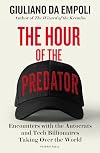
Another slim book, and thank goodness it's a short read as its subject matter is so alarming I'm not sure I'd want to spend days dwelling on it.
As a former senior advisor to Italian Prime Minister Matteo Renzi, Guiliano da Empoli has been a fly on the wall at enough global political events to speak with some authority on the frightening shift of global politics we now find ourselves in, where the carefully drawn up engagement rulebooks of post WWII are being torn up in a return to a survival show more of the fittest approach to political supremacy and domination, where he who dares wins. It's not just the defensive framework of bodies such as NATO that are getting pushed to the side, but also democracy being pushed aside by modern autocrats, legitimately voted to power by democratic elections but who then go on to dismantle those checks and balances (does anyone especially come to mind here...?).
We are in a new political era where action is king and the new world tyrants, dictators and strongmen draw strength from instability, unpredictability and aggression. As da Empoli puts it (talking about Trump and how he won't read even half a page or a single line of notes from his advisors):
But why should that matter, when the truly important thing is action? Because knowledge is the enemy of action. A chaotic environment demands bold decisions that captivate the public attention and shock his adversaries
Referring to the United States, da Empoli notes that a key transfiguration is that rather than new ideas coming from the centres of global power as has traditionally been the case, now many of the new wave of policy decisions are coming from ideas seen in small territories on the fringes, the kind of ideas that come with questionable moral substance.
Da Empoli focuses not just on the US in this slim book, but also on the tactics employed by the likes of the Crown Prince of Saudi Arabia and Nayib Bukele, president of El Salvador, who both used quick force to bring to heel adversaries (social as well as political).
Despite the subtitle, perhaps only a third at the most of the book looks at the influences of the tech billionaires of today on politics today. Much more frightening is how out of the reaches of government control these mega tech frontrunners are. The technology of the future being designed today is not understood by policymakers, and cosying up with these tech giants to use data mining to win campaigns (Obama is called out here as an early adopter of using social media to reach voters based on individual preferences) blurs boundaries and relationships further.
The two most frightening thoughts this book left me with are that (1) it's much, much cheaper in today's world of warfare to attack than to defend (e.g. expensive missiles need to be deployed to take down relatively cheap bomber drones), and (2) AI is utterly out of control. The order of control and supremacy in the political food chain is now irrelevant. The technology being developed by these AI leaders is completely out of governmental control, and the very people building it no longer understand how it makes the decisions it does. It's way beyond a scenario of the monkeys running the zoo - the whole zoo is evaporating into a digital simulation.
4.5 stars - a quick, easily digestible read. Prepare to be terrified. show less
As a former senior advisor to Italian Prime Minister Matteo Renzi, Guiliano da Empoli has been a fly on the wall at enough global political events to speak with some authority on the frightening shift of global politics we now find ourselves in, where the carefully drawn up engagement rulebooks of post WWII are being torn up in a return to a survival show more of the fittest approach to political supremacy and domination, where he who dares wins. It's not just the defensive framework of bodies such as NATO that are getting pushed to the side, but also democracy being pushed aside by modern autocrats, legitimately voted to power by democratic elections but who then go on to dismantle those checks and balances (does anyone especially come to mind here...?).
We are in a new political era where action is king and the new world tyrants, dictators and strongmen draw strength from instability, unpredictability and aggression. As da Empoli puts it (talking about Trump and how he won't read even half a page or a single line of notes from his advisors):
But why should that matter, when the truly important thing is action? Because knowledge is the enemy of action. A chaotic environment demands bold decisions that captivate the public attention and shock his adversaries
Referring to the United States, da Empoli notes that a key transfiguration is that rather than new ideas coming from the centres of global power as has traditionally been the case, now many of the new wave of policy decisions are coming from ideas seen in small territories on the fringes, the kind of ideas that come with questionable moral substance.
Da Empoli focuses not just on the US in this slim book, but also on the tactics employed by the likes of the Crown Prince of Saudi Arabia and Nayib Bukele, president of El Salvador, who both used quick force to bring to heel adversaries (social as well as political).
Despite the subtitle, perhaps only a third at the most of the book looks at the influences of the tech billionaires of today on politics today. Much more frightening is how out of the reaches of government control these mega tech frontrunners are. The technology of the future being designed today is not understood by policymakers, and cosying up with these tech giants to use data mining to win campaigns (Obama is called out here as an early adopter of using social media to reach voters based on individual preferences) blurs boundaries and relationships further.
The two most frightening thoughts this book left me with are that (1) it's much, much cheaper in today's world of warfare to attack than to defend (e.g. expensive missiles need to be deployed to take down relatively cheap bomber drones), and (2) AI is utterly out of control. The order of control and supremacy in the political food chain is now irrelevant. The technology being developed by these AI leaders is completely out of governmental control, and the very people building it no longer understand how it makes the decisions it does. It's way beyond a scenario of the monkeys running the zoo - the whole zoo is evaporating into a digital simulation.
4.5 stars - a quick, easily digestible read. Prepare to be terrified. show less
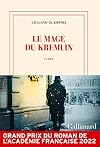
This is more 3.5 stars but rounding to 3.
Author claims that this is just a little bit dramatized true story. If it is then all parties involved are very pathetic, artistic creatures. Taking this into consideration I think this is much more drama than true story. Those true parts are I think parts more related to the political decisions, everything else is angst of young Werther, present in both the journalist and the so called Mage of Kremlin.
Point of view and story telling style is very show more reminiscent of the Hippie culture - you remember, peace and love and sex to everyone, until they grew up and gave birth to our current generation of leaders who have proven to be very materialistic and ..... what is the word ... disruptive. Because why learn how to govern when you can aim for the head and rule the entire country without any preparation (I think this was Macron's comment to his mentor Alain Minc). It is age of anti-statesman, people who ride on populist wave and to whom image is everything. Actual governing? Heh, not so much. So when someone appears that has means and will to rule for betterment of his country... then issues start to happen.
We have two people that are the backbone of this story.
One is journalist/writer who lives in Moscow, sees it as a dark place and is fascinated with the dystopian novel We (Zamyatin). Zamyatin, same as Solzhenitzyn is known for criticizing the authoritarian governments without providing the alternative, because eternal opposition is the best place to be, always right but never actually making the change. Although politicians that came in power in Russia post fall of USSR were the great hope, apparently, for the change. But change that culminated in the period that will only rise the blood pressure from every citizen of Russia today, period of Yeltsin who - I guess inspired by the western democracy system - opened fire and bombarded his country's parliament and during whose rule everything was for sale.
Second charcter in this story is one political advisor to modern Tsar (Putin, if anybody needs explanation). Now this character is descendant of the old tsarist family (his grandfather being member of the court, who miraculously survived the "horrendous" years of Soviet rule, while pissing on them from behind and making fun of them - yeah, right....). His childhood is marked by memories of those beautiful times (unlike times his father and himself lived in, under oppression where his father was member of Academia and he managed to get the university education) - although I am not sure who would call those times beautiful except Tsar and his court, majority of people were serfs and for all means and purposes slaves. But, never mind, those are minor details right? Important thing is, poetry was alive and French philosophy iluminated everything.
So our advisor spends youth surrounded by books, reads a lot (apparently fascinating amounts of French literature with profound effect on him - thankfully author is not biased) and finds himself living life full of inner anxiousness (apparently rather angry why he was born where he was born). He is surrounded by new generation of market entrepreneurs, his generation, modern day robber barons, but he is not an ambitious man so he does not take part in the state level firesale. He is poet (as I said, all characters are extremely pathetic) who decides to do something that clearly marks his entire generation - reality shows. And this brings him to attention of forces who want to replace Yeltsin with new power - future Tsar. Unfortunately for these forces, they wanted to use him as a puppet and this backfired .... spectacularly. Our advisor is offered advisor position and voila story of his adventures begins.
In this part of the novel author puts out the events that shaped Russian history - from Chechen wars onward, through the humiliation and constant ignoring coming from the West until suddenly things changed. All things author mentions are not any special revelation - for anyone interested in history all of these are known facts (except for the western news media of course and people that read only 2 or (God forbid) 5 minute reading-long articles). So for this, book was a let down (considering the hype).
Every controversial aspect of the novel - from Moscow bombings to current situation in Ukraine and dealing with oligarchs supporting the opposition - sheds no new light, not even a hint of something that might provide additional information (and let us remember, this was advertised as a true Russian story).
Our advisor is that, so much philosophically venerated, useless type of man - masochist of sorts that finds ways to even utterly destroy his love life by marrying a woman no sane man would ever touch let alone marry. But I guess this is not how intelligentsia acts - they need to suffer (hahahahahaha, I mean, hey, those soap operas have more reasoning than this book on this matter). Because again, suffering is art.
If you manage to get through this sludge of existential angst book delivers a very interesting view of politics, especially on high power levels. Constant beautification of old Tsarist Russia and ever present French influence (as nauseating as cases of UK or USA influence in other novels) aside, Tsar is shown as a man who aims to bring his country up from the knees and uses everything at his disposal to achieve this goal. All of the high power figures who were exiled from Russia and lived in their opulence in the West, working against their home country with all means available out of revenge are nothing but vultures who were identified and prevented from robbing the resources in a wanton manner of the 1990's. They wanted to control the power in the country but failed to see it is not possible. In this power play there are no second places - both internal and external players learn this fast.
Ending is again nothing original. Our advisor, who is again trying to sit on two or three chairs is no longer allowed to travel to US and (oh, horror) to Europe. And this is where he decides to leave the politics and devote rest of his life to his family. Tsar remains and continues to lead the country.
In all of this mish-mash author manages to put some critique of the West (mostly through the prism of Zamyatin but also by commenting how Tsar managed to imprison oligarchs and billionaires, which is something that cannot take place in the West) but this feels like an afterthought. Impact of automation and role of machines in separating rulers from their people, making rule absolute and out of reach - direct and indirect - of the very citizens is also mentioned. Author talks about all of this but in rather dimmed way (as is in general case with the entire novel, because how can you say anything good about country you consider an enemy).
While very well written, book is standard philosophical novel, unable to figure out if past is good or future is good. Unfortunately time period taken as a period to cherish is period during which (French influence aside, which is something that seems to be very important to the author) no progress took place except suffering [that triggered revolution to begin with]. Future on the other hand looks bleak but with proper national level politics we can go back to times of actual statesmen, people who love their country and try to build it.
One of the comments that I saw mentioned something about how novel shows willingness of Russians to live in authoritarian state instead democracy. I dont think this is mentioned anywhere in the novel. What is mentioned (in one of those critiques of the Western society) is that Russians want to live in state controlled by state not by various private parties and billionaires. They lived through that in 1990's and decided it is not for them. West is just now entering that phase in a public way, and I think that they will discover very soon how true power is not in the state's but in private hands (those NDAs between countries and pharmaceutical companies in last few years are just proof of that). Reason is very simple - there are no statesmen any more, just political janitors enabling the actual powers to be. Everything happening in the East was just a rehearsal.
Interesting novel, but unfortunately novel that would go completely unnoticed if it weren't for the time period in question.
If possible, do read it but to actually learn about the events read the actual history. show less
Author claims that this is just a little bit dramatized true story. If it is then all parties involved are very pathetic, artistic creatures. Taking this into consideration I think this is much more drama than true story. Those true parts are I think parts more related to the political decisions, everything else is angst of young Werther, present in both the journalist and the so called Mage of Kremlin.
Point of view and story telling style is very show more reminiscent of the Hippie culture - you remember, peace and love and sex to everyone, until they grew up and gave birth to our current generation of leaders who have proven to be very materialistic and ..... what is the word ... disruptive. Because why learn how to govern when you can aim for the head and rule the entire country without any preparation (I think this was Macron's comment to his mentor Alain Minc). It is age of anti-statesman, people who ride on populist wave and to whom image is everything. Actual governing? Heh, not so much. So when someone appears that has means and will to rule for betterment of his country... then issues start to happen.
We have two people that are the backbone of this story.
One is journalist/writer who lives in Moscow, sees it as a dark place and is fascinated with the dystopian novel We (Zamyatin). Zamyatin, same as Solzhenitzyn is known for criticizing the authoritarian governments without providing the alternative, because eternal opposition is the best place to be, always right but never actually making the change. Although politicians that came in power in Russia post fall of USSR were the great hope, apparently, for the change. But change that culminated in the period that will only rise the blood pressure from every citizen of Russia today, period of Yeltsin who - I guess inspired by the western democracy system - opened fire and bombarded his country's parliament and during whose rule everything was for sale.
Second charcter in this story is one political advisor to modern Tsar (Putin, if anybody needs explanation). Now this character is descendant of the old tsarist family (his grandfather being member of the court, who miraculously survived the "horrendous" years of Soviet rule, while pissing on them from behind and making fun of them - yeah, right....). His childhood is marked by memories of those beautiful times (unlike times his father and himself lived in, under oppression where his father was member of Academia and he managed to get the university education) - although I am not sure who would call those times beautiful except Tsar and his court, majority of people were serfs and for all means and purposes slaves. But, never mind, those are minor details right? Important thing is, poetry was alive and French philosophy iluminated everything.
So our advisor spends youth surrounded by books, reads a lot (apparently fascinating amounts of French literature with profound effect on him - thankfully author is not biased) and finds himself living life full of inner anxiousness (apparently rather angry why he was born where he was born). He is surrounded by new generation of market entrepreneurs, his generation, modern day robber barons, but he is not an ambitious man so he does not take part in the state level firesale. He is poet (as I said, all characters are extremely pathetic) who decides to do something that clearly marks his entire generation - reality shows. And this brings him to attention of forces who want to replace Yeltsin with new power - future Tsar. Unfortunately for these forces, they wanted to use him as a puppet and this backfired .... spectacularly. Our advisor is offered advisor position and voila story of his adventures begins.
In this part of the novel author puts out the events that shaped Russian history - from Chechen wars onward, through the humiliation and constant ignoring coming from the West until suddenly things changed. All things author mentions are not any special revelation - for anyone interested in history all of these are known facts (except for the western news media of course and people that read only 2 or (God forbid) 5 minute reading-long articles). So for this, book was a let down (considering the hype).
Every controversial aspect of the novel - from Moscow bombings to current situation in Ukraine and dealing with oligarchs supporting the opposition - sheds no new light, not even a hint of something that might provide additional information (and let us remember, this was advertised as a true Russian story).
Our advisor is that, so much philosophically venerated, useless type of man - masochist of sorts that finds ways to even utterly destroy his love life by marrying a woman no sane man would ever touch let alone marry. But I guess this is not how intelligentsia acts - they need to suffer (hahahahahaha, I mean, hey, those soap operas have more reasoning than this book on this matter). Because again, suffering is art.
If you manage to get through this sludge of existential angst book delivers a very interesting view of politics, especially on high power levels. Constant beautification of old Tsarist Russia and ever present French influence (as nauseating as cases of UK or USA influence in other novels) aside, Tsar is shown as a man who aims to bring his country up from the knees and uses everything at his disposal to achieve this goal. All of the high power figures who were exiled from Russia and lived in their opulence in the West, working against their home country with all means available out of revenge are nothing but vultures who were identified and prevented from robbing the resources in a wanton manner of the 1990's. They wanted to control the power in the country but failed to see it is not possible. In this power play there are no second places - both internal and external players learn this fast.
Ending is again nothing original. Our advisor, who is again trying to sit on two or three chairs is no longer allowed to travel to US and (oh, horror) to Europe. And this is where he decides to leave the politics and devote rest of his life to his family. Tsar remains and continues to lead the country.
In all of this mish-mash author manages to put some critique of the West (mostly through the prism of Zamyatin but also by commenting how Tsar managed to imprison oligarchs and billionaires, which is something that cannot take place in the West) but this feels like an afterthought. Impact of automation and role of machines in separating rulers from their people, making rule absolute and out of reach - direct and indirect - of the very citizens is also mentioned. Author talks about all of this but in rather dimmed way (as is in general case with the entire novel, because how can you say anything good about country you consider an enemy).
While very well written, book is standard philosophical novel, unable to figure out if past is good or future is good. Unfortunately time period taken as a period to cherish is period during which (French influence aside, which is something that seems to be very important to the author) no progress took place except suffering [that triggered revolution to begin with]. Future on the other hand looks bleak but with proper national level politics we can go back to times of actual statesmen, people who love their country and try to build it.
One of the comments that I saw mentioned something about how novel shows willingness of Russians to live in authoritarian state instead democracy. I dont think this is mentioned anywhere in the novel. What is mentioned (in one of those critiques of the Western society) is that Russians want to live in state controlled by state not by various private parties and billionaires. They lived through that in 1990's and decided it is not for them. West is just now entering that phase in a public way, and I think that they will discover very soon how true power is not in the state's but in private hands (those NDAs between countries and pharmaceutical companies in last few years are just proof of that). Reason is very simple - there are no statesmen any more, just political janitors enabling the actual powers to be. Everything happening in the East was just a rehearsal.
Interesting novel, but unfortunately novel that would go completely unnoticed if it weren't for the time period in question.
If possible, do read it but to actually learn about the events read the actual history. show less
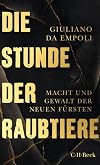
If it were a historical novel, some would say it is captivating and exciting, thinking, “That was once upon a time.”
Unfortunately, this book reflects the stark realities of today. Even though certain statements may make you laugh, it is very frightening and deeply saddening. Current events even surpass the content of this book or have already accelerated enormously.
The author jumps around between different eras to show that we have already experienced all this before, in line with my show more motto: Humanity learns nothing from history.
The author writes about his book:
It attempts to capture the breath of a world at the moment it plunges into the abyss – and the ice-cold seizure of power by another that takes its place.
He describes the power play of today's most important despots as the Borgia effect. That is, at the very beginning of the 16th century, Cesare Borgia invited his enemies to a peaceful celebration and then captured and tortured them, thus cementing his world order as sole ruler.
This is still happening today. With “false” promises, states are forced to bow down. Takeovers occur and no one intervenes. The ruler (president) appears as a “wolf in sheep's clothing” and feels justified in his actions. Thinking advisors are dismissed and replaced with puppets. A president no longer listens to his staff, because he and he alone is right about everything. Laws and treaties, whether national or international, do not apply to him in his eyes. We see this every day today; the whole world is in a kind of shock-induced paralysis and no one dares to stand in the way of such individuals.
Various examples of this are presented in this book.
In the last part, the author writes about the development of AI. He compares its introduction and beginnings with Kafka's “The Trial”, in which no one understands what is going on, neither the defendant nor the judges who are prosecuting him, and yet events take their inexorable course. The same thing happens with leading politicians: no one understands AI, but they are afraid to admit it, so they prefer to remain silent and let it flourish instead of enacting laws that could curb it.
Welcome to the brave new world, one that is frightening. show less
Unfortunately, this book reflects the stark realities of today. Even though certain statements may make you laugh, it is very frightening and deeply saddening. Current events even surpass the content of this book or have already accelerated enormously.
The author jumps around between different eras to show that we have already experienced all this before, in line with my show more motto: Humanity learns nothing from history.
The author writes about his book:
It attempts to capture the breath of a world at the moment it plunges into the abyss – and the ice-cold seizure of power by another that takes its place.
He describes the power play of today's most important despots as the Borgia effect. That is, at the very beginning of the 16th century, Cesare Borgia invited his enemies to a peaceful celebration and then captured and tortured them, thus cementing his world order as sole ruler.
This is still happening today. With “false” promises, states are forced to bow down. Takeovers occur and no one intervenes. The ruler (president) appears as a “wolf in sheep's clothing” and feels justified in his actions. Thinking advisors are dismissed and replaced with puppets. A president no longer listens to his staff, because he and he alone is right about everything. Laws and treaties, whether national or international, do not apply to him in his eyes. We see this every day today; the whole world is in a kind of shock-induced paralysis and no one dares to stand in the way of such individuals.
Various examples of this are presented in this book.
In the last part, the author writes about the development of AI. He compares its introduction and beginnings with Kafka's “The Trial”, in which no one understands what is going on, neither the defendant nor the judges who are prosecuting him, and yet events take their inexorable course. The same thing happens with leading politicians: no one understands AI, but they are afraid to admit it, so they prefer to remain silent and let it flourish instead of enacting laws that could curb it.
Welcome to the brave new world, one that is frightening. show less
The Hour of the Predator: Encounters with the Autocrats and Tech Billionaires Taking Over the World by Giuliano da Empoli
Giuliano da Empoli’s The Hour of the Predator: Encounters with the Autocrats and Tech Billionaires Taking Over the World offers a startling and sharply written account of our moment. Drawing on his political experience and global travels, he casts today’s power-brokers, autocrats and tech titans, as ruthless hybrids of Machiavellian princes and digital conquistadors, using “rage plus the algorithm” as their weapon.  What makes the book compelling is how it marries vivid show more storytelling (from UN-assemblies to closed-door Riyadh deals) with an urgent thesis: the liberal institutions that once anchored Western politics are eroding under the pressure of rule-breaking elites and unaccountable platforms. 
On the plus side, the book works brilliantly as wake-up call. It’s concise (about 160 pages) and loaded with memorable analogies (Aztecs, Borgias, conquistadors) that bring a sense of dramatic clarity to otherwise abstract geopolitical shifts. Da Empoli’s critique of both the predators and the “lawyers” (his term for old-school liberal elites) is biting and provocative. That said, if you’re looking for detailed solutions or a hopeful roadmap, you may find the book somewhat bleak. Its power lies more in diagnosis than prescription. All told, it’s an essential read for anyone who wants to understand how power is changing in the world. show less
On the plus side, the book works brilliantly as wake-up call. It’s concise (about 160 pages) and loaded with memorable analogies (Aztecs, Borgias, conquistadors) that bring a sense of dramatic clarity to otherwise abstract geopolitical shifts. Da Empoli’s critique of both the predators and the “lawyers” (his term for old-school liberal elites) is biting and provocative. That said, if you’re looking for detailed solutions or a hopeful roadmap, you may find the book somewhat bleak. Its power lies more in diagnosis than prescription. All told, it’s an essential read for anyone who wants to understand how power is changing in the world. show less
Lists
Awards


You May Also Like


Associated Authors
Statistics
- Works
- 14
- Members
- 855
- Popularity
- #29,931
- Rating
- 3.9
- Reviews
- 43
- ISBNs
- 73
- Languages
- 12