
Ralph Ketcham (1927–2017)
Author of The Anti-Federalist Papers and the Constitutional Convention Debates
About the Author
Works by Ralph Ketcham
The Anti-Federalist Papers and the Constitutional Convention Debates (1986) — Editor; Introduction — 1,622 copies, 5 reviews
Associated Works
The William and Mary Quarterly, July 1987: Constitution of the United States — Contributor — 2 copies
Tagged
Common Knowledge
- Canonical name
- Ketcham, Ralph
- Legal name
- Ketcham, Ralph Louis
- Birthdate
- 1927-10-28
- Date of death
- 2017-04-26
- Gender
- male
- Education
- Syracuse University (Ph.D|1956)
Colgate University
Allegheny College
United States Coast Guard Academy - Occupations
- professor
historian
political scientist - Organizations
- Syracuse University
Yale University
University of Chicago
National Humanities Institute - Awards and honors
- George Arents Medal (2003)
- Nationality
- USA
- Birthplace
- Berea, Ohio, USA
- Places of residence
- Syracuse, New York, USA
- Place of death
- Syracuse, New York, USA
- Associated Place (for map)
- New York, USA
Members
Reviews

An impressive feat of scholarship to write a biography of someone like James Madison whose life and career stretched from the American Revolution to the 1830s. He was the "architect" of the Constitution, congressman, secretary of state, fourth president of the United States, and elder statesman. According to Ketcham, the glue that holds Madison together is his Republican ideology. That is why he could be for a stronger federal government in the 1780s but against it in 1790s and why he was show more not a good war leader. Kethcam argues that Madison was not the dupe of Thomas Jefferson. There are parts I struggle with. For example, Ketcham describes Madison's Virginia Resolves of 1798 out to be more moderate than Jefferson's Kentucky Resolves, but I don't see it. Also, on political points Madison appears very much the Wilsonian practitioner of expediency. If so, that would undercut his Republican ideology. And he did things for purely political reasons, which is what you would expect from a professional politician, but where does that line end? Ketcham catches Madison changing some of his comments about Lafayette later in life, but doesn't delve any deeper into that theme. After having read Mary Sarah Bilder's Madison's Hand (2015) it makes me wonder how much Madison edited his papers. Finally, much scholarship has been produced since this biography was published around the Constitution, the 1790s, and the War of 1812. show less
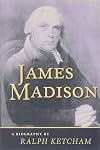
This book was tough to get through. I enjoy biographies but this is not the most entertaining biography. However, this is the most complete biography of Madison I could find.
Madison's most defining moments in history are: "father of the constitution" a title which he was given years later, his collaboration with Jefferson and possibly being a very strong influence in purchasing land instead of seizing it, and of course, the War of 1812.
During his Presidency, Madison refused to back down show more from the United States having rights to the sea and did not cower to the large empires in the east. Though much "luck" was involved, Madison reaffirmed the United States as a world scene player that deserved and would not be afraid to defend, a seat at the table, through patience and allowing events to unfold before choosing the best path.
Madison changed his stance on a larger central government when circumstances called for it, though still rejected the size of central government that Hamilton called for.
Madison seemed to come out on the winning side of almost every major political issue of his day. I enjoyed learning about him. show less
Madison's most defining moments in history are: "father of the constitution" a title which he was given years later, his collaboration with Jefferson and possibly being a very strong influence in purchasing land instead of seizing it, and of course, the War of 1812.
During his Presidency, Madison refused to back down show more from the United States having rights to the sea and did not cower to the large empires in the east. Though much "luck" was involved, Madison reaffirmed the United States as a world scene player that deserved and would not be afraid to defend, a seat at the table, through patience and allowing events to unfold before choosing the best path.
Madison changed his stance on a larger central government when circumstances called for it, though still rejected the size of central government that Hamilton called for.
Madison seemed to come out on the winning side of almost every major political issue of his day. I enjoyed learning about him. show less
This was a huge book. Let me just start with that because the volume that I had was over 700 pages. I closed it permanently at page 384. I couldn't take anymore of the style of Ralph Ketcham. When I started this book I had already read the biography of James Madison:(The American Presidents Series). I also had read a book on the writing of the constitution and one about the War of 1812. So I was looking for details when I picked up this book. And, yes, this book is filled with details, which show more would have been fine if they had been distributed with some semblance of order. However, throughout the pages that I read, the author was very disjointed and constantly jumps from one time period to another.
Again, this would be fine if it was in different chapters, about different aspects of Madison's life, but no, this happened in the same paragraphs and on some occasions the same long sentences.
This said, I could not in good conscience recommend this book to anyone, unless they were truly looking for a mountain of details concerning Madison's inability to decide on a career, his lack of a love life until he was 43, his health issues (mainly hypochondria), and his dependence on others both financially and emotionally.
Maybe the book got better after page 384, I'll never know. show less
Again, this would be fine if it was in different chapters, about different aspects of Madison's life, but no, this happened in the same paragraphs and on some occasions the same long sentences.
This said, I could not in good conscience recommend this book to anyone, unless they were truly looking for a mountain of details concerning Madison's inability to decide on a career, his lack of a love life until he was 43, his health issues (mainly hypochondria), and his dependence on others both financially and emotionally.
Maybe the book got better after page 384, I'll never know. show less
I finished James Madison: A Biography by Ralph Ketcham. It took me months to get through it. The author really liked his subject, and seemed to constantly be making excuses for him. Although he did try to examine him critically from time to time throughout the book. I found it interesting that later in life Madison changed some of his original letters to, in one case, make someone look better (LaFayette), and make someone look worse (John Adams). I found it surprising that Madison was so show more adamantly supportive of the separation of church and state (bravo!). His belief, based on his readings, was that state-supported religion only leads to corruption of religion. He definitely supported measures that favored Virginia, but he always kept the national priorities in mind. I also found it kind of funny that he pushed so hard for a strong national government - until he had to make the "obnoxious" Great Compromise - the peak was reached when he thought representation in both houses would be by population. He then became much more cautious about the power granted to the general government. This bio also showed me that there has been horrible, nasty bipartisanship since Washington's second administration, so I guess I shouldn't be so depressed about the current state of national politics.
As long as the bio was, some things were mentioned in passing with no explanation, such as Shay's Rebellion. I also found it interesting that the author would say out of the blue that Jefferson and Madison weren't scheming together in Dec 1879 - why say this if there hasn't been any other comment about it previously. Sometimes I felt like there was an unnamed prerequisite that I was supposed to read before reading this tome. Then, there were quotes he included that I just found no use for, and that were not explained in any way and no realy connection to what the author was relating. Here's my favorite..."I, pilgarlic, sat entranced." show less
As long as the bio was, some things were mentioned in passing with no explanation, such as Shay's Rebellion. I also found it interesting that the author would say out of the blue that Jefferson and Madison weren't scheming together in Dec 1879 - why say this if there hasn't been any other comment about it previously. Sometimes I felt like there was an unnamed prerequisite that I was supposed to read before reading this tome. Then, there were quotes he included that I just found no use for, and that were not explained in any way and no realy connection to what the author was relating. Here's my favorite..."I, pilgarlic, sat entranced." show less
Lists
Awards

You May Also Like


Associated Authors
Statistics
- Works
- 13
- Also by
- 2
- Members
- 2,245
- Popularity
- #11,424
- Rating
- 3.9
- Reviews
- 13
- ISBNs
- 32
- Languages
- 1
- Favorited
- 1