
Hortense Calisher (1911–2009)
Author of Sunday Jews
About the Author
Hortense Calisher, 1911-2009 Author Hortense Calisher was born in Manhattan, New York on December 20, 1911. She graduated from Barnard College in 1932 with a degree in English composition. Before becoming a writer, she worked as a sales clerk, a model, and a social worker. She wrote a total of 23 show more novels and short story collections during her lifetime including In the Absence of Angels (1951), False Entry (1961), Tale for the Mirror (1962), Textures of Life (1963), The New Yorkers (1969), and Sunday Jews (2002). Her memoir, Herself, an exploration of the intersection between a writer's life and her fiction, was published in 1972. Many of her short works have been anthologized and she is a contributor of short stories, articles and reviews to the New York Times, Harpers and other journals. She also lectured on literature and taught creative writing at several colleges and universities including Columbia University and Bennington College in Vermont. She received four Henry Awards and two Guggenheim Fellowships. She died on January 13, 2009 at the age of 97. (Bowker Author Biography) show less
Works by Hortense Calisher
Heartburn 2 copies
Na krańcach magii 1 copy
Associated Works
Writing Women's Lives: An Anthology of Autobiographical Narratives by Twentieth-Century American Women Writers (1994) — Contributor — 128 copies, 3 reviews
Rediscoveries II: Important Writers Select Their Favorite Works of Neglected Fiction (1988) — Contributor — 31 copies, 1 review
Out of the Best Books: An Anthology of Literature, Vol. 5: Community Responsibility (1969) — Contributor — 30 copies
New World Writing - Number 12 — Contributor — 7 copies
Ett skri ur mörkret — Contributor — 4 copies
Moderne Amerikaanse verhalen — Contributor — 3 copies
Tagged
Common Knowledge
- Canonical name
- Calisher, Hortense
- Birthdate
- 1911-12-20
- Date of death
- 2009-01-13
- Gender
- female
- Education
- Barnard College(1932)
Hunter College High School - Occupations
- professor
novelist
short story writer
sales clerk
model
social worker (show all 7)
memoirist - Organizations
- American Academy of Arts and Letters (Literature, 1977| President, 1987-1990)
PEN (president, 1986-1987) - Awards and honors
- Guggenheim Fellowship (1952, 1956)
American Academy of Arts and Letters Academy Award (Literature, 1967) - Relationships
- Harnack, Curtis (second husband)
- Short biography
- Hortense Calisher was born to a Jewish family in New York City. She attended Hunter College High School and graduated from Barnard College with a major in English and a minor in philosophy. It was the height of the Great Depression, and she went to work for the New York Department of Public Welfare as a social worker. In 1935, she married Heaton Heffelfinger, an engineer, with whom she had two children. She won an O. Henry Award for her first published story, “The Middle Drawer,”which appeared in The New Yorker in 1948. Three years later, she published her first book of stories, In the Absence of Angels, which established her reputation. She won two Guggenheim Fellowships (1952 and 1955), and in 1956–1957, became an adjunct professor of English at Barnard College. This was the first of more than a dozen adjunct or visiting professorships she held. In 1959, after a divorce from her first husband, she remarried to fellow writer Curtis Harnack. Her first novel, False Entry, was published in 1961. She produced a total of 23 novels and short story collections
during her career, as well as several memoirs, including Herself (1972), a mix of reminiscences, essays, reviews, and musings. Her best-known book is Sunday Jews (2002). She was elected to the American Academy of Arts and Letters and became its second female president in 1987. - Nationality
- USA
- Birthplace
- Manhattan, New York, USA
- Places of residence
- Nyack, New York, USA
- Place of death
- Manhattan, New York, USA
- Associated Place (for map)
- New York, USA
Members
Discussions
Hortense Calisher, 1911 - 2009 in Authors In Memoriam (January 2009)
Reviews

The subject - fathers and sons, mothers and daughters - seems simple enough. But under Calisher's hands it becomes more complex, a beautiful tapestry. In an ornate, near voluptuous style reminiscent of Henry James, she spins a story of newlyweds David and Elizabeth. Both are artists, at least in spirit, and represent the artistic life in New York City in the late fifties, early sixties. The story covers only about four years, but in that time these two come up against the realities of daily show more living and the responsibilities of adulthood, and parenthood too, after their daughter May is born. They have found what they think is the perfect abode in a loft in an old converted piano factory and they design and remodel the space to suit their needs and temperaments. But this "blue heaven" space turns out to harbor a deadly threat to their baby, A nearly invisible dust rising up from the stoneworks on the lower level exacerbates little May's hidden asthma, causing periodic seizures and life-threatening attacks. A subtext, or parallel story, concerns that of their parents, both widowed, who marry each other. David's father, Nicholas, has a heart condition and has lived a careful, almost precarious life for a dozen years or so. When he marries Elizabeth's mother, Margot, he marvels at this new lease on life, telling his son that the "surprises just keep on coming." The interplay between the generations is key to this story, and Calisher skilfully interweaves their lives, although they live on opposite coasts - the older couple in California. It is only after his father's death that David begins to see how closely they have been, and still are, all connected.
"He saw. If one could imagine a loom, or looms innumerable, warp-and-woof radiating everywhere, perhaps not even from a center. The texture was so tight that one could never see, even over as much as four years of it, where any one part had begun."
This book was first published in 1963 and has been long out of print but it has a kind of timeless widsom and beauty that makes it classic. I'm glad I finally found it and read it. show less
"He saw. If one could imagine a loom, or looms innumerable, warp-and-woof radiating everywhere, perhaps not even from a center. The texture was so tight that one could never see, even over as much as four years of it, where any one part had begun."
This book was first published in 1963 and has been long out of print but it has a kind of timeless widsom and beauty that makes it classic. I'm glad I finally found it and read it. show less

This is a really interesting work of literary science fiction from the early 1980s. I missed it at the time, and I'm sorry I did.
The basic premise of this novel is that, at a not clearly stated time possibly in the early 21st century, the US is sending a crew of civilians to a habitat/colony at the L5 LaGrange point between the Earth and the Sun. It's the first time civilians have been sent to a space station as potential colonists, and due to a years-long campaign by wealthy guerrilla show more journalist (today he'd be a blogger) Tom Gilpin, it is at least in theory a first exercise in including the whole range of humanity, rather than just a super-fit, elite subset.
We meet the inhabitants of one cabin, a relatively elite group although not your obvious choices for First Space Colonists. They include Tom Gilpin himself, his old friend and collaborator Veronica Oliphant, industrial magnate John Mulenberg, former diplomat and current leading international businessman William Wert, Wert's Iranian wife Soraya, and the man with two names, Wulf Lievering/Jacques Cohen. Lievering/Cohen is not deceiving anyone; he's been living and working openly under both names, and each of the passengers assigned to the same cabin have been given complete access to each other's biographies. Lievering/Cohen has been a poet, a professor of literature, a translator, and other things along the way.
And then there's one of the few crew members who spends significant time with them, Fred Kim, son of an internationally famous architect who's done significant work for NASA. Except he's not Fred Kim; he's really Mole Perdue, son of the NASA admiral in charge of this project.
Mole smuggled himself aboard because he's deeply suspicious and concerned about the fact that his father told his friend Fred's father to keep Fred grounded until the second trip.
Calisher, whose writing career stretched from 1951 to 2009, practiced a complex, ornate style of story telling that wasn't in favor in the seventies and eighties, but may be more welcome today. We get the complex interleaving of the characters' stories, non-linear, detailed, and intricate. The story builds up layer by layer, as we learn the good, the bad, and the ugly of all the principal characters. No one is a mere spear-carrier.
A really, really interesting read.
Recommended.
I received a free electronic galley from the publisher via NetGalley. show less
The basic premise of this novel is that, at a not clearly stated time possibly in the early 21st century, the US is sending a crew of civilians to a habitat/colony at the L5 LaGrange point between the Earth and the Sun. It's the first time civilians have been sent to a space station as potential colonists, and due to a years-long campaign by wealthy guerrilla show more journalist (today he'd be a blogger) Tom Gilpin, it is at least in theory a first exercise in including the whole range of humanity, rather than just a super-fit, elite subset.
We meet the inhabitants of one cabin, a relatively elite group although not your obvious choices for First Space Colonists. They include Tom Gilpin himself, his old friend and collaborator Veronica Oliphant, industrial magnate John Mulenberg, former diplomat and current leading international businessman William Wert, Wert's Iranian wife Soraya, and the man with two names, Wulf Lievering/Jacques Cohen. Lievering/Cohen is not deceiving anyone; he's been living and working openly under both names, and each of the passengers assigned to the same cabin have been given complete access to each other's biographies. Lievering/Cohen has been a poet, a professor of literature, a translator, and other things along the way.
And then there's one of the few crew members who spends significant time with them, Fred Kim, son of an internationally famous architect who's done significant work for NASA. Except he's not Fred Kim; he's really Mole Perdue, son of the NASA admiral in charge of this project.
Mole smuggled himself aboard because he's deeply suspicious and concerned about the fact that his father told his friend Fred's father to keep Fred grounded until the second trip.
Calisher, whose writing career stretched from 1951 to 2009, practiced a complex, ornate style of story telling that wasn't in favor in the seventies and eighties, but may be more welcome today. We get the complex interleaving of the characters' stories, non-linear, detailed, and intricate. The story builds up layer by layer, as we learn the good, the bad, and the ugly of all the principal characters. No one is a mere spear-carrier.
A really, really interesting read.
Recommended.
I received a free electronic galley from the publisher via NetGalley. show less
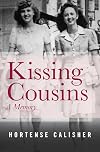
What a difficult book. I feel like there is knowledge and insight to be gained in these pages --somewhere-- but it's simply not given up easily enough. I mean, I like obscure memoirs, but this one isn't worth the effort to finish.
The book recalls memories associated with cousin Katie. But in the parts that I read we get more of the conflict that can exist when you are a Southern Jew in the North. In an extended family of blonds and brunettes, light and swarthy complexions, there's the show more opportunity for lots of conflict. Southern-ness versus Northern-ness versus different flavors of Jewish-ness.
This should have been more interesting read than it was.
And part of the problem was the language.
My image of our house was that it reverberated
with sounds that had to be classified, and that this
was society.
There is meaning here, just not enough to make it worth transliterating this verbiage into something worth thinking about.
But Physics was more like our own household,
full of closets that scarcely knew any longer what
they held, in whose depths I could spend an after-
noon with the concrete.
What it could have been is pages filled with the tantalizing hints of life, but Hortense passes by these too quickly. Like the cousins who were trying to pass themselves off as Christian. Or the puzzle she found in the big leatherbound family Bible.
... a receipt, issued to my grandfather for insurance
on a slave, that made me queasy, since according to my
father our grandmother had never kept any servants
except the freed. Perhaps my grandfather, of whom I
knew only the severe space between nose and mouth in
his mutton-chopped portrait, had been of another mind.
And there are just these quick snippets before we jolt ahead to another unrelated paragraph.
.
I so wanted to be fair in evaluating and considering this short memoir, however things like "another cheeseparing burden of the verbal" kept me from finishing. Sigh. show less
The book recalls memories associated with cousin Katie. But in the parts that I read we get more of the conflict that can exist when you are a Southern Jew in the North. In an extended family of blonds and brunettes, light and swarthy complexions, there's the show more opportunity for lots of conflict. Southern-ness versus Northern-ness versus different flavors of Jewish-ness.
This should have been more interesting read than it was.
And part of the problem was the language.
My image of our house was that it reverberated
with sounds that had to be classified, and that this
was society.
There is meaning here, just not enough to make it worth transliterating this verbiage into something worth thinking about.
But Physics was more like our own household,
full of closets that scarcely knew any longer what
they held, in whose depths I could spend an after-
noon with the concrete.
What it could have been is pages filled with the tantalizing hints of life, but Hortense passes by these too quickly. Like the cousins who were trying to pass themselves off as Christian. Or the puzzle she found in the big leatherbound family Bible.
... a receipt, issued to my grandfather for insurance
on a slave, that made me queasy, since according to my
father our grandmother had never kept any servants
except the freed. Perhaps my grandfather, of whom I
knew only the severe space between nose and mouth in
his mutton-chopped portrait, had been of another mind.
And there are just these quick snippets before we jolt ahead to another unrelated paragraph.
.
I so wanted to be fair in evaluating and considering this short memoir, however things like "another cheeseparing burden of the verbal" kept me from finishing. Sigh. show less

The story, Heartburn, has a fairytale familiarity. A man goes to a neurologist and says:
“I have some kind of small animal lodged in my chest… Probably a form of newt or toad.”
I was reminded of when my little brother put a frog down the front of my swimming costume (and of the first Alien film). We were all in a shallow, outdoor pool, and the frog was slippery, wriggling, and scared. I certainly wasn’t enjoying it either... Ugh. All was well in the end.
The patient explains how he show more thinks his situation occurred and is anxious to know the doctor’s opinion.
There are some excellent turns of phrase (“Swollen with irritation, he was only half conscious of an uneasy, vestigial twitching of his ear muscles, which contracted now as they sometimes did when he listened to atonal music.”), but the story itself was predictable, albeit it was more about disbelief than belief.
Short story club
I read this in Black Water 2: More Tales of the Fantastic, by Alberto Manguel, from which I’m reading one story a week with The Short Story Club, starting 24 March 2025.
You can read this story in the group.
You can join the group here. show less
“I have some kind of small animal lodged in my chest… Probably a form of newt or toad.”
I was reminded of when my little brother put a frog down the front of my swimming costume (and of the first Alien film). We were all in a shallow, outdoor pool, and the frog was slippery, wriggling, and scared. I certainly wasn’t enjoying it either... Ugh. All was well in the end.
The patient explains how he show more thinks his situation occurred and is anxious to know the doctor’s opinion.
There are some excellent turns of phrase (“Swollen with irritation, he was only half conscious of an uneasy, vestigial twitching of his ear muscles, which contracted now as they sometimes did when he listened to atonal music.”), but the story itself was predictable, albeit it was more about disbelief than belief.
Short story club
I read this in Black Water 2: More Tales of the Fantastic, by Alberto Manguel, from which I’m reading one story a week with The Short Story Club, starting 24 March 2025.
You can read this story in the group.
You can join the group here. show less
Lists
Awards


You May Also Like


Associated Authors
Statistics
- Works
- 33
- Also by
- 30
- Members
- 664
- Popularity
- #37,984
- Rating
- 3.7
- Reviews
- 8
- ISBNs
- 72
- Favorited
- 4