
Elspeth Barker (1940–2022)
Author of O Caledonia
Works by Elspeth Barker
caledolia 1 copy
Associated Works
Tagged
Common Knowledge
- Other names
- Langlands, Elspeth (birth name)
- Birthdate
- 1940-11-16
- Date of death
- 2022-04-21
- Gender
- female
- Education
- St Leonard's School, St Andrew's, Fife
University of Oxford (Somerville College|modern languages) - Occupations
- novelist
journalist
lecturer - Organizations
- Runton Hill school for girls (teacher|classics)
Norwich School of Art (teacher|creative writing)
Independent on Sunday (contributor)
London Review of Books (contributor)
Times Literary Supplement (contributor)
Guardian (contributor) (show all 8)
Observer (contributor)
Arvon Foundation (tutor) - Relationships
- Barker, George (1st husband)
Barker, Raffaella (daughter)
Troop, Bill (2nd husband) - Cause of death
- complications of a stroke
- Nationality
- Scotland
- Birthplace
- Edinburgh, Scotland, UK
- Places of residence
- Drumtochty castle, Aberdeenshire, Scotland (her parents' prep school)
Edinburgh, Scotland
Itteringham, Norfolk, England (Bintry House|a National Trust property) - Associated Place (for map)
- Scotland
Members
Reviews
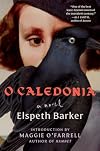
It's been months since I've read anything that really grabs me, and this strange, short, sad coming of age book was absolutely the right book at the right time. This one goes on the keeper shelf.
Barker begins with the murder of Janet, aged sixteen, in her family's castle in the Scottish highlands and then backtracks to her birth to tell the story of her short life. Janet is a socially awkward intellectual who connects to animals rather than people and never seems to know how to act, even show more around her own family. You can't help but think her life would have come right in the end, as it does for many of us weirdos who eventually find our place in the world, if it hadn't been for her early death. But in the final sentence her death is also framed as an almost joyous release from a life that felt unbearable.
Janet is seen as a problem child by her parents and stern Calvinist nanny. Hopped up on cake at a party (aged about four) she dances around wildly and is spanked and told how bad she is. Forced to babysit her younger sister, she daydreams and fails to notice when the baby starts eating sand at the beach, or drops her when trying to get her out of the pram, both of which adults see as examples of her wickedness. Even getting motion sickness during car trips is interpreted as an act of rebellion and attention-seeking. All these incidents are relayed through Janet's eyes as Barker shows how they contribute to her view of herself as someone unworthy of love. Her failings are so human and most are completely harmless, though her actions do sometimes result in other people getting injured. (In one case this is totally deserved; she pushes a boy who sexually harasses her into a patch of poisonous hogweed. Other times it is more ambiguous about whether she intended to cause someone else pain.) But at the same time Janet has so many good qualities. She is funny, irreverent, intelligent, caring (of animals), and often insightful about other people even though she doesn't know how to express it.
I found some of these scenes hard to read because they really struck home. I remember being a child and being confused about why something I had done was wrong. And as a parent I have certainly said things like "you are old enough to know better," which I don't think is a terrible, soul-destroying thing to say to a child. But you never know which experiences will turn out to be foundational in a person's self-image. (Not to compare Janet's parents to my own excellent parents or to myself, I hope!) I think what Barker conveyed so well, and so devastatingly, was the absolutely bewildering experience of growing up and figuring out how to be a person in the world.
Beyond the psychological insights, the writing was just incredible. Descriptions of the highland landscape and the decaying castle-cum-boarding school where the family live were both gloomy and beautiful. But there's something verging on the surrealist in aspects of the writing, too. Think of "I Capture the Castle" filtered through "Gormenghast" and that might be the best approximation. This book takes place in the 1940s and 50s but has a timeless feeling that contributes to that surreality. show less
Barker begins with the murder of Janet, aged sixteen, in her family's castle in the Scottish highlands and then backtracks to her birth to tell the story of her short life. Janet is a socially awkward intellectual who connects to animals rather than people and never seems to know how to act, even show more around her own family. You can't help but think her life would have come right in the end, as it does for many of us weirdos who eventually find our place in the world, if it hadn't been for her early death. But in the final sentence her death is also framed as an almost joyous release from a life that felt unbearable.
Janet is seen as a problem child by her parents and stern Calvinist nanny. Hopped up on cake at a party (aged about four) she dances around wildly and is spanked and told how bad she is. Forced to babysit her younger sister, she daydreams and fails to notice when the baby starts eating sand at the beach, or drops her when trying to get her out of the pram, both of which adults see as examples of her wickedness. Even getting motion sickness during car trips is interpreted as an act of rebellion and attention-seeking. All these incidents are relayed through Janet's eyes as Barker shows how they contribute to her view of herself as someone unworthy of love. Her failings are so human and most are completely harmless, though her actions do sometimes result in other people getting injured. (In one case this is totally deserved; she pushes a boy who sexually harasses her into a patch of poisonous hogweed. Other times it is more ambiguous about whether she intended to cause someone else pain.) But at the same time Janet has so many good qualities. She is funny, irreverent, intelligent, caring (of animals), and often insightful about other people even though she doesn't know how to express it.
I found some of these scenes hard to read because they really struck home. I remember being a child and being confused about why something I had done was wrong. And as a parent I have certainly said things like "you are old enough to know better," which I don't think is a terrible, soul-destroying thing to say to a child. But you never know which experiences will turn out to be foundational in a person's self-image. (Not to compare Janet's parents to my own excellent parents or to myself, I hope!) I think what Barker conveyed so well, and so devastatingly, was the absolutely bewildering experience of growing up and figuring out how to be a person in the world.
Beyond the psychological insights, the writing was just incredible. Descriptions of the highland landscape and the decaying castle-cum-boarding school where the family live were both gloomy and beautiful. But there's something verging on the surrealist in aspects of the writing, too. Think of "I Capture the Castle" filtered through "Gormenghast" and that might be the best approximation. This book takes place in the 1940s and 50s but has a timeless feeling that contributes to that surreality. show less
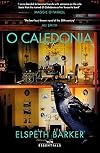
his is Janet's story, from her birth during WWII at her grandfather's home by the sea in southern Scotland, through her miserable boarding school years when she is surrounded by Philistines, to her death at sixteen in her family's grim highland castle. Janet's father believes that girls are an inferior kind of boy, while her mother likes babies and doesn't like her two eldest, Janet and her arrogant, frighteningly self-possessed brother Francis. Janet is not at all self-possessed: she show more notices only what interests her, retreats into her imagination, and can't be trusted. She's compassionate towards animals but doesn't like people.
This is a tragedy about an intelligent, unhappy, friendless, doomed misfit, but it's leavened with the humour of the ridiculous situations that Janet finds herself in, and a cast of exaggerated comic characters.
O Caledonia is strange, short, and well worth reading. show less
This is a tragedy about an intelligent, unhappy, friendless, doomed misfit, but it's leavened with the humour of the ridiculous situations that Janet finds herself in, and a cast of exaggerated comic characters.
O Caledonia is strange, short, and well worth reading. show less
I am sorry to say that I had never heard of this novel until I read a short article about it in The Guardian newspaper by Maggie O’Farrell, who also wrote the introduction to the recently re-released edition that I read.
As a novel it defies easy categorisation, combining elements of history, nature and almost Gothic horror as it tells the life of Janet, a challenging young woman who seemed to spend her life at odds with everyone whom she encountered. As a loner, despite four siblings, she show more found her greatest refuge in books, of which she was a precocious and prodigious reader. The book also offers an intriguing insight into life in Scotland in the early years after the Second World War. Janet’s family are fairly affluent by normal standards, living in a large house in the Highlands. While there may be sufficient financial resource, there is little in the way of society. The local population are far from welcoming of anyone, and quickly develop deep-rooted suspicions of everyone up at ’The Big House’ (or, more probably, ‘The Big Hoose’).
There is a strong feeling of melancholy, not least because we learn in the first few sentences that Janet will be murdered while still a teenager. The book is not, however, the story of her life. It is more a series of hilarious snapshots as she grows up, She is also far from a wholly sympathetic character – she is selfish, often heartless and sometimes downright cruel. She is never boring, though, and the book is almost hypnotic, ensnaring the reader from the first page.
I am confused as to why it is not better known, and how it had faded from the public consciousness. It definitely deserves to be better known. show less
As a novel it defies easy categorisation, combining elements of history, nature and almost Gothic horror as it tells the life of Janet, a challenging young woman who seemed to spend her life at odds with everyone whom she encountered. As a loner, despite four siblings, she show more found her greatest refuge in books, of which she was a precocious and prodigious reader. The book also offers an intriguing insight into life in Scotland in the early years after the Second World War. Janet’s family are fairly affluent by normal standards, living in a large house in the Highlands. While there may be sufficient financial resource, there is little in the way of society. The local population are far from welcoming of anyone, and quickly develop deep-rooted suspicions of everyone up at ’The Big House’ (or, more probably, ‘The Big Hoose’).
There is a strong feeling of melancholy, not least because we learn in the first few sentences that Janet will be murdered while still a teenager. The book is not, however, the story of her life. It is more a series of hilarious snapshots as she grows up, She is also far from a wholly sympathetic character – she is selfish, often heartless and sometimes downright cruel. She is never boring, though, and the book is almost hypnotic, ensnaring the reader from the first page.
I am confused as to why it is not better known, and how it had faded from the public consciousness. It definitely deserves to be better known. show less
1991
"So they blamed the mother for giving the child all those books to read: 'It's not natural for a bairn'; they blamed the father for his ideas about education; they blamed everyone and everything they could think of, but in the end there was grim assent: 'The lass had only herself to blame.'"
This novel, shortlisted for the Whitbread Prize, is considered a classic of modern Scottish literature. It has been compared to the works of Shirley Jackson, and in its setting on the bleak and dreary show more Scottish moors in a remote castle it has a definite Gothic feel. It is the story of the brief, tragic life of Janet--a sort of coming of age story, except that Janet does not really come of age, since she is found dead at the age of 17 in the opening pages of the novel.
Janet's inner life, and her perception of the experiences that caused her to believe herself to be unloved, rejected, and "bad," are expertly portrayed. She feels rejected, as one new sibling after another arrives to supplant her place in her parents' affection, and a "shard of crystal" entered her heart. Her suspicions are confirmed when she overhears her mother say she really only liked babies and found children annoying. "Anyhow, she had no need for a mother. She had the dogs, the cats, her pony and all the woods and hills and waters and winds of Auchnasaugh. And she had books."
Her life consists of a series of other events confirming her feelings of rejection and worthlessness. Her grandfather, admiring one of Janet's younger siblings, told her, "You were like that once, a beautiful wee thing. But now you're plain, my dear, very plain." When she was sent away to boarding school, she hoped she would make friends and life would be better, but the "excitement and pride of being a real schoolgirl with a real uniform had rapidly given way to bewilderment, and bewilderment to numb desolation."
Then, after reading Hiroshima, "She could no longer have faith in God or Man. She transferred any religious impulse which might yet linger within her to the Greek gods who did not even pretend to care especially for humanity or to value its efforts in aspirations...."
This was a very dark and sad book. show less
"So they blamed the mother for giving the child all those books to read: 'It's not natural for a bairn'; they blamed the father for his ideas about education; they blamed everyone and everything they could think of, but in the end there was grim assent: 'The lass had only herself to blame.'"
This novel, shortlisted for the Whitbread Prize, is considered a classic of modern Scottish literature. It has been compared to the works of Shirley Jackson, and in its setting on the bleak and dreary show more Scottish moors in a remote castle it has a definite Gothic feel. It is the story of the brief, tragic life of Janet--a sort of coming of age story, except that Janet does not really come of age, since she is found dead at the age of 17 in the opening pages of the novel.
Janet's inner life, and her perception of the experiences that caused her to believe herself to be unloved, rejected, and "bad," are expertly portrayed. She feels rejected, as one new sibling after another arrives to supplant her place in her parents' affection, and a "shard of crystal" entered her heart. Her suspicions are confirmed when she overhears her mother say she really only liked babies and found children annoying. "Anyhow, she had no need for a mother. She had the dogs, the cats, her pony and all the woods and hills and waters and winds of Auchnasaugh. And she had books."
Her life consists of a series of other events confirming her feelings of rejection and worthlessness. Her grandfather, admiring one of Janet's younger siblings, told her, "You were like that once, a beautiful wee thing. But now you're plain, my dear, very plain." When she was sent away to boarding school, she hoped she would make friends and life would be better, but the "excitement and pride of being a real schoolgirl with a real uniform had rapidly given way to bewilderment, and bewilderment to numb desolation."
Then, after reading Hiroshima, "She could no longer have faith in God or Man. She transferred any religious impulse which might yet linger within her to the Greek gods who did not even pretend to care especially for humanity or to value its efforts in aspirations...."
This was a very dark and sad book. show less
Lists
Awards


You May Also Like


Associated Authors
Statistics
- Works
- 7
- Also by
- 1
- Members
- 747
- Popularity
- #34,027
- Rating
- 3.9
- Reviews
- 29
- ISBNs
- 28
- Languages
- 6