
Michail Saltykow-Schtschedrin (1826–1889)
Author of The Golovlyov Family
About the Author
M. E. Saltykov (1826-1889) was a major Russian satirist of the nineteenth century. He wrote mostly satirical journalism, though his only novel, The Golovlyov Family, is considered his masterpiece and was proclaimed by D.D. Mirsky to be the gloomiest book in all of Russian literature. S. D. Cioran show more is Professor Emeritus of Russian literature at McMaster University. His other translations include Sologub's The Petty Demon and Dostoevsky's The Crocodile, both available from Ardis. show less
Works by Michail Saltykow-Schtschedrin
Ast klassika saltykov Shchedrin Poshehon st AST klassika Saltykov Shchedrin Poshekhon st (2010) 3 copies
Drei satirische Fabeln 3 copies
Rasskazy 2 copies
Pošehhonje vana-aeg : [romaan] 2 copies
Muinasjutte 2 copies
Vybrané pohádky 1 copy
Dějiny jednoho města (1936) 1 copy
" Izbrannoe". 1 copy
Valitud muinasjutte 1 copy
Dead Souls 1 copy
Judas Golovlyov 1 copy
Губернские очерки 1 copy
Медведь на Воеводстве 1 copy
Byl jsem v Evropě 1 copy
Life's little things 1 copy
الحكايات (Arabic Edition) 1 copy
Избранные произведения 1 copy
Obrázky z gubernie 1 copy
Associated Works
The Portable Nineteenth-Century Russian Reader (1993) — Author, some editions — 223 copies, 1 review
A Very Russian Christmas: The Greatest Russian Holiday Stories of All Time (2016) — Contributor — 46 copies, 1 review
The humour of Russia — Contributor — 4 copies
Tagged
Common Knowledge
- Canonical name
- Saltykov-Shchedrin, Mikhail
- Legal name
- Saltykov-Shchedrin, Mikhail Evgrafovich
- Other names
- Shchedrin, Nikolai
- Birthdate
- 1826-01-15
- Date of death
- 1889-04-28
- Gender
- male
- Education
- Moscow Institute
Imperial Lycee at Tsarskoye Selo - Occupations
- government official
writer
magazine editor - Nationality
- Russia
- Birthplace
- Spas-Ugol village, Taldomsky District, Moscow Governorate, Russia
- Places of residence
- Moscow, Russia
St Petersburg, Russia - Place of death
- St Petersburg, Russia
- Burial location
- Literary Cemetery, St Petersburg, Russia
- Associated Place (for map)
- St Petersburg, Russia
Members
Reviews
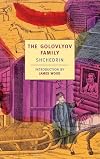
The most bleak Russian novel I have read by a very long shot. Every character in the book dies, mostly by suicide and alcohol poisoning. In many cases these deaths are abetted or encouraged by the character's mother or father. Most of them come back to the Golovlyov estate to die, but one commits suicide by the side of the road while her sister watches and another die on the road to Siberia, where they have been de facto exiled by his father. Oh, and did I mention, all of them dislike each show more other, cheat each other, and are indifferent to each other's suffering. To say that betrayal runs in the family Golovlyov would be inaccurate -- the predicate of betrayal is trust.
It is also a very odd "novel." Each of the seven or so chapters features only two or three characters, not counting servants/serfs. At first you think that Anna Petrovna, the matriarch, is the main character. But then she's cheated out of the estate she cheated others out of by her son, Porphyry (also known as little Judas, bloodsucker and candid boy), and goes off to die. Then he becomes the main character for the rest of the book.
Porphyry is a very odd character. At times he seems like a hypocrite in the mold of Tartuffe, but he has none of his humor and he believes his own religious praddle, to the point where he can sincerely berate a servant he impregnated for her sin while forgetting entirely his part in it. (Oh, and if you're wondering, he sends the child off to an anonymous orphanage after he is born.) One of the more interesting discussions in the book is one where Saltykov-Shchedrin explains the differences between Porphyry and a miser/hypocrite in the tradition of Moliere.
I didn't particularly love reading this book. But after finishing it I read James Wood's excellent introduction which made me appreciate it much more -- and at least retrospectively glad I read it. show less
It is also a very odd "novel." Each of the seven or so chapters features only two or three characters, not counting servants/serfs. At first you think that Anna Petrovna, the matriarch, is the main character. But then she's cheated out of the estate she cheated others out of by her son, Porphyry (also known as little Judas, bloodsucker and candid boy), and goes off to die. Then he becomes the main character for the rest of the book.
Porphyry is a very odd character. At times he seems like a hypocrite in the mold of Tartuffe, but he has none of his humor and he believes his own religious praddle, to the point where he can sincerely berate a servant he impregnated for her sin while forgetting entirely his part in it. (Oh, and if you're wondering, he sends the child off to an anonymous orphanage after he is born.) One of the more interesting discussions in the book is one where Saltykov-Shchedrin explains the differences between Porphyry and a miser/hypocrite in the tradition of Moliere.
I didn't particularly love reading this book. But after finishing it I read James Wood's excellent introduction which made me appreciate it much more -- and at least retrospectively glad I read it. show less

The introduction to my edition ascribes this quote to a contemporaneous critic named Dobrolyubov (surely a pseudonym):
Add a drop of venom to Oblomovism, and you get Golovlyovism.
I can't say it better than that. If you know Oblomov then you know the questions of nihilism and idiocy and tragedy in the state of 19th century Russia. The Golovlyov Family, more nihilistic, more tragic, is perhaps one of the gloomiest novels I've read. (Even for Russia.) What is the point of life for the landed show more gentry? Nothing. The satire here is to give each character an exaggeration of a common Russian trait then twist the knife.
Many readers will find this to be too much, and perhaps instead turn to Goncharov for commentary or Gogol for satire. While understandable, that choice won't satisfy the literary Russophile. It's a hard read but I'm utterly glad I did it. Saltykov and Dostoyevsky considered themselves literary and political enemies, so we should all know Saltykov just for that.
Translation note: I loved the Cioran translation. He truly captured/differentiated the characters' voices. show less
Add a drop of venom to Oblomovism, and you get Golovlyovism.
I can't say it better than that. If you know Oblomov then you know the questions of nihilism and idiocy and tragedy in the state of 19th century Russia. The Golovlyov Family, more nihilistic, more tragic, is perhaps one of the gloomiest novels I've read. (Even for Russia.) What is the point of life for the landed show more gentry? Nothing. The satire here is to give each character an exaggeration of a common Russian trait then twist the knife.
Many readers will find this to be too much, and perhaps instead turn to Goncharov for commentary or Gogol for satire. While understandable, that choice won't satisfy the literary Russophile. It's a hard read but I'm utterly glad I did it. Saltykov and Dostoyevsky considered themselves literary and political enemies, so we should all know Saltykov just for that.
Translation note: I loved the Cioran translation. He truly captured/differentiated the characters' voices. show less

I have been reading the blurbs that publishers put on their books’ covers long enough to remember when they were reasonably honest instead of just one more cog in the great grinding gears of the book industry. But I believe that this is the first time I have ever seen a blurb on a novel from one V. I. Lenin. Yes. Him. Of course, he wasn’t tossing off a compliment in order to help the author sell this book. Still, the great thinker had this to say: “It’s too bad that Saltykov didn’t show more live to see the great Russian revolution. He would probably have added a new chapter to The Golovlyov Family.” With all due respect to Comrade Lenin, I doubt it. And if Saltykov had done so, it would probably have taken me at least another week to finish this, possibly the most depressing book I have ever read. (I should note that the back cover also features kind words from one Ivan Turgenev and one Thedore Dreiser.) The novel takes as its subject the decline and fall of a provincial family of the decidedly minor gentry. Indeed, the introduction (by a professor of Russian literature) is exactly correct: “The Golovlyov Family is one of world literature’s most depressing books. Of course, Russian prose is not fabled for its levity, but Saltykov’s grim world is something special even among Russia’s chronicles of provincial rot.” Exactly. It does not help that my translation (by another professor of Russian literature, Samuel Cioran) is stilted and awkward. (I find it of great interest that between 1910 and 1988 the book was translated into English no fewer than eight times.) Saltykov’s treatment of the family and its destruction is so unrelenting that I suspect no one could make this an easy book to read. Family member after family member—each drawn with enormous insight–sickens and dies. Three generations of parents and children. It is no accident that the central figure is nicknamed Little Judas. Some go quickly. Some go slowly (allowing Saltykov to dwell on their astonishing and depressing lack of character). This is not a sad novel; few readers will have much sympathy for anyone here. But it is a brilliant portrayal of corruption, deterioration, decay, and death. Two hundred and fifty pages of it; page after page after page. It is no surprise to learn that it is a classic of Russian literature. show less
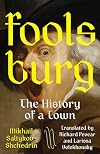
This 1870 novel is essential reading for anyone who wakes up in the morning and says to themselves “why is Russia so historically, permanently, irredeemably fucked up?” (which is surely most of us). The title alone tells us we’re in microcosm country here, and Saltykov is a satirist of the sledgehammer, rather than the stiletto, persuasion. His annal of mad mayors covers all the bases of bad governance — hubris, solipsism, sadism, greed — and he doesn’t neglect the intrinsic role show more of the Russian psyche in its production line of kakistocracies. It’s also of obvious relevance to the political disasters currently underway in various western countries, and the translators hammer this home by (surely somewhat tenuously despite their footnoted protestations) rendering the name of one minor nincompoop as “Trump”.
With its penchant for the absurd/fantastic (e.g. the “Music Box” mayor whose head contains… a music box) it’s plumb in the lineage of Gogol and modern iconoclasts like Sorokin. So I should love it — but too much of the satire dissipates into essayistic aridity as Saltykov labors to elucidate his point. The brutally unsubtle character names don’t help. There are some very funny and one or two quite terrifying portraits here — Final Boss Sullen-Grumble would surely be embraced by DOGE for his ideology of antihuman ignorance, nihilism and infantile vandalism — but I prefer my satire slyer and more seditious. show less
With its penchant for the absurd/fantastic (e.g. the “Music Box” mayor whose head contains… a music box) it’s plumb in the lineage of Gogol and modern iconoclasts like Sorokin. So I should love it — but too much of the satire dissipates into essayistic aridity as Saltykov labors to elucidate his point. The brutally unsubtle character names don’t help. There are some very funny and one or two quite terrifying portraits here — Final Boss Sullen-Grumble would surely be embraced by DOGE for his ideology of antihuman ignorance, nihilism and infantile vandalism — but I prefer my satire slyer and more seditious. show less
Lists
Awards


You May Also Like


Associated Authors
Statistics
- Works
- 69
- Also by
- 10
- Members
- 1,032
- Popularity
- #24,951
- Rating
- 3.8
- Reviews
- 20
- ISBNs
- 103
- Languages
- 13
- Favorited
- 2

