

Thomas N. Scortia (1926–1986)
Author of The Prometheus Crisis
About the Author
Disambiguation Notice:
Thomas Nicholas Scortia also wrote as Scott Nichols, Gerald MacDow, and Arthur R. Kurtz.
Works by Thomas N. Scortia
Sea Change 4 copies
Final Exam 3 copies
Though A Sparrow Fall 2 copies
Woman's Rib 2 copies
Thou Good And Faithful 2 copies
Superiority Complex [short story] 2 copies
The Shores Of Night 2 copies
Short Fiction Collection 1 copy
Precaución: inflamable 1 copy
PRECAUCIÓN: ¡INFLAMABLE! 1 copy
El hombre máquina 1 copy
Precaución: Inflamable! 1 copy
Extraños compañeros de cama 1 copy
Mostra di mostri 1 copy
The worm in the rose 1 copy
Flowering Narcissus 1 copy
Prométheus v plamenech 1 copy
Judas Fish 1 copy
Tarrying 1 copy
Alien Night 1 copy
Associated Works
Isaac Asimov's Magical Worlds of Fantasy, Volume 6: Mythical Beasties (1837) — Contributor — 135 copies, 2 reviews
Science Fiction Today and Tomorrow: A Discursive Symposium (1974) — Contributor — 99 copies, 2 reviews
Best Science Fiction Stories of the Year First Annual Collection (1972) — Contributor — 89 copies, 2 reviews
Best Science Fiction Stories of the Year Second Annual Collection (1973) — Contributor — 68 copies, 1 review
Shape Shifters: Fantasy and Science Fiction Tales About Humans Who Can Change Their Shapes (1978) — Contributor — 20 copies, 1 review
Analog Science Fiction/Science Fact: Vol. LXXXIV, No. 4 (December 1969) (1969) — Contributor — 19 copies
Future Science Fiction No. 31 — Contributor — 2 copies
Tagged
Common Knowledge
- Canonical name
- Scortia, Thomas N.
- Legal name
- Scortia, Thomas Nicholas
- Other names
- Kurtz, Arthur R.
MacDow, Gerald
Nichols, Scott
Scortia, T. N. - Birthdate
- 1926-08-29
- Date of death
- 1986-04-29
- Gender
- male
- Education
- Washington University in St. Louis
- Occupations
- chemist
science fiction writer - Relationships
- Robinson, Frank M. (colaborator)
- Nationality
- USA
- Birthplace
- Alton, Illinois, USA
- Places of residence
- Alton, Illinois, USA (birth)
La Verne, California, USA (death) - Place of death
- La Verne, California, USA
- Disambiguation notice
- Thomas Nicholas Scortia also wrote as Scott Nichols, Gerald MacDow, and Arthur R. Kurtz.
- Associated Place (for map)
- California, USA
Members
Discussions
Found: Post-apocalypse SF set on space stations orbiting Earth in Name that Book (November 2012)
Reviews

Spectacular. The main plot of this novel centers on a skyscraper that catches fire, but the book is remarkably character-driven. There is no one single narrative voice, there is no heavy-handed denouncement of technology or greed, and there is no saccharine commentary overlaying the story. Instead, the chapters focus, in great detail, on interesting, flawed, delightfully human characters. The cast is also quite diverse, featuring people of different ages, skin color, gender, sexual show more orientation, ability, religion, and mental health. The story doesn’t center on a single “hero”; rather, the ensemble of protagonists share the stage in a story big enough for many main characters. What follows is an intensely personal story of ordinary people who find themselves in an extraordinary situation.
The writing style is wonderful, with the tension building slowly throughout the story, and with an ending that feels, if not happy, at least resolved. Characters grow and become strong, or they cower and become weak, and they die (or not), and by the end, I felt as though I had been on the journey with them. The authors have an incredibly powerful style, and as they bring together the different story threads of the many different characters, they weave an elaborate work of art.
What has stayed most strongly in my mind in the days since I’ve finished this has been the myriad ways this book is ahead of its time in terms of prejudice and social conscience. I’d go as far as to say that it’s even ahead of our time. One of the main characters is a drug addict suffering from heroin withdrawal—a side of life not often shown in novels like this. There is a gay man, but his story has no trace of tokenism; rather, he is a fully developed and nuanced character. His sexual orientation is part of who he is, and even while he faces judgment and criticism from strangers, he rises above it all with a grace and dignity that is a marvel to behold. There is a black man, surrounded by racism, whose courage leads him to action; there is a woman whose strength and tenacity outshine many men. Even ageism is examined here. I don’t want to say too much because I don’t want to spoil anything, but two women—one in her 30s and one in her 60s—are treated much differently by their acquaintances. In this case, however, the woman who is 10 years “over the hill” is the 31-year-old, while the woman whose vitality still enriches her and delights others is in her 60s. The contrast between them is stark and unexpected, and it speaks to prejudices and pressures that still exist today.
This is one of the most compelling novels I’ve read, and it’s still relevant today. A phenomenal read. show less
The writing style is wonderful, with the tension building slowly throughout the story, and with an ending that feels, if not happy, at least resolved. Characters grow and become strong, or they cower and become weak, and they die (or not), and by the end, I felt as though I had been on the journey with them. The authors have an incredibly powerful style, and as they bring together the different story threads of the many different characters, they weave an elaborate work of art.
What has stayed most strongly in my mind in the days since I’ve finished this has been the myriad ways this book is ahead of its time in terms of prejudice and social conscience. I’d go as far as to say that it’s even ahead of our time. One of the main characters is a drug addict suffering from heroin withdrawal—a side of life not often shown in novels like this. There is a gay man, but his story has no trace of tokenism; rather, he is a fully developed and nuanced character. His sexual orientation is part of who he is, and even while he faces judgment and criticism from strangers, he rises above it all with a grace and dignity that is a marvel to behold. There is a black man, surrounded by racism, whose courage leads him to action; there is a woman whose strength and tenacity outshine many men. Even ageism is examined here. I don’t want to say too much because I don’t want to spoil anything, but two women—one in her 30s and one in her 60s—are treated much differently by their acquaintances. In this case, however, the woman who is 10 years “over the hill” is the 31-year-old, while the woman whose vitality still enriches her and delights others is in her 60s. The contrast between them is stark and unexpected, and it speaks to prejudices and pressures that still exist today.
This is one of the most compelling novels I’ve read, and it’s still relevant today. A phenomenal read. show less

I suspect this is the worst sf anthology I’ve ever had the misfortune to read. I mean, just look at that strapline on the cover: “Can sex survive the space age?”. I’m guessing yes it will, it’ll survive a whole lot of things, like climate crash, nuclear armageddon, global economic meltdown… maybe even the heat death of the universe. There are nineteen stories, two are by women (Chelsea Quinn Yarbro and Miriam Allen deFord); the remainder are by a mix of well-known names show more (Silverberg, Sturgeon, Aldiss, Farmer), and a few that were unknown to me. The stories, on the other hand, are full of the worst of early seventies sensibilities – the Silverberg is about a young man who discovers he has mental powers and uses them to stalk women, there’s a section titled “Toujours Gay” which opens with the frankly awful ‘The World Well Lost’, another story has serial rape as the “twist”, and the Aldiss is racist and features sexual slavery. The rest are either worse, or completely unmemorable. Best avoided. show less

Not a bad space thriller, shows its age at times, but is a good read.
The author worked in aerospace and it shows in his writing, the space station and rocket descriptions sound very convincing.
Like a lot of writing of this age it's descriptions of women is always focusing on their looks, and he doesn't seem to be able to be positive with any female characters, and there is a very short but uncomfortable description of the main characters experience bathing his young son, wistfully show more remembering his body. It's an odd paragraph or two.
But overall a good read. show less
The author worked in aerospace and it shows in his writing, the space station and rocket descriptions sound very convincing.
Like a lot of writing of this age it's descriptions of women is always focusing on their looks, and he doesn't seem to be able to be positive with any female characters, and there is a very short but uncomfortable description of the main characters experience bathing his young son, wistfully show more remembering his body. It's an odd paragraph or two.
But overall a good read. show less
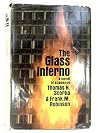
The Glass Tower. It’s supposed to be a show-stopper of a building. It is. It’s supposed to be envied by those in the building trade. It is. It’s supposed to be a coveted place to have shops, do business, and live. It is. It’s supposed to be safe. It almost is, but not quite. Though written in 1974, this book shows no signs of being dated. In fact, the portrayal of the characters seems quite current. Most people will be familiar with the tale and have likely seen the movie roughly show more based on it, but reading novel will give you a new perspective, despite knowing how it will end. The authors do an excellent job of building suspense throughout the novel. The fire itself is a major player in the drama, and they don’t let readers forget that. Many characters are introduced rapidly in the beginning chapters, but readers will soon sort out the major ones. It’s a very well-plotted and and exceedingly well-written story. If you’ve only seen the movie, do yourself a favor and add this book to your reading list. show less
Lists
Awards


You May Also Like


Associated Authors
Statistics
- Works
- 51
- Also by
- 40
- Members
- 805
- Popularity
- #31,684
- Rating
- 3.4
- Reviews
- 14
- ISBNs
- 56
- Languages
- 6