
Joseph S. Pulver (1955–2020)
Author of A Season in Carcosa
About the Author
Works by Joseph S. Pulver
The Aklonomicon — Editor — 3 copies
Walk on the Weird Side 3 copies
The Resplendent Troswoman Below 2 copies
The Night Music of Oakdeene & Others 2 copies
Down Black Staircases 1 copy
Cthulhu Codex (Journal) 1 copy
To Live and Die in Arkham 1 copy
Engravings 1 copy
Associated Works
The Children of Old Leech: A Tribute to the Carnivorous Cosmos of Laird Barron (2014) — Contributor — 86 copies, 1 review
In Heaven, Everything Is Fine: Fiction Inspired by David Lynch (2013) — Contributor — 56 copies, 1 review
Ride the Star Wind: Cthulhu, Space Opera, and the Cosmic Weird (2017) — Contributor — 25 copies, 1 review
Welcome to Miskatonic University: Fantastically Weird Tales of Campus Life (2019) — Contributor — 8 copies
Tagged
Common Knowledge
- Birthdate
- 1955-07-05
- Date of death
- 2020-04-24
- Gender
- male
- Nationality
- USA
- Birthplace
- Schenectady, New York, USA
- Place of death
- Berlin, Germany
- Associated Place (for map)
- USA
Members
Reviews

This book is one of a tiny number (probably in the single digits) to focus on the elaboration of the jauniste weird, a literary tradition with its seminal irruption in The King in Yellow by Robert W. Chambers. Far more enjoyable than the sort of pastiches and retreads that are common to the Lovecraftian "mythos," these stories take motives and inspiration from the source material, but they are invariably discrete and original approaches to madness and terror. The dread play itself mutates show more into opera, film, radio, children's television, tribal folklore, and other media. The metafictional qualities of the original Chambers stories (and the cousin-kisses they received from later Yog-Sothothery) have led many contributors to bring in other literary allusions ranging from Antonin Artaud to C.S. Lewis.
Materially, the book is no great shakes. The cover art is attractive enough, but the paper and binding are print-on-demand quality, and it could have used much more thorough proofing to attend to the ubiquitous typos. It almost avoids the nonsense "Yellow Sign" that originated in game graphics, but the damned thing still appears in the midst of the letter o in "Carcosa" on the spine! The book's greatest unmet desideratum is some information on the contributors, most of whom were new to me.
Stand-out pieces included the hallucinatory Victorian American period piece "MS Found in a Chicago Hotel Room" by Daniel Mills, the erudite surrealist "Theater and Its Double" by Edward Morris, and the psychotic crescendo of "Whose Hearts Are Pure Gold" by Kristin Prevallet. The sardonic present-day story by Cody Goodfellow, "Wishing Well," reminded me a great deal of the work of Chuck Palahniuk, and was certainly one of the volume's best.
All of these stories are suitably eerie and perverse. Perhaps as many as a third of them culminate with the incoherent collapse of the narrating perspective, which doesn't seem excessive given the importance of madness and destruction to the Carcosan mytheme. There's no special value to reading all of these stories in a continuous effort. I took one significant pause in the course of reading them, and the experience might have benefited from a couple more hiatuses. I strongly recommend the collection to those who are "into this sort of thing." show less
Materially, the book is no great shakes. The cover art is attractive enough, but the paper and binding are print-on-demand quality, and it could have used much more thorough proofing to attend to the ubiquitous typos. It almost avoids the nonsense "Yellow Sign" that originated in game graphics, but the damned thing still appears in the midst of the letter o in "Carcosa" on the spine! The book's greatest unmet desideratum is some information on the contributors, most of whom were new to me.
Stand-out pieces included the hallucinatory Victorian American period piece "MS Found in a Chicago Hotel Room" by Daniel Mills, the erudite surrealist "Theater and Its Double" by Edward Morris, and the psychotic crescendo of "Whose Hearts Are Pure Gold" by Kristin Prevallet. The sardonic present-day story by Cody Goodfellow, "Wishing Well," reminded me a great deal of the work of Chuck Palahniuk, and was certainly one of the volume's best.
All of these stories are suitably eerie and perverse. Perhaps as many as a third of them culminate with the incoherent collapse of the narrating perspective, which doesn't seem excessive given the importance of madness and destruction to the Carcosan mytheme. There's no special value to reading all of these stories in a continuous effort. I took one significant pause in the course of reading them, and the experience might have benefited from a couple more hiatuses. I strongly recommend the collection to those who are "into this sort of thing." show less

Here's an intriguing premise for an anthology. This collection of jauniste tales is written by a wide assortment of contemporary authors, but they are all women, whom editor Joe Pulver calls "the Sisters of the Yellow Sign." Cassilda, Queen of Carcosa, is thus referenced in the book title and becomes or overshadows a central character in many of the stories.
The quality of the work here is consistently high. In addition to displacing perspective from Chambers' precedent masculinity, the show more writers often vault away from his whiteness (as in "Yellow Bird," "In the Quad of Project 327," and "Pro Patria!") and even his human species (i.e. the canine protagonist of "Old Tsah-Hov"). These are all standout contributions, and so is Selena Chambers' quasi-scholarly and meta-literary "The Neurastheniac."
In keeping with the general trends of work inspired by The King in Yellow of Robert W. Chambers, there is no narrative continuity that joins these pieces together, just themes, motives, and mechanisms. Corruption, towers, masks, artistry, compulsion, dual suns, black stars, multiple moons, the indecipherable sign, the dreadful play, the ruined city, and the fathomless king are all brought forth in passage after passage. show less
The quality of the work here is consistently high. In addition to displacing perspective from Chambers' precedent masculinity, the show more writers often vault away from his whiteness (as in "Yellow Bird," "In the Quad of Project 327," and "Pro Patria!") and even his human species (i.e. the canine protagonist of "Old Tsah-Hov"). These are all standout contributions, and so is Selena Chambers' quasi-scholarly and meta-literary "The Neurastheniac."
In keeping with the general trends of work inspired by The King in Yellow of Robert W. Chambers, there is no narrative continuity that joins these pieces together, just themes, motives, and mechanisms. Corruption, towers, masks, artistry, compulsion, dual suns, black stars, multiple moons, the indecipherable sign, the dreadful play, the ruined city, and the fathomless king are all brought forth in passage after passage. show less
An great anthology of stories inspired by and / or set in Robert W. Chambers 'King in Yellow' Mythos. A notable feature of this collection is the theme that each writer is a women and the focus generally leans towards Cassilda, one of the other characters in the Carcosa / KIY Mythos. Every story in this collection is good, even the least among them is still a solid tale, and a few of them rise above to the level of excellence. A definitive recommendation to fans of The King in Yellow, or show more anyone who enjoys weird fiction. show less
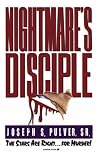
A serial killer is loose in Schenectady; at first he preys only on prostitutes, but soon decides to take his victims from the general public. Detective Chris Stewart is on the case, but the police find it hard going -- there are no clues other than the killer's MO which is gruesome, to say the least. The killer leaves a letter, and it makes absolutely no sense to Stewart or anyone else until a teenager visiting one of Stewart's friends discovers that the letter is filled with references to show more HP Lovecraft and the mythos. Off he goes to find an expert and finds the owners of a store specializing in books of horror, among other things, and begins his education into the world of HP Lovecraft. But there is a timeline...the killer, like so many practitioners of the dark arts before him, plans to unleash a terrible evil upon the world.
So far so good, right? If the author had left it at that, this could have been an awesome novel...full of Lovecraft references and those of his followers and imitators, it could have been delightful to someone like myself who really enjoys this stuff. But the author chose to go off on so many tangents and throw in a lot of unnecessary fill that made the reading an ordeal. Some of the dialog was beyond pulpy, especially the scenes with the killer and his cousins --- even for a book you know is totally out there, this was just bad.
There were a couple of things I liked about this book. First, it was fun to watch some of the characters discovering that Lovecraft (and those who contributed to the overall mythos) may not have just been writing fictional, pulpy occult stories but may have actually been speaking truth. Second, although it was often tedious to slog through, I had a good time making notes of the references the author throws out and running to the internet to look them up.
If you're a die-hard Mythos fan, and happen to have this in your collection, go ahead and read it, but otherwise, it's not one of the best entries in the Chaosium Call of Cthulhu fiction series. And whatever you do, do not make this your first foray into the world of HP Lovecraft or you may never go back. show less
So far so good, right? If the author had left it at that, this could have been an awesome novel...full of Lovecraft references and those of his followers and imitators, it could have been delightful to someone like myself who really enjoys this stuff. But the author chose to go off on so many tangents and throw in a lot of unnecessary fill that made the reading an ordeal. Some of the dialog was beyond pulpy, especially the scenes with the killer and his cousins --- even for a book you know is totally out there, this was just bad.
There were a couple of things I liked about this book. First, it was fun to watch some of the characters discovering that Lovecraft (and those who contributed to the overall mythos) may not have just been writing fictional, pulpy occult stories but may have actually been speaking truth. Second, although it was often tedious to slog through, I had a good time making notes of the references the author throws out and running to the internet to look them up.
If you're a die-hard Mythos fan, and happen to have this in your collection, go ahead and read it, but otherwise, it's not one of the best entries in the Chaosium Call of Cthulhu fiction series. And whatever you do, do not make this your first foray into the world of HP Lovecraft or you may never go back. show less
Lists
Awards


You May Also Like


Associated Authors
Statistics
- Works
- 31
- Also by
- 24
- Members
- 526
- Popularity
- #47,289
- Rating
- 3.8
- Reviews
- 10
- ISBNs
- 22
- Languages
- 1
- Favorited
- 4