

Robert Burleigh (1936–2025)
Author of Home Run: The Story of Babe Ruth
About the Author
Image credit: Credit: Mark Burleigh
Works by Robert Burleigh
The Future of the Earth: An Introduction to Sustainable Development for Young Readers (2003) 79 copies, 3 reviews
If You Spent a Day with Thoreau at Walden Pond (Christy Ottaviano Books) (2012) 72 copies, 3 reviews
Good-Bye Sheepie 1 copy
Associated Works
Tagged
Common Knowledge
- Other names
- Kronquist, Burleigh (pseudonym in making art)
- Birthdate
- 1936-01-04
- Date of death
- 2025-01-12
- Gender
- male
- Education
- Hyde Park High School, Chicago, Illinois, USA
DePauw University (BA)
University of Chicago (MA | Humanities) - Occupations
- reporter
English teacher
poet
art critic
artist (sculptor, painter)
children's book author - Organizations
- Southtown Economist, Chicago
Wilson Junior College, Chicago
Xenia: A Magazine of Poetry & Comment (cofounder)
Society for Visual Education
New Art Examiner - Agent
- Rubin Pfeffer
- Relationships
- Burleigh, Nina (offspring)
- Cause of death
- prostate cancer
- Nationality
- USA
- Birthplace
- Chicago, Illinois, USA
- Places of residence
- Chicago, Illinois, USA
San Francisco, California, USA
Nottawa Township, Michigan, USA
Grand Haven, Michigan, USA - Place of death
- Grand Haven, Michigan, USA
- Associated Place (for map)
- USA
Members
Reviews

The daughter of a traveling surveyor, Marie Tharp grew up with a keen interest in maps and cartography, eventually going on to earn degrees in music, English, mathematics and geology. Despite the resistance to women participating fully in the sciences in the 1940s, she went on to get a job at the Lamont Geological Laboratory at Columbia University. Although not permitted to join oceanographic voyages - it was considered bad luck to have women on board, even at that late date! - she was the show more cartographer who used the data collected on such voyages to map the surface of the Atlantic Ocean. Her work helped to open up a hidden part of the earth, and, through the discovery of the Mid-Atlantic Ridge, helped prove the theory of plate tectonics.
An engaging picture-book biography from author Robert Burleigh and illustrator Raúl Colón, whose previous collaboration in the same vein was Look Up! The Story of the First Woman Astronomer, Solving the Puzzle Under the Sea follows the story of a determined woman - Marie Tharp - who never let adversity and prejudice deter her, and whose ultimate triumph came in her contribution to the human understanding of how our planet works. I thought it was telling that, rather than protest at the unfair state of affairs that confronted her, when first entering her chosen field, Tharp instead set out to show others what she could do, demonstrating by example that stereotypes should be abandoned. I imagine that this was sometimes a very discouraging course of action for her, but her perseverance paid off. Indeed, there is now a scholarship named in her honor for women entering science at her erstwhile laboratory. As expected, the artwork here is every bit as appealing as the tale, with lovely blue, green and brown tones capturing and contrasting the watery and earth-bound scenes nicely. Recommended to anyone looking for picture-books featuring the scientific process, the oceanographic sciences, and/or women scientists. show less
An engaging picture-book biography from author Robert Burleigh and illustrator Raúl Colón, whose previous collaboration in the same vein was Look Up! The Story of the First Woman Astronomer, Solving the Puzzle Under the Sea follows the story of a determined woman - Marie Tharp - who never let adversity and prejudice deter her, and whose ultimate triumph came in her contribution to the human understanding of how our planet works. I thought it was telling that, rather than protest at the unfair state of affairs that confronted her, when first entering her chosen field, Tharp instead set out to show others what she could do, demonstrating by example that stereotypes should be abandoned. I imagine that this was sometimes a very discouraging course of action for her, but her perseverance paid off. Indeed, there is now a scholarship named in her honor for women entering science at her erstwhile laboratory. As expected, the artwork here is every bit as appealing as the tale, with lovely blue, green and brown tones capturing and contrasting the watery and earth-bound scenes nicely. Recommended to anyone looking for picture-books featuring the scientific process, the oceanographic sciences, and/or women scientists. show less
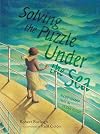
Working in a time when women were still unwelcome in her field, Marie Tharp mapped the ocean floor and provided convincing evidence for the previously rejected hypothesis of continental drift.
Burleigh's choice to write in Tharp’s voice makes the determined geologist’s story feel immediate, focusing tightly on her map that revealed the spreading Atlantic sea floor. He notes obstacles she overcame: a peripatetic childhood; gender discrimination; the superstition, still prevalent in 1948, show more that women were unlucky on ships; and disagreements about the drift theory even with her friend and colleague Bruce Heezen. There’s a short description of Tharp’s mapmaking process and a triumphant conclusion when the final, color version is published. But it’s Colón's watercolor-and-pencil illustrations that bring her story alive. Readers see the map-loving child, ships taking the soundings that provided her data, the cartographer with pencil in hand, both graphing and drawing, and, in a wordless double-page spread, the exciting revelation of the rift in the middle of the Mid-Atlantic Ridge. The distinctive combed swirls of Colón's art masterfully suggest light on a seascape, and people are realistically depicted. Backmatter includes more of Tharp’s story, useful vocabulary, bibliography and Internet links, and even “things to wonder about and do.”
An ideal introduction to a lesser-known scientist and an important understanding about how the Earth works. (Informational picture book. 5-9) show less
Burleigh's choice to write in Tharp’s voice makes the determined geologist’s story feel immediate, focusing tightly on her map that revealed the spreading Atlantic sea floor. He notes obstacles she overcame: a peripatetic childhood; gender discrimination; the superstition, still prevalent in 1948, show more that women were unlucky on ships; and disagreements about the drift theory even with her friend and colleague Bruce Heezen. There’s a short description of Tharp’s mapmaking process and a triumphant conclusion when the final, color version is published. But it’s Colón's watercolor-and-pencil illustrations that bring her story alive. Readers see the map-loving child, ships taking the soundings that provided her data, the cartographer with pencil in hand, both graphing and drawing, and, in a wordless double-page spread, the exciting revelation of the rift in the middle of the Mid-Atlantic Ridge. The distinctive combed swirls of Colón's art masterfully suggest light on a seascape, and people are realistically depicted. Backmatter includes more of Tharp’s story, useful vocabulary, bibliography and Internet links, and even “things to wonder about and do.”
An ideal introduction to a lesser-known scientist and an important understanding about how the Earth works. (Informational picture book. 5-9) show less

When a humpback whale becomes entangled in some abandoned fishing nets, her life is endangered as she slowly grows too tired to rise to the surface of the ocean to get air. A human rescue team arrives on the scene, but they must proceed cautiously as they try to free her from this terrible trap. One roll of her massive body, and the human rescuers could be crushed! Fortunately they persevere, managing to rescue the whale while remaining safe themselves...
Based upon a real-life whale rescue show more off the coast of California in 2005, Trapped!: A Whale's Rescue is enough of a true story, despite its fictional trappings, that I added it to my children's non-fiction shelf. That said, it does straddle the line between fiction and non-fiction. However that may be, it is still a gripping story, one which will involve child readers and listeners, who will be rooting for the whale's rescue. The illustrations, done by Wendell Minor, who often works on books with an ecological theme, are just lovely, adding to the reader's enjoyment and sense of involvement. The final scene, in which the whale is leaping into the air, with the moon rising behind her, is simply magical. Informative back-matter, including suggestions for further reading, add to the educational value of a title that also has appeal as an entertaining tale. Recommended to young whale and nature-lovers, and to those looking for quality picture-books for them. show less
Based upon a real-life whale rescue show more off the coast of California in 2005, Trapped!: A Whale's Rescue is enough of a true story, despite its fictional trappings, that I added it to my children's non-fiction shelf. That said, it does straddle the line between fiction and non-fiction. However that may be, it is still a gripping story, one which will involve child readers and listeners, who will be rooting for the whale's rescue. The illustrations, done by Wendell Minor, who often works on books with an ecological theme, are just lovely, adding to the reader's enjoyment and sense of involvement. The final scene, in which the whale is leaping into the air, with the moon rising behind her, is simply magical. Informative back-matter, including suggestions for further reading, add to the educational value of a title that also has appeal as an entertaining tale. Recommended to young whale and nature-lovers, and to those looking for quality picture-books for them. show less
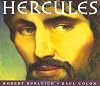
Even the striking paintings of Raul Colón can’t save Robert Burleigh’s picture-book verse retelling of the last of the twelve labours of Hercules [Heracles]. Burleigh provides no context whatsoever for the difficult task the Greek hero must pull off—wrest Cerberus, the three-headed monster dog that guards the palace of King Hades, from the underworld and bring the creature to the land of the living.
Burleigh doesn’t tell young readers that the goddess Hera has long and endlessly show more sought revenge on Hercules for her husband Zeus’s affair with Alcmene, the mortal mother of the hero. Some years back, Hera caused a fit of madness to descend on Hercules. Succumbing to it, he killed his family in a frenzy and, to expiate for his sins, was required to perform twelve labours for King Eurystheus.
Burleigh opens his narrative with the hero standing at the entrance to the underworld, reflecting on four of the eleven tasks he has already completed, but the author provides no reason why Hercules has been performing these acts at all. His frightening descent into the world of the dead is well described; he encounters other mythological figures along the way: Charon, the ferryman; the snake-haired Gorgon, whose gaze turns men to stone; and Sisyphus, the deceitful king forced to spend eternity rolling a boulder up a hill, only to have it repeatedly tumble back down the incline.
There is also some interest and tension in Burleigh’s depiction of the encounter between the hero and Cerberus, but again, it isn’t nearly enough to save a book that’s far too short on contextual details. In the end, young readers aren’t even told to whom Hercules presents the monstrous creature or why, just that Hercules is now free.
This is an inferior work, one I cannot recommend. The two-star rating is for Colón’s paintings alone. show less
Burleigh doesn’t tell young readers that the goddess Hera has long and endlessly show more sought revenge on Hercules for her husband Zeus’s affair with Alcmene, the mortal mother of the hero. Some years back, Hera caused a fit of madness to descend on Hercules. Succumbing to it, he killed his family in a frenzy and, to expiate for his sins, was required to perform twelve labours for King Eurystheus.
Burleigh opens his narrative with the hero standing at the entrance to the underworld, reflecting on four of the eleven tasks he has already completed, but the author provides no reason why Hercules has been performing these acts at all. His frightening descent into the world of the dead is well described; he encounters other mythological figures along the way: Charon, the ferryman; the snake-haired Gorgon, whose gaze turns men to stone; and Sisyphus, the deceitful king forced to spend eternity rolling a boulder up a hill, only to have it repeatedly tumble back down the incline.
There is also some interest and tension in Burleigh’s depiction of the encounter between the hero and Cerberus, but again, it isn’t nearly enough to save a book that’s far too short on contextual details. In the end, young readers aren’t even told to whom Hercules presents the monstrous creature or why, just that Hercules is now free.
This is an inferior work, one I cannot recommend. The two-star rating is for Colón’s paintings alone. show less
Lists
Awards


Solving the Puzzle Under the Sea: Marie Tharp Maps the Ocean Floor (*Nine to Twelve, Information Books, STEM (Science, Technology, Engineering, and Mathematics) – 2017)
Solving the Puzzle Under the Sea: Marie Tharp Maps the Ocean Floor (Outstanding Merit – Nine to Twelve, Information Books, STEM (Science, Technology, Engineering, and Mathematics) – 2017)


You May Also Like


Associated Authors
Statistics
- Works
- 61
- Also by
- 2
- Members
- 6,537
- Popularity
- #3,757
- Rating
- 3.8
- Reviews
- 362
- ISBNs
- 204
- Languages
- 6