
Katharine McMahon
Author of The Alchemist's Daughter
About the Author
Katharine McMahon was born in Britain. She is an author who has published nine novels. She is the bestselling author of "The Rose of Sebastopol" which was short listed for the Best Read Award at the Galaxy Book Awards in 2008. Her previous book "The Alchemist's Daughter" was one of Waterstone's show more Paperbacks of the Year in 2006. Her latest book, 'The Woman in the Picture", was released in 2014. (Bowker Author Biography) show less
Series
Works by Katharine McMahon
Córka alchemika 1 copy
Tagged
Common Knowledge
- Canonical name
- McMahon, Katharine
- Gender
- female
- Education
- Bristol University (English and Drama)
- Occupations
- teacher
actor
magistrate
nanny
novelist - Nationality
- UK
- Birthplace
- London, England, UK
- Places of residence
- Hertfordshire, England, UK
- Associated Place (for map)
- England, UK
Members
Reviews
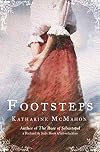
The women in Helena Mayrick's family have always led secretive and tragic lives, and when Helena's comfortable marriage is devastated by her husband's violent death, it seems that she, too, is locked into the cycle.
Helena is invited to research a book on her grandfather, H. Donaldson, the celebrated Edwardian photographer. At first she is reluctant to immerse herself in family history, particularly as Donaldson's relationship with her grandmother, Ruth, is shrouded in mystery and turmoil.
But show more gradually, as the story of enigmatic Ruth and the elusive, passionate Donaldson unfolds, Helena finds that the past, like the present, was shaped by cruel dilemmas and the demands of love...
My Thoughts:
A dual story of past and present of two women, Helena and Ruth. I enjoyed reading about Ruth and her relationship with Donaldson and her what becomes of them.
The story is nice and soft and is ideal if a reader dosen’t want anything too taxing and I felt myself getting sucked into the lives of the two women. I didn’t guess the outcome which is sometimes nice and then the story takes on the unexpected.
My only niggle is that in the beginning there were a lot to characters to know and at times I had to think well who are you !
This tale is a typical family secrets saga with rambling houses and very much in the vain of Kate Morton or Katherine Webb. A perfect read to get caught up in and I would like to see this tale perhaps as a tv drama. show less
Helena is invited to research a book on her grandfather, H. Donaldson, the celebrated Edwardian photographer. At first she is reluctant to immerse herself in family history, particularly as Donaldson's relationship with her grandmother, Ruth, is shrouded in mystery and turmoil.
But show more gradually, as the story of enigmatic Ruth and the elusive, passionate Donaldson unfolds, Helena finds that the past, like the present, was shaped by cruel dilemmas and the demands of love...
My Thoughts:
A dual story of past and present of two women, Helena and Ruth. I enjoyed reading about Ruth and her relationship with Donaldson and her what becomes of them.
The story is nice and soft and is ideal if a reader dosen’t want anything too taxing and I felt myself getting sucked into the lives of the two women. I didn’t guess the outcome which is sometimes nice and then the story takes on the unexpected.
My only niggle is that in the beginning there were a lot to characters to know and at times I had to think well who are you !
This tale is a typical family secrets saga with rambling houses and very much in the vain of Kate Morton or Katherine Webb. A perfect read to get caught up in and I would like to see this tale perhaps as a tv drama. show less
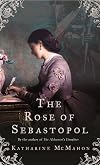
This is going to be another breathless, sputtering review as I literally finished this book minutes ago. I'm teary, all caught up in the emotion of the story and my love for the characters, which is the sign of a fantastic book.
I knew absolutely nothing about this book when I got it which meant I had no idea even of the plot, so it was a real delight to try to guess where the story was going. McMahon is a talented writer: she conveys the sense of the Crimean War without bogging the reader show more down in too much exposition or narrative about the war, and I found all the characters gripping. Her technique of flashing between the present to Mariella and Rosa's childhood years was lovely -- I found myself as in love with Mariella and Rosa as they were with each other.
The ending of the book was pitch perfect, even though I would have loved an Epilogue that neatly wrapped up the story for the characters (especially Mariella and Max). This is the kind of historical novel I adore and I can't rave about it enough. show less
I knew absolutely nothing about this book when I got it which meant I had no idea even of the plot, so it was a real delight to try to guess where the story was going. McMahon is a talented writer: she conveys the sense of the Crimean War without bogging the reader show more down in too much exposition or narrative about the war, and I found all the characters gripping. Her technique of flashing between the present to Mariella and Rosa's childhood years was lovely -- I found myself as in love with Mariella and Rosa as they were with each other.
The ending of the book was pitch perfect, even though I would have loved an Epilogue that neatly wrapped up the story for the characters (especially Mariella and Max). This is the kind of historical novel I adore and I can't rave about it enough. show less
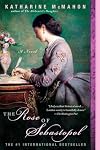
I've had to back-burner this book so many times that I'm not sure I can see it clearly anymore. At least I'm left feeling confused, because a lot of what I liked is also what I found problematic.
The first half of the book reads relatively slowly. Mariella is a pampered, sheltered girl who is a perfectly proper example of a lady in her time. She's a bit naive, she lacks a sense of adventure, and she's consumed with maintaining propriety. Although she's not a girl I'd like to hang with, she show more fits in her world and is sharply contrasted with her cousin, Rosa, who is strong-willed and impetuous and strains at the bonds of a proper life. The first half of the book, Mariella fits and it's Rosa who's jarring. Despite my belief, as a modern woman, that her impulses to career and education and travel were her absolute right, and despite the fact that I know that I would appreciate Rosa much more were we actually to meet, she comes across as grating and heedless. She doesn't fit this London life, while Mariella does.
Then the second half begins, and the tables are sharply turned. Rosa, who has gone to the Crimea as a nurse, disappears and Mariella goes to find her while also visiting her wounded fiancé. All of the sudden we are on the front in the Crimean War, where Rosa's independence and spirit are not only valuable, but downright necessary. And it's Mariella's focus on propriety and social position, her weakness in every respect, that's jarring. The second half of the book is not only much faster-paced, but is also the point where we get some serious character development from everyone concerned. It's sometimes uncomfortable and can be embarrassing or frustrating to read, but I also found it really satisfying.
This book, even though it exclusively follows Mariella's thoughts and movements, is about Rosa. Rosa is the lens through which we understand everything. Her family, the role of women, the horror of war. And so when she re-enters the story after her disappearance, the story ends. This is kind of a quest novel, and once we learn where Rosa went, the quest is finished. It feels abrupt, and I know a lot of people here didn't like it, but I found it strangely appropriate, and even satisfying. It fulfilled, for me, the Rosa of the first half, who always drew the attention of everyone around her, whether for good or bad. It also fulfills the Mariella of the second half, who for better or worse finally has a complete picture of her cousin. Once that's done, the rest is just details.
So, the slow first half made this book rough going for me, but I also think it's essential to the telling of the story. And the ending feels abrupt, but again... same thing. The very things that feel so unfulfilling also seem perfectly right. show less
The first half of the book reads relatively slowly. Mariella is a pampered, sheltered girl who is a perfectly proper example of a lady in her time. She's a bit naive, she lacks a sense of adventure, and she's consumed with maintaining propriety. Although she's not a girl I'd like to hang with, she show more fits in her world and is sharply contrasted with her cousin, Rosa, who is strong-willed and impetuous and strains at the bonds of a proper life. The first half of the book, Mariella fits and it's Rosa who's jarring. Despite my belief, as a modern woman, that her impulses to career and education and travel were her absolute right, and despite the fact that I know that I would appreciate Rosa much more were we actually to meet, she comes across as grating and heedless. She doesn't fit this London life, while Mariella does.
Then the second half begins, and the tables are sharply turned. Rosa, who has gone to the Crimea as a nurse, disappears and Mariella goes to find her while also visiting her wounded fiancé. All of the sudden we are on the front in the Crimean War, where Rosa's independence and spirit are not only valuable, but downright necessary. And it's Mariella's focus on propriety and social position, her weakness in every respect, that's jarring. The second half of the book is not only much faster-paced, but is also the point where we get some serious character development from everyone concerned. It's sometimes uncomfortable and can be embarrassing or frustrating to read, but I also found it really satisfying.
This book, even though it exclusively follows Mariella's thoughts and movements, is about Rosa. Rosa is the lens through which we understand everything. Her family, the role of women, the horror of war. And so when she re-enters the story after her disappearance, the story ends. This is kind of a quest novel, and once we learn where Rosa went, the quest is finished. It feels abrupt, and I know a lot of people here didn't like it, but I found it strangely appropriate, and even satisfying. It fulfilled, for me, the Rosa of the first half, who always drew the attention of everyone around her, whether for good or bad. It also fulfills the Mariella of the second half, who for better or worse finally has a complete picture of her cousin. Once that's done, the rest is just details.
So, the slow first half made this book rough going for me, but I also think it's essential to the telling of the story. And the ending feels abrupt, but again... same thing. The very things that feel so unfulfilling also seem perfectly right. show less

I generally don't read anything that has a body or blood in it because I am prone to nightmares, coward that I am. So it is probably completely incongruous that I would cheerfully agree to read a book in which one of the first female lawyers in Britain is helping to defend a man accused of murdering his wife. I am nothing if not inconsistent. Then again, I am up writing this review in the wee hours of the night when I am usually asleep because the image of a pink shoe on a lady's foot poking show more out of the underbrush has crawled into my brain and horrified me beyond sleep. Tame stuff for afficianados of the scary and gory but disturbing and lasting for babies like me.
Six years after her brother's death in WWI, Londoner Evelyn Gifford opens the door to find a small boy the spitting image of her brother standing with his mother on the stoop. There is no doubt that the child is her brother James' son, conceived just before his death. The household has been in a sort of grieving stasis since the telegram announcing James' death six years ago and the presence of small Edmund and his mum Meredith is about about to change everything. And while Evelyn's family life is undergoing this major upheaval, she is struggling in her professional life and opening up to an opportunity in her personal life as well.
One of the first female lawyers in England, Evelyn is still in training and facing the almost inevitable prejudice of being a trailblazer. Her boss has relegated her to mostly unimportant (and non-paying) clients. When he is out of town, by default she is given the case of a poor mother, a bit too fond of drink, who is accused of having kidnapped her own child. Leah Marchant willingly surrendered her children to a charity home while she tried to get back on her feet but in so doing, she didn't fully understand the consequences of her actions or the potentially terrible complications. In fact, neither did most of society fully understand the possible fates for children like Leah Marchant's. A seemingly insignificant case, it blossoms out of control as Evelyn undertakes to reunite the mother with her children.
Meanwhile, she is also called on to assist at a spectacular murder trial where a former soldier is accused of having shot his new wife in the heart while out picnicking and then cold bloodedly heading to a pub for a few drinks. The evidence against Stephen Wheeler is overwhelming if circumstantial and Evelyn may be the only person who believes his innocence. And proving that innocence could be beyond her capabilities.
As I've already mentioned, the murder storyline left me sleepless over the two nights it took to read the book. This is not because it was difficult to figure out who the killer was though. As a matter of fact, it seemed to me to be glaringly obvious from the first. But as the novel is much more than the mystery, this seems less a handicap than it might.
The obstacles faced by women in the time between the two world wars, as they not only entered the workplace but entered in educated professions which had always been the sole province of men, were enormous. And add to that the lack of rights of women in general during this time and it becomes clear the sorts of odds a character like Evelyn faced. She should have been a wonderfully admirable character but I just couldn't warm to her. She was somehow more insipid than I had expected given her drive to become a lawyer despite general public sentiment. Perhaps this was intended to show her complexity and make her multi-dimensional but it left me without a character with whom to identify. As for Meredith, the mother of James' son and the character who stands as a foil to Evelyn, I didn't care for her either. She was flighty and cruel, fickle, inconsistent, and grasping and I suspect she was not meant to seem that way. Evelyn's budding lust for Nicholas, a man who represents everything she abhors, was a distraction given everything else going on in the novel but his very presence was necessary to the meat of the plot, making for an interesting conundrum: how to include him without the busyness of yet another plot thread.
Given the fact that the novel was certainly out of my comfort zone, I probably zeroed in on things that wouldn't have struck other readers quite as strongly. And as evidenced by my lack of sleep, the detail of the story is quite vivid. The touches of historical information, the reaction and prejudice against the first female lawyers, the shipping of children from English charity homes to Canada where they could be ill-used, the toll the war had on the survivors, both soldier and civilian, all of these were fascinating and woven into the novel well. I just couldn't make a connection with the characters that didn't leave me irritated and so my overall enjoyment was lessened. I do think, however, that mystery readers will enjoy the threads of the story that kept me awake and historical fiction readers will find interesting nuggets scattered throughout this post-WWI set novel. show less
Six years after her brother's death in WWI, Londoner Evelyn Gifford opens the door to find a small boy the spitting image of her brother standing with his mother on the stoop. There is no doubt that the child is her brother James' son, conceived just before his death. The household has been in a sort of grieving stasis since the telegram announcing James' death six years ago and the presence of small Edmund and his mum Meredith is about about to change everything. And while Evelyn's family life is undergoing this major upheaval, she is struggling in her professional life and opening up to an opportunity in her personal life as well.
One of the first female lawyers in England, Evelyn is still in training and facing the almost inevitable prejudice of being a trailblazer. Her boss has relegated her to mostly unimportant (and non-paying) clients. When he is out of town, by default she is given the case of a poor mother, a bit too fond of drink, who is accused of having kidnapped her own child. Leah Marchant willingly surrendered her children to a charity home while she tried to get back on her feet but in so doing, she didn't fully understand the consequences of her actions or the potentially terrible complications. In fact, neither did most of society fully understand the possible fates for children like Leah Marchant's. A seemingly insignificant case, it blossoms out of control as Evelyn undertakes to reunite the mother with her children.
Meanwhile, she is also called on to assist at a spectacular murder trial where a former soldier is accused of having shot his new wife in the heart while out picnicking and then cold bloodedly heading to a pub for a few drinks. The evidence against Stephen Wheeler is overwhelming if circumstantial and Evelyn may be the only person who believes his innocence. And proving that innocence could be beyond her capabilities.
As I've already mentioned, the murder storyline left me sleepless over the two nights it took to read the book. This is not because it was difficult to figure out who the killer was though. As a matter of fact, it seemed to me to be glaringly obvious from the first. But as the novel is much more than the mystery, this seems less a handicap than it might.
The obstacles faced by women in the time between the two world wars, as they not only entered the workplace but entered in educated professions which had always been the sole province of men, were enormous. And add to that the lack of rights of women in general during this time and it becomes clear the sorts of odds a character like Evelyn faced. She should have been a wonderfully admirable character but I just couldn't warm to her. She was somehow more insipid than I had expected given her drive to become a lawyer despite general public sentiment. Perhaps this was intended to show her complexity and make her multi-dimensional but it left me without a character with whom to identify. As for Meredith, the mother of James' son and the character who stands as a foil to Evelyn, I didn't care for her either. She was flighty and cruel, fickle, inconsistent, and grasping and I suspect she was not meant to seem that way. Evelyn's budding lust for Nicholas, a man who represents everything she abhors, was a distraction given everything else going on in the novel but his very presence was necessary to the meat of the plot, making for an interesting conundrum: how to include him without the busyness of yet another plot thread.
Given the fact that the novel was certainly out of my comfort zone, I probably zeroed in on things that wouldn't have struck other readers quite as strongly. And as evidenced by my lack of sleep, the detail of the story is quite vivid. The touches of historical information, the reaction and prejudice against the first female lawyers, the shipping of children from English charity homes to Canada where they could be ill-used, the toll the war had on the survivors, both soldier and civilian, all of these were fascinating and woven into the novel well. I just couldn't make a connection with the characters that didn't leave me irritated and so my overall enjoyment was lessened. I do think, however, that mystery readers will enjoy the threads of the story that kept me awake and historical fiction readers will find interesting nuggets scattered throughout this post-WWI set novel. show less
Lists
Awards


You May Also Like


Statistics
- Works
- 12
- Members
- 2,185
- Popularity
- #11,731
- Rating
- 3.4
- Reviews
- 98
- ISBNs
- 111
- Languages
- 6
- Favorited
- 1