

Max Shulman (1919–1988)
Author of Rally Round the Flag, Boys!
About the Author
Max Shulman is assistant professor of theatre at the University of Colorado, Colorado Springs. He is coeditor of Performing the Progressive Era: Immigration, Urban Life, and Nationalism on Stage (Iowa, 2019). He lives in Colorado Springs, Colorado.
Works by Max Shulman
Max Shulman's Large Economy Size: 3 Novels in 1 Volume [Barefoot Boy With Cheek / The Feather Merchants / The Zebra Derby] (1948) 28 copies
Max Shulman's guided tour of campus humor : the best stories, articles, poems, jokes and nonsense from over sixty-five college humor magazines (1955) 17 copies
The Affairs of Dobie Gillis [1953 film] — Writer — 3 copies
Associated Works
Tagged
Common Knowledge
- Canonical name
- Shulman, Max
- Birthdate
- 1919-03-14
- Date of death
- 1988-08-28
- Gender
- male
- Education
- University of Minnesota
- Relationships
- Shulman, Martha Rose (daughter)
- Nationality
- USA
- Burial location
- Hillside Memorial Park, Los Angeles, California, USA
- Associated Place (for map)
- California, USA
Members
Discussions
Teen character named Crip in Name that Book (November 2015)
Reviews

Originally published in the early 1950s, these short stories are sweet, funny, and quaint without seeming irrelevant.
Dobie Gillis is the title character and the thread that connects these stories, though his character isn't set in stone and the stories aren't chronological or necessarily consistent. In all of them, he's an incurably optimistic and hopelessly romantic college student, but that's about it -- each of the stories is a different take on that basic character. Maybe he's fallen in show more love with a smart, ambitious girl, or a beautiful but dumb girl, or a spoiled rich girl, or a girl who's been sent away to New York by her parents. It doesn't matter, because each story is charming and Dobie is always a bit adorably goofy.
It's clear that these were written several decades ago, but though I had feared the female characters would be either flat or offensively stereotyped, they were widely varied and very fun to read. They certainly keep Dobie on his toes!
I received a complimentary copy of this book from the publisher in exchange for my honest review. show less
Dobie Gillis is the title character and the thread that connects these stories, though his character isn't set in stone and the stories aren't chronological or necessarily consistent. In all of them, he's an incurably optimistic and hopelessly romantic college student, but that's about it -- each of the stories is a different take on that basic character. Maybe he's fallen in show more love with a smart, ambitious girl, or a beautiful but dumb girl, or a spoiled rich girl, or a girl who's been sent away to New York by her parents. It doesn't matter, because each story is charming and Dobie is always a bit adorably goofy.
It's clear that these were written several decades ago, but though I had feared the female characters would be either flat or offensively stereotyped, they were widely varied and very fun to read. They certainly keep Dobie on his toes!
I received a complimentary copy of this book from the publisher in exchange for my honest review. show less

Another blast from the past, as I remember reading this mid-20th century satire when I was much too young to really understand a lot of the humor, but enjoying the fact that I was reading something that felt "grown-up".
Shulman (who I have learned also wrote The Many Loves of Dobie Gillis, which the classic TV show was based on), skewers the fictional Connecticut town of Putnam's Landing, which in the post-World War II era is transitioning from flinty Yankee village to bedroom commuter for show more New York City commuters. He spares none of the groups that make up the social strata of the town: the old-money original residents and their variously sullen and perky offspring, the flood of Italian immigrants who make up the working and service class, and the hopelessly suburban commuters. The three groups come together in spectacular fashion to do battle at the annual Fourth of July festivities with a fourth set of interlopers: soldiers who populate a new missile base in town.
I liked least the sexist humor about husbands being helpless to resist their wives' demands. The ethnic humor didn't seem particularly offensive to me, since I grew up in an Italian family not far away either in distance or time that would have fit in perfectly among the Italians of Putnam's Landing. Shulman is even-handed in his ridicule, with every group coming in for their fair share of digs, which keeps any of it from feeling like punching down.
I'm glad I re-read this, and I look forward to reading Liz's thoughts someday. While it didn't seem quite as hilariously transgressive as I remember it from my childhood, there were still some laugh-out-loud bits that made it worth the time. show less
Shulman (who I have learned also wrote The Many Loves of Dobie Gillis, which the classic TV show was based on), skewers the fictional Connecticut town of Putnam's Landing, which in the post-World War II era is transitioning from flinty Yankee village to bedroom commuter for show more New York City commuters. He spares none of the groups that make up the social strata of the town: the old-money original residents and their variously sullen and perky offspring, the flood of Italian immigrants who make up the working and service class, and the hopelessly suburban commuters. The three groups come together in spectacular fashion to do battle at the annual Fourth of July festivities with a fourth set of interlopers: soldiers who populate a new missile base in town.
I liked least the sexist humor about husbands being helpless to resist their wives' demands. The ethnic humor didn't seem particularly offensive to me, since I grew up in an Italian family not far away either in distance or time that would have fit in perfectly among the Italians of Putnam's Landing. Shulman is even-handed in his ridicule, with every group coming in for their fair share of digs, which keeps any of it from feeling like punching down.
I'm glad I re-read this, and I look forward to reading Liz's thoughts someday. While it didn't seem quite as hilariously transgressive as I remember it from my childhood, there were still some laugh-out-loud bits that made it worth the time. show less
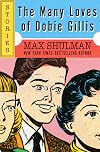
This book was pretty fun in the innocent, wholesome white-bread and apple-pie 1940s sort of way. Most people these days will know Dobie from late-night re-runs of re-runs of the ancient television series that managed to last four seasons (1959-1963). The stories here are similar in feel to that, but yeah... they're dated in many ways. Kids in these stories are geeking out over Tommy Dorsey and Benny Goodman. (Who are excellent-but-dead musicians, of course, and these days aren't exactly the show more sort of sound that college freshmen geek out over.)
The protagonist of the title is pretty much of a curve-watching, hormone-driven, crew-cutted, slacking lad of young college age, still living at home, which was pretty much the fashion back then, borrowing Dad's car, and never managing to keep a buck in his pocket.
My favorite character from the TV series was Maynard G. Krebs (played by Bob Denver) but, alas, no such character as MGK graces the e-pages of this short story collection. The lovely Thalia Menninger, who was played by Tuesday Weld in the TV series, doesn't turn up until about 30% of the way through the book, and then I think only in one story. My favorite character in the whole book was Fannie Jordan. (Fannie would be utterly and totally my type if I were a tongue-lolling 19 again: she's beatniky, bookish, probably never shaves her legs, might be lost without her glasses, and secretly listens to a lot of John Coltrane while reading philosophy... but I digress.)
Dobie's roving young eyes hop from one member of the female persuasion to another -- all rather innocently as there's not a lick of sex in any of the stories, so be prepared for basic WASP wholesomeness throughout. These shorts were originally published in the mid-to-late 1940s, more than a full decade before the show that bears some resemblance to them. In the main, the stories are pretty dated as well by their blatant nudge-and-wink sexism and Dobie's concentration on the physical attributes of his crushes. But at least the young ladies come in a variety pack and aren't all total cookie-cut-outs.
I read this recently-released e-book version on my tiny little smart phone at odd moments, and it took me about 4.5 months to get through, even though it's only about 250 e-pages long. I liked it pretty well, if eye-ball-rollingly at times; and if you enjoyed the TV show you'd probably sort of like it too. But I don't recommend it for anyone who isn't willing to shrug and forgive the lily white antique social veneer of the post WWII USA. show less
The protagonist of the title is pretty much of a curve-watching, hormone-driven, crew-cutted, slacking lad of young college age, still living at home, which was pretty much the fashion back then, borrowing Dad's car, and never managing to keep a buck in his pocket.
My favorite character from the TV series was Maynard G. Krebs (played by Bob Denver) but, alas, no such character as MGK graces the e-pages of this short story collection. The lovely Thalia Menninger, who was played by Tuesday Weld in the TV series, doesn't turn up until about 30% of the way through the book, and then I think only in one story. My favorite character in the whole book was Fannie Jordan. (Fannie would be utterly and totally my type if I were a tongue-lolling 19 again: she's beatniky, bookish, probably never shaves her legs, might be lost without her glasses, and secretly listens to a lot of John Coltrane while reading philosophy... but I digress.)
Dobie's roving young eyes hop from one member of the female persuasion to another -- all rather innocently as there's not a lick of sex in any of the stories, so be prepared for basic WASP wholesomeness throughout. These shorts were originally published in the mid-to-late 1940s, more than a full decade before the show that bears some resemblance to them. In the main, the stories are pretty dated as well by their blatant nudge-and-wink sexism and Dobie's concentration on the physical attributes of his crushes. But at least the young ladies come in a variety pack and aren't all total cookie-cut-outs.
I read this recently-released e-book version on my tiny little smart phone at odd moments, and it took me about 4.5 months to get through, even though it's only about 250 e-pages long. I liked it pretty well, if eye-ball-rollingly at times; and if you enjoyed the TV show you'd probably sort of like it too. But I don't recommend it for anyone who isn't willing to shrug and forgive the lily white antique social veneer of the post WWII USA. show less

This is a very entertaining satire of emerging suburban life in the 1950's. While its set in Connecticut, I have no doubt the author could have found similar dynamics in suburbs around Los Angeles, or Chicago.
Lists
Awards


You May Also Like


Associated Authors
Statistics
- Works
- 27
- Also by
- 11
- Members
- 835
- Popularity
- #30,604
- Rating
- 3.6
- Reviews
- 18
- ISBNs
- 37
- Favorited
- 1