
Clarence Brown (2) (1890–1987)
Author of National Velvet [1944 film]
For other authors named Clarence Brown, see the disambiguation page.
About the Author
Image credit: wikimedia.org
Series
Works by Clarence Brown
National Velvet / The Story of Seabiscuit / Black Beauty (Triple Feature Video) (1944) — Director — 12 copies
Clark Gable: The Signature Collection — Director — 3 copies
To Please a Lady [1950 film] — Director — 1 copy
Greta Garbo Collection 1 copy
Smouldering Fires [1925 film] — Director — 1 copy
Associated Works
Tagged
Common Knowledge
- Canonical name
- Brown, Clarence
- Legal name
- Brown, Clarence Leon
- Birthdate
- 1890-05-10
- Date of death
- 1987-08-17
- Gender
- male
- Education
- Knoxville High School, Knoxville, Tennessee, USA
University of Tennessee, Knoxville - Occupations
- film director
business owner - Awards and honors
- George Eastman Award (1957)
Hollywood Walk of Fame - Nationality
- USA
- Birthplace
- Clinton, Massachusetts, USA
- Places of residence
- Clinton, Massachusetts, USA
Knoxville, Tennessee, USA - Place of death
- Santa Monica, California, USA
- Burial location
- Forest Lawn Memorial Park Cemetery, Glendale, California, USA
- Associated Place (for map)
- USA
Members
Reviews
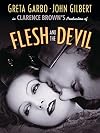
“So that you may not forget me.”
This beautiful story of fallen love from director Clarence Brown is given a romantic glow seldom seen in sound pictures. Garbo’s magic, only occasionally seen in her sound films, is gloriously displayed here by photographer William Daniels. John Gilbert’s screen charisma is also shown to great advantage, giving those who never saw him an explanation for his huge popularity during the silent era.
There is more story than usual is this lush and show more romantically told tale of forbidden love that just won’t die, and the long friendship it threatens. Based on Hermann Sudermann’s novel, “The Undying Past,” Benjamin F. Glazer’s screenplay doesn’t really seem that dated even today. The settings arranged by Cedric Gibbons and Frederic Hope make this fabulous production from MGM one of Garbo's finest films.
Leo von Harden (John Gilbert) and Ulrich (Lars Hanson) are military men whose bond runs deep and far, all the way back to childhood when they became blood-brothers in the presence of Ulrich's little sister Hertha (Barbara Kent) on the “Isle of Friendship.” When as young men they return home, Leo sees for the first time the woman who will perhaps destroy not only that friendship, but Leo himself.
Garbo is the image of romance stepping off the train in her first screen moments. It is not long after at a ball that the two meet again, the white rose exchanged at their first meeting in hand. The scenes that follow are some of the most lushly romantic in screen history. William Daniels frames Garbo’s Felicitas in match-light and moonlight beneath an arbor as one of the most romantic build-ups to a kiss in the history of motion pictures takes place.
The shots of Garbo and Gilbert that follow are justly legendary. Though fully clothed, there is an oozing afterglow of implied intimacy that is viscerally felt by the viewer. The scenes are filled with romance which takes a sudden and dark turn when the husband Felicity did not inform Leo of discovers them together. A duel incurs in which Leo prevails, but only the Pastor knows the real reason for the tragedy.
Garbo’s scenes picking out the right veil to mourn in shows the viewer all that Leo cannot see with his eyes. He will have to spend five lonely years in Africa before he can return to her so they may be together. He implores his friend for life, Ulrich, to watch after her until he returns. He will not realize what a mistake that was, until he returns and finds the two married. Ulrich, you see, was unaware of their prior love, and unable to resist her charms.
Barbara Kent is terrific as the grown Hertha, whose crush on Leo as a child has turned into an abiding yet unrequited love. Felicitas begs him to reconcile with his friend but her motives are not as pure as that white rose, and soon temptation will overcome them. What follows cannot be revealed to the viewer, but you will not see the ending of this romantic drama coming in any way, shape or form.
Garbo and Gilbert were actually in love here, and it comes across in their scenes together. It is ironic that the haze Garbo’s spell cast over Gilbert in real life would destroy him nearly to the same degree as Mayer did when sound came along. This is a beautiful and romantic film with a lush and lovely glow you will not find anywhere else on film. Watch Garbo and Gilbert by firelight some rainy night with someone you love. It is an unforgettable film experience. show less
This beautiful story of fallen love from director Clarence Brown is given a romantic glow seldom seen in sound pictures. Garbo’s magic, only occasionally seen in her sound films, is gloriously displayed here by photographer William Daniels. John Gilbert’s screen charisma is also shown to great advantage, giving those who never saw him an explanation for his huge popularity during the silent era.
There is more story than usual is this lush and show more romantically told tale of forbidden love that just won’t die, and the long friendship it threatens. Based on Hermann Sudermann’s novel, “The Undying Past,” Benjamin F. Glazer’s screenplay doesn’t really seem that dated even today. The settings arranged by Cedric Gibbons and Frederic Hope make this fabulous production from MGM one of Garbo's finest films.
Leo von Harden (John Gilbert) and Ulrich (Lars Hanson) are military men whose bond runs deep and far, all the way back to childhood when they became blood-brothers in the presence of Ulrich's little sister Hertha (Barbara Kent) on the “Isle of Friendship.” When as young men they return home, Leo sees for the first time the woman who will perhaps destroy not only that friendship, but Leo himself.
Garbo is the image of romance stepping off the train in her first screen moments. It is not long after at a ball that the two meet again, the white rose exchanged at their first meeting in hand. The scenes that follow are some of the most lushly romantic in screen history. William Daniels frames Garbo’s Felicitas in match-light and moonlight beneath an arbor as one of the most romantic build-ups to a kiss in the history of motion pictures takes place.
The shots of Garbo and Gilbert that follow are justly legendary. Though fully clothed, there is an oozing afterglow of implied intimacy that is viscerally felt by the viewer. The scenes are filled with romance which takes a sudden and dark turn when the husband Felicity did not inform Leo of discovers them together. A duel incurs in which Leo prevails, but only the Pastor knows the real reason for the tragedy.
Garbo’s scenes picking out the right veil to mourn in shows the viewer all that Leo cannot see with his eyes. He will have to spend five lonely years in Africa before he can return to her so they may be together. He implores his friend for life, Ulrich, to watch after her until he returns. He will not realize what a mistake that was, until he returns and finds the two married. Ulrich, you see, was unaware of their prior love, and unable to resist her charms.
Barbara Kent is terrific as the grown Hertha, whose crush on Leo as a child has turned into an abiding yet unrequited love. Felicitas begs him to reconcile with his friend but her motives are not as pure as that white rose, and soon temptation will overcome them. What follows cannot be revealed to the viewer, but you will not see the ending of this romantic drama coming in any way, shape or form.
Garbo and Gilbert were actually in love here, and it comes across in their scenes together. It is ironic that the haze Garbo’s spell cast over Gilbert in real life would destroy him nearly to the same degree as Mayer did when sound came along. This is a beautiful and romantic film with a lush and lovely glow you will not find anywhere else on film. Watch Garbo and Gilbert by firelight some rainy night with someone you love. It is an unforgettable film experience. show less

A man falls in love with a woman who marries his best friend.
It's nice to look at. And even though it's cheesy melodrama, it never manages to be boring. I just can't get behind this sort of story - a morality tale with the moral of "bros before hos."
Concept: F
Story: D
Characters: D
Dialog: D
Pacing: B
Cinematography: A
Special effects/design: A
Acting: B
Music: B
Enjoyment: C
GPA: 2.2/4
It's nice to look at. And even though it's cheesy melodrama, it never manages to be boring. I just can't get behind this sort of story - a morality tale with the moral of "bros before hos."
Concept: F
Story: D
Characters: D
Dialog: D
Pacing: B
Cinematography: A
Special effects/design: A
Acting: B
Music: B
Enjoyment: C
GPA: 2.2/4
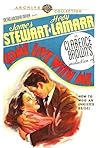
Come Live with Me (1941) -- Long before this movie, there was the Christopher Marlowe poem.
This movie may include a brief reference to the Marlowe poem, but that's just because Stewart plays a struggling writer, and he knows the poem.
Lamarr is struggling too. She's overstayed her passport, and Immigration is ready to send her back to Austria. Can she claim refugee status? Apparently not, but the Immigration official is either sympathetic to her beauty, or he doesn't want to send her back to show more the Nazis. Either way, the solution is to find an American citizen to marry.
Stewart agrees, and Immigration never bothers to check if the marriage is legit. In any case, once the marriage serves its purpose for Lamarr, she's ready to ask for a divorce so that she can marry the married man she's been having an affair with...
Interesting plot, considering the Production Code. I haven't looked into if the Code gave this movie any problems, but I guess it ended in a way that the Code would approve of, and I'll leave it at that. Since you know who the main stars of the film are, you can probably figure out who ends up together in the end.
Fun story, but rather simple. Good chemistry, which is funny because I don't think of Stewart as a romantic lead. But he got to kiss Katharine Hepburn in The Philadelphia Story (1940), and now he gets to kiss Hedy Lamarr. show less
This movie may include a brief reference to the Marlowe poem, but that's just because Stewart plays a struggling writer, and he knows the poem.
Lamarr is struggling too. She's overstayed her passport, and Immigration is ready to send her back to Austria. Can she claim refugee status? Apparently not, but the Immigration official is either sympathetic to her beauty, or he doesn't want to send her back to show more the Nazis. Either way, the solution is to find an American citizen to marry.
Stewart agrees, and Immigration never bothers to check if the marriage is legit. In any case, once the marriage serves its purpose for Lamarr, she's ready to ask for a divorce so that she can marry the married man she's been having an affair with...
Interesting plot, considering the Production Code. I haven't looked into if the Code gave this movie any problems, but I guess it ended in a way that the Code would approve of, and I'll leave it at that. Since you know who the main stars of the film are, you can probably figure out who ends up together in the end.
Fun story, but rather simple. Good chemistry, which is funny because I don't think of Stewart as a romantic lead. But he got to kiss Katharine Hepburn in The Philadelphia Story (1940), and now he gets to kiss Hedy Lamarr. show less

C (Indifferent).
A horse-obsessed little girl enters a major race. It's surprisingly watchable for what it is, but I was never going to like this movie.
(Mar. 2024)
A horse-obsessed little girl enters a major race. It's surprisingly watchable for what it is, but I was never going to like this movie.
(Mar. 2024)
Lists
Awards


You May Also Like


Associated Authors
Statistics
- Works
- 47
- Also by
- 1
- Members
- 694
- Popularity
- #36,475
- Rating
- 3.7
- Reviews
- 15
- ISBNs
- 68
- Languages
- 2