
David Ebershoff
Author of The 19th Wife
About the Author
David Ebershoff is the author of "The Danish Girl" and the publishing director of "The Modern Library". Hi newest book is entitled, "The 19th Wife." (Publisher Provided)
Image credit: Photo by Edie High Sanchez
Works by David Ebershoff
The Rose City [short story] 1 copy
Preacher 01/08 1 copy
Associated Works
The Letter Q: Queer Writers' Notes to their Younger Selves (2012) — Contributor — 297 copies, 5 reviews
McSweeney's 12: Unpublished, Unknown, and/or Unbelievable (2003) — Contributor — 290 copies, 4 reviews
Girls Who Like Boys Who Like Boys: True Tales of Love, Lust, and Friendship Between Straight Women and Gay Men (2007) — Contributor — 111 copies, 3 reviews
Tagged
Common Knowledge
- Canonical name
- Ebershoff, David
- Birthdate
- 1969
- Gender
- male
- Education
- Brown University
University of Chicago
Keio University (Tokyo)
Polytechnic School (Pasadena) - Occupations
- author
editor
teacher - Organizations
- Random House (Editor at large)
Columbia University - Awards and honors
- Lambda Literary Award
American Academy of Arts and Letters Rosenthal Foundation Award
Ferro-Grumley Award for Excellence in LGBT Literature
New York Public Library Young Lions Award -- Finalist
James Tiptree Award Finalist
True West Magazine's Best Western Fiction Writer in America, 2009 (show all 8)
Galaxy British Book Awards Finalist
ALA Stonewall Book Award Finalist - Agent
- Elaine Koster (Elaine Koster Literary Agency)
- Nationality
- USA (birth)
- Birthplace
- Pasadena, California, USA
- Places of residence
- Pasadena, California, USA
New York, New York, USA - Associated Place (for map)
- USA
Members
Reviews

I was pretty excited to run across this book, as it's not often that I find historical fiction about New Religious Movements, even those as unobscure as early Mormonism. So a fictional account of Ann Eliza Young? Count me in! And everything about the publication of the book and others' reviews seemed to indicate it would be a good read. But 50 pages in, though already engrossed in the story and breezing through the pages, I became troubled.
For one thing, it's difficult to determine where show more Ebershoff's reliance on historical documents ends and his fictionalization of Ann Eliza, Brigham, and others begins. The inclusion of fictional documents supposedly from Mormon archives throughout the narrative doesn't help this. I wasn't sure how much of the book was simply a re-telling of Ann Eliza's own books and how much was literary license.
But what most bothered me was the lack of nuance. Ebershoff shows only the bad side of polygamy, in both Ann Eliza's portions of the novel and in the modern-day story. To a lesser extent, he doesn't seem particularly friendly towards the mainstream LDS faith in general, either historical or contemporary. It's all too-sweet missionary girls, crazy manipulative prophets, and gay therapy. The "Firsts," as the modern polygamists in the novel are called, are clearly a take-off on Warren Jeffs and the FLDS, which was all blowing up in the media around the time the novel was published. And while the FLDS IS almost certainly full of abuse and the extremes of patriarchal control, there are other fundamentalist Mormons for whom polygamy was and remains a vital, genuine, welcome part of their faith. Ebershoff ignores that, for those who practice it, polygamy is not necessarily what the FLDS has made it.
Faith is at the forefront of The 19th Wife -- why do people follow the doctrines they do, especially when they involve such radical lifestyles, or the casting off of beloved children, or harmful environments in which said children were raised. Ebershoff's answer seems to be simply that beliefs is formed from the situations in which people are raised, particularly when it's in comparative isolation. But he never gets the reader to truly feel as if this is true; it's too simplistic an answer, with no depth of feeling echoed in the characters. The end result is that his main characters just accept people as they are, despite the crazy beliefs they've picked up from their lives. It's not a very complimentary or nuanced resolution. The novel presents two interesting stories and tells them well in terms of plotline, but ultimately it lacks the depth required of such a controversial subject. show less
For one thing, it's difficult to determine where show more Ebershoff's reliance on historical documents ends and his fictionalization of Ann Eliza, Brigham, and others begins. The inclusion of fictional documents supposedly from Mormon archives throughout the narrative doesn't help this. I wasn't sure how much of the book was simply a re-telling of Ann Eliza's own books and how much was literary license.
But what most bothered me was the lack of nuance. Ebershoff shows only the bad side of polygamy, in both Ann Eliza's portions of the novel and in the modern-day story. To a lesser extent, he doesn't seem particularly friendly towards the mainstream LDS faith in general, either historical or contemporary. It's all too-sweet missionary girls, crazy manipulative prophets, and gay therapy. The "Firsts," as the modern polygamists in the novel are called, are clearly a take-off on Warren Jeffs and the FLDS, which was all blowing up in the media around the time the novel was published. And while the FLDS IS almost certainly full of abuse and the extremes of patriarchal control, there are other fundamentalist Mormons for whom polygamy was and remains a vital, genuine, welcome part of their faith. Ebershoff ignores that, for those who practice it, polygamy is not necessarily what the FLDS has made it.
Faith is at the forefront of The 19th Wife -- why do people follow the doctrines they do, especially when they involve such radical lifestyles, or the casting off of beloved children, or harmful environments in which said children were raised. Ebershoff's answer seems to be simply that beliefs is formed from the situations in which people are raised, particularly when it's in comparative isolation. But he never gets the reader to truly feel as if this is true; it's too simplistic an answer, with no depth of feeling echoed in the characters. The end result is that his main characters just accept people as they are, despite the crazy beliefs they've picked up from their lives. It's not a very complimentary or nuanced resolution. The novel presents two interesting stories and tells them well in terms of plotline, but ultimately it lacks the depth required of such a controversial subject. show less
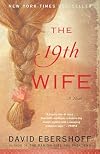
Murder? Check. Famous historical characters? Check. Unbiased examination of religious church-and-state themes? Check. Ripped-from-the-headlines polygamous cult? Check. Good writing and sympathetic characters? Check and check.
The 19th Wife was hard to put down. I'm usually not a fan of books that don't stick to one narrative but Ebershoff deftly weaves together two stories: a modern-day murder on a polygamous ranch in Utah and a historical narrative based on the real-life story of Ann Eliza show more Young, one of Brigham Young's wives who in 1875 attempted to divorce him and began the crusade to end polygamy in the United States.
The historical part uses tons of different sources to tell the story: Ann Eliza's first-person narrative (based on a book she actually wrote called Wife No. 19), fictional correspondence between a BYU grad student and current-day Mormon church leaders, historical accounts from Ann Eliza's family members and contemporaries, fictional newspaper articles and a Wikipedia entry, to name a few. I've read that many people preferred the historical narrative to the modern-day murder mystery, but I liked them both.
I loved the protagonist of the modern parts, a young gay man named Jordan, who was kicked out of a fundamentalist polygamist compound (the "First Latter-Day Saints," which appear similar to the fundamental and polygamist LDS sect that was in the news a year ago or so) when he was young for holding hands with his stepsister. Jordan's mother, herself a 19th wife, is arrested for the murder of Jordan's father. Jordan, reluctantly at first, determines to clear her name. His voice is compelling, and you can't help rooting for him and those he meets on his crusade to exonerate his mom. The parts that take place on the Firsts' middle-of-nowhere town are downright creepy. Ebershoff does clearly state early in the book that the funamental polygamists are not related to today's Mormons except through distant history, and that the LDS church today does not condone polygamy. Kinda sad people still have to make this distinction, but anyway.
The historical parts are a fascinating depiction of the early history of the Church of Jesus Christ of Latter-Day Saints, focusing specifically on the origins of polygamy and how Joseph Smith and his successor, Brigham Young, forced their followers to practice it, telling them it was the only way to heaven. I'm not Mormon, so I don't know exactly how much of the historical part is pure fact and how much is narrative license. Regardless, it's just flat-out fascinating. Polygamy was a disgusting, soul-crushing practice and I caught myself shaking my head and saying "oh no he didn't" a bunch of times. The gradual corruption it wreaked on the early LDS families makes for compelling stuff.
I could go on and on about the book, but suffice to say if you like historical narratives based on actual events, you'll like this book. Also if you're fascinated by modern-day polygamists (and who wasn't, after the raid on that ranch a year or two ago?) this is a good introduction to that way of life. My only complaints are the book is a bit on the long side (the ARC is almost 600 pages) and I was constantly wondering during the historical parts what was truth and what was fiction. Maybe that's just the journalist in me. But you can read more about Ebershoff's research methods on his Web site or in the Author's Note at the back of the book.
Overall, yes! This was a good read show less
The 19th Wife was hard to put down. I'm usually not a fan of books that don't stick to one narrative but Ebershoff deftly weaves together two stories: a modern-day murder on a polygamous ranch in Utah and a historical narrative based on the real-life story of Ann Eliza show more Young, one of Brigham Young's wives who in 1875 attempted to divorce him and began the crusade to end polygamy in the United States.
The historical part uses tons of different sources to tell the story: Ann Eliza's first-person narrative (based on a book she actually wrote called Wife No. 19), fictional correspondence between a BYU grad student and current-day Mormon church leaders, historical accounts from Ann Eliza's family members and contemporaries, fictional newspaper articles and a Wikipedia entry, to name a few. I've read that many people preferred the historical narrative to the modern-day murder mystery, but I liked them both.
I loved the protagonist of the modern parts, a young gay man named Jordan, who was kicked out of a fundamentalist polygamist compound (the "First Latter-Day Saints," which appear similar to the fundamental and polygamist LDS sect that was in the news a year ago or so) when he was young for holding hands with his stepsister. Jordan's mother, herself a 19th wife, is arrested for the murder of Jordan's father. Jordan, reluctantly at first, determines to clear her name. His voice is compelling, and you can't help rooting for him and those he meets on his crusade to exonerate his mom. The parts that take place on the Firsts' middle-of-nowhere town are downright creepy. Ebershoff does clearly state early in the book that the funamental polygamists are not related to today's Mormons except through distant history, and that the LDS church today does not condone polygamy. Kinda sad people still have to make this distinction, but anyway.
The historical parts are a fascinating depiction of the early history of the Church of Jesus Christ of Latter-Day Saints, focusing specifically on the origins of polygamy and how Joseph Smith and his successor, Brigham Young, forced their followers to practice it, telling them it was the only way to heaven. I'm not Mormon, so I don't know exactly how much of the historical part is pure fact and how much is narrative license. Regardless, it's just flat-out fascinating. Polygamy was a disgusting, soul-crushing practice and I caught myself shaking my head and saying "oh no he didn't" a bunch of times. The gradual corruption it wreaked on the early LDS families makes for compelling stuff.
I could go on and on about the book, but suffice to say if you like historical narratives based on actual events, you'll like this book. Also if you're fascinated by modern-day polygamists (and who wasn't, after the raid on that ranch a year or two ago?) this is a good introduction to that way of life. My only complaints are the book is a bit on the long side (the ARC is almost 600 pages) and I was constantly wondering during the historical parts what was truth and what was fiction. Maybe that's just the journalist in me. But you can read more about Ebershoff's research methods on his Web site or in the Author's Note at the back of the book.
Overall, yes! This was a good read show less
 This review was written for LibraryThing Early Reviewers.
David Ebershoff's THE DANISH GIRL (2000) is an engaging, often very moving, fact-based novel about Einar Wegener/Lili Elbe, a Danish artist who was supposedly the first person to undergo gender reassignment surgery in 1930 at a clinic in Dresden. The characters are very believable, as Ebershoff traces the early lives of both Wegener and the woman he would marry, Greta Waud, also an artist, who recognizes her husband is a woman trapped inside a man's body, and helps him to "become Lili." (And show more the descriptions of the pain and recovery periods from the surgeries are difficult to read.)
This is a hard book to summarize or characterize, and I was surprised how much I enjoyed it, but Ebershoff is a marvelous writer, who captured not just the two main characters and their strange love story and journey together, but also the feel and the settings of 1920s Denmark, France, Germany and California (where Greta grew up in a very wealthy family).
The book won some awards when it was new, but gained more fame after it was adapted to the screen about fifteen years later. I've not seen the movie, but I will very strongly recommend this novel, which puts human faces on and gives voices to the whole LGBTQ movement.
- Tim Bazzett, author of the memoir, BOOKLOVER show less
This is a hard book to summarize or characterize, and I was surprised how much I enjoyed it, but Ebershoff is a marvelous writer, who captured not just the two main characters and their strange love story and journey together, but also the feel and the settings of 1920s Denmark, France, Germany and California (where Greta grew up in a very wealthy family).
The book won some awards when it was new, but gained more fame after it was adapted to the screen about fifteen years later. I've not seen the movie, but I will very strongly recommend this novel, which puts human faces on and gives voices to the whole LGBTQ movement.
- Tim Bazzett, author of the memoir, BOOKLOVER show less
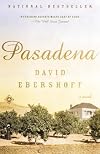
What a curious book! Based on Wuthering Heights, with recognisable characters from Emily Bronte's gothic saga, David Ebershoff's novel is also a lush history of California, bringing the early to mid twentieth century development of Pasadena to life. Very slow and ponderous in places, with an omniscient narrator who tends to alienate the central characters ('But Linda did not know this', etc.), Pasadena is still eminently readable, with evocative descriptions of scenery and buildings, wry show more commentary on the lives of the rich and the poor (Cathy and Heathcliff would have felt at home in Baden Baden by the Sea, even in 1919!), and a modern, twisting take on Wuthering Heights. Getting through the 500 pages took longer than usual, but I was rewarded for persevering.
The story within a story narration of Emily's novel is taken over by Andrew Blackwood (Lockwood), a property developer, and Cherry Nay (Nelly Dean), the agent showing him around the Rancho Pasadena, owned by the enigmatic Mr Bruder (a better name for Heathcliff!) Between Blackwood and Cherry in 1945, and Bruder's reminiscences from 1919 on, another tragic story of doomed love and a lack of communication is replayed, but in California instead of Yorkshire. Orange groves, beaches, heatwaves and the nouveau riches make for a surprisingly timeless setting, gradually being steamrollered in the name of progress. "It seems it's what the citizens want these days. Modernity. Convenience. Speed. People want to live in the future now, don't they?" Blackwood asks Bruder, who replies, "The past is of little use to them." Sad, but true.
Reading Wuthering Heights is not necessary to understand this novel, but comparisons are inevitable. I also picked up on shades of The Great Gatsby and The Thorn Birds, and I haven't read East of Eden, but that's no doubt in there too. Pasadena is a wonderful blend of history, family saga, literary classic and travelogue that will work for some and bore other readers to death. show less
The story within a story narration of Emily's novel is taken over by Andrew Blackwood (Lockwood), a property developer, and Cherry Nay (Nelly Dean), the agent showing him around the Rancho Pasadena, owned by the enigmatic Mr Bruder (a better name for Heathcliff!) Between Blackwood and Cherry in 1945, and Bruder's reminiscences from 1919 on, another tragic story of doomed love and a lack of communication is replayed, but in California instead of Yorkshire. Orange groves, beaches, heatwaves and the nouveau riches make for a surprisingly timeless setting, gradually being steamrollered in the name of progress. "It seems it's what the citizens want these days. Modernity. Convenience. Speed. People want to live in the future now, don't they?" Blackwood asks Bruder, who replies, "The past is of little use to them." Sad, but true.
Reading Wuthering Heights is not necessary to understand this novel, but comparisons are inevitable. I also picked up on shades of The Great Gatsby and The Thorn Birds, and I haven't read East of Eden, but that's no doubt in there too. Pasadena is a wonderful blend of history, family saga, literary classic and travelogue that will work for some and bore other readers to death. show less
Lists
Awards


You May Also Like


Associated Authors
Statistics
- Works
- 7
- Also by
- 8
- Members
- 5,180
- Popularity
- #4,800
- Rating
- 3.7
- Reviews
- 350
- ISBNs
- 106
- Languages
- 16
- Favorited
- 9


