
Lisa See
Author of Snow Flower and the Secret Fan
About the Author
Lisa See was born in Paris but grew up in Los Angeles, spending much of her time in Chinatown. She is of Chinese decent. Her first book, On Gold Mountain: The One Hundred Year Odyssey of My Chinese-American Family (1995), was a national bestseller and a New York Times Notable Book. The book traces show more the journey of Lisa's great-grandfather, Fong See. Her first fiction novel, Flower Net (1997) was a national bestseller, a New York Times Notable Book, and on the Los Angeles Times Best Books List for 1997. Flower Net was also nominated for an Edgar award for best first novel. In addition to writing books, Ms. See was the Publishers Weekly West Coast Correspondent for 13 years. Her bestselling novels, all inspired by her Chinese heritage, include Snow Flower and the Secret Fan, A Peony in Love, Shanghi Girls, Dreams of Joy and China Dolls. Among her awards and recognitions are the Organization of Chinese Americans Women's 2001 award as National Woman of the Year and the 2003 History Makers Award presented by the Chinese American Museum. See serves as a Los Angeles City Commissioner. (Bowker Author Biography) show less
Disambiguation Notice:
Lisa See collaborated with her mother Carolyn See and her mother's companion John Espey to write several novels, published under the pseudonym Monica Highland.
Image credit: Lisa See on Feb. 16, 2017
Series
Works by Lisa See
On Gold Mountain: The One-Hundred-Year Odyssey of My Chinese-American Family (1995) 970 copies, 24 reviews
Peony in Love {abridged} 1 copy
2005 1 copy
Associated Works
My Bookstore: Writers Celebrate Their Favorite Places to Browse, Read, and Shop (2012) — Contributor — 621 copies, 16 reviews
Half and Half: Writers on Growing Up Biracial and Bicultural (1998) — Contributor — 154 copies, 1 review
What My Mother Gave Me: Thirty-one Women on the Gifts That Mattered Most (2013) — Contributor — 106 copies, 19 reviews
A Taste of Murder: Diabolically Delicious Recipes from Contemporary Mystery Writers (1999) — Contributor — 48 copies, 1 review
Tagged
Common Knowledge
- Legal name
- Kendall, Lisa See
- Other names
- Highland, Monica (pseudonym)
- Birthdate
- 1955-02-18
- Gender
- female
- Education
- Loyola Marymount University
- Occupations
- writer
novelist - Organizations
- El Pueblo de Los Angeles Monument Authority (Los Angeles City Commissioner)
- Awards and honors
- Organization of Chinese American Women (National Woman of the Year, 2001)
Chinese American Museum’s History Makers Award (2003) - Relationships
- See, Carolyn (mother)
- Short biography
- See www.lisasee.com/Bio.htmLisa See is an American writer and novelist. Her books include On Gold Mountain: The One-Hundred-Year Odyssey of My Chinese-American Family (1995), a detailed account of See's family history, and the novels Flower Net (1997), The Interior (1999), Dragon Bones (2003), Snow Flower and the Secret Fan (2005), Peony in Love (2007) and Shanghai Girls (2009), which made it to the 2010 New York Times bestseller list. Both Shanghai Girls and Snow Flower and the Secret Fan received honorable mentions from the Asian/Pacific American Awards for Literature.
See's novel, The Tea Girl of Hummingbird Lane (2017), is a powerful story about circumstances, culture, and distance among the Akha people of Xishuangbanna, China. It paints an unforgettable portrait of a little known region and its people and celebrates the bond of family.
See's most recent novel, The Island of Sea Women, is a story about female friendship and family secrets on Jeju Island before, during and in the aftermath of the Korean War. It was released on March 5, 2019.
Flower Net, The Interior, and Dragon Bones make up the Red Princess mystery series. Snow Flower and the Secret Fan and Peony in Love focus on the lives of Chinese women in the 19th and 17th centuries respectively. Shanghai Girls (2009) chronicles the lives of two sisters who come to Los Angeles in arranged marriages and face, among other things, the pressures put on Chinese-Americans during the anti-Communist mania of the 1950s. See completed a sequel titled Dreams of Joy, released in May 2011. China Dolls (June 2014) deals with Chinese American nightclub performers of the 1930s and 1940s.
Writing under the pen name Monica Highland, See, her mother Carolyn See, and John Espey, published two novels: Lotus Land (1983), 110 Shanghai Road (1986), and Greetings from Southern California (1988), a collection of early 20th Century postcards and commentary on the history they represent. She has a personal essay ("The Funeral Banquet") included in the anthology Half and Half.
See has donated her personal papers (1973–2001) to UCLA. During the 2012 Golden Dragon Chinese New Year Parade in Los Angeles Chinatown, See served as the Grand Marshal. - Nationality
- USA
- Birthplace
- Paris, Île-de-France, France
- Places of residence
- Los Angeles, California, USA
- Disambiguation notice
- Lisa See collaborated with her mother Carolyn See and her mother's companion John Espey to write several novels, published under the pseudonym Monica Highland.
- Associated Place (for map)
- USA
Members
Discussions
On Gold Mountain, Lisa See in World Reading Circle (August 2013)
Reviews
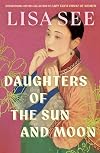
“…together we are daughters of the sun and moon.”
Lisa See’s Daughters of the Sun and Moon blends historical fact and fiction to tell the story of three very different Chinese women whose lives intertwine in the nascent town of Los Angeles during the late nineteenth century.
Told in five parts, each introduced with a historical photograph and newspaper article, the story unfolds from the alternating perspectives of Petal, Dove, and Moon, with events taking place primarily over the show more course of about a year.
Petal is eighteen years old when she arrives in Los Angeles in 1871, having been sold by her starving peasant family in China and then auctioned off to become a “woman always holding up her legs”—an indentured prostitute.
Seventeen-year-old Dove, with the cruelly bound feet that mark her as beautiful and refined, has been sent to Los Angeles to become the second wife of a much older, wealthy merchant.
In 1926, octogenarian Tong Yu, known as Moon, recalls the arrival of Petal and Dove, whom she meets when they are brought to the office of her husband, Dr. Chee Long “Gene” Tong, a respected practitioner of Chinese herbal medicine.
The three women reside in Calle de Los Negros, the neighbourhood to which the roughly 178 Chinese immigrants, including just 34 women, living in Los Angeles are largely confined. Their stories, based on the lives of real women, are fascinating and heartbreaking examples of courage and resilience in the face of traditional expectations, disenfranchisement, misogyny, and racism. See writes candidly about their harrowing experiences, and it is not easy to read of the loss, violence, and trauma Petal, Dove, and Moon endure. Yet somehow these women cling to the slim thread of hope that the freedom, love, and justice they desire will one day be theirs, largely because of the support and solace they find in one another.
The pivotal event in Daughters of the Sun and Moon is what became known as the Night of Horrors, a riot triggered by a rivalry between two Tongs that resulted in nearly 500 white and Latino Americans descending on Calle de Los Negros. With a population of around 5,000 people and barely a handful of police, Los Angeles in the late nineteenth century was a rough, almost lawless town rife with violence, corruption, and anti-Chinese sentiment. On the night of October 24, 1871, the mob ran unchecked, destroying property, committing numerous assaults, and, most grievously, lynching at least fifteen Chinese men and boys, while several more Chinese residents were shot or beaten to death.
Rich in historical detail and populated with memorable characters, Daughters of the Sun and Moon is a challenging and powerful novel of friendship and survival in the face of tragedy, which I recommend. show less
Lisa See’s Daughters of the Sun and Moon blends historical fact and fiction to tell the story of three very different Chinese women whose lives intertwine in the nascent town of Los Angeles during the late nineteenth century.
Told in five parts, each introduced with a historical photograph and newspaper article, the story unfolds from the alternating perspectives of Petal, Dove, and Moon, with events taking place primarily over the show more course of about a year.
Petal is eighteen years old when she arrives in Los Angeles in 1871, having been sold by her starving peasant family in China and then auctioned off to become a “woman always holding up her legs”—an indentured prostitute.
Seventeen-year-old Dove, with the cruelly bound feet that mark her as beautiful and refined, has been sent to Los Angeles to become the second wife of a much older, wealthy merchant.
In 1926, octogenarian Tong Yu, known as Moon, recalls the arrival of Petal and Dove, whom she meets when they are brought to the office of her husband, Dr. Chee Long “Gene” Tong, a respected practitioner of Chinese herbal medicine.
The three women reside in Calle de Los Negros, the neighbourhood to which the roughly 178 Chinese immigrants, including just 34 women, living in Los Angeles are largely confined. Their stories, based on the lives of real women, are fascinating and heartbreaking examples of courage and resilience in the face of traditional expectations, disenfranchisement, misogyny, and racism. See writes candidly about their harrowing experiences, and it is not easy to read of the loss, violence, and trauma Petal, Dove, and Moon endure. Yet somehow these women cling to the slim thread of hope that the freedom, love, and justice they desire will one day be theirs, largely because of the support and solace they find in one another.
The pivotal event in Daughters of the Sun and Moon is what became known as the Night of Horrors, a riot triggered by a rivalry between two Tongs that resulted in nearly 500 white and Latino Americans descending on Calle de Los Negros. With a population of around 5,000 people and barely a handful of police, Los Angeles in the late nineteenth century was a rough, almost lawless town rife with violence, corruption, and anti-Chinese sentiment. On the night of October 24, 1871, the mob ran unchecked, destroying property, committing numerous assaults, and, most grievously, lynching at least fifteen Chinese men and boys, while several more Chinese residents were shot or beaten to death.
Rich in historical detail and populated with memorable characters, Daughters of the Sun and Moon is a challenging and powerful novel of friendship and survival in the face of tragedy, which I recommend. show less
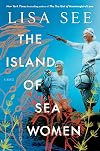
Taken captive by Lisa See's Haenyeo saga!
What can I say? I am once more blown away by a Lisa See novel.
See exceeded my expectations with this epic narrative centered around the female divers of Jeju Island, Korea. Set from the 1930's on at the time of the Japanese Occupation and later under the United States care-taking forces.
Told across time from the viewpoint of an older woman, Young-sook as she grapples with the twists her life has taken over these years, confronting her successes, show more failings and betrayals.
Her friendship with Mi-ja, the daughter of a collaborator and the breakdown of that closeness, leaves us with Young-Sook's anger which is hard bitten and understandable. Her inability to forgive is tangible.
Amongst the brightest moments are the scenes of the haenyeo (the women divers) collective as they commence diving accompanied by their rituals, patter and traditional comments.
The picture of Young-Sook and Mi-ja making rubbings of things to remember is just delightful, with moments of humor, joy and sorrow.
Another funny side is the popularity of the story of Heidi amongst the Jeju Islanders. The dark side is the massacres of the islanders by both Japanese and US troops. Both atrocious and both shameful.
A magnificent heartfelt story that begins with two young girls who become friends, whose lives are entwined for years, who face the worst, causing them to cease any comminication and then finally redemption that comes from a surprising quarter in an unexpected way. The treatment of the Haenyeo by various occupying governments and the Korean government, putting men in charge of them is a travesty against their culture and traditions. And the struggle to keep those teams and the culture of the Haenyeo alive in face of an ever changing and encroaching dispirit worldview is the challenge all indigenous populations face, and the answers are few.
The author's notes are extensive and well worth a read, demonstrating See's attention to the historical and traditional aspects surrounding the Island of Jeju and in particular the culture of the Haenyo.
A NetGalley ARC show less
What can I say? I am once more blown away by a Lisa See novel.
See exceeded my expectations with this epic narrative centered around the female divers of Jeju Island, Korea. Set from the 1930's on at the time of the Japanese Occupation and later under the United States care-taking forces.
Told across time from the viewpoint of an older woman, Young-sook as she grapples with the twists her life has taken over these years, confronting her successes, show more failings and betrayals.
Her friendship with Mi-ja, the daughter of a collaborator and the breakdown of that closeness, leaves us with Young-Sook's anger which is hard bitten and understandable. Her inability to forgive is tangible.
Amongst the brightest moments are the scenes of the haenyeo (the women divers) collective as they commence diving accompanied by their rituals, patter and traditional comments.
The picture of Young-Sook and Mi-ja making rubbings of things to remember is just delightful, with moments of humor, joy and sorrow.
Another funny side is the popularity of the story of Heidi amongst the Jeju Islanders. The dark side is the massacres of the islanders by both Japanese and US troops. Both atrocious and both shameful.
A magnificent heartfelt story that begins with two young girls who become friends, whose lives are entwined for years, who face the worst, causing them to cease any comminication and then finally redemption that comes from a surprising quarter in an unexpected way. The treatment of the Haenyeo by various occupying governments and the Korean government, putting men in charge of them is a travesty against their culture and traditions. And the struggle to keep those teams and the culture of the Haenyeo alive in face of an ever changing and encroaching dispirit worldview is the challenge all indigenous populations face, and the answers are few.
The author's notes are extensive and well worth a read, demonstrating See's attention to the historical and traditional aspects surrounding the Island of Jeju and in particular the culture of the Haenyo.
A NetGalley ARC show less
The Island of Sea Women is a difficult book. The writing is beautiful, the emotions and bonds between family and friends are clearly explained and felt. At its core it is a story of pain, anger, and loss.
But this is all set in a place, culture, and historical time I knew little or nothing of. I’d only heard of Jeju recently because a friend’s son was assigned to work there. Jeju is an island of South Korea known today as a tourist destination. In the 1940s - 1970s (when most of the story show more takes place) it is a remote island with many struggles. The sea women are haenyeo: deep divers who support and lead their families by fishing in deep waters. This matriarchal society is unique in the world.
The most difficult aspect of the book involves political upheaval following World War II. Jeju was interested in a united Korea but the leaders and American supporters were determined to wipe out communism. The book portrays fictionalized examples of an historical event - the Bukchon massacre. This reading was difficult. I spent a lot of time on google and was horrified by the details and cover up of this era.
This is not an easy read but it captured me and is surely going to be remembered. show less
But this is all set in a place, culture, and historical time I knew little or nothing of. I’d only heard of Jeju recently because a friend’s son was assigned to work there. Jeju is an island of South Korea known today as a tourist destination. In the 1940s - 1970s (when most of the story show more takes place) it is a remote island with many struggles. The sea women are haenyeo: deep divers who support and lead their families by fishing in deep waters. This matriarchal society is unique in the world.
The most difficult aspect of the book involves political upheaval following World War II. Jeju was interested in a united Korea but the leaders and American supporters were determined to wipe out communism. The book portrays fictionalized examples of an historical event - the Bukchon massacre. This reading was difficult. I spent a lot of time on google and was horrified by the details and cover up of this era.
This is not an easy read but it captured me and is surely going to be remembered. show less
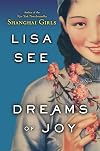
This book packs an even bigger punch than its predecessor. While Pearh and May had their share of ordeals in their youth (and even adulthood) Joy has learned the hard way that Chairman Mao was not as good a leader as he should have been.
The Great Leap Forward was an absolute fucking disaster. When it causes famine and untold deaths, yeah, it's going down in history as a horrendous example of ignorance in the hands of those who are responsible for the people. This nationwide program is show more experienced by Joy, who experiences China before the Great Leap Forward. Despite certain difficulties, life is still relatively fine and there is plenty to eat. But when the Great Leap Forward was instated, God help all them poor bastards.
Reading about the Great Leap through the eyes of (mostly one person) really helps to paint a picture of why it was such a failure, and how the government got away with instituting it in the first place. I sincerely hope there is a third book to this story. show less
The Great Leap Forward was an absolute fucking disaster. When it causes famine and untold deaths, yeah, it's going down in history as a horrendous example of ignorance in the hands of those who are responsible for the people. This nationwide program is show more experienced by Joy, who experiences China before the Great Leap Forward. Despite certain difficulties, life is still relatively fine and there is plenty to eat. But when the Great Leap Forward was instated, God help all them poor bastards.
Reading about the Great Leap through the eyes of (mostly one person) really helps to paint a picture of why it was such a failure, and how the government got away with instituting it in the first place. I sincerely hope there is a third book to this story. show less
Lists
Allie's Wishlist (1)
To Read (1)
Reading Globally (1)
Unread books (1)
AP Lit (1)
. (1)
Urban Fiction (1)
Sense of place (1)
Netgalley Reads (1)
A Novel Cure (1)
Female Author (2)
Asia (3)
Great Audiobooks (1)
Women in War (1)
to get (1)
Women's Stories (1)
Awards


You May Also Like


Associated Authors
Statistics
- Works
- 20
- Also by
- 6
- Members
- 33,096
- Popularity
- #583
- Rating
- 3.9
- Reviews
- 1,574
- ISBNs
- 452
- Languages
- 21
- Favorited
- 99


