
Rodger Kamenetz
Author of The Jew in the Lotus: A Poet's Re-Discovery of Jewish Identity in Buddhist India
About the Author
Rodger Kamenetz is the author of The Jew in the Lotus and Stalking Elijah, and of three collections of poetry. He teaches literature at Louisiana State University in Baton Rouge and lives in New Orleans.
Image credit: via Penguin Random House
Works by Rodger Kamenetz
The Jew in the Lotus: A Poet's Re-Discovery of Jewish Identity in Buddhist India (1994) 765 copies, 12 reviews
The History of Last Night's Dream: Discovering the Hidden Path to the Soul (2007) 77 copies, 2 reviews
Associated Works
Telephone 17 — Contributor — 1 copy
Tagged
Common Knowledge
- Birthdate
- 1950
- Gender
- male
- Education
- Yale University
Stanford University
Johns Hopkins University - Occupations
- professor
- Organizations
- Louisiana State University
- Nationality
- USA
- Places of residence
- Baltimore, Maryland, USA
New Orleans, Louisiana, USA - Associated Place (for map)
- USA
Members
Reviews
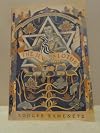
This book came to me from the free shelf at my local library but I have been wanting to read it since I first read a review of it almost three decades ago. I am neither Jewish nor Buddhist but I am interested in learning about other faith traditions and communities, and Kamenetz offers clear-headed observations about Tibetan Buddhism, American Judaism, and the reasons people who grow up in one religious tradition might find a more vivid faith by switching to a different one. This is a show more fascinating account of a visit by a diverse group of rabbis to Dharamsala at the invitation of the Dalai Lama and what the rabbis and Kamenetz learned there and thereafter. I learned a lot about both faiths, even accounting for change in the nearly thirty years since this book was published and reading this inspired me to reflect more deeply on my own attitudes toward my own faith and others beyond Buddhism and Judaism. show less
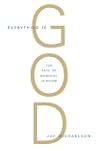
I've always had a bit of trouble with the concept of/word god. I was pretty young when I stopped thinking there was a giant, bearded white dude in the sky who controlled everything. But there was always something that tripped me up—the concept of forever. The fact that there was always a “before” and there will never be an end, really messed me up. Then, after going to a Buddhist inspired school, reading a little bit of Spinoza, and having a meditation experience where I saw everything show more as one, I began to have a concept of what the word god could mean to me. I still don't like the word, and I substitute “forever” or “everything” or “nature” for it whenever I can, but it makes a lot more (and less) sense to me now. The introduction describes it well: “'God' is a mask, a way of speaking about the world: of naming it … 'god' is the name we give to the oneness of it all.”
Everything is God helped me along this path, not only by talking about god in a way I can relate to, but also by tying to it Judaism. The concept that most resonated with me (and which I'll probably butcher) is “transcending and including.” I'll quote from the book (quoting other sources) again: “in the beginning, mountains are mountains. During zazen, mountains are not mountains. Afterwards, mountains are once again mountains” but, at this stage, they are “both: both everything and nothing, both existent and nonexistent.” Michaelson then ties it into Judaism, specifically the star of David: “The downward pointing triangle represents the 'first stage,' the world of ordinary experience, in which there is self and other, figure and ground.... The upward point triangle represents the “second stage” of unitary consciousness, in which there is no self, no other, no figure, and only the one Ground of Being.... The star together is the third stage of nonduality: both-and and neither-nor.”
This intriguing concept is introduced in the first nine pages of the book, but it sets the stage. The rest of the book is Michaelson talking a lot more about this, and also giving context to nondual Judaism by talking about nondualism, Judaism, nondual Judaism, nondual Judaism, and the parts of other religions that contain nondualism. At times Everything is God gets very heady and dense, and at other times it offers us practical ways to try and reach a state of “both-and and neither-nor.” show less
Everything is God helped me along this path, not only by talking about god in a way I can relate to, but also by tying to it Judaism. The concept that most resonated with me (and which I'll probably butcher) is “transcending and including.” I'll quote from the book (quoting other sources) again: “in the beginning, mountains are mountains. During zazen, mountains are not mountains. Afterwards, mountains are once again mountains” but, at this stage, they are “both: both everything and nothing, both existent and nonexistent.” Michaelson then ties it into Judaism, specifically the star of David: “The downward pointing triangle represents the 'first stage,' the world of ordinary experience, in which there is self and other, figure and ground.... The upward point triangle represents the “second stage” of unitary consciousness, in which there is no self, no other, no figure, and only the one Ground of Being.... The star together is the third stage of nonduality: both-and and neither-nor.”
This intriguing concept is introduced in the first nine pages of the book, but it sets the stage. The rest of the book is Michaelson talking a lot more about this, and also giving context to nondual Judaism by talking about nondualism, Judaism, nondual Judaism, nondual Judaism, and the parts of other religions that contain nondualism. At times Everything is God gets very heady and dense, and at other times it offers us practical ways to try and reach a state of “both-and and neither-nor.” show less
"It is easy to be a mystic in warm, summer days, when one is well fed and rested. It's more profound to maintain enlightened consciousness when one is heartbroken, or ill, or confronting delusion it its destructive power. Likewise, it's quite easy to say "all is God" in the comfort of a retreat center, or at Shabbat dinner; can it be said in a hospital ward? In a prisoner of war camp? Or even in our own homes, when love is suddenly absent? Can we say that God is both light and darkness then?"
The Jew in the Lotus: A Poet's Rediscovery of Jewish Identity in Buddhist India (Plus) by Rodger Kamenetz
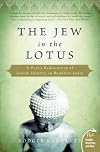
It was interesting at the beginning but got bogged down in the middle. The ending was also good but I am not quite sure I understand the conclusion. It seems the author wishes to put mysticism back into mainstream Judaism in order to make it stronger. The Hasidic tradition as mystical was not sufficiently explained from my perspective, which is that of a Reform Jew. I believe he is ignoring the fact that Buddhism in the United States is not really as mystical as in other parts of the world show more so he may be headed in the wrong direction. However I don't know whether Buddhism in the US is mostly Zen, which is different from Tibetan. Something to investigate... show less
Awards


You May Also Like


Associated Authors
Statistics
- Works
- 14
- Also by
- 3
- Members
- 1,176
- Popularity
- #21,864
- Rating
- 4.1
- Reviews
- 15
- ISBNs
- 36
- Languages
- 1