
William Todd Schultz
Author of An Emergency in Slow Motion: The Inner Life of Diane Arbus
About the Author
William Todd Schultz is a professor at Pacific University in Oregon and blogs for Psychology Today. He curates the book series Inner Lives, analyses of significant artists and political figures, and his own book in the series, Tiny Terror, examines the writings of Truman Capore, Schultz is also the show more author of An Emergency in Slow Motion, a study of the art and personality of Diane Arbus. show less
Image credit: The Oregonian
Works by William Todd Schultz
Tagged
Common Knowledge
- Gender
- male
- Education
- Lewis and Clark College, Portland (BA|Philosophy)
Lewis and Clark College, Portland (BA|Psychology)
University of California, Davis (MA|Psychology)
University of California, Davis (PhD|Psychology) - Occupations
- Psychology professor
- Organizations
- Pacific University (professor)
Personology Society - Awards and honors
- National Endowment for the Humanities (1995)
Members
Reviews
Tiny Terror: Why Truman Capote (Almost) Wrote Answered Prayers (Inner Lives) by William Todd Schultz
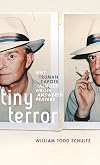
William Todd Schultz takes on Truman Capote in a way no one ever could during Capote's lifetime: through psychoanalysis. Of course, since Capote has been dead these 27 years, this endeavor will necessarily run up against some obstacles.
I confess to being a bit dubious about psychobiography; the practice doesn't seem all that different from those armchair and pop psychologists who insist on diagnosing people they've never met, much less spoken to at any length. (Oddly, the diagnosis in those show more cases almost always seems to be "narcissistic personality disorder." I'm not sure what that means, but it's interesting to note, anyway.)
Nonetheless, if any dead author is a good candidate for psychobiographical treatment, it's Capote. For one thing, Capote never stopped talking about anything, especially himself (and even when he was talking about someone else, he was talking about himself), so a psychobiographer has ample – indeed, voluminous – material. And as anyone knows after they’ve read dozens of Capote interviews conducted over his lifetime, Truman tended to be a bit, shall we say, elastic with the truth. But as any psychoanalyst will tell you, people reveal themselves through their own narratives; the liberties one chooses to take with the truth are simply another avenue by which one can gain understanding. Capote also said in interviews that he declined to undergo therapy or analysis precisely because he worked out his problems through his writing (although in fairness, he’s probably not too different from a lot of writers in that regard).
Schulz’s thesis – stated over-simply, that Capote wrote Answered Prayers so that he could reject his friends before they got around to rejecting him – seems quite plausible in light of Capote’s life and writings, and especially in light of his public antics, which those of us old enough to have seen them remember with a mix of fascination, amusement, and horror. Anyone interested in Capote as a persona and popcult phenomenon, or even just as a writer, might want to give this concise psychobiography a look.
Edit: There is one mistake that pains me greatly and that I hope is corrected in later editions: the Editor of the New Yorker when Capote published In Cold Blood was, famously, William Shawn, not, as Schultz has it, Wallace Shawn. A famous Wallace Shawn does exist, but he didn't edit the New Yorker in the 1950; rather, he's William's son. show less
I confess to being a bit dubious about psychobiography; the practice doesn't seem all that different from those armchair and pop psychologists who insist on diagnosing people they've never met, much less spoken to at any length. (Oddly, the diagnosis in those show more cases almost always seems to be "narcissistic personality disorder." I'm not sure what that means, but it's interesting to note, anyway.)
Nonetheless, if any dead author is a good candidate for psychobiographical treatment, it's Capote. For one thing, Capote never stopped talking about anything, especially himself (and even when he was talking about someone else, he was talking about himself), so a psychobiographer has ample – indeed, voluminous – material. And as anyone knows after they’ve read dozens of Capote interviews conducted over his lifetime, Truman tended to be a bit, shall we say, elastic with the truth. But as any psychoanalyst will tell you, people reveal themselves through their own narratives; the liberties one chooses to take with the truth are simply another avenue by which one can gain understanding. Capote also said in interviews that he declined to undergo therapy or analysis precisely because he worked out his problems through his writing (although in fairness, he’s probably not too different from a lot of writers in that regard).
Schulz’s thesis – stated over-simply, that Capote wrote Answered Prayers so that he could reject his friends before they got around to rejecting him – seems quite plausible in light of Capote’s life and writings, and especially in light of his public antics, which those of us old enough to have seen them remember with a mix of fascination, amusement, and horror. Anyone interested in Capote as a persona and popcult phenomenon, or even just as a writer, might want to give this concise psychobiography a look.
Edit: There is one mistake that pains me greatly and that I hope is corrected in later editions: the Editor of the New Yorker when Capote published In Cold Blood was, famously, William Shawn, not, as Schultz has it, Wallace Shawn. A famous Wallace Shawn does exist, but he didn't edit the New Yorker in the 1950; rather, he's William's son. show less
Satisfying psychological biographies of dozens of different types of artists. Schultz emphasizes that artists are NOT mentally ill, as a group, duh, and instead possess highest levels of openness on the Big 5 personality test. The traits of schizotypy are not pathological by themselves: it's just that artists feel and notice far more than typical people.
I'm not convinced that all successful artists have a trauma narrative. I don't quite get what we're supposed to glean from the analysis of show more the suicides of Sylvia Plath, Diane Arbus, and Kurt Cobain. Sure, exceptionally troubled, talented, furious. But I lost the thread there.
Otherwise quite well structured and attention grabbing. show less
I'm not convinced that all successful artists have a trauma narrative. I don't quite get what we're supposed to glean from the analysis of show more the suicides of Sylvia Plath, Diane Arbus, and Kurt Cobain. Sure, exceptionally troubled, talented, furious. But I lost the thread there.
Otherwise quite well structured and attention grabbing. show less
Tiny Terror: Why Truman Capote (Almost) Wrote Answered Prayers (Inner Lives) by William Todd Schultz

American Heritage Dictionary defines the term psychobiography as “a biography that analyzes the psychological makeup, character, or motivations of its subject.” This approach to biography is generally more, concerned with the why of a life than it is with the what. As William Todd Schultz makes clear in Tiny Terror, author Truman Capote is a near perfect candidate for such a treatment.
As noted in the book’s subtitle, Schultz focuses on one specific question in regards to understanding show more Capote: Why Truman Capote (Almost) Wrote Answered Prayers. Schultz wants to know what would motivate a man like Truman Capote to so viciously trash the group of high-society women he called his best friends. These women, Capote’s “swans,” were the only real friends he seemed to have left late in his life, and that he would risk losing those friendships for the sake of a novel he never finished is difficult to understand. Capote did take that risk and, as a result, he was ostracized and blackballed from the company of these women for the rest of his life, leaving him to die a broken man in the home of perhaps his last friend in the world, Johnny Carson’s ex-wife, Joanne.
Tiny Terror delves deeply into Capote’s dark Southern childhood in order to explain how he came to be the man he was. His was a childhood of insecurities in which he felt abandoned by his parents and failed to form any real friendships other than with fellow author and childhood neighbor Harper Lee, (although their relationship is only lightly touched upon in the book). According to Schultz’s theory, because of so much early insecurity, Capote grew into a neurotically supersensitive adult who always “expected to be hurt” in any emotional relationship he entered. Sooner or later, he would be rejected.
This was, however, only one side of the man’s personality. Capote convinced himself that he was beyond caring what others thought of him, especially those whom he felt were using him simply as an oddity or amusement. He was determined to strike first at those he sensed were laughing at him or taking him for granted. Rather than allowing himself to be hurt, Capote defended himself with a nasty, pre-emptive strike in which he would take his revenge on others before they could hurt him more than they already had.
In the case of his “swans” and Answered Prayers, as Schultz puts it, “Capote died a sad, lonely death. In some ways he scripted it. He never expected to be loved; he expected to be dismissed, and he was in the end. He made it happen…Even the swans flew off, to the sound of Capote’s buckshot.”
William Todd Schultz has written a remarkably insightful book that fans of Truman Capote’s work are sure to appreciate. Even those who only knew or remember Capote as a fascinating late night guest on talk shows of that era are certain to see him in a new light - and wonder how they could have missed so much suffering on display as they laughed along with his television host.
Rated at: 4.0 show less
As noted in the book’s subtitle, Schultz focuses on one specific question in regards to understanding show more Capote: Why Truman Capote (Almost) Wrote Answered Prayers. Schultz wants to know what would motivate a man like Truman Capote to so viciously trash the group of high-society women he called his best friends. These women, Capote’s “swans,” were the only real friends he seemed to have left late in his life, and that he would risk losing those friendships for the sake of a novel he never finished is difficult to understand. Capote did take that risk and, as a result, he was ostracized and blackballed from the company of these women for the rest of his life, leaving him to die a broken man in the home of perhaps his last friend in the world, Johnny Carson’s ex-wife, Joanne.
Tiny Terror delves deeply into Capote’s dark Southern childhood in order to explain how he came to be the man he was. His was a childhood of insecurities in which he felt abandoned by his parents and failed to form any real friendships other than with fellow author and childhood neighbor Harper Lee, (although their relationship is only lightly touched upon in the book). According to Schultz’s theory, because of so much early insecurity, Capote grew into a neurotically supersensitive adult who always “expected to be hurt” in any emotional relationship he entered. Sooner or later, he would be rejected.
This was, however, only one side of the man’s personality. Capote convinced himself that he was beyond caring what others thought of him, especially those whom he felt were using him simply as an oddity or amusement. He was determined to strike first at those he sensed were laughing at him or taking him for granted. Rather than allowing himself to be hurt, Capote defended himself with a nasty, pre-emptive strike in which he would take his revenge on others before they could hurt him more than they already had.
In the case of his “swans” and Answered Prayers, as Schultz puts it, “Capote died a sad, lonely death. In some ways he scripted it. He never expected to be loved; he expected to be dismissed, and he was in the end. He made it happen…Even the swans flew off, to the sound of Capote’s buckshot.”
William Todd Schultz has written a remarkably insightful book that fans of Truman Capote’s work are sure to appreciate. Even those who only knew or remember Capote as a fascinating late night guest on talk shows of that era are certain to see him in a new light - and wonder how they could have missed so much suffering on display as they laughed along with his television host.
Rated at: 4.0 show less
William Todd Schultz's biography of Elliott Smith is not particularly definitive, though it at least attempts to fill an obvious void in well-researched accounts of his life; many readers having been unsated by Benjamin Nugent's previous attempt that seemed rushed to publication shortly after Smith's death. One of the key strengths of this book is its supremely fine focus on Smith's early years growing up in Dallas, followed by the move to Portland and his time with Heatmiser. The detail and show more insight in this first half of the book is captivating, with regard to both the development of the man and his music.
The only drawback in this first half, one which occurs throughout the book, is Schultz's use of lyric snippets from Smith's songs to garnish some particular moment, explicitly referencing which song that lyrics derives from every time this device is employed. This tactic, used far too frequently to retain any charm, quickly begins to grate and distract from the text.
The second half of the book, starting around the release of the self titled album, meditates on that album's preoccupation with heroin by someone who at that point was not a user. This is an intriguing observation, but it also marks the starting point of a narrative shift. The complexity of the subject slowly begins to dilute into that of a tortured genius gradually plummeting towards death. Who constructs this narrative? Schultz is the author, but he is not entirely responsible for this. For one, what Schultz has at his disposal is ultimately sparse. All he can rely on is the music, published interviews, and oral histories from friends and collaborators, and then only those willing to share. Several members of Smith's family and other intimate relations did not talk to Schultz and it is doubtful they will ever talk to anyone about him on record. It is also not much of an exaggeration to say that Smith crafted or bought into this narrative himself, and began to mold himself around it. This has the potential to inhibit and sabotage objective or open attempts at biography.
It is not impossible, though, to subvert the "tortured artist" narrative, whether Smith purposefully adhered to it or not. The best biographies aspire to and sometimes succeed in holding the subject in question, in order to uproot mythos and to create the most fully realized representation possible. Edmund White's biography of Jean Genet and Jon Lee Anderson's biography of Che Guevara come to mind. Schultz, his background in psychology, would seem more apt than any rock historian to attempt such a feat, but that does not come to pass here.
Smith transforms in Schlutz's book from tortured genius to junkie savant, becoming more and more a flat character, the book petering out into speculation for ten or so pages about the nature of his death. Though the question is pertinent, Schultz's adamant and drawn out conclusion of suicide cloyingly reiterates Smith's lifelong despondency and diverges into apologia for Jennifer Chiba, who in the end is significant to Elliott's life, though these last pages in the book hardly deal with Elliott at all. He is talking about a death scenario, a woman caught in its devastating aftermath, and a knife. The knife serving as a maudlin if not insulting metaphor of an existential wound, because the metaphor nearly negates the importance of the music, oversimplifies the man, and dampens what could have been a potentially great biography. Smith's narrative is simply hard to navigate in and of itself, one that may never be fully uncovered, but what the budding lineage of his biographies indicate is that the possibility for illuminating interpretations is there. Schultz's addition is flawed but devoted; a cracked light bulb. show less
The only drawback in this first half, one which occurs throughout the book, is Schultz's use of lyric snippets from Smith's songs to garnish some particular moment, explicitly referencing which song that lyrics derives from every time this device is employed. This tactic, used far too frequently to retain any charm, quickly begins to grate and distract from the text.
The second half of the book, starting around the release of the self titled album, meditates on that album's preoccupation with heroin by someone who at that point was not a user. This is an intriguing observation, but it also marks the starting point of a narrative shift. The complexity of the subject slowly begins to dilute into that of a tortured genius gradually plummeting towards death. Who constructs this narrative? Schultz is the author, but he is not entirely responsible for this. For one, what Schultz has at his disposal is ultimately sparse. All he can rely on is the music, published interviews, and oral histories from friends and collaborators, and then only those willing to share. Several members of Smith's family and other intimate relations did not talk to Schultz and it is doubtful they will ever talk to anyone about him on record. It is also not much of an exaggeration to say that Smith crafted or bought into this narrative himself, and began to mold himself around it. This has the potential to inhibit and sabotage objective or open attempts at biography.
It is not impossible, though, to subvert the "tortured artist" narrative, whether Smith purposefully adhered to it or not. The best biographies aspire to and sometimes succeed in holding the subject in question, in order to uproot mythos and to create the most fully realized representation possible. Edmund White's biography of Jean Genet and Jon Lee Anderson's biography of Che Guevara come to mind. Schultz, his background in psychology, would seem more apt than any rock historian to attempt such a feat, but that does not come to pass here.
Smith transforms in Schlutz's book from tortured genius to junkie savant, becoming more and more a flat character, the book petering out into speculation for ten or so pages about the nature of his death. Though the question is pertinent, Schultz's adamant and drawn out conclusion of suicide cloyingly reiterates Smith's lifelong despondency and diverges into apologia for Jennifer Chiba, who in the end is significant to Elliott's life, though these last pages in the book hardly deal with Elliott at all. He is talking about a death scenario, a woman caught in its devastating aftermath, and a knife. The knife serving as a maudlin if not insulting metaphor of an existential wound, because the metaphor nearly negates the importance of the music, oversimplifies the man, and dampens what could have been a potentially great biography. Smith's narrative is simply hard to navigate in and of itself, one that may never be fully uncovered, but what the budding lineage of his biographies indicate is that the possibility for illuminating interpretations is there. Schultz's addition is flawed but devoted; a cracked light bulb. show less
You May Also Like


Statistics
- Works
- 5
- Members
- 189
- Popularity
- #115,305
- Rating
- 3.4
- Reviews
- 9
- ISBNs
- 20
- Languages
- 1
