
Lee Gutkind
Author of In Fact: The Best of Creative Nonfiction
About the Author
Lee Gutkind has explored the worlds of medicine, technology, and science through writing for more than 25 years. He is the author of 16 books, including Stuck in Time: The Tragedy of Childhood Mental Illness, and the editor of nine anthologies about health and medicine, including I Wasn't Strong show more Like This When I Started Out: True Stories of Becoming a Nurse. His stories and op-ed pieces about mental illness and related issues have appeared in the New York Times and on National Public Radio. Gutkind is Distinguished Writer-in-Residence in the Consortium for Science, Policy Outcomes at Arizona State University and a professor in the School for the Future of Innovation in Society. show less
Image credit: Norman Mailer Center
Series
Works by Lee Gutkind
You Can't Make This Stuff Up: The Complete Guide to Writing Creative Nonfiction--from Memoir to Literary Journalism and Everything in Between (2012) 247 copies, 2 reviews
The Art of Creative Nonfiction: Writing and Selling the Literature of Reality (Wiley Books for Writers Series) (1997) 210 copies, 3 reviews
I Wasn't Strong Like This When I Started Out: True Stories of Becoming a Nurse (2013) 154 copies, 15 reviews
Keep It Real: Everything You Need to Know About Researching and Writing Creative Nonfiction (2008) 134 copies, 2 reviews
True Stories, Well Told: From the First 20 Years of Creative Nonfiction Magazine (2014) — Editor — 56 copies, 10 reviews
The Best Seat in Baseball, But You Have to Stand: The Game as Umpires See It (Writing Baseball) (1975) 43 copies, 1 review
Becoming a Doctor: From Student to Specialist, Doctor-Writers Share Their Experiences (2010) 41 copies, 1 review
True Crime: Real-Life Stories of Abduction, Addiction, Obsession, Murder, Grave-robbing, and More (2013) 31 copies, 13 reviews
Southern Sin: True Stories of the Sultry South and Women Behaving Badly (2014) — Editor — 27 copies, 10 reviews
Oh, Baby: True Stories About Conception, Adoption, Surrogacy, Pregnancy, Labor, and Love (2015) 21 copies, 12 reviews
Our Roots Are Deep With Passion: Creative Nonfiction Collects New Essays by Italian-American Writers (2006) 18 copies
The Fine Art of Literary Fist-Fighting: How a Bunch of Rabble-Rousers, Outsiders, and Ne’er-do-wells Concocted Creative Nonfiction (2024) 17 copies
Creative Nonfiction: The Final Issue: The Best of Thirty Years of Creative Nonfiction (2009) 10 copies
My Last Eight Thousand Days: An American Male in His Seventies (Crux: The Georgia Series in Literary Nonfiction Ser.) (2020) 9 copies
Surviving crisis : twenty prominent authors write about events that shaped their lives (1997) 8 copies
Rage & Reconciliation: Inspiring a Health Care Revolution (Medical Humanities Series) (2003) 8 copies
Creative Nonfiction 15: Lessons in Persuasion: Writers with Pittsburgh Roots or Connections (2000) 8 copies
Truckin' with Sam: A Father and Son, The Mick and The Dyl, Rockin' and Rollin', On the Road (2010) 5 copies
Healing: 20 Prominent Authors Write abt Inspirational Moments Achieving Health Gaining In (2001) — Editor — 4 copies
Hurricanes and Carnivals: Essays by Chicanos, Pochos, Pachucos, Mexicanos, and Expatriates (2007) 4 copies, 1 review
Writing Away the Stigma: Ten Courageous Writers Tell True Stories About Depression, Bipolar Disorder, ADHD, OCD, PTSD & more (2014) 3 copies
Associated Works
Tagged
Common Knowledge
- Canonical name
- Gutkind, Lee
- Legal name
- Gutkind, Lee
- Birthdate
- 1945-01-03
- Gender
- male
- Education
- University of Pittsburgh
- Occupations
- editor
university professor - Awards and honors
- The Steve Allan Individual Award
Chancellor's Award for Public Service
Howard Blakeslee Award
Golden Eagle Award (for A Place Just Right)
National Endowment of the Arts Creative Writing Fellowship
Chatham College (LLD) - Nationality
- USA
- Birthplace
- Pittsburgh, Pennsylvania, USA
- Associated Place (for map)
- Pennsylvania, USA
Members
Reviews
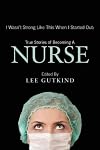
My life lately has been filled with nurses. Between my father going into a skilled nursing facility, my son needing lots of doctor appointments, and watching Call the Midwife, I think about and interact with nurses all the time. More than I realize. Funny that way, doctors are the important ones, the ones we see for problems, but nurses really have all the answers, comfort, and common sense.
Reading, I Wasn't Strong Like This When I Started Out: True Stories of Becoming a Nurse made me show more actually consider becoming a nurse. Each essay, written by a different nurse, was thoughtful, articulate and presented me with a side of nursing I had not before considered. The authors were mostly female, from all over the US and Canada, and most had discovered second careers in writing and had written about their working life with humor, pathos, and insight.
There were nursing students, nursing home nurses, pediatric nurses, ER nurses, nurses in rural china, and nurses on ships that sailed to impoverished nations to aid the poorest of the poor, suffering from common ailments that would never bother us. I read about nurses who dealt with AIDS patients in the era when no one would touch one and nurses who arrived at people's homes to check on them in their darkest hours. There were hospice nurses, and nurses who survived cancer to go on and become nurses themselves and one beautiful essay about nurse whisperers: from the point of view of the person watching the nurse care for her aging parents. Great one!
I enjoyed every essay and would like to write to one woman who raises issues about HIPPA and confidentiality that I have always thought about and considered in my own career with writing circles and incarcerated women. She articulated some of the things I think about with regard to storytelling beautifully.
The epigraph on the front of the book says, "required reading for anyone going into healthcare" I would go one further and say it is required reading for anyone needing healthcare. Truly, that good. Good work. Thanks Nurses! show less
Reading, I Wasn't Strong Like This When I Started Out: True Stories of Becoming a Nurse made me show more actually consider becoming a nurse. Each essay, written by a different nurse, was thoughtful, articulate and presented me with a side of nursing I had not before considered. The authors were mostly female, from all over the US and Canada, and most had discovered second careers in writing and had written about their working life with humor, pathos, and insight.
There were nursing students, nursing home nurses, pediatric nurses, ER nurses, nurses in rural china, and nurses on ships that sailed to impoverished nations to aid the poorest of the poor, suffering from common ailments that would never bother us. I read about nurses who dealt with AIDS patients in the era when no one would touch one and nurses who arrived at people's homes to check on them in their darkest hours. There were hospice nurses, and nurses who survived cancer to go on and become nurses themselves and one beautiful essay about nurse whisperers: from the point of view of the person watching the nurse care for her aging parents. Great one!
I enjoyed every essay and would like to write to one woman who raises issues about HIPPA and confidentiality that I have always thought about and considered in my own career with writing circles and incarcerated women. She articulated some of the things I think about with regard to storytelling beautifully.
The epigraph on the front of the book says, "required reading for anyone going into healthcare" I would go one further and say it is required reading for anyone needing healthcare. Truly, that good. Good work. Thanks Nurses! show less
 This review was written for LibraryThing Early Reviewers.
True Crime: Real-Life Stories of Abduction, Addiction, Obsession, Murder, Grave-robbing, and More by Lee Gutkind
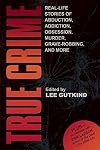
There is a slow, careful nature to the first stories in"True Crime" that sets the tone for a collection that is not lurid, though often deeply disturbing. Instead of merely being a recounting of terrible violence, this book a reflection on crime and criminals, how these touch an individual and form him or her in ways unimaginable, what they say about human nature.
Once I came to the middle of "True Crime" I had a very difficult time setting it aside. The writing is, for the most part, very show more good, and the stories are compelling. I could not stop thinking about two of them: a young gang member murdered by two men, one of whom was his best friend, and a husband who killed his pregnant wife and two young children. The writing for these is exceptionally good, providing just enough information that you understand how the crime came to be committed - but no easy and obvious answers and explanations, because there are none.
I thought for a long time after finishing these stories - about human nature, about that moment when a person decides he's going to commit a crime, about how we think about violence and the way in which a violent death affects not only the family members and close friends but everyone who is touched by it, who knew the victims or the perpetrator. All readers will do a lot of reflecting too, I'm sure.
All the stories here are good, but not all are remarkable; I found myself skimming only one, a rather curious essay that begins with the infamous Mike Tyson ear-biting incident.
My greatest objection was to the lack of photos. Readers are immersed so intensely in an incident, yet provided with no images to connect with the stories. show less
Once I came to the middle of "True Crime" I had a very difficult time setting it aside. The writing is, for the most part, very show more good, and the stories are compelling. I could not stop thinking about two of them: a young gang member murdered by two men, one of whom was his best friend, and a husband who killed his pregnant wife and two young children. The writing for these is exceptionally good, providing just enough information that you understand how the crime came to be committed - but no easy and obvious answers and explanations, because there are none.
I thought for a long time after finishing these stories - about human nature, about that moment when a person decides he's going to commit a crime, about how we think about violence and the way in which a violent death affects not only the family members and close friends but everyone who is touched by it, who knew the victims or the perpetrator. All readers will do a lot of reflecting too, I'm sure.
All the stories here are good, but not all are remarkable; I found myself skimming only one, a rather curious essay that begins with the infamous Mike Tyson ear-biting incident.
My greatest objection was to the lack of photos. Readers are immersed so intensely in an incident, yet provided with no images to connect with the stories. show less
This review was written for LibraryThing Early Reviewers.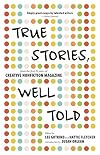
I thoroughly enjoyed this book, mostly for the reasons I read and enjoy creative nonfiction: you can learn something new. But not in the way that one can learn something new in today's front-page headlines (that's journalism, of the inverted pyramid variety, most likely), but something new told in an imaginative, three-dimensional way. That's creative nonfiction. (The title really does say it all.) Creative nonfiction is snippets of the lives and experiences of other people's we may never show more have otherwise encountered. It's discovering things you never new existed, like an in-depth (but not dense) history of Finland's version of baseball; or how, once a year, in Pacific Grove, CA (population: 15,522), overwintering monarch butterflies outnumber people. (See "Pesäpallo: Playing at the Edge of the World" and "The Butterfly Effect", respectively.)
If you are a fan of, say, 'This American Life' on NPR, you will without a doubt enjoy this book. Not all stories will resonate with all people, but, really, that's also a little how the human experience operates.
However, I am biased: I am a former student of creative nonfiction. More to the point, I am a product of the creative nonfiction program at the University of Pittsburgh for which Mr. Gutkind 'fist-fought', as described in his retrospective at the end of the book. I most certainly fan-girled out reading the parts describing the 5th floor of the Cathedral of Learning and Cardiac Hill, and the list mentioning his colleagues read a bit like my transcript. I had slight pangs of regret at the thought that I had chosen not to take Mr. Gutkind's writing seminar, though I suspect I would have produced for him what he calls 'obviously mediocre material'. (I do not write for a living, as my degree trained me to do, nor do I do anything close to it. But if anything, it taught me to be a lifelong reader, and, yes, a creative nonfiction nerd.)
Despite my personal connections and biases, I cannot say it simply enough: Read this book, and, if you like it, support the magazine from which these stellar essays were carefully mined. I know I will. show less
If you are a fan of, say, 'This American Life' on NPR, you will without a doubt enjoy this book. Not all stories will resonate with all people, but, really, that's also a little how the human experience operates.
However, I am biased: I am a former student of creative nonfiction. More to the point, I am a product of the creative nonfiction program at the University of Pittsburgh for which Mr. Gutkind 'fist-fought', as described in his retrospective at the end of the book. I most certainly fan-girled out reading the parts describing the 5th floor of the Cathedral of Learning and Cardiac Hill, and the list mentioning his colleagues read a bit like my transcript. I had slight pangs of regret at the thought that I had chosen not to take Mr. Gutkind's writing seminar, though I suspect I would have produced for him what he calls 'obviously mediocre material'. (I do not write for a living, as my degree trained me to do, nor do I do anything close to it. But if anything, it taught me to be a lifelong reader, and, yes, a creative nonfiction nerd.)
Despite my personal connections and biases, I cannot say it simply enough: Read this book, and, if you like it, support the magazine from which these stellar essays were carefully mined. I know I will. show less
This review was written for LibraryThing Early Reviewers.You can't make this stuff up : the complete guide to writing creative nonfiction--from memoir to literary journalism and everything in between by Lee Gutkind
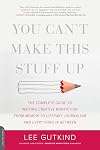
I’ve bought way too many “how to write” books that I’ve parked on my bookshelves and never got around to opening. They sound helpful but are a lot of blather with maybe one good tip among the pages.
This is not that kind of book. I borrowed it from the library, and it’s due today, so I thought I’d have a quick run-through to see if it was worth perhaps adding to my good writing books shelf (it’s quite small) or if I should return it to the library and forget it.
It’s 2 hours show more later and I have been totally immersed. Gutkind has so many approachable examples and ideas that I was positively entranced. I’m working on building up my creative non-fiction writing and this is just the book to encourage me, and anyone else with similar goals.
It’s a rare writer who can clearly explain how it can be done. Gutkind is one. The book is on my to-buy list. Excellent information on all aspects of writing creative non-fiction, with telling examples and exercises I actually want to do.
Bonus! show less
This is not that kind of book. I borrowed it from the library, and it’s due today, so I thought I’d have a quick run-through to see if it was worth perhaps adding to my good writing books shelf (it’s quite small) or if I should return it to the library and forget it.
It’s 2 hours show more later and I have been totally immersed. Gutkind has so many approachable examples and ideas that I was positively entranced. I’m working on building up my creative non-fiction writing and this is just the book to encourage me, and anyone else with similar goals.
It’s a rare writer who can clearly explain how it can be done. Gutkind is one. The book is on my to-buy list. Excellent information on all aspects of writing creative non-fiction, with telling examples and exercises I actually want to do.
Bonus! show less
Lists
Awards


You May Also Like


Associated Authors
Statistics
- Works
- 91
- Also by
- 1
- Members
- 2,372
- Popularity
- #10,825
- Rating
- 3.6
- Reviews
- 129
- ISBNs
- 136
- Favorited
- 1
