
Sigal Samuel
Author of The Mystics of Mile End: A Novel
Works by Sigal Samuel
Tagged
Common Knowledge
Members
Reviews
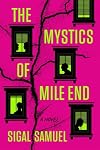
Sigal Samuel’s novel The Mystics of Mile End is an impressively confident debut work of fiction that tells the story of the Meyer family of Mile End (a neighbourhood in Montreal). David, the father of Lev and Samara, is a lapsed Orthodox Jew and professor of Jewish Mysticism. His estrangement from the Orthodox faith was triggered in part by the sudden and tragic death of his wife, who was hit by a car, and his firm disavowal of organized religion is a driving force in his life, one that he show more has imposed on his children. That is why Lev and Samara keep their interest in Judaism to themselves. Lev, a science geek grounded in the real world, is also attracted to religion, and Samara, outwardly an unexceptional young teenager, is secretly studying for her Bat Mitzvah with a neighbor who is a Holocaust survivor and an expert in Jewish history and folklore. The novel’s four-part structure enables the reader to become familiar with the three main characters: Lev, David, and Samara each narrate their own sections while the final section is told from multiple points of view. As time passes the three Meyers are pulled in directions that don’t easily mesh. David has a heart attack and becomes convinced that God is communicating through the murmur that his heart emits; Lev, the budding scientist, paradoxically immerses himself in Orthodox faith and practice; Samara struggles with a distant relationship with her father and her own homosexuality. Central to the concerns of all three is the mythical Tree of Knowledge, which a deranged neighbour, Katz, is reconstructing in his front yard out of household trash and junk. Samuel tells her story with verve and energy, making liberal use of her obvious mastery of Jewish mysticism. The characters are sympathetic. We share their confusion in the face of life-altering choices and are drawn irresistibly into the distinct world that each inhabits. The novel maintains an even keel through the first three sections as we grow to care about the Meyers and their struggles to understand one another and make peace with their Jewish heritage. In the overwrought fourth part Samara’s obsession with the Tree of Knowledge crosses a line and her behaviour becomes erratic. The reader may be surprised to learn that the very act of pursuing certain lines of knowledge can place characters in actual physical peril, and as the novel gallops toward its conclusion everyone’s efforts are focused on saving Samara from a life-threatening situation. The final scene, which employs elements that would be more at home in a gothic potboiler, strains credibility and is not particularly satisfying. Still, Sigal Samuel has written an absorbing and sophisticated first novel that provides the reader with a fascinating glimpse into an arcane world that many of us will never experience first-hand. show less
The Mystics of Mile End is a rich and satisfying novel in a number of ways. It juxtaposes Jewish mysticism and rationalism; it presents a world populated by a mix of hipsters and conservative Jews; it explores the crisis moments in life that can lead to an embrace or rejection of faith; it contrasts scientifically based narrative with the narrative of the Torah and Kabbalah. Add to this the fact that it’s narrated in four different voices and what the reader encounters is a world that’s show more new at every turn.
The Meyer family has lost its mother, and her sudden death leaves not just a gap in the family, but unresolved questions of faith. Her husband, David, an academic, has rejected the conservative Judaism they once shared, replacing it with a rigid rationalism. Samara, the oldest of the two siblings has chosen to secretly prepare for her Bat Mitzvah, a ritual her father has refused to allow her to participate in. Younger brother Lev lives a sort of dual existence, attending Hebrew school in the afternoons, then hanging out with his best friend, who is obsessed with astronomy. He embraces faith and science, without seeing the potential conflicts between them.
This is the situation at the novel’s start. Samuel takes us through years of this family’s life as its members move toward and away from their original faith. At the center of this to-and-fro movement is the Tree of Life—a mystical construction embodying God’s creative energy and the human spirit. Each of the novel’s central characters undertakes a study of the Tree: Lev as a part of his Hebrew school lessons; David after a heart attack; Samara in an attempt to understand her father; and Lev’s astronomer friend in an attempt to understand Samara, for whom he has an unrequited love.
Spending time in the world of Mile End offers readers food for both the heart and mind. This is the sort of story you’ll find yourself turning over as you fall asleep at night, reflecting on the philosophical walls each character builds to circumscribe her/his world and the things that can happen as the foundations of these walls are gradually undermined. show less
The Meyer family has lost its mother, and her sudden death leaves not just a gap in the family, but unresolved questions of faith. Her husband, David, an academic, has rejected the conservative Judaism they once shared, replacing it with a rigid rationalism. Samara, the oldest of the two siblings has chosen to secretly prepare for her Bat Mitzvah, a ritual her father has refused to allow her to participate in. Younger brother Lev lives a sort of dual existence, attending Hebrew school in the afternoons, then hanging out with his best friend, who is obsessed with astronomy. He embraces faith and science, without seeing the potential conflicts between them.
This is the situation at the novel’s start. Samuel takes us through years of this family’s life as its members move toward and away from their original faith. At the center of this to-and-fro movement is the Tree of Life—a mystical construction embodying God’s creative energy and the human spirit. Each of the novel’s central characters undertakes a study of the Tree: Lev as a part of his Hebrew school lessons; David after a heart attack; Samara in an attempt to understand her father; and Lev’s astronomer friend in an attempt to understand Samara, for whom he has an unrequited love.
Spending time in the world of Mile End offers readers food for both the heart and mind. This is the sort of story you’ll find yourself turning over as you fall asleep at night, reflecting on the philosophical walls each character builds to circumscribe her/his world and the things that can happen as the foundations of these walls are gradually undermined. show less
 This review was written for LibraryThing Early Reviewers.
The Myer family lives in Montreal’s Mile End neighborhood. The neighborhood is mostly made up of Hasidic Jews and a few random Hipsters. Father, David is a professor of Jewish Mysticism, but no longer believes since the passing of his wife. Samara, is thirteen and secretly planning her bat mitvah. Lev idolizes his older sister and has found a task by helping his neighbor Mr. Katz. Mr. Katz is attempting to build the Tree of Life out of toilet paper rolls, dental floss and green painted show more leaves.
There are a lot of things going on in this book concerning each family member as they go through cycles of hope, fear and loss. The writing is fantastically layered where details come out one by one. The characters are what truly make this story wonderful. Each character is searching for something, something to believe in, and something to hold on to. Samara and Lev have a great relationship and l love that when left to their own devices for dinner they make mac and cheese with M&M’s and pizza with gummy bears. As the Tree of Life infiltrates each of their lives, David, Sam and Lev have a chance at falling deeper. This story is wonderfully complex, one that you will have to sit with and think about. It combines science and religion, fantasy, heartbreak, family, and most of all, hope.
This book was received for free in return for an honest review. show less
There are a lot of things going on in this book concerning each family member as they go through cycles of hope, fear and loss. The writing is fantastically layered where details come out one by one. The characters are what truly make this story wonderful. Each character is searching for something, something to believe in, and something to hold on to. Samara and Lev have a great relationship and l love that when left to their own devices for dinner they make mac and cheese with M&M’s and pizza with gummy bears. As the Tree of Life infiltrates each of their lives, David, Sam and Lev have a chance at falling deeper. This story is wonderfully complex, one that you will have to sit with and think about. It combines science and religion, fantasy, heartbreak, family, and most of all, hope.
This book was received for free in return for an honest review. show less
Samara and Lev are kids who've lost their mother at a young age and are being raised by their professor father with the help of many of the neighbors in their Canadian Mile End neighborhood. Their religious mother and non-practicing father are raising them in a Hasidic Jewish neighborhood, with Samara planning on participating in her bat mitzvah behind her father's back. Fearing her father's wrath, she practices her chanting and candle-lighting with a neighbor who supports her religious show more journey. Another neighbor, whom some consider a crazy old man, is building a tree of life in his front yard and has caught Lev's attention. Lev spends time with this man, helping him build this tree, then wonders exactly what this tree's meaning is.
At a certain point in his life, their father David who teaches Jewish mysticism decides to learn more about Kabbalah and the tree of life. With his daughter Samara choosing a religious path and his son Lev wondering about the tree of life, David decides he should study the tree of life and offer a class on it himself. Through this journey, David takes on the learning of Kabbalah, and searches for the meaning of life, and finds that he must sacrifice himself to this cause because he just cannot stop chasing the meaning.
When their father dies, both Lev and Samara fall into their own issues, Samara becoming even more obsessed with the tree of life, Lev also wanting to know more about this tree from their crazy neighbor, they both are searching for meaning from a world that has taken their parents and left them only with each other and the bonds they have made with close friends; will that be enough, or is there more? Told from alternate points of view, this story lets you in on each person's deepest thoughts at a certain point in time.
I really am not familiar with the Jewish religion, Kaballah, nor the fact there was a Jewish mysticism that had nothing to do with what I thought mysticism actually was. I found this underlying theme somewhat overwhelming, but the story of the people, how their lives interacted and how they were looking for more meaning in their lives was interesting. I won this copy via LibraryThing. show less
At a certain point in his life, their father David who teaches Jewish mysticism decides to learn more about Kabbalah and the tree of life. With his daughter Samara choosing a religious path and his son Lev wondering about the tree of life, David decides he should study the tree of life and offer a class on it himself. Through this journey, David takes on the learning of Kabbalah, and searches for the meaning of life, and finds that he must sacrifice himself to this cause because he just cannot stop chasing the meaning.
When their father dies, both Lev and Samara fall into their own issues, Samara becoming even more obsessed with the tree of life, Lev also wanting to know more about this tree from their crazy neighbor, they both are searching for meaning from a world that has taken their parents and left them only with each other and the bonds they have made with close friends; will that be enough, or is there more? Told from alternate points of view, this story lets you in on each person's deepest thoughts at a certain point in time.
I really am not familiar with the Jewish religion, Kaballah, nor the fact there was a Jewish mysticism that had nothing to do with what I thought mysticism actually was. I found this underlying theme somewhat overwhelming, but the story of the people, how their lives interacted and how they were looking for more meaning in their lives was interesting. I won this copy via LibraryThing. show less
This review was written for LibraryThing Early Reviewers.Lists
Awards


You May Also Like


Statistics
- Works
- 2
- Members
- 221
- Popularity
- #101,334
- Rating
- 3.7
- Reviews
- 17
- ISBNs
- 12
- Languages
- 1
