
Nomi Eve
Author of The Family Orchard
About the Author
Nomi Eve received an N.F.A. in fiction writing from Brown University, and has worked as a freelance book reviewer for The Village Voice, the Boston Globe, New York Newsday, and the Jerusalem Post. Her stories have appeared in Glimmer Train Stories and The Village Voice Literary Supplement. The show more Family Orchard is her first novel. She lives in Cambridge, Massachusetts. (Bowker Author Biography) show less
Image credit: Elena Seibert/Knopf
Works by Nomi Eve
Tagged
Common Knowledge
- Birthdate
- 1968-03-13
- Gender
- female
- Nationality
- USA
- Places of residence
- Cambridge, Massachusetts, USA
- Associated Place (for map)
- Massachusetts, USA
Members
Reviews
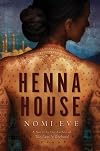
This is a beautifully written, meticulously researched book. At first I thought I was reading about a young girl in Biblical times Yemen. The Jews and the Muslims are living side by side with the Muslims ruling and controlling every minute detail of the lives of the Jews. The homes, clothing, living conditions, and cultural mores are biblical. It was quite shocking to realize that the story starts around the 1920's! Then I thought about how many people, especially girls and women are still show more living in similar conditions in much of the world, and it was not hard to believe that such an almost pre-historic existence could exist concurrently with the first trans-Atlantic flight of Charles Lindburgh, the Baseball career of Babe Ruth etc.
All that aside, this is a beautiful, rich story of a young girl growing up in a small primative village where girls are betrothed as toddlers, married as soon as they bleed, and live rather bleak lives. Jewish children who are orphaned can legally be "snatched" by "The Confiscator", a Muslim, and then converted to Islam and adopted by Muslim families. Adela is the youngest child, the only girl, with a loving but ailing father, a cold, harsh mother, and older, brutish brothers. At the age of 5 things are looking dismal as parents cannot find her a husband -to -be. An exotic cousin comes into her life and things change dramatically. (No more plot details.....)
The story flows Adela as she grows up, learns about being a woman, finds love, friendship, sisterhood, heartbreak and discovers the world beyond her tiny village. The art of Henna plays a huge role and it is a fascinating one. As someone who has had minor hennas applied I found the descriptions of the role henna played in the Yemenite culture so interesting. Once again there is this commonality between the Jewish and Muslim faiths....(The author has created a website that offers more information about Henna etc).
Nomi Eve has created memorable characters, and shone light into a culture and people who were almost destroyed because of Hitler, WW2 and the creation of the State of Israel. As the Yemini Jews fled to Israel many chose to adopt modern lifestyles and their dress, foods and even hennas were pushed aside. Happily there is now a resurgence of appreciation for these cultural touchstones and Nomi Eve's novel will help to further encourage and celebrate them. show less
All that aside, this is a beautiful, rich story of a young girl growing up in a small primative village where girls are betrothed as toddlers, married as soon as they bleed, and live rather bleak lives. Jewish children who are orphaned can legally be "snatched" by "The Confiscator", a Muslim, and then converted to Islam and adopted by Muslim families. Adela is the youngest child, the only girl, with a loving but ailing father, a cold, harsh mother, and older, brutish brothers. At the age of 5 things are looking dismal as parents cannot find her a husband -to -be. An exotic cousin comes into her life and things change dramatically. (No more plot details.....)
The story flows Adela as she grows up, learns about being a woman, finds love, friendship, sisterhood, heartbreak and discovers the world beyond her tiny village. The art of Henna plays a huge role and it is a fascinating one. As someone who has had minor hennas applied I found the descriptions of the role henna played in the Yemenite culture so interesting. Once again there is this commonality between the Jewish and Muslim faiths....(The author has created a website that offers more information about Henna etc).
Nomi Eve has created memorable characters, and shone light into a culture and people who were almost destroyed because of Hitler, WW2 and the creation of the State of Israel. As the Yemini Jews fled to Israel many chose to adopt modern lifestyles and their dress, foods and even hennas were pushed aside. Happily there is now a resurgence of appreciation for these cultural touchstones and Nomi Eve's novel will help to further encourage and celebrate them. show less
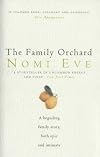
Where to begin? I had this book on my shelf for ages - years in fact. Something led me to take it off the shelf and start it a few weeks back... Maybe because I have been reading other books at the same time, I found the opening chapters took a while to get into. I soon got into my stride though, and found myself really enjoying Nomi Eve's writing.
Her characters were so real and interesting. Their flaws and foibles making them very intriguing personalities. This is a book about family and show more place. The story covers the generations of the Sepher family from their arrival in Jerusalem in the mid-19th century through to their moving to a small agricultural community near the citrus groves around Petah Tiqva. The family orchard of the title is the livelihood and home that Shimon Sepher makes for his family in the early 20th century, a time when Palestine was changing rapidly as the Zionist pioneers move to their promised land. The orchard would in time pass to son and then grandson.
The historical setting for this generational novel is the background plot as the dramatic national events through the years manifest themselves on an intimate scale. The orchard is of course the central character in the story and witnesses the key moments in our protagonists' lives. Eve writes with a really lovely feeling full of poignancy and poetry - but never going overboard with it. I particularly loved the detail of the orchard's life cycle and the different seasons that would pass, it helped give the story a nice rhythm. Overall I enjoyed it very much. show less
Her characters were so real and interesting. Their flaws and foibles making them very intriguing personalities. This is a book about family and show more place. The story covers the generations of the Sepher family from their arrival in Jerusalem in the mid-19th century through to their moving to a small agricultural community near the citrus groves around Petah Tiqva. The family orchard of the title is the livelihood and home that Shimon Sepher makes for his family in the early 20th century, a time when Palestine was changing rapidly as the Zionist pioneers move to their promised land. The orchard would in time pass to son and then grandson.
The historical setting for this generational novel is the background plot as the dramatic national events through the years manifest themselves on an intimate scale. The orchard is of course the central character in the story and witnesses the key moments in our protagonists' lives. Eve writes with a really lovely feeling full of poignancy and poetry - but never going overboard with it. I particularly loved the detail of the orchard's life cycle and the different seasons that would pass, it helped give the story a nice rhythm. Overall I enjoyed it very much. show less
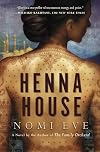
Henna House is the story of a Yemeni Jewish family written in the form of a memoir by the family's youngest daughter Adela. We meet her 1923, where five-year-old Adela is the ninth child and only daughter. She lives in fear of confiscation under the Muslim “Orphan’s Decree” should her sick father die prematurely. Through her narration, Adela is able to give the reader a unique look into a culture full of tradition, mysticism and history. When she meets her cousin Hani she is drawn into show more the seductive and ritualistic art of henna. All the primary characters here are female and, although deferential to the men, these are forceful women living in difficult times. Their sacred rituals bind them in their tasks of marriage, child-rearing and housekeeping. But a sense of fear and impending catastrophe infuses the story as increasingly antisemitic laws passed by Yemen's Imam cast a pall over Adela's life. Her father grows sickly, and her mother desperately searches for a boy suitable for Adela's betrothal in order to save her from being adopted and converted by a Muslim family.
I really enjoyed Henna House. The historical aspects of the story, the intriguing characters, and the cultural traditions were fascinating. The story was beautifully written and I especially loved the way female relationships were portrayed, and the religious and Jewish culture references. I knew very little about the Yemen Jews and what occurred in the 1920s. Reading this book was definitely an eye-opener for me. I was unaware that the Yemeni Jews had henna as part of their traditions, and I found the parts of this novel featuring the henna drawing to be absolutely fascinating. I've never read a book by this author but I'll definitely keep an eye out for another one in the future. show less
I really enjoyed Henna House. The historical aspects of the story, the intriguing characters, and the cultural traditions were fascinating. The story was beautifully written and I especially loved the way female relationships were portrayed, and the religious and Jewish culture references. I knew very little about the Yemen Jews and what occurred in the 1920s. Reading this book was definitely an eye-opener for me. I was unaware that the Yemeni Jews had henna as part of their traditions, and I found the parts of this novel featuring the henna drawing to be absolutely fascinating. I've never read a book by this author but I'll definitely keep an eye out for another one in the future. show less
Jews and Muslims lived together in peace but perhaps not total harmony, since there were disagreements between them for which the Muslims always had the upper hand. They lived by their rules and owed their lives to their good graces. Orphaned Jewish children were taken into the Muslim community, by the Confiscator. Relatives had to prove they were financially able to care for the orphan, and most of the time they were too poor to satisfy the regulations. The cloud of confiscation hung over show more Adela Damari because her father, a fine shoemaker, was in very poor health. If her father died, she could be spirited away from her world, by the Confiscator, and forced to live and work in his.
We traveled with Adela from Quaraah to Aden and finally on to Palestine and then Israel, meeting members of her family along the way. When she was nine, and her cousin Asaf was only a year or so older, they were pledged to each other, to prevent her confiscation. Both of them seemed older than their young years. Hani, Adela’s friend and cousin, also appeared too wise for her age, and all three of them seemed too promiscuous for the times. Binyamin, another friend of Adela’s, seemed quieter and more reserved. Except for Adela’s mom, Sulamita, most of the women seemed relaxed and gay, more open minded, in some ways, even in their remarks. She on the other hand was strict and rigid, often cruel in her punishments. Adela, therefore, relied on several of her aunts for warmth and understanding. My favorite character was Binyamin who remained true to himself throughout and my least was Asaf who was more of a chameleon, fitting himself into the moment.
The Yemeni Jews seemed to live in the past, in a time warp, with their traditions, their religion and their superstitions. Many were illiterate. Girls, especially, received no education. Some Jews who succeeded were portrayed as ruthless and/or deceptive and devious. Others were depicted as kind, simple folk. The Muslims were portrayed largely as brutal and barbaric, killing and maiming simply for the sake of revenge, just and unjust. The Jews suffered many hardships but seemed to find joy in simple pleasures like Henna painting, cloth dyeing and preparing meals. The men, also, took pride in the work they performed to support their families. Eventually, though, world events forced many to leave their homes and travel to distant places.
Sometimes, the book seemed too simplistic and/or contrived. I found the scenes depicting little children consumed with ideas of sex, inappropriate and most unrealistic. Their world was a backward one, so I had trouble conceiving of their secret meetings or of their physical desire developing as it did. I also did not think it was necessary for the author to provide Sulamita with a lesbian experience in order to explain away her changes of mind. It seemed like the book was suddenly pandering to today’s liberal values by pointing out her unjust ostracism. As a witness to the experience, Aunt Rahel used the threat of exposure, in order to get her way.
Although I found it to be a slow read, at first, in the last 75 pages, the story suddenly came to life with the influence of The Holocaust and the British Partition of the Holy Land in 1947, which caused the Arabs to go on a rampage raining down destruction and death on Jews wherever they found them. As it moved forward in time, I grew more engaged with the story. I thought the story got bogged down in the trials and triumphs of day to day life, rather than in the big picture world, of Jewry, and so it became less of an historic narrative and more of a fairy tale. The introduction of a certain amount of mysticism or magic, trending into the supernatural, with prescient dreams and Henna designs that came to life, stretched my imagination a little, but it did add some charm to the story. This book relates how some survived. It is a story of violence and betrayal, loyalty and infidelity, all wrapped up in the pages of a love story.
Still, I learned many things from reading the book. I learned about the custom of henna painting, and that was really interesting. I was surprised to find so many parallels between the ways the Muslims and the Jews treated their women and the way in which both ethnic groups dressed. Both adhered to strict codes of attire. I noted that the male progeny seemed arrogant while the women were expected to be totally subservient and were not only purchased as chattel, they were treated as such. I also learned about the Confiscator who watched the community carefully to discover the next Jewish orphan in order to appropriate and immerse the child into the Muslim world. An exceptional lesson for me was learning about The Magic Carpet which was an effort to rescue the Yemeni Jews fleeing from the Arabs who were attacking them, robbing, beating and murdering them, for no reason other than they seemed to want to and that they were there. Previously, I had only known about the rescue of the Ethiopian Jews, who were also forced to flee their country. show less
We traveled with Adela from Quaraah to Aden and finally on to Palestine and then Israel, meeting members of her family along the way. When she was nine, and her cousin Asaf was only a year or so older, they were pledged to each other, to prevent her confiscation. Both of them seemed older than their young years. Hani, Adela’s friend and cousin, also appeared too wise for her age, and all three of them seemed too promiscuous for the times. Binyamin, another friend of Adela’s, seemed quieter and more reserved. Except for Adela’s mom, Sulamita, most of the women seemed relaxed and gay, more open minded, in some ways, even in their remarks. She on the other hand was strict and rigid, often cruel in her punishments. Adela, therefore, relied on several of her aunts for warmth and understanding. My favorite character was Binyamin who remained true to himself throughout and my least was Asaf who was more of a chameleon, fitting himself into the moment.
The Yemeni Jews seemed to live in the past, in a time warp, with their traditions, their religion and their superstitions. Many were illiterate. Girls, especially, received no education. Some Jews who succeeded were portrayed as ruthless and/or deceptive and devious. Others were depicted as kind, simple folk. The Muslims were portrayed largely as brutal and barbaric, killing and maiming simply for the sake of revenge, just and unjust. The Jews suffered many hardships but seemed to find joy in simple pleasures like Henna painting, cloth dyeing and preparing meals. The men, also, took pride in the work they performed to support their families. Eventually, though, world events forced many to leave their homes and travel to distant places.
Sometimes, the book seemed too simplistic and/or contrived. I found the scenes depicting little children consumed with ideas of sex, inappropriate and most unrealistic. Their world was a backward one, so I had trouble conceiving of their secret meetings or of their physical desire developing as it did. I also did not think it was necessary for the author to provide Sulamita with a lesbian experience in order to explain away her changes of mind. It seemed like the book was suddenly pandering to today’s liberal values by pointing out her unjust ostracism. As a witness to the experience, Aunt Rahel used the threat of exposure, in order to get her way.
Although I found it to be a slow read, at first, in the last 75 pages, the story suddenly came to life with the influence of The Holocaust and the British Partition of the Holy Land in 1947, which caused the Arabs to go on a rampage raining down destruction and death on Jews wherever they found them. As it moved forward in time, I grew more engaged with the story. I thought the story got bogged down in the trials and triumphs of day to day life, rather than in the big picture world, of Jewry, and so it became less of an historic narrative and more of a fairy tale. The introduction of a certain amount of mysticism or magic, trending into the supernatural, with prescient dreams and Henna designs that came to life, stretched my imagination a little, but it did add some charm to the story. This book relates how some survived. It is a story of violence and betrayal, loyalty and infidelity, all wrapped up in the pages of a love story.
Still, I learned many things from reading the book. I learned about the custom of henna painting, and that was really interesting. I was surprised to find so many parallels between the ways the Muslims and the Jews treated their women and the way in which both ethnic groups dressed. Both adhered to strict codes of attire. I noted that the male progeny seemed arrogant while the women were expected to be totally subservient and were not only purchased as chattel, they were treated as such. I also learned about the Confiscator who watched the community carefully to discover the next Jewish orphan in order to appropriate and immerse the child into the Muslim world. An exceptional lesson for me was learning about The Magic Carpet which was an effort to rescue the Yemeni Jews fleeing from the Arabs who were attacking them, robbing, beating and murdering them, for no reason other than they seemed to want to and that they were there. Previously, I had only known about the rescue of the Ethiopian Jews, who were also forced to flee their country. show less
Lists
Awards


You May Also Like


Statistics
- Works
- 2
- Members
- 756
- Popularity
- #33,638
- Rating
- 3.6
- Reviews
- 27
- ISBNs
- 27
- Languages
- 6