
Simon Critchley
Author of The Book of Dead Philosophers
About the Author
English philosopher Simon Critchley was born on February 27, 1960. He earned his BA (1985) and PhD (1988) from the University of Essex in England. Critchley received his M.Phil. from France's University of Nice in 1987. Critchley has held university fellow, lecturer, reader, and professor positions show more and was the Director of the Centre for Theoretical Studies at the University of Essex. Additionally, Critchley was President of the British Society for Phenomenology from 1994-1999, he held a Humboldt Research Fellowship in Philosophy at the University of Frankfurt, and was Programme Director of the Collège International de Philosophie. Since 2004 Critchley has taught philosophy at the New School for Social Research in New York. Critchley's publications include "The Ethics of Deconstruction: Derrida and Levinas," the collection of essays "Ethics-Politics-Subjectivity," "Continental Philosophy: A Very Short Introduction," "On Humour," "Things Merely Are," "Infinitely Demanding," and the New York Times bestseller "The Book of Dead Philosophers". (Bowker Author Biography) show less
Works by Simon Critchley
Ethics-Politics-Subjectivity: Essays on Derrida, Levinas & Contemporary French Thought (1999) 95 copies
O Livro dos Filósofos Mortos - eBook 2 copies
De døde filosoffers bog 1 copy
Mystical Anarchism 1 copy
Is Utopianism Dead? 1 copy
PHILOSOPHY IN 30 DAYS 1 copy
Why Heidegger matters 1 copy
Associated Works
Difficulties of Ethical Life (Perspectives in Continental Philosophy) (2008) — Contributor — 4 copies
Adbusters Magazine Single Issue Sep/Oct 2004 (Redefinging Progress: No Future, #55 Vol 12 No. 5) (2004) — Contributor — 1 copy
Tagged
Common Knowledge
- Legal name
- Critchley, Simon James
- Birthdate
- 1960-02-27
- Gender
- male
- Education
- University of Essex (BA|1985|Ph.D|1988)
University of Nice (M.Phil|1987) - Occupations
- professor
philosopher - Organizations
- New School for Social Research
University of Essex - Relationships
- Webster, Jamieson (ex-wife)
- Nationality
- UK
- Birthplace
- Letchworth, Hertfordshire, England, UK
- Places of residence
- New York, New York, USA
- Associated Place (for map)
- UK
Members
Reviews
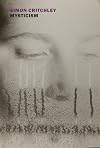
It is hard not to admire someone so skilled at making words describe the indescribable. Ecstasy is an amorphous, shouted whisper of a place, but Critchley is brave enough and adventurous enough to attempt to use words to bring us there. Bravo. What scorn may exist in a readers mind for the irrational experiences of mysticism must needs be arrested, for a moment at least, as Critchley looks through a window of Christian experience to see what is really there. It’s not magic; it is the real show more experiences of real people finding a suitable structure of living through this realm of reality. An inspiring read. show less
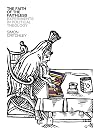
I wanted to like The Faith of the Faithless more than I ended up doing. In fact I wanted to love this book, and at first I thought I might.
"Thinkers whose company I have long valued, Like Augustine and Pascal, raise exactly the right questions, even if I cannot accept their answers," he writes in his introduction. A promising start but what follows, for me, feels far too much like a conceptual game—much too concerned with name-checking one postmodernist reference point after another.
(I show more think the point where I really got off the bus altogether was his extended discussion of Paul—well, supposedly Paul, but really Heidegger. Chapter 4 is absolutely thick with one Heideggerian concept and term after another, and does absolutely nothing to explicate any of it. Unless you have spend days if not weeks, months or years of your life decoding Heidegger's dense conceptual/philosophical apparatus already, this chapter may as well be skipped in its entirety.)
This book piles high its series of replacements for transcendence. If there is no capital-B Beyond to pin our hopes on we instead get a long series of small-b beyonds. Over the course of this text we look beyond the authority of the general will (p. 51), beyond human force (p. 62), beyond the "materiality of the greenback" (p. 78), beyond all depths (p. 127), beyond normal jouissance (p. 140), beyond the self (p. 154). We pause briefly to touch politically-correct base and say that Christ is not "a conduit to a transcendent beyond," and then immediately get back to the beyond-fixation: beyond the self (p. 186), beyond good and evil (p. 192), beyond "the realm of thought and knowledge" (p. 223), beyond the limits of group identity (p. 244), beyond even particularity (p. 244). That is a whole lot of beyonding for a supposedly non-transcendentalist text.
But wait—if you thought there was only so much aestheticized sublime excess that could be taken on board as a replacement for religion—oh, there's more. Be prepared to exceed "the limits of potency and strength" (p. 14), exceed the power of the self (p. 18), exceed knowledge itself (p. 140), exceed your own powers of projection (p. 154), exceed human strength (p. 160), exceed human power (p. 162) and human strength (pps. 180, 181, 182), exceed the self itself (p. 183), exceed "the limit of human potentiality" (p. 205), exceed "the finitude of any context" (p. 221)... on it goes. Beyond excessive, wouldn't you say?
The last chapter before the conclusion is a strangely strained confrontation with Slavoj Zizek, who has apparently taken the time to critique Critchley's critique of him—which Critchley must now critique in turn. I honestly do not know enough about Zizek's texts to know just how fair or unfair Critchley's fiery criticisms are, but the whole thing feels overly performative, like he just wants to dance in the spotlight thrown on his critique by Actual Attention from the Actually Famous Guy. What's more, even if I haven't read a substantial portion of Zizek's oeuvre, I've heard enough extended interviews with him at this point to know Zizek's take on political protest is at least more nuanced and more flexible than how Critchley portrays it here. "I challenge anyone to find a positive usage of the word 'postmodern' in anything I've written," he says in completely unconvincing protest at Zizek's classification of him as part of the (weaksauce) "postmodern left." If it quacks like a duck etc. etc.
Maybe if I knew my Heidegger and knew my Zizek I'd be much more qualified to judge Critchley's book, but in the meantime all I can do is, by turns, be annoyed or intrigued by his various provocative arguments... and wonder what could have been if someone as clearly intelligent as Critchley could aim his efforts higher than just cleverly playing the cultural theory game. show less
"Thinkers whose company I have long valued, Like Augustine and Pascal, raise exactly the right questions, even if I cannot accept their answers," he writes in his introduction. A promising start but what follows, for me, feels far too much like a conceptual game—much too concerned with name-checking one postmodernist reference point after another.
(I show more think the point where I really got off the bus altogether was his extended discussion of Paul—well, supposedly Paul, but really Heidegger. Chapter 4 is absolutely thick with one Heideggerian concept and term after another, and does absolutely nothing to explicate any of it. Unless you have spend days if not weeks, months or years of your life decoding Heidegger's dense conceptual/philosophical apparatus already, this chapter may as well be skipped in its entirety.)
This book piles high its series of replacements for transcendence. If there is no capital-B Beyond to pin our hopes on we instead get a long series of small-b beyonds. Over the course of this text we look beyond the authority of the general will (p. 51), beyond human force (p. 62), beyond the "materiality of the greenback" (p. 78), beyond all depths (p. 127), beyond normal jouissance (p. 140), beyond the self (p. 154). We pause briefly to touch politically-correct base and say that Christ is not "a conduit to a transcendent beyond," and then immediately get back to the beyond-fixation: beyond the self (p. 186), beyond good and evil (p. 192), beyond "the realm of thought and knowledge" (p. 223), beyond the limits of group identity (p. 244), beyond even particularity (p. 244). That is a whole lot of beyonding for a supposedly non-transcendentalist text.
But wait—if you thought there was only so much aestheticized sublime excess that could be taken on board as a replacement for religion—oh, there's more. Be prepared to exceed "the limits of potency and strength" (p. 14), exceed the power of the self (p. 18), exceed knowledge itself (p. 140), exceed your own powers of projection (p. 154), exceed human strength (p. 160), exceed human power (p. 162) and human strength (pps. 180, 181, 182), exceed the self itself (p. 183), exceed "the limit of human potentiality" (p. 205), exceed "the finitude of any context" (p. 221)... on it goes. Beyond excessive, wouldn't you say?
The last chapter before the conclusion is a strangely strained confrontation with Slavoj Zizek, who has apparently taken the time to critique Critchley's critique of him—which Critchley must now critique in turn. I honestly do not know enough about Zizek's texts to know just how fair or unfair Critchley's fiery criticisms are, but the whole thing feels overly performative, like he just wants to dance in the spotlight thrown on his critique by Actual Attention from the Actually Famous Guy. What's more, even if I haven't read a substantial portion of Zizek's oeuvre, I've heard enough extended interviews with him at this point to know Zizek's take on political protest is at least more nuanced and more flexible than how Critchley portrays it here. "I challenge anyone to find a positive usage of the word 'postmodern' in anything I've written," he says in completely unconvincing protest at Zizek's classification of him as part of the (weaksauce) "postmodern left." If it quacks like a duck etc. etc.
Maybe if I knew my Heidegger and knew my Zizek I'd be much more qualified to judge Critchley's book, but in the meantime all I can do is, by turns, be annoyed or intrigued by his various provocative arguments... and wonder what could have been if someone as clearly intelligent as Critchley could aim his efforts higher than just cleverly playing the cultural theory game. show less

Not a pop star biography, this is a loving philosophical investigation into the underpinnings of David Bowie’s many personas and why he has exerted a practically lifelong fascination over the author. Predictably my favorite elements of this book were the parts where the author talked about his own life and what individual Bowie songs meant to him. Like you would expect, Critchley covers gender, sexuality, creating identities, and dystopias. But what was different from everything else show more I’ve read about Bowie was the material about narrative identities and how Bowie “breaks superficial conventions between authenticity and truth.” Critchley explains how David Bowie uses utterly constructed, self-conscious fakery to be original and convey deep emotional truth, with just one example being an anecdote about how Robert Fripp watched Bowie trying to generate exactly the right emotion in his voice, playing the loop and trying different things over and over.
This same dynamic was unconsciously illustrated in a description of how David Bowie didn’t attend his brother Terry’s funeral after his death by suicide, because he didn’t want to turn it into a media circus. Critchley says, “The note on Bowie’s bouquet was extremely poignant: ‘You’ve seen more things than we can imagine, but all these moments will be lost—like tears washed away by the rain.’” My reaction to this was, yeah, it’s extremely poignant, especially if you’re a fan of the movie Blade Runner, since Bowie’s note is an unabashed rephrasing of Rutger Hauer’s character’s dying speech at the end, minus the bit about space travel. Always a pose to tell a true thing. Also, it’s worth noting that I had to look up what year Blade Runner came out and make sure it was first, because Bowie is such an influential icon that I thought it wasn’t out of the question that the screenplay writers were copying Bowie instead of the other way around.
What other book is this like? Every other book about David Bowie, but thankfully not too much so. Okay, it was also kind of like Uncommon: An Essay on Pulp by Own Hatherley
Theme Song? “The Secret Life of Arabia” show less
This same dynamic was unconsciously illustrated in a description of how David Bowie didn’t attend his brother Terry’s funeral after his death by suicide, because he didn’t want to turn it into a media circus. Critchley says, “The note on Bowie’s bouquet was extremely poignant: ‘You’ve seen more things than we can imagine, but all these moments will be lost—like tears washed away by the rain.’” My reaction to this was, yeah, it’s extremely poignant, especially if you’re a fan of the movie Blade Runner, since Bowie’s note is an unabashed rephrasing of Rutger Hauer’s character’s dying speech at the end, minus the bit about space travel. Always a pose to tell a true thing. Also, it’s worth noting that I had to look up what year Blade Runner came out and make sure it was first, because Bowie is such an influential icon that I thought it wasn’t out of the question that the screenplay writers were copying Bowie instead of the other way around.
What other book is this like? Every other book about David Bowie, but thankfully not too much so. Okay, it was also kind of like Uncommon: An Essay on Pulp by Own Hatherley
Theme Song? “The Secret Life of Arabia” show less
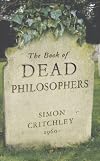
I tend to be pretty generous in my review of books -- I genuinely like most of what I read. But Simon Critchley's Book of Dead Philosophers is an exception. This book was pretty much completely terrible. The premise is amazing; he proclaims that he's going to look at how philosophers have viewed death and also discuss some of the ways said philosophers met their own end. From the first few pages of the book, I was very interested in comparing how philosophers have viewed death.
Once Critchley show more actually starts discussing these issues, the book become a rather flaccid catalog of philosophers coupled with weak summaries of their ideas with an equally disappointing discussion of their deaths. Reading The Book of Dead Philosophers has all the excitement of reading the cargo manifesto of a Dutch freighter. Take for instance, his treatment of the philosopher Demetrius:
Fatally bitten by an asp
That's it. What the heck even include this entry unless you've just decided to list ways that these people died, no matter how generic and uninteresting they are. Lactantius does a much better job of it if you're into that sort of thing.
As far as I can tell, Critchley has a rather materialist view of death and has little to say about other views beyond a mild amusement and dismissal. Aside from a few passing nods, anything outside of the western tradition is overlooked. Indian philosophy is entirely ignored as is Buddhism. Islam and Judaism aren't much better treated. Critchley's views are beside the point to me -- he can believe what he likes. My problem is that his treatment of the subject matter is so superficial as to be meaningless. Avoid this book. show less
Once Critchley show more actually starts discussing these issues, the book become a rather flaccid catalog of philosophers coupled with weak summaries of their ideas with an equally disappointing discussion of their deaths. Reading The Book of Dead Philosophers has all the excitement of reading the cargo manifesto of a Dutch freighter. Take for instance, his treatment of the philosopher Demetrius:
Fatally bitten by an asp
That's it. What the heck even include this entry unless you've just decided to list ways that these people died, no matter how generic and uninteresting they are. Lactantius does a much better job of it if you're into that sort of thing.
As far as I can tell, Critchley has a rather materialist view of death and has little to say about other views beyond a mild amusement and dismissal. Aside from a few passing nods, anything outside of the western tradition is overlooked. Indian philosophy is entirely ignored as is Buddhism. Islam and Judaism aren't much better treated. Critchley's views are beside the point to me -- he can believe what he likes. My problem is that his treatment of the subject matter is so superficial as to be meaningless. Avoid this book. show less
Lists
Awards


You May Also Like


Associated Authors
Statistics
- Works
- 68
- Also by
- 6
- Members
- 3,463
- Popularity
- #7,346
- Rating
- 3.6
- Reviews
- 45
- ISBNs
- 202
- Languages
- 15
- Favorited
- 2