
Robert Peston
Author of Who Runs Britain?: and Who's to Blame for the Economic Mess We're in
About the Author
Image credit: Steve Punter
Works by Robert Peston
How Do We Fix This Mess? The Economic Price of Having it all, and the Route to Lasting Prosperity (2012) 77 copies, 5 reviews
Associated Works
Tagged
Common Knowledge
- Birthdate
- 1960-04-25
- Gender
- male
- Occupations
- journalist
author - Organizations
- British Broadcasting Corporation
- Relationships
- Busby, Siân (wife)
Peston, Maurice (father) - Nationality
- UK
UK - Associated Place (for map)
- UK
Members
Reviews
How Do We Fix This Mess? The Economic Price of Having it all, and the Route to Lasting Prosperity by Robert Peston
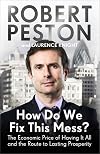
The financial catastrophe of the last 10 years has been written about many times - describing what happened, explaining what happened or proposing what has to happen next. Despite the title, Peston's book is mainly about explaining what happened with a little advice about what needs to happen next. Peston's position as a financial/business analyst and reporter gave him a front row seat during the crisis and gives him the right skills to explain what went wrong to the rest of us. That he does show more not quite succeed in this is, I think, more due to the enormous complexity of the financial organisations and structures that we have in place than to any failures on his part.
Peston presents a good description of why things went wrong for the technical laymen. This is not focused on the personalities or the individual banks involved (for that, see 'Too Big To Fail'). We get the macro-economic framework that put us where we are and why things happened the way they did. The primary focus is the UK and eurozone economies with little about the USA or the rest of the world, although China gets a fair look-in. This is not a failing, just a particular focus and a reminder that not everything is a reaction to what happens Stateside.
The most depressing outcome from reading this book is the realisation that our financial and economic frameworks have become so complex and so intertwined that no one, perhaps least of all the people who are supposed to be governing it all, have any real grasp of the big picture and, worse, have no idea what the real impact of any particular action they take might have. As Mario Andretti said - 'If you think you're in control of the car, you're not going fast enough' - and I think that is where we are today. The bankers are driving this global economy car and are only concerned with speed, not with safety, fuel efficiency or even direction.
Lastly, I think it is inevitable that a current affairs book like this can quickly become out-of-date and it proves so here in some places (the book was published in 2012). It is also sad to see that some of Peston's 'If we don't change this soon, this bad thing could happen' have happened and with little sign of any efforts to do anything by governments, regulators or bankers. Meanwhile, everyone else suffers. show less
Peston presents a good description of why things went wrong for the technical laymen. This is not focused on the personalities or the individual banks involved (for that, see 'Too Big To Fail'). We get the macro-economic framework that put us where we are and why things happened the way they did. The primary focus is the UK and eurozone economies with little about the USA or the rest of the world, although China gets a fair look-in. This is not a failing, just a particular focus and a reminder that not everything is a reaction to what happens Stateside.
The most depressing outcome from reading this book is the realisation that our financial and economic frameworks have become so complex and so intertwined that no one, perhaps least of all the people who are supposed to be governing it all, have any real grasp of the big picture and, worse, have no idea what the real impact of any particular action they take might have. As Mario Andretti said - 'If you think you're in control of the car, you're not going fast enough' - and I think that is where we are today. The bankers are driving this global economy car and are only concerned with speed, not with safety, fuel efficiency or even direction.
Lastly, I think it is inevitable that a current affairs book like this can quickly become out-of-date and it proves so here in some places (the book was published in 2012). It is also sad to see that some of Peston's 'If we don't change this soon, this bad thing could happen' have happened and with little sign of any efforts to do anything by governments, regulators or bankers. Meanwhile, everyone else suffers. show less
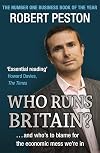
The 2008 financial crisis wasn't a surprise. The writing had been on the wall long enough among many experts, and when it finally blew up it was merely like a child finally pointing at a naked Emperor. The question is, how did we get there?
Untangling it all is certainly not easy! Born out of the highly complex functioning of institutions engaging in obscure gambling and speculations (if not plain scams!) all very abstract for the layman, here was a mess incredibly difficult to get your head show more around. Robert Peston, though, manages to explain it all in simple terms. It's his strength -as he tackles the topic very accessibly, as if writing the script for an investigative documentary for people otherwise clueless about economics to watch. It's also his weakness -since many readers might find it so easy to read they may not learn anything new nor relevant to them. Personally, here was one of the first works I approached about the topic -having no prior understanding of such financial world- and so I was grateful for its straightforward approach.
The key concepts are simply defined. More, what he also does is to link it all to the political world (more my cup of tea) to show that, if banging on crook financiers is justified, nevertheless, most of the responsibility lies with politicians themselves. After all, they allowed this to happen by letting their own interest colluding with such world, at the expense of the rest of us. Peston being a British journalist, he deals here with Great Britain only; and what an eloquent example that is!
He reminds us indeed that if Britain was so dependent upon the financial sector in the first place, it was mainly due to the strong will of the New Labour to turn the country into an attractive window for such billionaires and businessmen (many made filthy rich by the speculations underpinning that catastrophe), a political will which had led to a near plutocracy dangerous for democracy. In fact, it's not so much the shameless wealth accumulated by a few and thanks to a dubious tax system that he denounces here, but the Cash for Honours scandal whereas such wealthy 'barons' received life peerage in exchange of donations to the New Labour. If this wasn't reflecting a corrupt system, then what does?
Here's a book, then, which is easy and accessible enough to understand the financial chaos which led to the crash, while putting things into a broader perspective. The economic crisis alone was bad enough. The most disturbing aspect of it all, though, was that it was peddled by a corrupt political system whereas democracy was put on hold to serve colluding interest between the political and financial world. It surely bashes hard on New labour while seemingly sparring the Tories (which is unfair -who embraced such looney capitalism in the first place?). Nevertheless, here's a punch for those unfamiliar with such worlds yet wanting to understand a bit better what really happened. A very good read. show less
Untangling it all is certainly not easy! Born out of the highly complex functioning of institutions engaging in obscure gambling and speculations (if not plain scams!) all very abstract for the layman, here was a mess incredibly difficult to get your head show more around. Robert Peston, though, manages to explain it all in simple terms. It's his strength -as he tackles the topic very accessibly, as if writing the script for an investigative documentary for people otherwise clueless about economics to watch. It's also his weakness -since many readers might find it so easy to read they may not learn anything new nor relevant to them. Personally, here was one of the first works I approached about the topic -having no prior understanding of such financial world- and so I was grateful for its straightforward approach.
The key concepts are simply defined. More, what he also does is to link it all to the political world (more my cup of tea) to show that, if banging on crook financiers is justified, nevertheless, most of the responsibility lies with politicians themselves. After all, they allowed this to happen by letting their own interest colluding with such world, at the expense of the rest of us. Peston being a British journalist, he deals here with Great Britain only; and what an eloquent example that is!
He reminds us indeed that if Britain was so dependent upon the financial sector in the first place, it was mainly due to the strong will of the New Labour to turn the country into an attractive window for such billionaires and businessmen (many made filthy rich by the speculations underpinning that catastrophe), a political will which had led to a near plutocracy dangerous for democracy. In fact, it's not so much the shameless wealth accumulated by a few and thanks to a dubious tax system that he denounces here, but the Cash for Honours scandal whereas such wealthy 'barons' received life peerage in exchange of donations to the New Labour. If this wasn't reflecting a corrupt system, then what does?
Here's a book, then, which is easy and accessible enough to understand the financial chaos which led to the crash, while putting things into a broader perspective. The economic crisis alone was bad enough. The most disturbing aspect of it all, though, was that it was peddled by a corrupt political system whereas democracy was put on hold to serve colluding interest between the political and financial world. It surely bashes hard on New labour while seemingly sparring the Tories (which is unfair -who embraced such looney capitalism in the first place?). Nevertheless, here's a punch for those unfamiliar with such worlds yet wanting to understand a bit better what really happened. A very good read. show less
The Whistleblower: 2021's most explosive thriller from Britain's top political journalist by Robert Peston
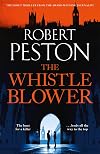
I think the major strength in Robert Peston’s storytelling in this political thriller is the convincing authenticity of his depictions of politicians, the workings of Parliament and the Civil Service, political journalists, the adrenaline-fuelled atmosphere of press rooms, the pressure of journalistic deadlines, the power exerted by media tycoons, corporate greed and the obstacles put in the way of anyone who is attempting to expose corruption of any kind. By setting his novel in 1997, show more during the run up to the General Election, he used his professional knowledge to very good effect, evoking the highly febrile nature of the political mood of the time, the public’s disillusion with the government of the day and the strong desire for change, all of which will be instantly recognisable to anyone who lived through that period. However, the downside to this was that I found myself spending too much time wondering which real-life people some of his characters were possibly (probably!) based on. Whilst that was quite entertaining, I think this distraction contributed to my difficulty in feeling fully engaged with the developing plot, particularly during the first half of the story. This meant that it wasn’t until the second half of the story that I began to experience the escalating tension I expect from a thriller and, once this had happened, to feel more invested in what was happening to the fictional characters. Although there were occasions when I thought the development of the storyline relied too heavily on some improbable coincidences, on balance, the rather dark, labyrinthine plot felt all too depressingly believable. Without wishing to give anything of the plot away, I appreciated the extra twist the author introduced to the ‘whistle-blower’ aspect of the story.
Although many of the characters were distinctly flawed, each one was well-drawn (‘warts and all’) and, with their various peccadilloes, made a convincing contribution to the author’s portrayal of the rather murky world of political manoeuvrings and shenanigans, lobbying and the powerful influences of big business and the media which underpinned the storyline. With his drink and drug habits, his vanity, his frequently amoral behaviour when it came to how he obtained information for his next big story (something which had caused his estrangement from his sister) and his generally self-centred attitudes, I must admit that initially I found it difficult to find any redeeming features in Gil. However, the gradual revelations about his past experiences, both personal and professional, enabled me to understand what drove him and, very slowly, to begin to warm to him! I think this process was helped by the fact that I really liked Jess, his colleague and fellow seeker of the truth behind Claire’s death, and thought that if she was prepared to help him, he must have some saving-graces! It was also helped by the many ways in which the author so effectively incorporated themes of ambivalence, trust, loyalty, betrayal, grief, mourning and love, when exploring Gil’s past and present relationships, particularly those with members of his family (his parents, his two nephews and his brother-in-law) in the weeks following Claire’s death.
Whilst this is unlikely to be one of my top-ten books of the year, I did find it an entertaining read, particularly enjoying the dry humour and political satire which was a key feature of Robert Peston’s storytelling.
With thanks to Readers First and the publisher for a copy of this book in exchange for an honest review. show less
Although many of the characters were distinctly flawed, each one was well-drawn (‘warts and all’) and, with their various peccadilloes, made a convincing contribution to the author’s portrayal of the rather murky world of political manoeuvrings and shenanigans, lobbying and the powerful influences of big business and the media which underpinned the storyline. With his drink and drug habits, his vanity, his frequently amoral behaviour when it came to how he obtained information for his next big story (something which had caused his estrangement from his sister) and his generally self-centred attitudes, I must admit that initially I found it difficult to find any redeeming features in Gil. However, the gradual revelations about his past experiences, both personal and professional, enabled me to understand what drove him and, very slowly, to begin to warm to him! I think this process was helped by the fact that I really liked Jess, his colleague and fellow seeker of the truth behind Claire’s death, and thought that if she was prepared to help him, he must have some saving-graces! It was also helped by the many ways in which the author so effectively incorporated themes of ambivalence, trust, loyalty, betrayal, grief, mourning and love, when exploring Gil’s past and present relationships, particularly those with members of his family (his parents, his two nephews and his brother-in-law) in the weeks following Claire’s death.
Whilst this is unlikely to be one of my top-ten books of the year, I did find it an entertaining read, particularly enjoying the dry humour and political satire which was a key feature of Robert Peston’s storytelling.
With thanks to Readers First and the publisher for a copy of this book in exchange for an honest review. show less
This is a disappointing book, largely because it falls into a peculiar genre - that of the journalistic pot-boiler from a celebrity journalist who has been given carte blanche by a publisher, while the sun of public notice shines upon him, to rehash 'stories what I wrote'.
The disappointment is particularly intense because Peston was the journalist who broke the Northern Rock story. He was the boy who cried out 'but the Emperor has no clothes'. The Government and the City have been trying to show more cobble together some robes for finance capitalism ever since.
I always thought that he was a rather unwitting hero. This book shows just how much. His writing since the Northern Rock imbroglio, on his BBC Blog, has been informative but it has increasingly shown the extent to which PR Departments and spinners have been determined to tie down this perhaps naive loose cannon whose words almost broke the Bank. The book is merely a demonstration that the author is a man of his time - a believer in an ideal version of the 'middle way' and still sentimental towards the sharks who built empires on debt, a man who suddenly found himself at the centre of the bubble-pricking that wiser heads knew was coming but left him surprised and shocked.
The best bit of the book is the first Chapter where his confused but fairly typical middle class analysis lies. It is an analysis you will hear as a standard from those in Middle England who like Thatcher's reforms but who thought they went too far in terms of social cohesion, who rather liked the social democrat impulse behind Blairism, who thought debt-fuelled and loud-mouthed near-hysterical one-dimensional services sector bosses represented 'leadership' and who thought growth could be sustained forever. These are people who want a 'nice' capitalism and who will accept a bit of green puffery and corporate social responsibility to ensure that they never have to see how the sausages are made.
If he is shocked that it was not so, there are times when he sees why - only to draw back from the brink because it raises too many questions about a world that he was part of as a commentator for the past decade. There is an excuse for any journalist that he only reports the news and does not make it, but it really is remarkable how few financial and business journalists investigated very deeply what was happening under their noises. Now that the crisis has happened, very few of them want to say things that will admit that they were wrong - they avoid, displace and obfuscate.
As for Peston, there seems to be a decent man here who just cannot see outside his box any more than can the bulk of the London professional classes whose entire wealth resided on a bit of economic legerdemain and a determined refusal to ask too many questions beyond the 'story'. For serious analysis, go to Larry Elliott and others of his ilk.
The nub of his argument should be taken as his own last sentences in that first chapter - "The accumulation of vast wealth by a growing class of super-rich - who owe no allegiance to any state - is a regressive trend for the distribution of power. It will taint governance and distort democracy."
He states this and then he moves on ... what should be a considered analysis, about how what he knows leads to his analysis, becomes little more than a series of disconnected case studies - of Sir Phillip Green whom he clearly inordinately admires and who is currently gambling his retail all on Topshop in New York, a blow-by-blow account of the struggle for Marks & Spencers which seems to fascinate financial journalists but is intensely dull to the rest of us, gossip about the hedge fund superstars (yawn!), the very serious matter of the disarray in national pensions arrangements, the scandal surrounding wealthy donations to the Labour Party and a rather strange and uninformative account of Sir Allan Leighton's Chairmanship of the Post Office which merely indicates that our great national institutions seem to operate in a permanent state of near-policy chaos.
The point about inordinate political influence is to be found in throw-away remarks that should have been the basis for a better book. He writes, for example, of Paul Marshall who set up Marshall Wace, a hedge fund, in 1997, which is now one of the biggest ten in Europe (or was in 2008). This man a) gave £30,000 to the LibDems, b) £1m to set up the LibDem-leaning think tank CentreForum and c) was co-Editor of the 2004 Orange Book which was instrumental in building a political clientele for liberal economics within the Liberal Democrats and pushing it back towards the economic centre-right. This is interesting especially when you add the fact that the first Director of CentreForum was a retired Goldman Sachs banker.
In short, there is a nexus here of ideological influence with, on the surface, wealthy finance capital actively engaged in a process of political management directed at the one remaining centre-left party then-resistant to the government/finance capital complex. The arrival of Nick Clegg, a relatively uninspiring but safe political nonentity, at least next to the lively Vince Cable, as Party Leader and the shift of the Party's political centre from the left to the right cannot fail to be seen in this context. Yet Peston does not investigate the matter further - he states the fact like a good reporter and then simply moves on to worry about the decline of Warburg and Cazenove.
In fact, this book isn't about 'Who Runs Britain?' at all. It does not have anything like the value of Anthony Sampson's efforts from an earlier generation. It tells us little of the actual as opposed to possible influence by which finance capital effectively ran the UK with the connivance of Government for over a decade. It tells us nothing of why New Labour politicians are so deeply ignorant of the system they serve.
There are a few things to be learned from this book - that the current Government is not a fit custodian of our country and that there is no reason to believe that any Government from either of the other main parties would do any better. There seems to be no political party of either the Right or the Left which is in a position to challenge large scale globalised finance capital (not the free market, as such, I note) or has an alternative strategy that would allow democratic Government to reassert its authority over surprisingly small numbers of people.
Some of these people (on the evidence of this book) are not a little psychologically disturbed. Many of them unidimensional with an anal obsession with money that must have something to do with inappropriate potty-training or dark moments in childhood history. We may smile but this collusion between the political class and the unaccountable wealthy has become a very serious matter.
In the last moments of the book, Peston returns to the theme of stateless, unaccountable plutocrats undermining democracy but it is too late. He has seen the problem but he has not engaged with it. He has given us a bit of gossip and scandal from some over-excitable entrepreneurs. He has shown us the incompetence of our governing classes but we knew of that already. What he has not done us is tell us who precisely runs Britain, who precisely is to blame for the mess (despite the jacket promise) and certainly not what should happen next. show less
The disappointment is particularly intense because Peston was the journalist who broke the Northern Rock story. He was the boy who cried out 'but the Emperor has no clothes'. The Government and the City have been trying to show more cobble together some robes for finance capitalism ever since.
I always thought that he was a rather unwitting hero. This book shows just how much. His writing since the Northern Rock imbroglio, on his BBC Blog, has been informative but it has increasingly shown the extent to which PR Departments and spinners have been determined to tie down this perhaps naive loose cannon whose words almost broke the Bank. The book is merely a demonstration that the author is a man of his time - a believer in an ideal version of the 'middle way' and still sentimental towards the sharks who built empires on debt, a man who suddenly found himself at the centre of the bubble-pricking that wiser heads knew was coming but left him surprised and shocked.
The best bit of the book is the first Chapter where his confused but fairly typical middle class analysis lies. It is an analysis you will hear as a standard from those in Middle England who like Thatcher's reforms but who thought they went too far in terms of social cohesion, who rather liked the social democrat impulse behind Blairism, who thought debt-fuelled and loud-mouthed near-hysterical one-dimensional services sector bosses represented 'leadership' and who thought growth could be sustained forever. These are people who want a 'nice' capitalism and who will accept a bit of green puffery and corporate social responsibility to ensure that they never have to see how the sausages are made.
If he is shocked that it was not so, there are times when he sees why - only to draw back from the brink because it raises too many questions about a world that he was part of as a commentator for the past decade. There is an excuse for any journalist that he only reports the news and does not make it, but it really is remarkable how few financial and business journalists investigated very deeply what was happening under their noises. Now that the crisis has happened, very few of them want to say things that will admit that they were wrong - they avoid, displace and obfuscate.
As for Peston, there seems to be a decent man here who just cannot see outside his box any more than can the bulk of the London professional classes whose entire wealth resided on a bit of economic legerdemain and a determined refusal to ask too many questions beyond the 'story'. For serious analysis, go to Larry Elliott and others of his ilk.
The nub of his argument should be taken as his own last sentences in that first chapter - "The accumulation of vast wealth by a growing class of super-rich - who owe no allegiance to any state - is a regressive trend for the distribution of power. It will taint governance and distort democracy."
He states this and then he moves on ... what should be a considered analysis, about how what he knows leads to his analysis, becomes little more than a series of disconnected case studies - of Sir Phillip Green whom he clearly inordinately admires and who is currently gambling his retail all on Topshop in New York, a blow-by-blow account of the struggle for Marks & Spencers which seems to fascinate financial journalists but is intensely dull to the rest of us, gossip about the hedge fund superstars (yawn!), the very serious matter of the disarray in national pensions arrangements, the scandal surrounding wealthy donations to the Labour Party and a rather strange and uninformative account of Sir Allan Leighton's Chairmanship of the Post Office which merely indicates that our great national institutions seem to operate in a permanent state of near-policy chaos.
The point about inordinate political influence is to be found in throw-away remarks that should have been the basis for a better book. He writes, for example, of Paul Marshall who set up Marshall Wace, a hedge fund, in 1997, which is now one of the biggest ten in Europe (or was in 2008). This man a) gave £30,000 to the LibDems, b) £1m to set up the LibDem-leaning think tank CentreForum and c) was co-Editor of the 2004 Orange Book which was instrumental in building a political clientele for liberal economics within the Liberal Democrats and pushing it back towards the economic centre-right. This is interesting especially when you add the fact that the first Director of CentreForum was a retired Goldman Sachs banker.
In short, there is a nexus here of ideological influence with, on the surface, wealthy finance capital actively engaged in a process of political management directed at the one remaining centre-left party then-resistant to the government/finance capital complex. The arrival of Nick Clegg, a relatively uninspiring but safe political nonentity, at least next to the lively Vince Cable, as Party Leader and the shift of the Party's political centre from the left to the right cannot fail to be seen in this context. Yet Peston does not investigate the matter further - he states the fact like a good reporter and then simply moves on to worry about the decline of Warburg and Cazenove.
In fact, this book isn't about 'Who Runs Britain?' at all. It does not have anything like the value of Anthony Sampson's efforts from an earlier generation. It tells us little of the actual as opposed to possible influence by which finance capital effectively ran the UK with the connivance of Government for over a decade. It tells us nothing of why New Labour politicians are so deeply ignorant of the system they serve.
There are a few things to be learned from this book - that the current Government is not a fit custodian of our country and that there is no reason to believe that any Government from either of the other main parties would do any better. There seems to be no political party of either the Right or the Left which is in a position to challenge large scale globalised finance capital (not the free market, as such, I note) or has an alternative strategy that would allow democratic Government to reassert its authority over surprisingly small numbers of people.
Some of these people (on the evidence of this book) are not a little psychologically disturbed. Many of them unidimensional with an anal obsession with money that must have something to do with inappropriate potty-training or dark moments in childhood history. We may smile but this collusion between the political class and the unaccountable wealthy has become a very serious matter.
In the last moments of the book, Peston returns to the theme of stateless, unaccountable plutocrats undermining democracy but it is too late. He has seen the problem but he has not engaged with it. He has given us a bit of gossip and scandal from some over-excitable entrepreneurs. He has shown us the incompetence of our governing classes but we knew of that already. What he has not done us is tell us who precisely runs Britain, who precisely is to blame for the mess (despite the jacket promise) and certainly not what should happen next. show less
You May Also Like


Associated Authors
Statistics
- Works
- 9
- Also by
- 1
- Members
- 515
- Popularity
- #48,204
- Rating
- 3.6
- Reviews
- 23
- ISBNs
- 41