
Guerrilla Girls
Author of The Guerrilla Girls' Bedside Companion to the History of Western Art
About the Author
Image credit: Eye on Books
Works by Guerrilla Girls
Bitches, Bimbos, and Ballbreakers: The Guerrilla Girls' Illustrated Guide to Female Stereotypes (2003) 251 copies, 6 reviews
Guerilla Girls ( Author )(Bitches, Bimbos, and Ballbreakers: The Guerrilla Girls' Illustrated Guide to Female Stereotypes) Paperback (1869) 2 copies
Hot Flashes 1 copy
!Women Art Revolution 1 copy
Associated Works
Tagged
Common Knowledge
- Canonical name
- Guerrilla Girls
- Gender
- n/a
Members
Reviews

In 1985, the Guerrilla Girls made a startling observation: of the 169 artists featured in the MoMA exhibition An International Survey of Recent Painting and Sculpture, only a small minority were women or artists of colour. From that moment on the group unceasingly created poster campaigns, handouts, leaflets and other ephemera in the aim of "opening the public eye to the discrimination which reigns within our very phallo- and ethno-centric artistic institutions".
Their printed matter is most show more often used in the context of actions taking place in public spaces. Pasting up posters in the street and handing out flyers or manifestos allow The Guerrilla Girls to reach a wider audience, but direct contact with the general public also exposes them to confrontation and the risk of violent reactions from opponents who wish to silence them.
Keeping in mind their will to communicate with the masses, these "Bad Girls" employ simple yet striking visual codes. Their texts are as succinct and incisive as advertising slogans and are systematically typeset in capital letters and bold or ultra-bold fonts. The posters are printed in flashy colours and one can clearly observe a penchant for girly pinks, yellow, red and black. Images are directly plundered from archetypal scenes of art history and radically set against monochrome backgrounds by means of brash digital cutouts, free of any secondary and superfluous information.
The group clever use of iconography is epitomized in the figure of the gorilla, a mask of which members don before each intervention. After all, there is just a hair's breadth between "guerrilla" and "gorilla".
The mask acts both as signature and disguise, allowing The Guerrilla Girls to hide their true identities while riffing on well-known gender-normative superheroes whom we need not name. The Guerrilla Girls' first intention is to save the art world from its prime enemies: sexism and racism. The mask provides a place for anonymity in their struggle. It hides each member's identity and therefore protects him or her from any consequences that might be detrimental to their careers as artists or to their private lives. But if it is to be considered as an accessory or an element of camouflage, the mask can also become comical or ironic.
Choosing a primate as your emblem is of course far from anodyne. While monkeys are often considered comical due to their mimetic nature, the gorilla comes across as menacing or threatening and potentially aggressive. The long, sharp incisors of the Guerrilla Girls' masks clearly illustrate this point. And so we are in agreement: their opinion must be heard.
Once again, of course, it's the mask that allows this amazing feat. The listener's attention is concentrated on the words spoken and not on the identity of he/she speaking. The content we see or rather read on the Guerrilla Girls' posters and handouts is not relegated to a position of secondary importance behind an individual's identity. Discourse prevails here.
A new Guerrilla Girls publication entitled The Hysterical Herstory of Hysteria and How It Was Cured, produced and published by mfc-michèle didier is added to the printed ephemera.
This edition takes the form of a "board book"; its thick pages remind us of children's educational volumes while offering a didactic and satirical reading of the history of a neurosis considered to affect only the fair sex. show less
Their printed matter is most show more often used in the context of actions taking place in public spaces. Pasting up posters in the street and handing out flyers or manifestos allow The Guerrilla Girls to reach a wider audience, but direct contact with the general public also exposes them to confrontation and the risk of violent reactions from opponents who wish to silence them.
Keeping in mind their will to communicate with the masses, these "Bad Girls" employ simple yet striking visual codes. Their texts are as succinct and incisive as advertising slogans and are systematically typeset in capital letters and bold or ultra-bold fonts. The posters are printed in flashy colours and one can clearly observe a penchant for girly pinks, yellow, red and black. Images are directly plundered from archetypal scenes of art history and radically set against monochrome backgrounds by means of brash digital cutouts, free of any secondary and superfluous information.
The group clever use of iconography is epitomized in the figure of the gorilla, a mask of which members don before each intervention. After all, there is just a hair's breadth between "guerrilla" and "gorilla".
The mask acts both as signature and disguise, allowing The Guerrilla Girls to hide their true identities while riffing on well-known gender-normative superheroes whom we need not name. The Guerrilla Girls' first intention is to save the art world from its prime enemies: sexism and racism. The mask provides a place for anonymity in their struggle. It hides each member's identity and therefore protects him or her from any consequences that might be detrimental to their careers as artists or to their private lives. But if it is to be considered as an accessory or an element of camouflage, the mask can also become comical or ironic.
Choosing a primate as your emblem is of course far from anodyne. While monkeys are often considered comical due to their mimetic nature, the gorilla comes across as menacing or threatening and potentially aggressive. The long, sharp incisors of the Guerrilla Girls' masks clearly illustrate this point. And so we are in agreement: their opinion must be heard.
Once again, of course, it's the mask that allows this amazing feat. The listener's attention is concentrated on the words spoken and not on the identity of he/she speaking. The content we see or rather read on the Guerrilla Girls' posters and handouts is not relegated to a position of secondary importance behind an individual's identity. Discourse prevails here.
A new Guerrilla Girls publication entitled The Hysterical Herstory of Hysteria and How It Was Cured, produced and published by mfc-michèle didier is added to the printed ephemera.
This edition takes the form of a "board book"; its thick pages remind us of children's educational volumes while offering a didactic and satirical reading of the history of a neurosis considered to affect only the fair sex. show less
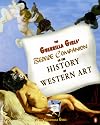
This book offers a whirlwind tour of the roles played (or not played) by women throughout the history of art in the "Western World," from the age of the Greek city-state to the end of the twentieth century. Tackling taboos century by century, the book's anonymous authors explode sexist myths as they cast light on the achievements of many of the underrated, underreported, damned-near invisible female artists who've labored mightily over the past few millennia to make marks on the show more male-dominated world of fine art. The book is a response to the chauvinistic "canonical" texts on art history and analysis that virtually exclude from their pages any mention of women artists and their accomplishments.
I appreciate the theme of this book, and its reason for being. The authors' voice offers the timbre needed to fill out the art world's oratorio. I've definitely learned from reading it, and have been left with a longing to learn more.
That said, the book is laid out like a modern middle school textbook, replete with eye-catching graphics, boxed trivial tidbits on the margins, whimsical fonts and photo montages. All of this offers ample opportunity for distraction. The medium reinforces the fact that the book's authors spend no more than two pages on any single artist, painting the merest outline of each. Many of these character sketches read like quickly-researched essays written by attention-deficit high schoolers, and do little justice to the artists they treat. Thankfully the book ends with an extensive list of texts for further reading.
In summary, the book was an eye-opener, and worth reading, but not exceedingly well-done, and mercifully short. show less
I appreciate the theme of this book, and its reason for being. The authors' voice offers the timbre needed to fill out the art world's oratorio. I've definitely learned from reading it, and have been left with a longing to learn more.
That said, the book is laid out like a modern middle school textbook, replete with eye-catching graphics, boxed trivial tidbits on the margins, whimsical fonts and photo montages. All of this offers ample opportunity for distraction. The medium reinforces the fact that the book's authors spend no more than two pages on any single artist, painting the merest outline of each. Many of these character sketches read like quickly-researched essays written by attention-deficit high schoolers, and do little justice to the artists they treat. Thankfully the book ends with an extensive list of texts for further reading.
In summary, the book was an eye-opener, and worth reading, but not exceedingly well-done, and mercifully short. show less
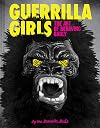
A new compilation documenting the work of the Guerrilla Girls over the last 35 years. They have been calling out the art world to advocate for better representation of women and artists of color in museum collections, gallery shows, exhibition reviews, and financial compensation. They are unsung masters of infographics, combining depressing statistics with wit and tongues firmly in cheek.
Thank you, GG, for all of your work, though I wish it was no longer necessary. Sadly, the more things show more change, the more things stay the same. Although there has been incremental progress, it is not enough. More can and needs to be done. Alas, this book ends in early 2019, so there is nothing about recent attempts at unionization by art workers, especially in New York and Los Angeles. Many institutions, such as the Minneapolis Institute of Art, were re-examining their collections and how they describe them. And then the pandemic hit, and many museums have permanently laid off workers. The Guerrilla Girls work to increase diversity is even more vital during this year of reckoning, show less
Thank you, GG, for all of your work, though I wish it was no longer necessary. Sadly, the more things show more change, the more things stay the same. Although there has been incremental progress, it is not enough. More can and needs to be done. Alas, this book ends in early 2019, so there is nothing about recent attempts at unionization by art workers, especially in New York and Los Angeles. Many institutions, such as the Minneapolis Institute of Art, were re-examining their collections and how they describe them. And then the pandemic hit, and many museums have permanently laid off workers. The Guerrilla Girls work to increase diversity is even more vital during this year of reckoning, show less
Bitches, Bimbos, and Ballbreakers: The Guerrilla Girls' Illustrated Guide to Female Stereotypes by Guerrilla Girls
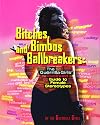
This is an excellent and easy to read primer for anyone wanting to look into the stereotyping of women. A variety of categories women are lumped into are examined, illustrated, and explained in all their sexist histories. Using biting sarcasm touched with humor, the Guerrilla Girls explain how stereotypes have affected women though time. Tips for how to overcome or remove stereotypes are also scattered throughout the book. For a light yet revealing introduction to feminism and the show more stereotyping of woman, you can't find a better and more entertaining book. The last few pages also feature tools to create your own feminist subversions and a thorough bibliography for further research. show less
Awards

You May Also Like


Associated Authors
Statistics
- Works
- 15
- Also by
- 3
- Members
- 835
- Popularity
- #30,604
- Rating
- 3.8
- Reviews
- 15
- ISBNs
- 15
- Languages
- 2
- Favorited
- 2