
Juri Tynjanov (1894–1943)
Author of Death of the Vazir-Mukhtar
About the Author
Tynyanov, one of the founders of structuralist criticism, made lasting contributions to Pushkin studies, to the theory of verse semantics, and to other fields. His novels tend to embody his theoretical interests. His most important works deal with the oppressive period of Nicholas I's reign. Death show more and Diplomacy in Persia (The Death of Wazir-Mukhtar) (1927--28) is a biographical novel about the celebrated nineteenth-century satirist Aleksandr Griboyedov. Other novels include Kyukhlya (1925), about the Decembrist poet Kyukhel'-beker, and the unfinished Pushkin (1935--37). Among Tynyanov's shorter works, the novella Second Lieutenant Kije (1927), set in the time of the temperamental Emperor Paul I, has achieved the greatest renown and was made into a film in 1934. (Bowker Author Biography) show less
Works by Juri Tynjanov
Permanent Evolution: Selected Essays on Literature, Theory and Film (Cultural Syllabus) (2019) 3 copies
Puškins : [romāns] 2 copies
Archaisty i novatory 2 copies
Кюхля. Подпоручик Киже. Восковая персона. Малолетний Витушишников (Классики и современники) (1989) 1 copy
Vahakuju : jutustusi 1 copy
Смерть Вазир-М3хтара: Роман 1 copy
Woskowa persona 1 copy
Кюхля : [роман] ; Подпоручик Киже : [рассказ] ; Восковая персона : [повесть] ; Малолетний Витушишников :… (1989) 1 copy
Избранные произведения 1 copy
Малолетный Витушишников 1 copy
Подпоручик Киже 1 copy
История литературы. Критика 1 copy
Puschkin histor. Roman 1 copy
Secondelieutnant Sjedoch 1 copy
Poetik : ausgew. Essays 1 copy
Литературный факт [Сборник] 1 copy
Восковая персона 1 copy
Associated Works
Tagged
Common Knowledge
- Canonical name
- Tynyanov, Yury
- Legal name
- Tynyanov, Juri Nikolajevitš
- Other names
- Tyni︠a︡nov, I︠U︡. N. (I︠U︡riĭ Nikolaevich)
Tynyanov, Yury Nikolaevich
Тынянов, Юрий Николаевич
Tynanov, Yury Nikolaevich - Birthdate
- 1894-10-18
- Date of death
- 1943-12-20
- Gender
- male
- Education
- Petrograd University
University of St. Petersburg - Occupations
- Pushkin scholar
literary critic
translator
screenwriter
historical novelist - Organizations
- Union of Soviet Writers
- Short biography
- Juri Tynjanov was born to a Jewish family of doctors in Rezhitsa, Russian Empire (present-day Rēzekne, Latvia). He went to gymnasium (high school) in Pihkova and studied from 1912 to 1919 at the Faculty of History and Linguistics of the University of St. Petersburg. There he attended the seminar on Alexander Pushkin held by Semyon Vengerov, a renowned literary historian. Tynjanov was fluent in German and French, and became a literary critic. He wrote more than half a dozen books about Pushkin and his era, most of which have never been translated into English. After graduation, he worked as a teacher and translator for the Comintern. From 1920, he served as the secretary of OPOJAZ (Society for the Study of Poetic Language), a prominent group of linguists and literary critics. In the years 1921–1930, Tynjanov was a professor at the Institute of Art History. He started writing fiction in the mid-1920s. His first historical novel, Küchlja (1925) was about the Decembrist poet Wilhelm Küchelbecker, a friend of Pushkin. His novel Smert Vazir-Muhtara (Death of the Vazir-Muhtari, 1927–1928) described the fate of the diplomat and playwright Alexander Griboyedov. He also spent many years researching and writing a novel about Pushkin's childhood and youth that was unfinished at his death. His novella Second Lieutenant Kije (1927), set in the time of the Emperor Paul I, brought him his widest fame and was adapted into a film in 1934. That same year, he was elected a member of the board of the Writers' Union of the Soviet Union. During World War II, he was evacuated from Leningrad sick with multiple sclerosis and died at age 49 in Moscow.
- Nationality
- Russia
- Birthplace
- Rezhitsa, Russian Empire
- Places of residence
- Rezhitsa, Russian Empire
Petrograd, Russia - Place of death
- Moscow, Russia, USSR
- Burial location
- Vagankovo Cemetery, Moscow, Russia
- Associated Place (for map)
- Russia
Members
Discussions
Yuri Tynianov's novel reaches English readers – after 90 years in Fans of Russian authors (August 2021)
Reviews

The first of these two novellas is a wicked satire on bureaucracy set during the reign of Czar Paul I (1754-1801), son of Catherine the Great. In addition to ridiculing the czar himself, Tynyanov updates an old story: the czar’s bureaucrats are in such fear of him that no one dares to correct an officially approved memorandum erroneously declaring one officer dead and inventing another one. The novella is straight out of Gogol and tracks the fortunes of the two men concerned. The show more nonexistent soldier (Lieutenant Kijé) begins life with a “real” flogging and exile to Siberia followed by his recall and steady rise through the ranks. This fictional Kijé owes his very success to his equally fictional qualities: he doesn’t offend anyone, he commits no errors, makes no mistakes, and does nothing foolish. He succeeds by doing nothing—hardly a challenge for someone who isn’t there. Indeed, the Czar promotes this literal nonentity, thus beginning his meteoric rise. Predictably, Kijé becomes so famous that the Czar commands that Kijé appear before him. The officer mistakenly declared dead, on the other hand, takes the clerical error seriously—it was official so it must be true—and soon succumbs to doubt, despair and, inevitably, death. The second novella features a larger cast and is set at the court of Paul's son, Nicholas I. A young boy performs a minor service to the czar; the act is absurdly overblown as imperial courtiers compete to outdo one another in glorifying their narcissistic ruler. I thought the second story less effective than the first, though still bitterly humorous. Under the humor, of course, lies Tynyanov’s virulent criticism of mindless rule-followers, a dangerous critique to have published under Stalin. Or, say, an orange-haired, carrot-complexioned blowhard. I find it most remarkable that although he first published this in 1928, he in fact died in 1943 (at the age of 49) from natural causes…multiple sclerosis. show less

Il s'agit du plus extraordinaire roman historique qui se puisse lire. Le héros en est Alexandre Griboïedov, diplomate, certes, mais aussi poète, la seconde figure du romantisme russe à côté de Pouchkine. Moscou, Pétersbourg, les routes du Sud, Tiflis, Tabriz, Téhéran..., c'est l'histoire de cet homme, ses amours, ses aventures, ses moments d'indifférence, ses témérités, son audace : un fantastique défilé d'êtres humains, la haute société, les gens de lettres, les show more militaires, les fonctionnaires, les marchands, les espions politiques, tout le pays, et au-delà des frontières persanes les déserteurs, les eunuques, la cour du chah, les princes prêts à s'égorger les uns les autres... Je n'ai jamais rien lu d'aussi éblouissant que ce tourbillon d'hommes et de femmes qui dure un peu moins d'une année. show less
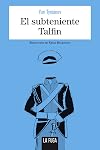
Dos sátiras sobre los delirios y la burocracia y el poder de los autócratas tan afiladas que hacen que uno se pregunte si no son algún reflejo de la época en la que fueron escritas (aunque es cierto que situaciones como las descritas se podrían dar en muchas épocas y lugares) En cualquier caso, son dos textos muy divertidos y con un estilo que engancha.
Dos sátiras sobre los delirios y la burocracia y el poder de los autócratas tan afiladas que hacen que uno se pregunte si no son algún reflejo de la época en la que fueron escritas (aunque es cierto que situaciones como las descritas se podrían dar en muchas épocas y lugares) En cualquier caso, son dos textos muy divertidos y con un estilo que engancha.
Lists
Awards


You May Also Like


Associated Authors
Statistics
- Works
- 46
- Also by
- 6
- Members
- 340
- Popularity
- #70,095
- Rating
- 3.7
- Reviews
- 8
- ISBNs
- 57
- Languages
- 10
- Favorited
- 1