
Patricia Clapp (1912–2003)
Author of Constance: A Story of Early Plymouth
Works by Patricia Clapp
Tagged
Common Knowledge
- Legal name
- Cone, Patricia Clapp
- Birthdate
- 1912
- Date of death
- 2003
- Gender
- female
- Education
- Columbia University
- Nationality
- USA
- Birthplace
- Boston, Massachusetts, USA
- Places of residence
- Upper Montclair, New Jersey, USA
- Associated Place (for map)
- USA
Members
Reviews
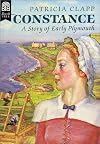
This came to mind because a neighbor was telling stories about his relation to Stephen Hopkins. I thought "wasn't that the father..." and indeed it was. My library has weeded this book, which vexed me greatly, because...
I feel like modern YA authors often borrow from that terrible interview question: "What is one of your weaknesses?" You know, the one where you say something like "I'm OCD about deadlines" and they're supposed to think that's a good thing.
So many authors often seem to think show more "My protagonist can't be perfect. They need a fault," so they give them a character trait like, say, being an introvert. But then, at the end of the book, it's that very "negative" trait that attracts the main guy/gets them the job/saves the country.
Constance(the character) is rude, proud, racist, vain, and negative. And I love it. Not because those are qualities that we should strive for, but because Clapp walks us on a journey of growth in a lot of those areas. She doesn't do it perfectly and, at the end, Constance is still far from perfect, but we are shown that, yes, people have nasty traits and yes people can change. There's a point where one of the settlers does something terrible. And Constance and a friend are talking about that person and they get to that event and, because of the uncomfortableness of it, essentially say "I don't know what to think and I'm just going to pretend that nasty thing didn't happen because I can't really deal with it." Clapp is very aware, not perfectly, but largely, of the way human beings behave when asked to look back at the sticky, nasty, morally-reprehensible events of life---we justify, ignore, evade it because we don't like dealing with the conflict. I thought that her portrayal was very realistic---though not at all one we should emulate.
The middle-end-ish is a bit drawn out and boring, probably because not much historically seemed to happen, though I did like the discussion about fishing tactics.
FYI:
I'm a descendant of John Cooke- the guy who didn't get the girl. And, no, that's not a spoiler. You pretty much know by the second chapter. :)
Also am very disappointed that they're marketing this (on the GR blurb) as a romance... it is, at the end, but the first half is mostly, well, not. I mean, 50 people die. show less
I feel like modern YA authors often borrow from that terrible interview question: "What is one of your weaknesses?" You know, the one where you say something like "I'm OCD about deadlines" and they're supposed to think that's a good thing.
So many authors often seem to think show more "My protagonist can't be perfect. They need a fault," so they give them a character trait like, say, being an introvert. But then, at the end of the book, it's that very "negative" trait that attracts the main guy/gets them the job/saves the country.
Constance(the character) is rude, proud, racist, vain, and negative. And I love it. Not because those are qualities that we should strive for, but because Clapp walks us on a journey of growth in a lot of those areas. She doesn't do it perfectly and, at the end, Constance is still far from perfect, but we are shown that, yes, people have nasty traits and yes people can change. There's a point where one of the settlers does something terrible. And Constance and a friend are talking about that person and they get to that event and, because of the uncomfortableness of it, essentially say "I don't know what to think and I'm just going to pretend that nasty thing didn't happen because I can't really deal with it." Clapp is very aware, not perfectly, but largely, of the way human beings behave when asked to look back at the sticky, nasty, morally-reprehensible events of life---we justify, ignore, evade it because we don't like dealing with the conflict. I thought that her portrayal was very realistic---though not at all one we should emulate.
The middle-end-ish is a bit drawn out and boring, probably because not much historically seemed to happen, though I did like the discussion about fishing tactics.
FYI:
I'm a descendant of John Cooke- the guy who didn't get the girl. And, no, that's not a spoiler. You pretty much know by the second chapter. :)
Also am very disappointed that they're marketing this (on the GR blurb) as a romance... it is, at the end, but the first half is mostly, well, not. I mean, 50 people die. show less
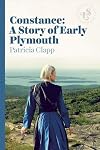
My biggest regret about reading Patricia Clapp's book is that the author is no longer alive. I would have liked to be able to thank and ask many questions. I am a direct descendant of Constance Hopkins and have read the two books about her father's life and some of his own writings and short journal references to him but the information about her life is sparse and hardly anything about her children. I would have like to ask the author about more about Constance's life and her friendship show more with Priscilla Alden and so much more.
But I am grateful for the description of the frightening epidemic that killed so many of the people who came over on the Mayflower. I pictured the Common House tall and strong and lined with rows of pallets of those stricken with the disease. I had the good fortune of visiting the replicas of that and the small dark house that Constance lived in when I visited that area.
The author brought to life the sight, sound and thoughts of my ancestor and I an truly thankful for that. I want to encourage more people to explore their ancestry and seek article and books about their ancestors. show less
But I am grateful for the description of the frightening epidemic that killed so many of the people who came over on the Mayflower. I pictured the Common House tall and strong and lined with rows of pallets of those stricken with the disease. I had the good fortune of visiting the replicas of that and the small dark house that Constance lived in when I visited that area.
The author brought to life the sight, sound and thoughts of my ancestor and I an truly thankful for that. I want to encourage more people to explore their ancestry and seek article and books about their ancestors. show less
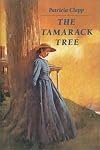
Although the setup for the story was a bit clunky and I was not totally convinced all the history was completely correct, once the story got going it was very interesting. I knew some of the story of the siege of Vicksburg but the reality of it was portrayed very effectively. I had a bit of trouble with the Southern Belle character and her over the top accent, she seemed utterly ahistorical, but overall a well-done YA novel.

Not a beloved favourite from my youth--I just read it for the first time, and I'm 54 at present.
The viewpoint character did almost nothing except yearn to be held by a big strong man—it's amazing to me how up-to-date someone like Jane Austen can feel, and how terribly dated and stilted some works from only half a century ago are by comparison!
The ghost's antics failed to elicit any concern from me, let alone actual horror. I wasn't dazzled by the actual sentences (if little happens, but show more it's beautifully depicted, that's its own reward). Nobody particularly seemed like an actual, authentic person (let alone an interesting actual authentic person), so this was disappointing.
(I realise it's a book for children, but that's very little excuse. The best of childrens literature can hold its head high against the best of adult fiction, I don't lower the bar for them).
(Note: 5 stars = amazing, wonderful, 4 = very good book, 3 = decent read, 2 = disappointing, 1 = awful, just awful. I'm fairly good at picking for myself so end up with a lot of 4s). I feel a lot of readers automatically render any book they enjoy 5, but I grade on a curve! show less
The viewpoint character did almost nothing except yearn to be held by a big strong man—it's amazing to me how up-to-date someone like Jane Austen can feel, and how terribly dated and stilted some works from only half a century ago are by comparison!
The ghost's antics failed to elicit any concern from me, let alone actual horror. I wasn't dazzled by the actual sentences (if little happens, but show more it's beautifully depicted, that's its own reward). Nobody particularly seemed like an actual, authentic person (let alone an interesting actual authentic person), so this was disappointing.
(I realise it's a book for children, but that's very little excuse. The best of childrens literature can hold its head high against the best of adult fiction, I don't lower the bar for them).
(Note: 5 stars = amazing, wonderful, 4 = very good book, 3 = decent read, 2 = disappointing, 1 = awful, just awful. I'm fairly good at picking for myself so end up with a lot of 4s). I feel a lot of readers automatically render any book they enjoy 5, but I grade on a curve! show less
Lists
Awards


You May Also Like


Associated Authors
Statistics
- Works
- 15
- Members
- 1,041
- Popularity
- #24,732
- Rating
- 3.8
- Reviews
- 50
- ISBNs
- 40
- Languages
- 2