
David Adam (1) (1972–)
Author of The Man Who Couldn't Stop: OCD and the True Story of a Life Lost in Thought
For other authors named David Adam, see the disambiguation page.
About the Author
David Adam is the auhtor of The Man Who Couldn't Stop which is a fianalist for the $53,000 prize for the 2015 Royal Society Winton Prize for Science Books. This is the only major international prize that celebrates science-writing for a non-specialist audience. (Bowker Author Biography)
Image credit: David Adam
Works by David Adam
The Man Who Couldn't Stop: OCD and the True Story of a Life Lost in Thought (2014) 360 copies, 12 reviews
Tagged
Common Knowledge
- Birthdate
- 1972
- Gender
- male
- Occupations
- science writer
- Nationality
- UK
- Associated Place (for map)
- UK
Members
Reviews
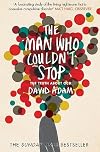
Here's a first-hand account of what it's like to live with OCD. A sufferer himself, the author in fact openly and bravely tells of his fear-terror of catching HIV-AIDS, and all the lengths he goes to in order to battle such fear. The pain he has to go through is harrowing! If he rationally knows that all his rituals are unnecessary, he cannot but feel compelled to perform them. Over. And over. And over. Again. And again. And again. It's a mental torture, and, even more harrowing, his way to show more battle his intrusive, disturbing, and silly thoughts always turns into failure. OCD surely has a good press. It's actually quite often turned into a joke, the label used as a mere synonym for being over-peculiar. Yet, there is nothing to laugh about for whose having to endure a fate into its grip:
'...what must be resisted in OCD is not a physical craving, but the mental pull of your own consciousness. In the grip of a compulsive urge there is nowhere to hide and nothing to reason with. To resist the compulsion with willpower alone is to hold back an avalanche by melting the snow with a candle.'
I truly loved this book. David Adam's stunning testimony is more than a window open into a different mind; it is, also, a vast and intelligible overview of the history, research, and treatment of such a baffling condition.
He breaks the silly prejudice still going around (to suffer from Obsessive-Compulsive Disorder is not having an Obsessive-Compulsive Personality Disorder, so much for the confusion entertained by the mass-medias!). He shows how OCD comes in all shapes and forms; and revises how it was described in the medical literature from Esquirol to Freud. He retraces the various treatments that had been offered, from the behaviourists to leucotomy, and, electroconvulsive therapy to medications and Cognitive Behavioural Therapy (the crucial importance of Richard Solomon's experiments with dogs is fascinating!). He discusses the Yale-Brown test as a tool for diagnosis. Calling in the neurosciences, evolutionary anthropology and psychology, he also tries and shed light upon the root causes of this bewildering condition, both 'a social handicap and a societal burden'. Particularly interesting too were his comparisons of OCD as a spectrum with other impairments, such as autism and even schizophrenia.
The Man Who Couldn't Stop is a fascinating, very accessible, and far-ranging book on a condition too often dismissed as being just a silly quirk. Courageous, cleverly entertaining, instructive... Here's a read providing not only a better understanding of what is feels like to live with OCD, but, also, is very educative when it comes to the science behind it. Highly recommended! show less
'...what must be resisted in OCD is not a physical craving, but the mental pull of your own consciousness. In the grip of a compulsive urge there is nowhere to hide and nothing to reason with. To resist the compulsion with willpower alone is to hold back an avalanche by melting the snow with a candle.'
I truly loved this book. David Adam's stunning testimony is more than a window open into a different mind; it is, also, a vast and intelligible overview of the history, research, and treatment of such a baffling condition.
He breaks the silly prejudice still going around (to suffer from Obsessive-Compulsive Disorder is not having an Obsessive-Compulsive Personality Disorder, so much for the confusion entertained by the mass-medias!). He shows how OCD comes in all shapes and forms; and revises how it was described in the medical literature from Esquirol to Freud. He retraces the various treatments that had been offered, from the behaviourists to leucotomy, and, electroconvulsive therapy to medications and Cognitive Behavioural Therapy (the crucial importance of Richard Solomon's experiments with dogs is fascinating!). He discusses the Yale-Brown test as a tool for diagnosis. Calling in the neurosciences, evolutionary anthropology and psychology, he also tries and shed light upon the root causes of this bewildering condition, both 'a social handicap and a societal burden'. Particularly interesting too were his comparisons of OCD as a spectrum with other impairments, such as autism and even schizophrenia.
The Man Who Couldn't Stop is a fascinating, very accessible, and far-ranging book on a condition too often dismissed as being just a silly quirk. Courageous, cleverly entertaining, instructive... Here's a read providing not only a better understanding of what is feels like to live with OCD, but, also, is very educative when it comes to the science behind it. Highly recommended! show less
Subtitled “OCD and the true story of a life lost in thought”, this is an absorbing account of OCD (obsessive-compulsive disorder) and related mental illnesses, told from the point of view of someone who suffers from OCD himself. Dr. David Adam is currently a writer and editor at the scientific journal Nature, so he brings a clear-headed understanding to his own condition and that of others who suffer similarly.
He quickly dispels the notion that it’s all about obsessive hand-washing or show more similar (he had to fight his publishers who wanted to put a bar of soap on the cover). Though such behaviour may be one symptom of OCD, it is only typical in a small number of cases.
Adam starts the book with the words “An Ethiopian schoolgirl called Bira once ate a wall of her house. She didn’t want to, but she found that to eat the wall was the only way to stop her thinking about it.”
Adam’s own obsession, from which he is, and will probably never be fully free, is a fear of being accidentally infected with HIV-AIDS. He became obsessed that the slightest scratch could somehow infect him: he scrapes his heel at a swimming pool and draws blood. Could someone else, someone with AIDS, have also scraped their heel there, perhaps only moments before? He uses a paper towel to blot up the dot of blood on his heel, only to begin worrying that someone with AIDS might have handled the towel before him, perhaps with a scratch on their finger… and on and on. Adam always knew that these thoughts were paranoid and absurd, but he
couldn’t stop thinking such thoughts, nor stop himself carrying out obsessive rituals to try to protect himself.
Adam details how almost everyone has intrusive, unwanted thoughts popping into their heads throughout their everyday lives. Most of us can easily and quickly dismiss these thoughts. Those with OCD cannot. He describes many often-bizarre case studies, and shows how the condition has been recognised for many centuries, even if not given its modern name.
He covers the various treatments for OCD which have been tried over the years, and about the various treatments he himself has endured, the most effective finally being a form of cognitive behavioural therapy. He offers sympathy and a lot of good advice to others who suffer from unwanted thoughts of which they cannot rid themselves or control.
A really fascinating book about the oddities of the human brain. show less
He quickly dispels the notion that it’s all about obsessive hand-washing or show more similar (he had to fight his publishers who wanted to put a bar of soap on the cover). Though such behaviour may be one symptom of OCD, it is only typical in a small number of cases.
Adam starts the book with the words “An Ethiopian schoolgirl called Bira once ate a wall of her house. She didn’t want to, but she found that to eat the wall was the only way to stop her thinking about it.”
Adam’s own obsession, from which he is, and will probably never be fully free, is a fear of being accidentally infected with HIV-AIDS. He became obsessed that the slightest scratch could somehow infect him: he scrapes his heel at a swimming pool and draws blood. Could someone else, someone with AIDS, have also scraped their heel there, perhaps only moments before? He uses a paper towel to blot up the dot of blood on his heel, only to begin worrying that someone with AIDS might have handled the towel before him, perhaps with a scratch on their finger… and on and on. Adam always knew that these thoughts were paranoid and absurd, but he
couldn’t stop thinking such thoughts, nor stop himself carrying out obsessive rituals to try to protect himself.
Adam details how almost everyone has intrusive, unwanted thoughts popping into their heads throughout their everyday lives. Most of us can easily and quickly dismiss these thoughts. Those with OCD cannot. He describes many often-bizarre case studies, and shows how the condition has been recognised for many centuries, even if not given its modern name.
He covers the various treatments for OCD which have been tried over the years, and about the various treatments he himself has endured, the most effective finally being a form of cognitive behavioural therapy. He offers sympathy and a lot of good advice to others who suffer from unwanted thoughts of which they cannot rid themselves or control.
A really fascinating book about the oddities of the human brain. show less
Six-word review: Imagine that you can never stop.
Extended review:
Everyone has odd notions and intrusive, unwelcome thoughts from time to time. What if your life were dominated by them, indeed governed by them, and you could never, ever shut them off? What if they were so far from socially acceptable that you couldn't discuss them with anyone, and yet you were powerless to halt the behaviors they provoked? What if their very nature posed a virtually insurmountable obstacle to seeking show more help?
Then you might be in a position to identify with the author of this book, a recognized science writer who for more than twenty years has kept his painful condition a secret, even from his family.
The author describes with unsparing candor the reality of obsessive-compulsive disorder as others have reported it, both practitioners and sufferers, and as he himself experiences it. He gives an account of public perceptions of OCD, relating it to other mental health conditions and to inner states, and discusses the history of its treatment up to the present, from barbaric surgeries to behavior modification.
Something like OCD in a mild form seems to run in my family, though nothing--as far as I know--that resembles Adam's experience. Nonetheless, I found his research and especially his personal narrative both compelling and illuminating. It's a quick medium-weight read that both heightens awareness and leaves much to ponder. show less
Extended review:
Everyone has odd notions and intrusive, unwelcome thoughts from time to time. What if your life were dominated by them, indeed governed by them, and you could never, ever shut them off? What if they were so far from socially acceptable that you couldn't discuss them with anyone, and yet you were powerless to halt the behaviors they provoked? What if their very nature posed a virtually insurmountable obstacle to seeking show more help?
Then you might be in a position to identify with the author of this book, a recognized science writer who for more than twenty years has kept his painful condition a secret, even from his family.
The author describes with unsparing candor the reality of obsessive-compulsive disorder as others have reported it, both practitioners and sufferers, and as he himself experiences it. He gives an account of public perceptions of OCD, relating it to other mental health conditions and to inner states, and discusses the history of its treatment up to the present, from barbaric surgeries to behavior modification.
Something like OCD in a mild form seems to run in my family, though nothing--as far as I know--that resembles Adam's experience. Nonetheless, I found his research and especially his personal narrative both compelling and illuminating. It's a quick medium-weight read that both heightens awareness and leaves much to ponder. show less
An interesting memoir where the author writes candidly about his struggles with OCD. It was an insightful and educational read for me. There are so many stereotypical ideas concerning OCD, how it presents itself, what it’s really like, and how there have been so many attempts to try and treat it or at least make it more manageable for those who live with it. I particularly enjoyed the various sharing of knowledge regarding not just OCD but similar issues with neurological, psychiatric, and show more psychological conditions and/or injuries. Some content is quite graphic (regarding electroshock and lobotomies for example) but some is also jaw-dropping and quite frankly unimaginably miraculous. It’s an entertaining and fascinating read. In spite of that I had to drop a star as I felt it seemed to lose cohesiveness in the last chapter and it seemed quite abrupt or disconnected. I’d recommend it though. show less
Lists
Awards


You May Also Like


Associated Authors
Statistics
- Works
- 2
- Members
- 401
- Popularity
- #60,557
- Rating
- 3.6
- Reviews
- 13
- ISBNs
- 147
- Languages
- 5